Month: November 2017

Poppy Seed Festival Presents BREAD CRUMBS

Witty, self-aware, and with a definite Grimm streak…

By Lois Maskiell

A fresh take on an old tale, Bread Crumbs is a funny, yet cruel portrayal of relationships in modern life. Specially selected for this year’s Poppy Seed Festival, this one-hour show that questions the gendered tropes common to fairy tales is self-devised by a team of recent graduates of the Victorian College of the Arts.

Bread Crumbs.jpg

Ruby Johnston and Benjamin Nichol, along with a talented production team including set and costume designer Joseph Noonan, sound composer Sidney Millar and lighting designer Rachel Lee, have created this highly-stylised performance that traces the journey of brother and sister Hansel and Gretel in a magical landscape loosely set in Australian surburbia.

In the first scene, the lullaby-like music coupled with picture-book costumes of gaudy colour establishes an innocent tone that sharply contrasts the coarse language of Gretel (Johnston), the girl guide whose use of Australian vernacular hits a mature-audiences-only rating in exceptional style. It’s this stark contrast, between the genre of fairy tale and fantastically black humour that keeps this production fresh and quirky to the final scene.

When Gretel escapes her childhood home by running away with Hansel (Nicole), their only means of returning is the deliberately-left bread crumbs that she knows he will eat. This plot to never return home proves successful. Searching for a prince charming, she wanders in the woods, leading her highly-strung brother on an adventure that leads to a dark reality.

When Gretel enters into a relationship with Prince Charming (Nicole), he’s not quite the man she had in mind. The acting and narrative takes a turn towards realism, and an abusive relationship ensues. It’s here that the performance makes its strongest comment on the darker sides of young ‘love’: domestic violence in the suburbs.

Australian cultural references including quips about hard rubbish, vegemite on crumpets and dreams of a man who drinks Corona instead of Melbourne Bitter inject a load of mature humour into this generally playful fable to keep adult audiences engaged.

The acting is highly physical and vocally rich, creating a hyper-real world bursting with energy. Johnston’s driving performance as the bossy, big sister is outstanding and strong, powering the narrative along. Benjamin transitions with ease from the anxious younger brother to the hipster Prince Charming who uses love as an excuse for violence and abuse.

So what’s the moral of story? Perhaps that for a woman in today’s world to truly be free, she must become the narrator of her own life.

Bread Crumbs runs from the 21st of November until the 2nd of December at The Stables, Meat Market in North Melbourne.

http://www.poppyseedfestival.com/events-products/show-3-tickets

The Kransky Sisters Present A VERY KRANSKY CHRISTMAS

Deliciously oddball holiday humour

By Leeor Adar

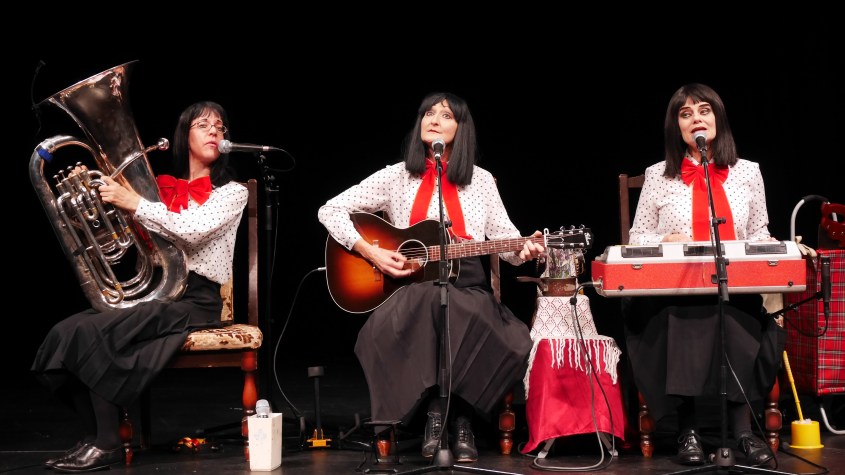
The Kransky Sisters are the kookiest cabaret act gracing Australia, and really, they’ve become cultural icons in their own right including memorable TV appearances on programs on Spicks and Specks and Adam Hills Tonight. I doubt many pictured backwater Australia as three sheltered sisters as a comic-cabaret gothic triad, but nonetheless here they are in all their kooky mod-squad glory.

Kransky Christmas.jpg

The Kranskys are touring pre-holidays to offer some quirky Christmas cheer to Australians everywhere. Appearing at the relatively new kid on the block, the Alex Theatre, the sisters Mourne, Eve and Dawn (Annie Lee, Christine Johnston and Carolyn Johns) bring the house down with their hilarious songs, revamped versions of club hits, and strange stories from their fictional lives.

For those who don’t know the Kranskys’ origin tale, it starts out like most caravan dreams: Mourne and Eve’s mother runs off with their uncle, leaving them with their half-sister Dawn, the tuba-playing and long-suffering member of the pack. They live in Esk in small-town Queensland, and ever dressed alike, conduct their everyday Aussie lives whilst enabling each other’s sheltered world-views – with marvelously funny results.

To get everyone in the mood for their fabulously off-beat humour, a slideshow shared highlights of the sisters’ travels over the past year. It’s particularly funny to those who like the odd and unsettling – which is pretty much everyone in the audience – because we didn’t come for a Barbie sideshow, and the wonderful seriousness of their vibe only heightens the absurdity.

Mourne (clearly the dominant sibling), tells stories from their childhood and adult lives, and Eve nods in agreement and chimes in, whereupon they’re often completing each other’s sentences as Dawn eyeballs them. Songs intersperse their histories, from singing Thriller to an unsuspecting Swedish backpacker, to taking same backpacker to a nightclub only to regale the night through song to us – we really get a solid dose of Kransky Does Pop: Sia, Daft Punk etc. etc. and it’s an absolute hoot as the sexual undertones of the music are utterly lost on them. Brandishing the tuba, and an oddball collection of other instruments, they give us a new vantage point to confection music by injecting their gloomy-folk magic to it.

The Kransky Sisters are a highly talented performance trio, and their style, music and unique way of storytelling gives them the enduring creative edge to attract audiences for years to come. I know that I will happily attend their next Christmas shindig if they will have me.

If you want to catch the kooky Kranskys, you may need swallow your pride for some audience participation – but boy will it make for some fun! You’ll find them touring Melbourne until the 26 November, and then on to NSW, QLD, SA and ACT.

For Melbourne:

20th – 26th November, 2017

Alex Theatre

135 Fitzroy Street,

St Kilda, Melbourne, VIC

Info & tickets: www.alextheatrestk.com and ticketek.com.au

For other upcoming locations, dates and ticketing, head to the following link: http://www.thekranskysisters.com/touring

Tangled Web Theatre Presents BETRAYAL

Pinter’s work at its finest

By Ross Larkin

Harold Pinter is a somewhat acquired taste. The Nobel Prize-winning British playwright’s work was distinctive in its knack for simplicity and complexity all at once. Betrayal is possibly Pinter’s most interesting example of his preoccupation with the fragility and emotional inconsistency of the human condition and the relationships implicated by it.

Betrayal.jpg

Betrayal examines a chronologically reversed seven-year period in the affair-laden lives of married couple Emma and Robert and their close friend (and Emma’s lover), Jerry. Deception and infidelity are second nature and compulsive to the trio to the extent where the characters themselves lose track and create their own undoing.

Tangled Web Theatre’s production, directed by Bruce Cochrane, succeeds in capturing the mood of the piece: one of subtle tension, heavy pauses and intricate exchanges. Presented sparsely and deliberately, the atmosphere and direction would have made Pinter himself proud.

However, it’s the performers who really shine here. Supported by Michael Fenemore’s solid portrayal in the difficult role of Robert, Eleni Miller, who plays the unapologetic and somewhat sociopathic Emma, is suave yet guarded with a calculated and emotional repression that is natural, absorbing and devastating. Her understated performance is hypnotic and exactly the right measure of Pinteresque.

Tim Constantine as the deceptive Jerry is exceptional, capturing the charm and truthfulness of the character without ever succumbing to any obvious or intentional malice or trickery, but rather, allowing the text to allure and reveal while maintaining Jerry’s authenticity and self-perceived ingenuousness.

The pair are mesmerising from the get-go with a believable and palpable dynamic, rich in nuance and wonder, managing to woo the audience to care and empathise, despite their deceitful, self-absorbed ways.

Betrayal in all its uncomfortable loitering and tension may not be for every taste, but for those who like their theatre raw, brooding and close to the bone, it’s just the ticket. Playing now at the Northcote Town Hall until November 19th nightly at 8pm with 2pm weekend matinees. Booking at www.northcotetownhall.com.au or (03) 9481-9500.


Q44 Theatre Presents NK: A KAZANTZAKIAN MONTAGE

A valiant effort to portray a remarkable man

By Myron My

Cretan writer and philosopher Nikos Kazantzakis is perhaps most well-known for his two novels Zorba the Greek and The Last Temptation of Christ, and his epic poem The Odyssey: A Modern Sequel. However, Kazantzakis also led a life of adventure, passion and exploration and in Howard F. Dossor’s NK: A Kazantzakian Montage, important and life-changing moments from his personal story are presented and examined.

NK A Kazantzakian Montage.jpg

The story is told with the aid of a Greek Chorus that gives life to Kazantzakis’ stories, and allows the impressive nine performers (Elyssia Koulouris, Erin Marshall, Kostas Illias, Nicole Coombs, Paul Pellegrino, Sebastian Gunner, Tabitha Veness, Tania Knight, Will Atkinson) to easily switch in and out of the Chorus to become a person from Kazantzakis’ life. Alex Tsitsopoulos as Kazantzakis displays an sound understanding of who this writer was, and delivers a thoughtful performance. However, the production falls into the trap of having Kazantzakis explaining how certain experiences made him feel and what they meant to him, rather than showing us why these moments were important. This resulted in long monologues with less impact, particularly evident in the final scene with the Chorus that had the potential to be a climatic moment and bring this unique life’s story full circle.

While it is an ambitious task to condense seventy-four years into a two-hour show, it felt overall that the work was trying to depict too much, and therefore momentous events Kazantzakis’ life were merely skimmed. His first marriage, which lasted for 15 years, was over within minutes in the show, and his exploration of the monasteries of Mount Athos with his friend and poet, Angelos Sikelianos, while creating some great visuals and certainly marked as an important experience for him, was not given the time that it seemed to warrant.

The live music by Pantelis Krestas and his bouzouki and the sound design by Justin Gardham work well together in creating an authentic Greek ambience – along with some enthusiastic clapping from the audience – and also in bringing out the emotional layers of the story. John Collopy‘s lighting design creates the ambience for each scene and highlights the intensity of Kazantzakis’ emotions. Suzanne Heywood‘s direction utilises the space creatively and through minimal use of props and positioning of the performers is able to set up some visually arresting moments, including the earlier mentioned scene at Mount Athos.

NK: A Kazantzakian Montage is a look at the political, philosophical and intimate nature of a man who never stopped asking questions about life. While it’s great to see Q44 Theatre stepping outside of their familiar repertoire with this form of story and storytelling, the reliance on lengthy exposition and the structure of this narrative unfortunately never allows the audience to profoundly understand and become familiar with Nikos Kazantzakis.

NK: A Kazantzakian Montage was performed at Gasworks Arts Park between 14 – 17 November 2017.

Image by John Collopy

Circus Oz Presents SIDESAULT FESTIVAL

Sheer delight

By Lois Maskiell

Sidesault Festival kicked off with a roaring double bill on Wednesday the 8th of November. This experimental circus festival presented by Circus Oz is showcasing emerging and established circus artists in the wondrous Melba Speigeltent and features a range of independant artists from Melbourne and beyond. Casting Off by Australian troupe, A Good Catch and Unsuitable by Tumble Circus from Belfast certainly delivered the goods on the opening night.

Casting Off.jpg

Casting Off commenced with three performers sitting under a table all the while deliberating how to start their own show. These candid clowns soon took their audience on a ride as absurd as it was touching. The dialogue was fresh, carrying the show along with popping originality. The acrobatics, fast-paced and true to the Australian circus tradition, were pleasingly raw and rough around the edges.

Performers Debra Batton, Sharon Gruenert and Spenser Inwood clearly have a bond that only years of training circus could provide. Debra’s one-liners, planned or improvised were goldmines of laughter. She dropped pearls of nonsensical wisdom, including forgetting what the meaning of life was on top of a three-chair stack. Gruenert threw firey tantrums that could outdo a toddler amidst her air-piercing acrobatics. Finally, the charming Spenser Inwood effortlessly executed an aerial cradle routine, throwing and catching Sharon while jazz scat-singing melodiously.

Casting Off was relaxed, personal and fantastically inappropriate. Not surprising to see these Circus Oz performers pushing their art to new places here in Melbourne.

The ambiance of the Melba Spiegeltent is like no other venue. It’s a space whose magic has been collecting like dust since it was made in Belgium in 1910. The second show on the bill, Unsuitable reflected the facets of this mirrored tent well with its revue-type show consisting of a series of individual acts.

Unsuitable by Tumble Circus premiered at Sidesault Festival, and to say it was welcomed warmly would be an understatement. This full-length show commenced with a short vignette of three mischevieous clowns who liked to kick each others’ butts to psychtrance.

Ken Fanning, Tina Segner and Angelique Ross demonstrated their talent in a series of individual and group acts. All our favourite apparatus took the stage: trapeze, tissue, hula hoops and even a group juggling act with all performers in spangled leotards, platforms and blonde wigs.

Highlights include Tina’s tissue routine performed in motorcycle helmet, Angelique’s poetic tightwire act that told the story of a trip on the metro and featured some edible props, and Ken’s clowning act that proves the art of buffooning is very much alive. He really had the audience in the palm of his hand, eliciting high-pitched cackles with ease.

Sharp, edgy and hilarious: Tumble Circus’s Unsuitable is guaranteed to keep you engaged and laughing.

Supported by the City of Yarra and presented by Circus Oz, Sidesault Festival runs from the 8th to the 18th and is not to be missed. For tickets and more information: http://www.circusoz.com/the-spiegeltent/shows-at-the-melba.html

Image by Rob Blackburn

Robyn Archer in QUE RESTE T’IL (WHAT REMAINS?)

A chanteuse’s love song to la musique

By Leeor Adar

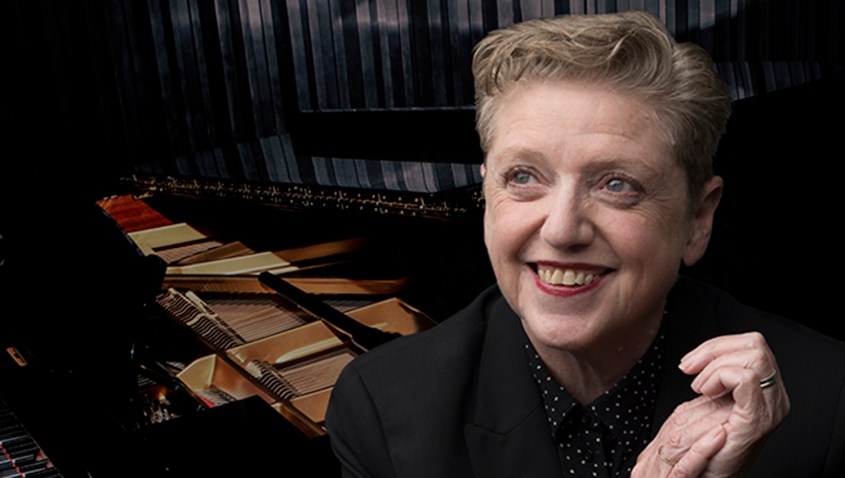
Australian luminary and chanteuse Robyn Archer takes her Melbourne audience through a journey of harsh cityscapes and loving sentiments in Que reste t’il (What Remains?). I suspect the ‘What Remains?’ of her performance is an ode to the love affair we have with French music and how ingrained it has become within our popular culture.

RobynArcher.jpg

What is so enthralling about Archer’s performance is her engagement with her audience. When an awkward twenty-something seated beside her relatively conservative mother can both burst into song along with the crowd, you know that the conductor of such an experience is of the gifted kind. The crowd is filled with those who have supported Archer for decades, and she certainly knows how to command them with her voice and wit.

Accompanied by Michael Morley on piano, and Paul Butrumlis on accordion, Archer’s music sails through the turbulent times of Paris from the late nineteenth century and as far as the 1970s – even stopping to deliver an outsider’s perspective of the city of lights in Cole Porter’s You Don’t Know Paree. Archer interspersed her songs with stories of the era – a charming education on the history of live performance, with decadent and tragic stories ranged from lesser-known artists to the crowded halls of the Dadaist movement. It is apparent in ‘What Remains?’ that Parisian cabaret was not afraid to regurgitate the city’s own horrors and grime, juxtaposed with the songs concerning quaint longings of love that perch in a higher place above the cityscape.

I found Archer’s ability to weave history through French songs a marvellous form of escapism. My eyes even misted over during a rendition of Marie-Louise Damien’s Pluie: Damien, as Archer explains, was a chanteuse of the Parisian cabaret lesser known than Édith Piaf, but her music was exquisite, as Archer showcases. From Jacques Brel (who’s music dominates the night), Archer takes on some comic short rides with Aristide Bruant’s It Takes Cash, the kitsch delight The Singing Nun’s Dominique and the steamy Serge Gainsbourg/Brigitte Bardot’s Je t’aime. ‘What Remains?’ is such a tasty and eclectic mix of tragi-ballads and humour, where nothing musical of the French variety is left unturned.

The night came to a roaring close with two comic renditions – Alouette where everyone chimed in, and a bastardisation of Piaf’s Non, je ne regrette rien. Archer and her team exited the stage with thundering applause behind them – we really wanted more than an encore.

Francophiles found themselves in a comforting terrain in ‘What Remains?’, and for those remaining, find themselves delightfully haunted by the songs that have pervaded their lives through various mediums over the years.

‘Que reste t’il (What Remains?)’ was performed at Melbourne’s Arts Centre, 10-12 November 2017. Follow Archer’s latest here: http://robynarcher.com/

Image by Claudio Raschella

Malthouse Presents THE TESTAMENT OF MARY

Listening for a voice

By Bradley Storer

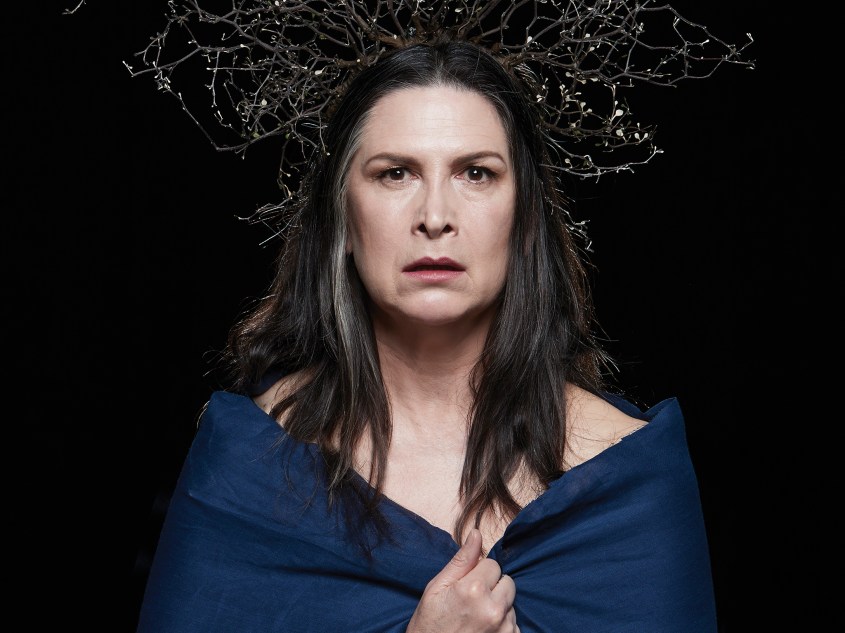
In the darkened corner of a modern apartment, a woman in blue is curled up weeping and clenching her fists. A stark blackout, and the same woman stands expressionless and walks into the kitchen to chop vegetables. With this bleak contrast of mourning and domesticity, The Testament of Mary begins to unfold the hidden story of the mother of God.

Testament of Mary.jpg

Colm Toibin’s script, adapted from his own novel of the same name, is certainly evocative, and the passages describing Mary following the trail of Jesus’ march to crucifixion, her vigil and eventual terrified flight from Golgotha are as heart-breaking as they are harrowing. While the aim of the play seems to be to break down our historical and religious pre-conceptions of Mary, in Testament she never emerges as enough of a fully-formed character to do this. In sections describing her situation years after the crucifixion, flashes of a full-blooded Mary emerges – in a poignant description of a chair left eternally empty waiting for its occupant to return, or in her bafflement in dealing with the outlandish declarations of her son’s former followers, we can see her humanity appearing. Once the play moves on to re-telling Jesus’ rise and subsequent downfall, however, Mary becomes a reactionary character with no agency to affect her own fate. She is simply shuffled around according to the actions and desires of other (mostly male) characters, whether it be her mysterious cousin Marcus or Jesus himself, but what Mary herself desires is very rarely evident.

Pamela Rabe works incredibly hard to form a character out of these materials, and the fact that Testament works at all as a dramatic piece can be credited entirely to her as a brilliant actor. The unrelenting darkness and bleakness of Toibin’s writing begins to feel almost monotone as the play goes on, which unfortunately the direction of Anne-Louise Sarks seems unable to combat. The contemporary apartment set by Marg Horwell and Paul Jackson – while maybe intended to divorce the story of its distant historical context – alas adds nothing to the overall meaning. Steve Toulmin’s compositions and sound design, while sometimes overused, add subtle poignancy and gravitas to several key moments.

The Testament of Mary is described as having the goal of ‘to examine how myths are made, and to question who has the power to tell them’ but never offers up a strong enough voice of its own or an alternative to accepted mythology. The key divergence from biblical text, that Jesus was not the son of God, doesn’t feel like enough of a dramatic twist to build the entire plot upon. For a play about the historical silencing of women and the narrative exclusion of the feminine viewpoint, The Testament of Mary feels oddly voiceless.

Dates: 3 – 26th November

Venue: Merlyn Theatre, The Malthouse, 113 Sturt St, Southbank VIC

Times: Tuesday 6:30pm, Wednesday – Saturday 7:30pm, Matinee Saturday 3pm, Sunday 5:30pm.

Prices: $35 – $69

Bookings: www.malthousetheatre.com.au , boxoffice@malthousetheatre.com.au , Ph: 03 9685 5111

Image by Zan Wimberley

Melbourne Festival 2017: THE WRAP WITH TAYLOR MAC

A glorious festival finale

By Bradley Storer

After finishing the rapturously received 24 Decades of Popular Music in America for this year’s Melbourne Festival, Taylor Mac returned to preside over the closing of the festival. From the very start, as Mac entered from the rear of the Forum Theatre and crowd-surfed over the people gathered at the front of the stage, an uninhibited party atmosphere prevailed. Mac (who uses the gender pronoun ‘judy’) was casually charismatic and commanding, describing the event as a collection of the queerest moments from the full 24 Decade show and with the aid of musical director Matt Ray and a small collection of musicians from the show judy certainly delivered!

TaylorMac the Wrap.jpg

The hyper masculinity of Bruce Springsteen’s ‘Born to Run’ was used as the back drop to a clandestine gay romance, the Supremes’ ‘You Keep Me Hanging On’ (aided by the magnificent vocals of guest singers Steffanie Christi’an Mosley and Thornetta Davis) soundtracked the bus ride towards the Bayard Rustin march. Mac enlisted the audience to help re-enact the funeral procession of Judy Garland to the tune of ‘Goodbye Yellow Brick Road’ before the explosion of the Stonewall Riots in the Rolling Stones ‘Gimme Shelter’. The climax of the evening came in a spontaneous rendition of Prince’s make-out classic ‘Purple Rain’ where the division between audience and performers was broken down by what felt like sheer Dionysian joy, with tears and singing along in equal measure – as well as an incredible guitar solo from guitarist extraordinaire Viva DeConcini. The audience was then asked to dance with someone of the same gender (or for non-binary people, anyone of their choice) as Mac and Ray transformed a homophobic Ted Nugent song into a gorgeous slow dance at a gay junior prom, a beautiful and poignant ending to the high-octane evening.

The best was saved for last, with a song not from Mac’s 24 Decade show, as judy encored with a camptastic cover of Olivia Newton John’s ‘Xanadu’ as a tribute to the Australian audience, complete with mirror ball and costume designer Machine Dazzle back up dancing dressed as a disco butterfly. The crowd roared and begged for more, and the feeling of sad acceptance as Mac exited the stage was palpable: the sensation of waking from a wonderful dream and having to return to the real world.

A delicious and satisfying ending to a triumphant season at the Melbourne Festival, and we can only wait in anticipation for what the festival will bring next year!

Date: 22nd October, 2017

Time: 7pm

Venue: Forum Theatre, Flinders St & Russel St, Melbourne VIC 3000

Tetsuya Umeda’s SPECTACLE OF EXTRAORDINARY OBJECTS

Experiencing the the experiment

By Lois Maskiell

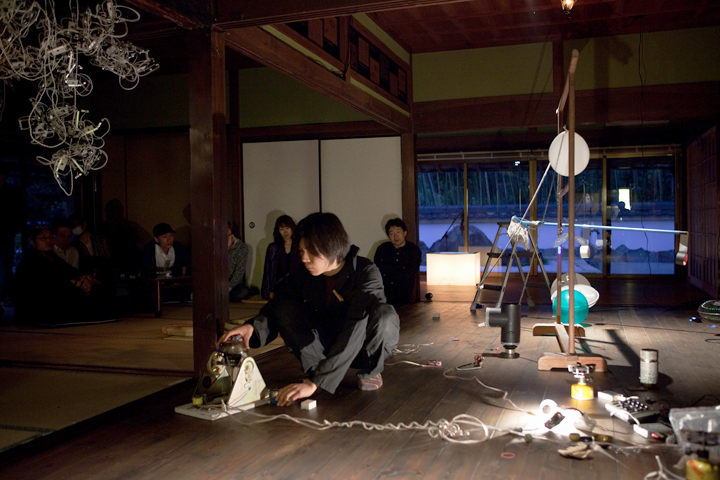
Attending Tetsuya Umeda’s performance at The Substation, Newport was akin to being held captive in a particularly entertaining science experiment. This one-hour piece featured the artist manipulating a range of objects, sound and light. These objects included portable gas stoves, loudspeakers, beakers, lamps and even bags of rice that he began to cook. Umeda’s artistry lies in turning these ordinary items into an extraordinary spectacle for the senses.

Umeda pic.jpg

The first feat of intrigue included Umeda swivelling a metal rod into a lump of dry ice. This rod, which had been heated in the flame of a gas stove made a bizarre screeching noise. Soon, on the opposite side of the room, a loudspeaker was lowered from the staggeringly high ceiling over the balcony. With this loudspeaker dangling from a long string mid-air, the site-specific nature of Umeda’s work was revealed. The relationship between object and space lurched before your eyes.

Umeda meandered carefully around his constructed environment, tweaking items and causing reactions, of many kinds. As objects flew into the air, audience members gasped instantaneously. These knee-jerk reactions brought the audience together in a shared, visceral experience.

The most memorable assemblage was an enormous glass bowl with a flickering light bulb placed inside it. Umeda filled the bowl with water and left his audience to marvel at both the danger and beauty of electricity in water. Umeda continued by crumbling dry ice into the water, creating a hypnotising layer of white smoke that emerged like a snake from the bowl.

For audiences unaccustomed to performance art, this piece could either be an exciting and novel experience or an introduction to a genre of art that often demands significant commitment on the audience’s behalf to stay engaged. Chasing the next cluster of objects to implode/explode was part of the game. Umeda’s performance emitted an overarching sentiment of intrigue and alertness, though the final question remains: did he eat the rice?

Presented by The Substation and Liquid Architecture in association with Performance Space and Room40, Tetsuya Umeda’s work was at The Substation, Newport October 30 – November 04, 2017.

Taylor Mac’s 24 DECADE HISTORY OF POPULAR MUSIC IN AMERICA

A transcendent performance experience

By Bradley Storer

‘Everything you’re feeling is appropriate….

…This is going to go on a lot longer than you’re gonna want it to.’

These were some of the guiding words from American cabaret titan and performance artist Taylor Mac (who uses the gender pronoun ‘judy’) as we embarked on a colossal undertaking for both the performer and us, the audience. 24 hours in total of performance, divided into four six-hour chapters, with each hour dedicated to a decade of American history and the music that was popular during the time, leading all the way from the late 1800’s to the present day. Mac was aided by the mammoth musical talent of musical director Matt Ray (who arranged all 246 songs in the show), 24 separate costumes by mind-bogglingly creative designer Machine Dazzle, a crew of ‘Dandy Minions’ composed of local performers from all genres, as well as a 24-piece ensemble of musicians and backing vocalists who were reduced by one every hour until finally Mac was left alone onstage. This ‘radical faerie realness ritual sacrifice’, as Mac described it, had already been performed piecemeal over the past five years and finally as a complete 24 hour cycle last year in New York, and now came Melbourne’s chance to sample this incredible piece for the 2017 Melbourne Festival.

Taylor Mac.jpg

The ‘sacrifice’ aspect of the ritual was the audience itself: sacrificing our time, our sense of self and inhibitions as our boundaries slowly broke down. Describing the disparate parts of the show seems maddeningly insufficient – not only the content but the simple act of being there and experiencing it in the moment, the collective build-up over the course of the four performances, was an essential part of the overall effect of the work. The continuing theme in each decade was of a community or group breaking apart and coming together during a state of crisis, and Mac informed us that a formative experience for both judy and the show was judy’s first encounter with the LGBTIQA+ community – a San Francisco AIDS walk at the height of the epidemic, where the affected members of the community were united and celebrating despite the disease tearing them all apart. In the combined 24 hours the audience spent with Mac, we began to form our own makeshift community amongst ourselves and with the performers.

The epic journey upon reflection feels like a collection of kaleidoscopic images blurring together at the edges. We witnessed the birth of America in a re-enacted dandy’s (as in ‘Yankee Doodle Dandy’) revenge, the beginning of the women’s movement with a surprise guest appearance from Australian cabaret goddess Meow Meow, the influx of alcohol and the subsequent battle between the temperance movement and American drinking culture (here represented by Mac as the chaotic jester/drunken best friend ‘Crazy Jane’). The travel and settlement of Irish immigrants and the displacement of the Native Americans told through a ‘hetero-normative jukebox musical’, the audience blindfolded for the best part of an hour to evoke a parallel to the suffering of the people on the Trail of Tears, before the form and the chapter itself was ripped apart by a Native American child breaking free of white colonialist narratives and (in a meta-twist) from Mac as well.

The American civil war became a free-for-all ping pong ball barrage between the audience members, leading to an awkward dinner party with Mac as the presiding matriarch trying to keep peace in the rebuilding of the nation – to distract us, Mac and the entire company enacted an off-the-wall version of Gilbert and Sullivan’s The Mikado stripped of its Orientalism and colonialist undercurrents by setting the action on Mars. Sections of the audience were brought up onstage to imitate the overcrowding of the boroughs of New York during the rise of immigration from Europe, before World War I tore the men (and male-identifying people) from the rest of the audience as they were conscripted and sent off to battle. The Golden Age of post-World War I jazz, represented here in a star turn that nearly stole the show by Melbourne cabaret icon and community activist Mama Alto, was shattered by the Depression but spirits were kept afloat by an audience-wide visit to a (metaphorical) soup kitchen, with actual (and delicious!) soup. After World War II, the white audience members were displaced from their seats and asked to stand at the sides of the theatre to simulate white flight to the suburbs, while people of colour were encouraged to move to the front and make themselves comfortable as a symbolic reparation for centuries of oppression world wide. We all clambered onto the freedom train as we rode the bus to the Bayard Rustin March, with strains of Bob Dylan and the Supremes accompanying the trip. The Cold War morphed into a battle between two giant inflatable phalluses decorated with the American and Soviet flags, followed by a rapturous orgy of joy in a 70’s backroom sex party heralded by Mac’s glorious version of ‘Purple Rain’, before we were birthed onto the bleak shore of the modern age in the harsh searching eye of a spotlight during a hushed and soul-piercing ‘O Super Man’. Nearly the entire cast swept away in the horrific torrent of the AIDS crisis, three skulls over Mac’s head weeping glittery tears for the lives lost to the disease. Mac inviting all the lesbians in the audience onstage for a radical lesbian party to celebrate an under-appreciated section of the queer community and as recognition for their tireless work to hold the community together and care for the sick. Mac finally left alone onstage, draped in a gigantic glittery vulva dress, accompanying themselves on the ukulele and piano in judy’s own compositions.

The sheer scope of 24 Decade is gargantuan, and watching the show was like entering an alternative universe – guided by Mac’s penetrating and rigorous intellect, the six-hour segments of the show passed by with surprising quickness. Mac continually told us that judy’s role was not a teacher or mentor but a ‘reminder’ of things that had been forgotten or buried by ourselves or others before us. In this vein, judy reminded us that this was not a ‘safe space’ because no such place exists in reality; we were never allowed to grow comfortable in our seats, called upon constantly to engage either physically or mentally with what was occurring before us. The audience, at first reluctant, began to engage with more and more enthusiasm as the hours passed, and it seems at one time or another that every section of the audience, from youngest to oldest, was represented onstage in some way.

Mac was unflappable across the entire span of the 24-hour show, never forgetting a single lyric and judy’s powerful voice never failing for even an instant. Dazzle’s intricate and endlessly creative outfits were a true spectacle that fascinated with their level of detail. The rotating cast of musicians and singers who supported Mac were uniformly excellent, with special mention to singer Steffanie Christi’an Mosley whose incredible soulful voice made even singing the alphabet a spiritual experience, and guitarist Viva DeConcini who blistered the audience with solos throughout, but absolutely claimed the stage during the famous solo in ‘Purple Rain’.

Every description of the event feels absolutely inadequate. As Mac explained at the very beginning of the show, the subject of worship in this ritual was not the noun, but the verb – the act of creation itself as both the subject of our worship and our form of worshipping, hence even trying to describe what a 24 Decade History managed to achieve feels impossible. In the current bleak political climate world-wide, this felt like a hopeful, joy-filled vision of a potential world in which the outsider was celebrated, the disenfranchised empowered, and queer reigned supreme.

The audience was left alone in darkness, many weeping, clinging together and pleading for this world not to end, singing the words of Mac’s final refrain:

‘You can lie down, or get up and play’.

A challenge to take the world we had just envisioned, and bring it to life.

Taylor Mac’s 24 Decade History of Popular Music in America was performed Wednesday 11th / Friday 13th / Wednesday 18th / Friday 20th October 2017 at The Forum Theatre, 154 Flinders St, Melbourne.