Category: Whats On

Kin Collective Presents SHRINE

Intelligent and invested production of Winton’s play

By Tania Herbert

Starting with an Acknowledgement of Country and transitioning straight into an Australianism-filled train-of-thought dialogue, it was immediately evident that we were in the theatre with one of Australia’s most celebrated writers, Tim Winton. Shrine is one of Winton’s three Western Australian-based plays, presented by Kin Collective and directed by Marcel Dorney.

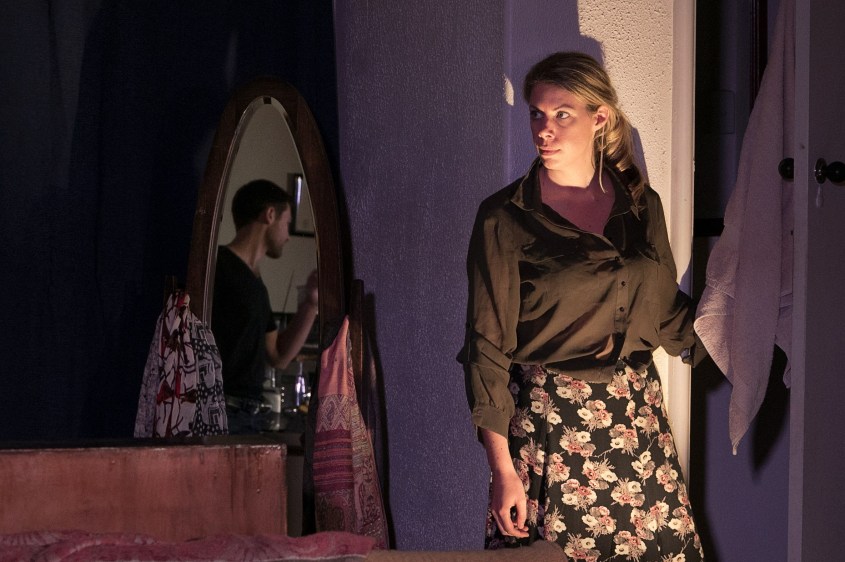
Shrine.jpg

The script content is not happy fare, telling the story of teenager Jack Mansfield (Christian Taylor) and his untimely death from a car accident that his bratty and drunk grammar-school friends (Nick Clark and Keith Brockett) manage to walk away from unscathed. His grieving parents (Chris Bunworth and Alexandra Fowler) find themselves struggling to come to terms with both their loss and their disbelief at the events as related by his school mates.

The catalyst come through interactions with June (Tenielle Thompson), an enigmatic and almost ghost-like character, who appears to Jack’s father Adam. She offers the chance for him to gain a last insight into his son, as she tells stories of moments from her long-term school-girl crush on Jack.

The central character of Adam – a stoic, grieving father filled with barely-contained rage – was masterfully captured by TV and theatre veteran Bunworth. The emotional range of both character and actor were engaging and believable, driving both the story and the emotion. Thompson as June plays counterpoint to his layers of emotional depth with a likeable and steady performance.

Dorney’s staging greatly added to the allure of the play, with the brick shrine centre stage functioning poignantly as prop, emotional barrier, or transitional object. This, with the heavy proscenium border and ambient soundtrack made the performance space reminiscent of a live cinema, with characters stepping from screen into the audience, beautifully capturing the theme within the play of moving between life and fiction.

The build-up and resolution were unpredictable, nuanced and somehow satisfying, in typical-Winton style. However, unfortunately there are serious eye-rolls evoked by the storyline’s gender stereotyping (quite touchingly reflected upon by the director in his program notes), with female characters presented only as passive recipients of abuse and grief. There was little Fowler could do with the character of Mary Mansfield as the wailing wife, who appears only to howl, berate her husband and embark on soliloquies of childbirth and motherhood. Her one short scene of a sweet memory with Jack is the only time she gets to be her own woman, and becomes a particularly moving moment of performance. The sections of stunted, overlapping sentences typical of Winton felt a little unnatural as more prose than dialogue – though the director used them to advantage, giving a lofty Greek-chorus feel to the unwinding of the tragedy.

Thus despite some script limitations, the direction and performances here are strong, the play engaging, and the lighting (designed by Kris Chainey) is just gorgeous. Fortyfivedownstairs was the perfect venue for a dive into what lies under the surface of Australian culture in Shrine.

Shrine is on at fortyfivedownstairs, May 24 – June 18, Tuesday – Saturday 8pm, Sunday 5pm.

Bookings: 02 9662 9966 or online at  http://www.fortyfivedownstairs.com/wp2016/event/shrine-tim-winton/.

Ticket price: $30-45.

N.B. Shrine is part of 2017 VCE Drama Studies Unit 3 Curriculum – Thurs 1, 8 & 15 June 11am school matinees are for school groups only.

Malthouse Presents WILD BORE

Frightfully funny

By Caitlin McGrane

Where to even begin with this one? My best friend and I have this long-running joke where we text each other photos of slightly out-of-place objects, like an abandoned sock on the ground or a lonely piece of graffiti on a wall, alongside the caption, ‘but is it art?’ I’m not sure quite how this started but it never fails to make me laugh. And this week while I watched Wild Bore at The Malthouse I was reminded of this joke because it seemed as though the creative minds behind this project may have been in on it as well.

Wild Bore Tim Grey Photography.jpg

The production starts with bottoms. Gloriously unfiltered female derrières proudly presented to a somewhat bemused audience. This is a show about answering your critics (or is it?) and the opening (pun 100% intended) sets the tone from the start – this is going to be fun and deeply bonkers. Zoë Coombs-Marr, Ursula Martinez and Adrienne Trustcott led us up and down on a wild, wild ride. The show is extremely visual, with most of the show a long-running graphic joke about sticking stuff up your bum. It also features probably the most wonderful and well-executed knob gag I’ve ever seen. It was amazing. I loved it.

After years of writing about film and theatre, wanting to tear my eyes out with rage and disappointment at yet another ‘sad heterosexual white boy’ play about a moody woman who just. won’t. love. him, I was practically punching the air with joy at the end of Wild Bore. I can’t count the number of times I’ve wanted to stand up in a theatre and scream ‘WHERE ARE THE WOMEN?’ and this show seemed like the perfect, jaw-achingly funny reply to this question, which is that we’re here, and we’re not fucking going anywhere.

Happily, the show didn’t feel like it had a paucity of representational identity politics, Coombs-Marr, Martinez and Trustcott spoke for themselves, on their own terms and with their own real voices. They were joined all too briefly by Krishna Istha who lit up the stage with their dazzling consciousness-raising speech demanding better treatment and representation of people of colour, trans and gender non-conforming people in the arts. I was utterly blown away by this show and am beyond thrilled to see Coombs-Marr, Istha, Martinez and Trustcott setting the bar so high for truly interesting theatre.

The show was well-supported by set and costume design from Danielle Brustman (I want a pair of those bum-less trousers to use in reply whenever men tell me to smile), sound design from Raya Slavin and lighting design from Richard Vebre truly helped sustain the laughter, while stage manager Harriet Gregory made some excellent deliberate dramaturgical decisions.

This show deserves support not just because it includes better gross-out humour than Bridesmaids but also because it makes no apologies for doing exactly what you’re ‘not supposed to do’; by answering and gently mocking critics, the performers allow us to see how ludicrously seriously we sometimes take ourselves, including the impossibly high standards we set for performers, especially women. Tearing down expectations is not the same as tearing down critics, and this show demonstrated how wonderful that can be.

Wild Bore is now showing at The Malthouse until 4 June. Tickets and more information: http://malthousetheatre.com.au/whats-on/wild-bore

Image by Tim Grey Photography

StageArt Presents SPRING AWAKENING

Ambitious take on audacious musical

By Bradley Storer

Spring Awakening, the rock musical which first revolutionized the modern conception of musical theatre over ten years ago on Broadway, is a strange beast – the text derived from Frank Wedekind’s controversial late-ninteenth-century play, combined with contemporary rock/pop/folk songs composed by Duncan Sheik and Steven Sater that are specifically designed to stand apart from and explore the action of the plot rather than to advance it as in traditional music theatre. Resolving this division between the music and text requires strong direction and a conceptual framework that can bridge these two elements.

Spring Awakening.jpg

Director Robbie Carmellotti has made big and bold offers with this production, and I thoroughly respect and applaud his efforts in exploring new pathways to interpret a modern classic. However, elements of this production did not fully succeed: the decision to have characters play their own instruments at different points (which all but vanished by the second act) didn’t add anything in particular to the meaning or understanding of the show – the central conceit of nineteenth-century German school children morphing into teen rock stars is already so strong on its own that it doesn’t need this addition. The appearance of handheld microphones as part of this overall metaphor, while an inherent part of this show, becomes overused in this production and feels forced into several unnecessary moments. The decision to have the cast speak their dialogue in German accents and to sing in American accents, which again I appreciate as an attempt to underline the distance between the characters and their inner ‘rock stars’, is unfortunately undermined by a lack of consistent accents across the entire cast. And finally, the re-orchestration of Sheik’s music at certain points deadened the impact of this vital and pulse-raising score, the loss of electric guitar in ‘The Bitch of Living’ turning the number into a country-fied hoedown that lacks the energy and guts of the original.

Brent Trotter is wonderful as Moritz, the anxiety-riddled schoolboy who befalls a terrible fate, managing the character’s difficult journey with great emotion and a gorgeous contemporary voice. As Wendla, Jessie-Lou Yates works hard and tirelessly throughout, but feels slightly miscast in reading as too old to be a young girl undergoing puberty. Ashley Roussety as Melchoir, the closest the show has to a central character, has the opposite problem – he looks perfectly cast as the charismatic and fiercely intelligent protagonist and delivers a credible performance in the first act, and is particularly impressive in Zoee Marsh’s choreography for ‘The Mirror-Blue Night’. However, in the second act he begins to feel a little lost in the role as the story races to climax, losing the emotional impact of the tragic but hopeful conclusion.

The supporting cast, in contrast, are uniformly excellent. Henry Brett steals the entire show as the effete Hanschen, drawing raucous laughter in his two big scenes. Luisa Scrofani impressively shreds the bass guitar as she emotionally tears into the bleakness of ‘The Dark I Know Well’. Grace Browne shines as Thea, and Alice Batt plays both violin and the role of Anna beautifully. Olivia Solomons manages to effectively differentiate every one of her multitude of female adult characters, but sadly Barry Mitchell as her opposite is less successful as parts blur together with similar vocal tone and physicality. The entire ensemble offer up heart-touching loveliness in the complex choreography and choral harmonies of ‘Touch Me’, one of the production’s stronger moments, and showcasing some stunning riffing from Jordan Mahar as Georg.

While this production may have its problems, StageArt should be commended for their commitment to offering contemporary and challenging musicals, and the entire creative team and cast congratulated for attempting a new approach to this much-loved and ground-breaking piece.

Dates: 19 May -10 June

Venue: Chapel off Chapel, 12 Little Chapel St, Prahran.

Times: Wed – Sun 7:30pm, Matinee Sat & Sun 1.30pm, Sun 21st May 4pm

Prices: $49 – $79

Bookings: chapeloffchapel.com.au, (03) 8290 7000, at the venue box office.

Opera Australia and John Frost Present MY FAIR LADY

Lush, lovely and loyal revival

By Bradley Storer

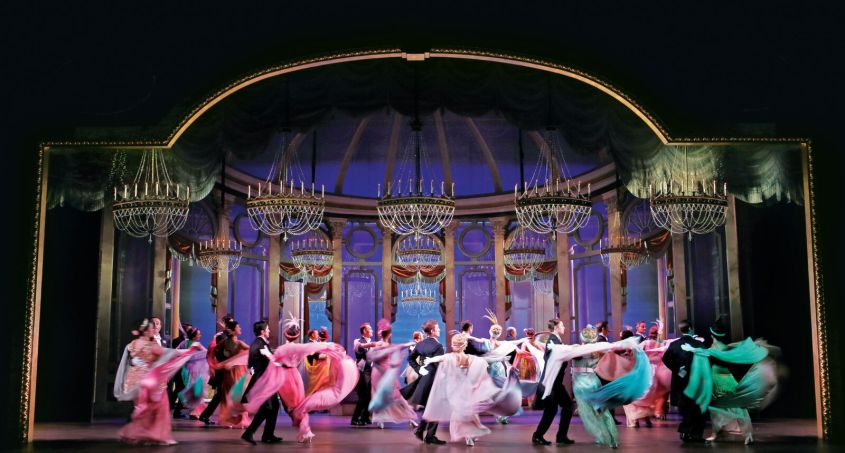
Rapturous strings and a painted scrim of the Thames welcomed the audience into the world of Edwardian-era London on the Melbourne opening night at My Fair Lady. This production under the direction of the original Eliza Doolittle, Dame Julie Andrews herself, hums with vitality, and with sets and costumes modelled on the original Broadway production (by Oliver Smith and Cecil Beaton respectively) one can feel the wonder the show must have provoked in the audience of yesterday, the Ascot Gavotte a particular moment of sheer visual loveliness.

My Fair Lady Photo by Jeff Busby.jpg

Anna O’Byrne is perfectly cast as Eliza. Her silvery soprano handled the score with ease, deploying Eliza’s feistiness and vulnerability in equal measure, and winning the audience’s heart in all her iconic numbers – but especially in the giddy and rapturous ‘I Could Have Danced All Night’. Her standing ovation at the end of the night was well-earned.

Charles Edwards manages to find the heart and humanity in the often reprehensible Henry Higgins, but doesn’t shy away from his acid tongue or biting wit in ‘Why Can’t The English?’ and ‘Hymn to Him’, managing to adroitly combine the ‘talk-singing’ style of the originator Rex Harrison with moments of understated lyrical voice to create a more individualised interpretation.

As Higgins’ closest confidante, Colonel Pickering, Tony Llewellyn-Jones is charmingly hilarious in the duo’s back and forth and in his own small moments onstage. Robyn Nevin as Mrs Higgins steals the show effortlessly with just a few lines, subtly suggesting where Henry has inherited his quick wit and turn of phrase from.

The scene-stealing role of Alfred P. Doolittle is here played by Reg Livermore, who places his own stamp upon the part and nails the cheeky paean to laziness ‘With a Little Bit of Luck’. As the lovesick Freddy, Mark Vincent has a lush and easy vocal tone, delivering a lovely ‘On the Street Where You Live’. The ensemble are fantastic throughout, bringing superb energy and vivacity to their characters and shining in Christopher Gattelli‘s choreography for ‘I’m Getting Married in the Morning’.

There has been critical discussion over whether certain elements and the ending of the musical should have been changed for this new production, and indeed on opening night there were moments where the blatant misogyny of Higgins drew audible gasps from the audience – since this has been staged as a recreation of the original 1956 production, I felt that trying to sanitise the darker undertones of the show that are more apparent to society today would be dishonest. It is doubtful the work can ever be described as ‘feminist’, since the musical seems to be more actually focused on Higgins’ journey than Eliza’s and concerns itself more with the effects of the class system rather than gender, but by refusing to soften the sheer awfulness of Higgins’ character it can be argued the production maintains a measure of integrity, even as it is slightly baffling why the newly self-empowered Eliza would choose to return to him.

Overall, a charming and beautiful revisitation of a classic sure to delight any audience!

Dates: May 16th – July 27th (Melbourne)

Times: WednesdaySaturday 7:30pm, Tuesday 1pm, Wednesday 1pm, Sunday 3pm

Venue: Regent Theatre, 191 Collins St, Melbourne

Bookings: Ticketmaster.com.au or the venue box office

Image by Jeff Busby

Daniel Lammin and MUST Present AWAKENING

A stunning reimagining

By Bradley Storer

Frank Wedekind’s play Spring Awakening – a tale of sex, violence, and the messy transition from child towards adulthood – is a classic of the twentieth century, incredibly explicit and shocking for the conservative times in which it was written and instantly banned. Awakening, an adaption of the original Spring by director Daniel Lammin comprised of five actors (Nicola Dupree, Samantha Hafey-Bagg, Eamonn Johnson, James Malcher, Sam Porter and Imogen Walsh) all sharing and swapping roles, seeks to unpack and re-examine the issues raised in the original play to see if anything has changed.

Awakening.jpg

Oddly enough, it is when the play sticks close to its source material that it feels slightly flat – the earlier, more traditional scenes seem to drag and lack energy despite the commitment of the cast and a wonderful sound design (constructed by Porter) that enlivens every scene. As more stylized and less naturalistic conventions take over, the true and more thrilling theatre begins to appear. Hansy’s masturbatory monologue has never been more intimate and enthralling, and the darkness and horror of the barn scene chills the blood, Wendla’s terrified whispers echoing in the blackness.

The second act, which breaks completely with the setting and costuming of the original text, is where Awakening truly comes into its own. Here Wedekind’s play is cracked open and re-examined in the light of modern society, the most obvious connection being the continuing prevalence of youth suicide and disconnection from each other even in an age where technology connects us in more ways than ever, depicted here in funny and finally tear-inducing series of text messages that pinpoint that tenuous dance between the desire to reach out and the fear of the vulnerability inherent in doing so. The cast are brilliantly versatile, swapping roles with ease, singing multiple harmonies on many occasions and even playing instruments for a Freddie Mercury song.

The final, brilliant revelation this re-examination comes to is an uncovering and denouncement of the original Spring Awakening’s support and perpetuation (whether intentionally or unintentionally, but it is made clear that this makes little difference) of rape culture, pointing out a hideous contradiction in thinking that feels both stunningly obvious and horribly insidious.

Lammin and the cast should be incredibly proud, Awakening is shocking in the best sense of the word: a true ‘awakening’.

Venue: Fortyfivedownstairs, 45 Flinders Lane, Melbourne.

Dates: 10th – 21st May 2017

Times: Tuesday – Saturday 7:30pm, Sunday 5pm

Price: $25 – $35

Tickets: 03 9662 9966 or fortyfivedownstairs.com

Malthouse Theatre Presents AWAY

An Australian fever-dream

By Leeor Adar

The Sydney Theatre Company/Malthouse collaboration of Michael Gow’s modern classic Away opens with Mendelssohn’s A Midsummer Night’s Dream to stir the summer heat from the stage to warm this Melbourne audience in winter.

Away

Matthew Lutton’s blaze through the Malthouse Theatre (and now as Artistic Director) has brought Melbourne audiences some extraordinary and outlandish theatre to feast upon in recent seasons. The announcement that Away would be on the banquet table for procuring no doubt left many theatregoers with a morbid curiosity. The matrimony between the rugged Australian summer depicted in Gow’s writing and director Lutton’s horror dream of dancing animal skulls somehow takes this classic to new contemporary heights. Yes, Dale Ferguson’s costume design keeps us well within the bounds of the 60s, but his set complies with the post-modern theatrics we’ve come to expect from the Malthouse under the gaze of Lutton. Lutton injects into Gow’s world a kind of dystopian synchronicity that plays out as the actors dance in formations together like glamourous zombies trying to forget their realities to Stephanie Lake’s choreography.

What we have depicted in Away is an Australia of then which is not that much different from the Australia of today. Everyone has high hopes for the Aussie dream, but even in the most comfortable homes the world outside will always rudely awaken us. What unites the families of Tom (Liam Nunan) and Meg (Naomi Rukavina), our high school would-be, could-be, not-be lovers, is the quiet sadness and acceptance of a life that was hard-won. The fear that something could steal the dream away lurks beneath the happy exteriors of (most) of Gow’s characters, and becomes a focal point of the play. That dream is already stolen from Roy (Glenn Hazeldine) and Coral (Natasha Herbert) through the loss of their son in the Vietnam War. Herbert’s Kim-Novak look-alike Coral continuously treads the line between reality and the past, slipping further and further away from the desperate grasp of her husband. Coral is not mad because Roy cannot control her; she is in such a deep state of grieving that the Aussie dream is well and truly lost for her. Herbert gives Coral a fluid naivety damaged by tragedy; her performance is one of the heart-breaking standout’s alongside Liam Nunan’s Tom.

Amongst the great pretenders are Vic (Julia Davis) and Harry (Wadih Dona) who manage to live in the moment as they watch their son Tom slip away from them due to his illness. We know the inevitability of grief will befall them, and they too may just stop smiling through their sadness and join Coral on her faraway shore.

In contrast we have the couple whose great tragedy is staying together, existing in a chronic state of unhappiness in which no holiday can salvage. Heather Mitchell’s Gwen is marvellously funny and annoying as her shrill voice drains her family of any moments of joy; a complacent husband Jim (Marco Chiappi) continues to accept his lot with a resigned shruggery. Their family is one blessed with health, but they are not untouched by the life of having lived as battlers-come-good. Gwen’s chronic state of stress is indicative of another kind of grief, one where a lifelong sacrifice for a future yet lived leaves traces of bitterness.

This is still a sensitive and poignant production by Lutton amidst the jarring devices of non-naturalism that threatens to break down the walls of their world. Audiences will be surprised from the outset of this play; if they are expecting a classic re-telling of Away they will be in for an awakening – but it really is a very good one.

Away will grace Melbourne audiences at the Malthouse Theatre until May 28th. Collect your tickets here: http://malthousetheatre.com.au/whats-on/away?gclid=Cj0KEQjwoqvIBRD6ls6og8qB77YBEiQAcqqHe6-xVP730ooUfRIBdx6VZ67CrJxYFl3Ytuu3-bHvzQcaAulB8P8HAQ

North of Eight Presents TOYER

Inviting strangers to play

By Myron My

North of Eight is Melbourne’s new theatre company on the block and they return this month with their second show of their inaugural season, Gardner McKay’s Toyer. The Australian premiere of this psychological thriller takes place over roughly 24 hours with a stranger entering a woman’s life at a time when the city is being terrorised by a man who rapes his victims before lobotomising them.

Toyer4_ActorFaranMartin_PhotobyArunMunozPhotography.jpg

Maude (Faran Martin) is a clinical psychiatrist who lives alone in her LA home in the hills and has recently drawn the attention of an unknown voyeur who watches her in the evenings. Peter (Kashmir Sinnamon) is a stranger who has just repaired Maude’s car and needs to use her phone to call his friend. With the “toyer” on the loose, so-called because he toys with his victims before he attacks, it might not be the safest option to let Peter inside, but he’s charming and friendly and makes Maude laugh, so should the risk outweigh the temptation?

Originally published in the early 90s, this play is unfortunately beginning to show its age, and what might have constituted suspenseful and dramatic material originally now results in frustration and disbelief at how the narrative progresses and the decisions the characters make. Coming in at just over two hours, the story becomes repetitive especially with the initial game of ‘will he or won’t he leave?’, and ‘is he or isn’t he the toyer?’ quickly wearing thin. There are some preposterous plot twists that occur, whereupon by the time the truth is revealed, there is very little surprise or interest to be had, and nor do we care what the fate of these characters will be.

While there is some thoughtful direction by Sarah Hallam that allows the actors time to fully comprehend the circumstances their characters find themselves in, there are moments when Martin’s performance seems too theatrical and the emotions her character expresses feel somewhat forced. Maude never feels genuine in her terror, the fault of which lies mainly with her character development in the story. However, there are instances when Sinnamon brings darker human elements to the surface with Peter that are able to ignite some interest from the audience – yet even this achievement can only be maintained for so long with this character before it starts to become predictable.

It really feels like McKay was so determined to create a thriller with Toyer that he ignored plot holes and the character development that could have kept his protagonists interesting and intriguing. Unfortunately the hard-working performances here suffer because of this, and there is unfortunately very little suspense to be felt. As a new theatre company, it would be great to see North of Eight performing more inspiring and contemporary works rather than this decades-old play that demands a lot from its audience and actors with very little pay-off.

Venue: The Courthouse Hotel 86 Errol St, North Melbourne. 

Season: Until 13 May | Tue – Sat 8pm
Tickets: $28 Full | $22 Conc 
Bookings: North of Eight

Image by Arun Munoz Photography

David M. Hawkins Presents CABARET: THE MUSICAL

Go like Elsie

By Bradley Storer

This production of Kander and Ebb’s Broadway classic Cabaret, opening in Melbourne after a sold-out Sydney season, left me with incredibly mixed feelings – a collection of fantastic elements that never quite coalesces into a satisfying whole. The set, itself a stylized stage surrounded by nightclub seating that neatly blends into the first few rows of the Athenaeum Theatre, suggests a blurring of the line between performance and reality but this is never capitalized on in the show itself. For a musical that should seem eerily relatable in our current political climate, it never becomes quite clear what message this production is trying to deliver.

cabaret-the-musical-chelsea-gibb-sally-bowles.jpg

Australian cabaret and theatre legend Paul Capsis easily inhabits the role of the Emcee, here depicted like a grotesque ventriloquist’s dummy, and even though he spends most of the evening onstage watching and occasionally assisting in the action he feels oddly under-utilized – darting in and out of scenes, it feels as though we are never given the chance to savor and drink in Capsis’ unique stage presence.

As the central character Cliff Bradshaw, Jason Kos does a fine job in the first act of delineating the character’s stiffness melting away into sexual awakening but his performance became oddly disjointed and robotic towards the climax of the musical which robbed the more tragic moments of any poignancy. In contrast, Chelsea Gibb as Sally Bowles gives one of the best performances of her career, finding the desperation and insecurity lurking under the flightiness and affected ‘little girl’-ishness that Sally constantly projects as a way of escaping her problems. Even as she flees from reality and responsibility, you feel incredibly sorry for her.

The supporting cast as a whole are wonderful. Kate Fitzpatrick and John O’May as the elderly Fraulein Schneider and Herr Schulz had a lovely chemistry, making their ill-fated romance all the more heart-breaking. Deborak Krizak as Fraulein Kost brings her un-erring physical comic chops, and in the final scene even manages to bring a tragic dimension to the character’s fate. The ensemble execute Kelley Abbey’s choreography with ghoulish panache and deliver strong performances in small cameos throughout the show.

Sound issues plagued the entire performance I attended, with a few missed cues and microphones randomly switching off, which would be understandable on opening night – but immediately before she could start singing the title number of the show, Gibb’s microphone completely cut out. She was forced, with the loving insistence of the onstage Capsis and an off-stage yell from director Gale Edwards, to leave the stage completely mid-performance to have her microphone replaced. Capsis sweetly vamped onstage for time before he was given the cue to re-introduce Gibbs onstage, to overwhelming and supportive applause from the audience.  When Gibbs began her number again, the sound issues continued with wash-over from other mics backstage coming through – nevertheless, Gibbs rose above circumstance and knocked the ball out of the park with a performance of the titular song ‘Cabaret’ that not only demolished the hearts of the audience but, astonishingly, even managed to banish any memory of Liza Minnelli’s iconic rendition. It was one of the most electrifying moments I’ve ever experienced in the theatre, and generated a mid-show (and well-deserved) standing ovation.

While the production itself does not always rise to meet such lofty standards, theatre-goers should rush to see this performance for the ages!

Venue: Athenaeum Theatre, 188 Collins St, Melbourne

Dates: 27th April – 20th May

Times: Monday – Saturday 7:30pm, Matinees Wednesday 1pm Saturday 2pm

Tickets: ticketek.com.au, Ticketek outlets or at the venue.

Image by John McCrae

THE RABBLE Presents JOAN

Magnificent

By Myron My

It was only a matter of time before experimental feminist theatre company THE RABBLE decided to take on the life of Joan of Arc, the woman who helped France win the war over Orléans and was later burnt at the stake for heresy and cross-dressing. Twenty-five years after her death however, she was declared innocent of her crimes by the courts and was canonised in 1920. Her struggle and persecution is something that still resonates with us today, and with a fierce and poignant feminist perspective on her story, co-creators Kate Davis and Emma Valente bring her plight into a contemporary spotlight.

Joan.jpg

The show begins with a projection of an eye onto a scrim at the front of the stage. While it originally challenges the audience, there is a vulnerability and apprehension to the blinking eye that lingers in the room. The sound of burning logs and crackling wood as it continues to stare into the audience further builds on the unease and hints at what is to come. While we may know the story of Joan of Arc, there are still plenty of surprising and gripping moments to unfold in this production.

Joan‘s non-linear narrative structure explores significant moments in  life including her visions of angels and saints, the examination she underwent to ensure her virginity was intact, and her execution by fire – spectacularly and awfully brought to life on stage. These vignettes are used as a way of exploring not only Joan’s power and persecution, but also that of all women. The focus is not war or history but the person – the woman – and THE RABBLE construct a strong and commanding voice and presence for their protagonist through the evocative performances from its highly talented and dedicated cast.

The four Joans (Luisa Hastings Edge, Emily Milledge, Dana Miltins, and Nikki Shiels) initially appear behind the scrim of Davis’ set, with flashes of light illuminating them or capturing them briefly before the stage is enveloped by darkness once more. The music and Valente’s lighting create a haunting rhythm which, when paired with her adept direction of the cast with their ritualistic prayer-like movements, fills the room with a supreme intensity, emphasising the devout faith held by Joan.

The projections designed by Martyn Coutts are effectively used (particularly during the character’s aforementioned visions and examination), which allows for various complex feelings and thoughts to be cleverly depicted by the various Joans, complemented by the flawless lighting and sound effects.

While there are no authentic representations of what Joan looked like, in casting four women to play her, Joan allow her to embody womankind. While the only documents that exist of her speaking are those from her trial, this superb production expresses powerful words, emotions and ideas from and to her, and by extension, offers a voice to women across time.

Venue: Theatreworks, 14 Acland St, St Kilda 
Season: Until 30 April | Wed – Sat 7:30pm, Sun 5pm 
Tickets: $38 Full | $30 Conc 
Bookings: Theatreworks

Image by David Paterson

Melbourne Premiere of ALADDIN: THE MUSICAL

A show to grant all your wishes

By Jessica Cornish

Soaring into a world of imagination, music, sequins and rich Middle Eastern textiles, the iconic Disney-cartoon-turned-Broadway-musical Aladdin has hit the stage of Her Majesty’s Theatre, kickstarting Melbourne’s 2017 premiere season.

Aladdin the Musical.jpeg

Aladdin, under the clever direction and choreography of Casey Nicholaw, follows the fairy tale story of the street-wise orphan who unexpectedly finds himself master of a vivacious genie with the power to transform him into a prince and win Princess Jasmine’s heart.

The fast-paced musical closely mirrors the nostalgic cartoon in look and feel. The stage was luxuriously draped with backlit silk drops, hanging pendent lights and texturally rich Arabian rugs and patterns designed by Bob Crowley. A series of appropriately-themed new songs were composed for the stage musical that successfully complimented the original score maintaining the song’s original themes and overall feel, while the well-known favourites (composed by Alan Menken with lyrics by Tim Rice, Howard Ashman and Chad Beguelin) from the original score were all present. “Arabian Nights”, “One Jump Ahead”, “Prince Ali”, “Friend Like Me” and of course “A Whole New World” all dazzle on stage, with the latter successfully incorporating the illusive magic carpet effortlessly flying through a darkened backlit stage of speckled light.

The musical was well cast with impressive leads and a vocally and visually strong ensemble. Ainsley Melham (Aladdin) fit the build and imagination as the lovable lead: he was vocally precise with a solid appealing stage presence and when coupled with his petite co-star Hiba Elchikhe (Princess Jasmine), their characters had a beautiful chemistry together, (although I sometimes wasn’t sure if Jasmine was from the Middle East or the Bronx – there were a few inconsistencies across the board with accent choices).

Hands down Michael James Scott’s larger-than-life presence as the sassy blue Genie stole the show. Shaking the audience to life with topical Australian-tailored comedic references and oozing with glitter and energy, he riveted the audience with his songs and consistently provided comic relief for the narrative, which was well counter-balanced by evil doo-er Adam Murphy (Jafar), who literally seemed to be a delicious reincarnate of the cartoon character.

The sound quality, similarly to the lighting design by Natasha Katz, was vibrant and punchy however periodically Elchikhe’s voice was lost in the mix, overpowered by her male counterparts voices and instrumentation. Similarly, there were a couple of lyrics that were lost in the Genie’s numbers: however, I’m sure these minor sound issues will be quickly ironed out by opening night.

Overall, this musical has it all and is a perfect night out for children big (yes, even the adults won’t be able to resist) and small. This pacey, high-energy musical is gloriously bursting with colour and pyrotechnics and upbeat music. It opened in Melbourne this week, so take advantage of this while you can!

Where: Her Majesty’s Theatre, 219 Exhibition Street, Melbourne 3000

When: April 20- October 22

Wednesday- Saturday evening performances 8pm

Sunday evening performance 6:30pm

Wednesday and Sunday matinees at 1pm

Ticket prices range from $50-$195.00

Bookings: Call Ticketek agency 132 849, visit the website Tickettek.com.au or any Tickettek agency or the Box Office in Her Majesty’s Box Office opens two hours prior to all performances for door sales and ticket collections.