Category: Whats On

Theatre Works Presents ANIMAL

Core-shaking theatre

By Myron My

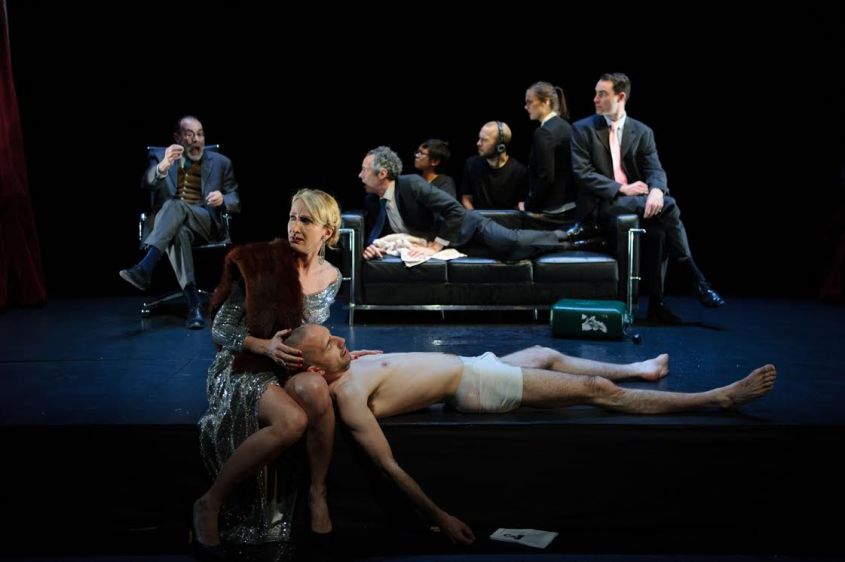
Watching Animal is a rare theatrical experience. It has such a visceral effect on you that you are left shaken and feeling extremely vulnerable and angry as you walk out. Created by Susie Dee, Kate Sherman and Nicci Wilks, it is an exploration of domestic violence and how women are meant to react in a world where violence against women and male brutishness are celebrated – and it is as gritty as physical theatre can be.

Animal.jpg

The stage design by Marg Horwell feels like a large shipping container; dark, cold and empty except for a number of small square cages. The two sisters climb and crawl over them, the whole time emoting that they are also caged, desperately looking for a way out. The tattered netting that covers the roof can be seen as protection from the outside, but with the many holes in it, it is only a matter of time before it is destroyed. 

Composer Kelly Ryall builds a suffocating and unsympathetic environment from the opening moments of the show, and is relentless in drawing you into the sisters’ world. There are moments in Animal where you feel like you need to look away as the horror unfolds, but even if you do (which you shouldn’t), the sounds are so vivid that they create the visuals for you regardless. There is one moment particular, where along with Andy Turner‘s lighting design, the shadows that form along the walls and menacingly envelops the two sisters involves some nail-biting tension and panic.

All these elements work meticulously together to support the two performers on stage. Sherman and Wilks show strong commitment, strength and stamina in their challenging roles. The duality (and also the blending) of playful sisters who depend on and support each other to hyper-aggressive fighters has a complexity that the two are able to authentically create on stage. The need to swap between these “characters” in seconds is not only a physical demand on their bodies but also an emotional and psychological one.

As with SHIT and The Long Pigs, Dee’s direction allows for moments that make us laugh, surprise us, and haunt us. With a show like Animal, pacing is extremely important and Dee ensures that there are adequate breaks between the truly dark moments of the show, so that by the time we reach the powerful conclusion we are completely engaged with the piece.
While there is no dialogue in Animal, it speaks volumes regarding the immense impact domestic violence and violence against women has on women: the violence that they experience and also the violence that it breeds. Compelling, gruelling and masterful work by Influx Theatre, Animal is raw theatre at its finest.

Venue: Theatre Works, 14 Acland St, St Kilda

Season: Until 27 November | Wed – Sat 8pm, Sun 5pm

Tickets: $35 Full | $26 Conc, Under 30, Groups 8+

Bookings: Theatre Works

Image by Pier Carthew
Red Stitch Presents UNCLE VANYA

Chekhov adaptation is both smart and stylish

By Leeor Adar

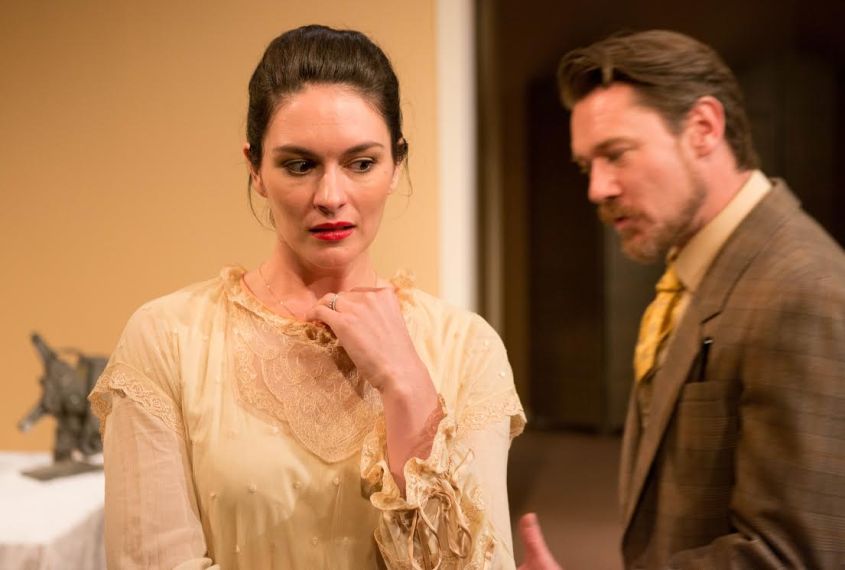
Nadia Tass continues her accomplished direction here in Annie Baker’s adaptation of Anton Chekhov’s Uncle Vanya. It is one of the best things I’ve seen this year, and Red Stitch delivers some of the best Australian theatre once again. Having witnessed a number of Chekhov productions recently, it is a delight to see such an accomplished and stylish cast bring to life one of Chekhov’s more titillating works. Uncle Vanya brings the longings for life, for land and for love in a way that embraces the depths of the emotional life rarely written so well. The melancholy acceptance of our lot rings true, we almost feel like tearing down the walls of the little world on stage and freeing the characters from their own reverie and turmoil.

 Uncle Vanya - Rosie Lockhart & Ben Prendergast c. David_Parker.jpg

Baker’s contemporary adaptation of Uncle Vanya captures the larger-than-life torment of the characters in a way we recognise as an audience. From the plight of the forests to the plight of the loss of youth and vigour to sedentary living, Chekhov’s world continues to make sense to contemporary audiences. While admittedly his world tends to drag (why any work should go beyond two hours is increasingly beyond me), the Chekhovian drag perfectly symbolises the endless days that follow in the pursuit of living – so aptly considered by the character of Sonya.

Long-time resident of Red Stitch, David Whiteley portrays the title role of Uncle Vanya with humour, bitterness and vitality. It’s hard playing a lovelorn, broken man, but Whiteley does it with panache. Whiteley is accompanied brilliantly by Ben Prendergast’s Astrov, the country doctor-cum-man of the earth. Both fall prey to the bored wanderlust of the leisurely Yelena, portrayed with so much grace, guile and allure by Rosie Lockhart. Lockhart’s mystery is balanced well with Sonya’s earthy kindness, played by Eva Seymour with astonishing conviction. The supporting cast bring their own, with a special mention to Justin Hosking’s tragi-comic Telegin, who’s timing and awkwardness are utterly endearing. Marta Kaczmarek’s ‘nanny’ Marina’s watchful, wise gaze pervades the production with the kind of certainty that only comes with a life lived and observed. Together this ensemble cast seamlessly delivers this universal family drama with an intimacy and tenderness that does justice to the writer’s work. My only displeasure is with the Russian accents deployed with too great a variety by the actors to genuinely contribute to the overall work.

Sophie Woodward’s set and costume design captures the country home feel astutely. The little window gazing towards the countryside that only the characters can see out of perfectly encapsulates the unending longing. The lounge sofa converts so well from the bed of the exhaustingly self-important Professor, Serebryakov (Kristof Kaczmarek), to the melancholy place where Voynitsky drowns his sorrows. The set is utilised very well, and the carefully thought-out production is aided by Woodward’s style.

There is great humour and poetry to Tass’ Uncle Vanya, and the excellent direction kites its audience along, observing all the moments that rupture, and all those softer moments in between. Chekhov fans will endure, and they will enjoy. For those who are unfamiliar with the work, this production would be a great place to start.

Uncle Vanya continues to be performed at Red Stitch until December 17.

http://redstitch.net/bookings/

Image by David Parker

La Mama Presents HANDS OVER EYES

Intelligent and engrossing new work

By Myron My

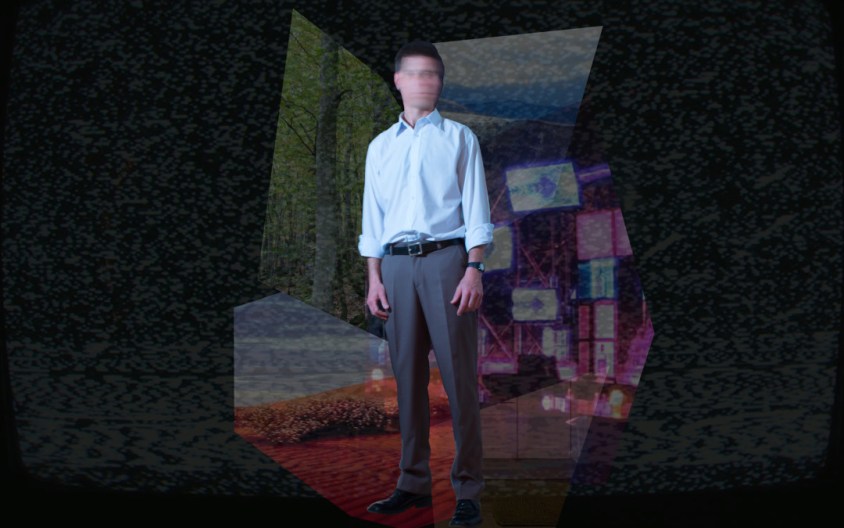
There were times while watching Hands Over Eyes that I felt like I was watching a live episode of Black Mirror, a TV series that looks at how our over-reliance on technology can have far darker consequences than we could have imagined. Presented as part of La Mama Theatre Explorations season for work in various stages of development, Peter Danastasio’s Hands Over Eyes raises discussion on perceptions of truth and honesty and how the impact this can have on people.

Hands Over Eyes.jpg

Danny Carroll plays Paul Havour, a conversationalist who works for a company that conducts simulated experience sessions to assist patients with their past traumas or phobic treatments. Through the course of the week he begins to question his beliefs and work ethics while attempting to assist his patients with treatments he finds troubling.

The issues being explored here do run the risk of making the audience feel as if they are drowning in information, especially given the clinically-themed dialogue. With the use of some well-timed breaks in speech, visual projections and subtle humour, Danastasio ensures that even though our utmost attention is required for its entirety, we still have time to process what is being said and the implications of what that means.

I do feel the relationships between the characters needed to be more strongly established, and the conversations between them – and how these conversations were had – to then be representative of that. There are scenes where Paul is speaking with his patient who seems to have an equal understanding of Paul’s specialist knowledge regarding the mind and human connection. The power dynamics within the company employees also needed to be more consistent.

The ensemble in Hands Over Eyes are extremely dedicated to their characters and for the most part, carry a firm sense of authority in what they say, further generating authenticity throughout the show. Carroll seems to be a natural in the highly demanding role of Paul, who is in virtually every minute of the 75-minute play. His ability to capture Paul’s initial suaveness and confidence and the subtle transformation to uncertainty and doubts that begin to creep into his own thoughts is well manifested. However, I would have liked the story to take his crisis further and create a much stronger impact on Paul’s life. The supporting cast of Ashton Sly, Ezekiel Day, Jim Coulson, Alex Rouse, Alex Rowe and Evangeline Stoios all bring depth and purpose to their characters and all have a motivation that is clear, even if they are only on stage for one scene.

The sound design by Ben Griffiths and the lighting and filmed components by Darcy Conlan are carefully constructed and further enhance the environment being portrayed. The active interactions the actors have with the visual projections are particularly great to watch as are Paul’s interactions with Karen.

It’s a comforting thought when independent theatre still in development can already be more thought-provoking and entertaining than some of the professional performances being produced. Hands Over Eyes is a rewarding watch that will have you questioning your own ideas based on your own reality and the repercussions of this.

Hands Over Eyes was performed between 16 – 18 November at La Mama Theatre.

Benn Bennett in OCCASIONAL SUBURBAN WITCH

Delightfully and darkly bewitching

By Bradley Storer

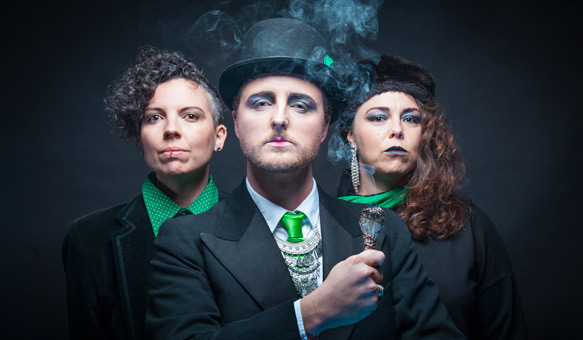
The ‘witchy woman’ of the Western suburbs gathering ingredients for her potions under the scrutiny of her perplexed neighbours – song-writer Benn Bennett uses this opening image as our gateway to explore ideas of modern witchcraft in relation to the role of women in society.

Occasional Suburban Witch.jpg

Bennett is a charming and charismatic host for the evening as he guides us through the combination of original songs and occasional cover to celebrate femininity and the wisdom of women. His topics range from the previously mentioned ‘suburban witch’, his inability to ever be a ‘nonna’ to dream-like love songs involving orange trees (it makes sense in context).

Sarah Ward provides backing vocals for Bennett as well as taking lead during several songs, her huge range shown off in a Balkan gypsy-esque vocalese that segues into a dramatic rendition of the Stevie Nicks classic ‘Rhiannon’. Ward comes close to stealing the entire show with her hilarious background moments of physical comedy, making it hard to take your eye off her even when silent. Bec Matthews in addition to providing backing vocals is virtuosic in her drumming ability, using brooms all the way to kitchen implements to create percussive backings for Bennett’s music.

For those with a taste for the occult mixed with a dash of feminism, Occasional Suburban Witch is a dark delight that begs to be devoured!

Venue: The Butterfly Club, Carson Place (off Lt Collins St)

Time: 7pm

Dates: 16th – 20th November

Bookings: www.thebutterflyclub.com or at the door.

Price: Full $32, Concession $28, Members $26, Group (6+) $25

Arts Centre Melbourne Presents JACK CHARLES V THE CROWN

Unmissable

By Caitlin McGrane

Uncle Jack Charles has a long and illustrious artistic career behind him; from co-founding the first Indigenous theatre company Nindethana to Hollywood’s hallowed halls, Uncle Jack Charles has carefully crafted his presence in both the international and Australian arts scenes. Jack Charles has also faced a long history of abuse, frustration and rejection through the Australian judicial system. A member of the Stolen Generation, Charles’ story of addiction, arrest and prosecution was documented beautifully and poignantly in the documentary Bastardy.

Jack Charles. Photographer Bindi Cole[1] copy.jpg

Jack Charles v The Crown seems to me an attempt to address some of the issues in the 2008 doco by retracing Charles’ life from his beginnings at the Royal Women’s Hospital to 2016 in the Arts Centre’s Fairfax Studio. Charles is alone throughout the performance, joined by only the band to provide beautiful musical accompaniment along the way. Co-written by Jack Charles and John Romeril (who also served as Dramaturg), Jack Charles v The Crown is a poignant reminder of how far Australia still has to go in addressing its appalling treatment of Indigenous peoples.

The play opens with scenes from Bastardy of Charles injecting himself with heroin, current Charles meanwhile works blissfully away on a pottery wheel on stage, delicately moulding the clay. The audience is simultaneously introduced to Charles’ charge sheets from 2004 when he was arrested on several counts of burglary. It sounds rough but the production is created carefully and unflinchingly, so what could be interpreted as painful is actually full of pathos and humour.

Director Rachael Maza has masterfully constructed this production, weaving together documentary footage, photographs and charge sheets together with Uncle Jack Charles’ unmistakeable gleeful cheek to create something much greater than the sum of its parts. This production is a story of redemption and coming to terms with the past: the way Charles tells his story means one moment you feel utterly heartbroken, yet a few moments later he has you giggling and guffawing at some innuendo.

The musical score composed by Nigel MacLean kept the pace of the production and added depth to Charles’ monologues. These musical interludes and accompaniments were performed by Gary Dryza, Mal Beveridge and Phil Collings, and occasionally Uncle Jack Charles; who knew he had such a set of lungs on him? The set and costumes (Emily Barrie) were carefully designed to keep the sense of intimacy as Charles moved around the stage making pottery and a cuppa. Lighting (Danny Pettingill) and audio visual design (Peter Worland) supported the performance, and gently overlaid the mood on stage.

I loved everything about this performance, and I honestly can’t recommend it highly enough. I feel very privileged to see a part of Uncle Jack Charles’s story, and I can’t wait to see what he does next.

Jack Charles v The Crown is now showing at The Arts Centre’s Fairfax Studio until 20 November – make sure you get in quick. Tickets and more info: Arts Centre Melbourne

Image by Bindi Cole

Poppy Seed Festival Presents BLESSED

Dark and dusty divinity

By Myron My

The Poppy Seed Festival returns to Melbourne for its second year, opening with Fleur Kilpatrick’s Blessed , a modern retelling of angel Gabriel’s visit to Mary informing her that she is to be the mother of Jesus presented by Attic Erratic. While her previous work, The City They Burned, successfully re-imagined the story of Lot and the fall of Sodom into contemporary times, in this production there is perhaps too much effort in pushing the religious undertones, whereupon I feel the authenticity of what Kilpatrick is attempting to create gets blurred.

Blessed.jpg

The story follows Maggie and Grey (Olivia Monticciolo and Matt Hickey), who after years of no contact are reunited in Grey’s grimy and shabby home. These are people who are from the lower end of the socio-economic spectrum and living in community housing, who are struggling to make ends meet with low-paying jobs.

While the idea of these two characters being involved with The Annunciation is an interesting exploration of the above issues facing many today, the story never quite gets to making as much as an impact or statement as it should; and for me, if this is a love story, then Hickey and Monticciolo are also unsuccessful in finding it in their characters. While effort has clearly gone into developing Grey and Maggie, the relationship between them doesn’t seem to resonate convincingly on stage and the journey to get to the finale seemed to stagnate at times. Even some adroit direction by Danny Delahunty failed to ignite a spark in the performances or keep the momentum building.

The set design by Luc Favre is a highlight however, and clearly depicts the squalid environment in which Grey and Maggie find themselves in. The unkempt bedroom and the rubbish and clothes strewn across the room are a great visual extension of where Grey has found himself in life.

Kilpatrick may have a deeper message to impart with Blessed in terms of class, love and equality, but unfortunately this production feels as messy as Grey’s bedroom.

Venue: Malthouse Theatre, 113 Sturt Street, Southbank VIC 3006
Season: Until 20 November | Tues – Sat 8pm, Sun 4pm
Tickets: $38 Full | $28 Conc
Bookings: Malthouse Theatre

Image by Sarah Walker

Melbourne 2016: THE TALLIS SCHOLARS

Divine music in all senses of the word and experience

By Leeor Adar

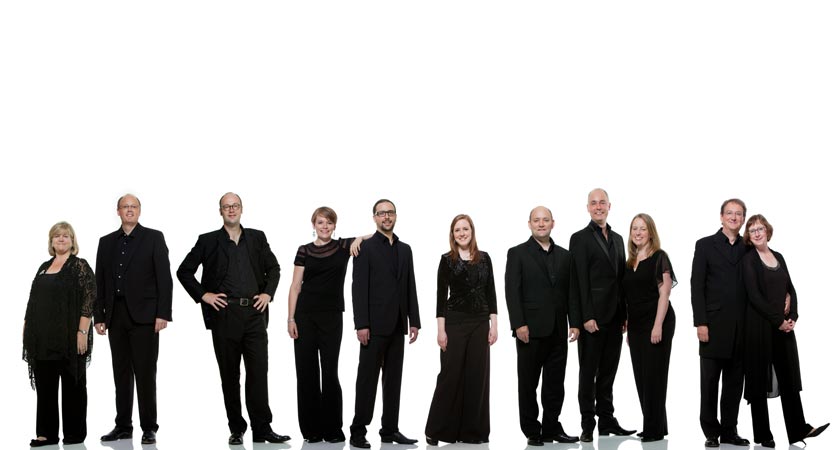
Born under Peter Phillips‘ directorship, The Tallis Scholars wonderfully transcend the passage of time and deliver audiences the English Renaissance polyphony.

 The Tallis Scholars.jpg

Since 1973, Phillips has been proving that polyphony draws audiences in the droves. If anything is to be said for Hamer Hall on that balmy Melbourne night, the audiences of varying generations filled the seats to indulge in these beautiful harmonies. Sixteenth-century composer Thomas Tallis, a man who won the patronage of the powerful and elite (and also held the monopoly of printing music), inspired the title of Phillips’ troupe.

Phillips challenges his singers and convention by having only two singers perform a part. Phillips aptly states that two singers for a part are ‘more precise’ and ‘vulnerable’. The fact that the performers must work harder to crystallise their sound is an even greater credit to their ability and to their director. We were treated to some of the most ethereal sounds a human voice could deliver; I was elsewhere for much of this performance, hoisted by these angelic voices to higher ground. The mysticism inspired by Catholicism clearly still affects audiences today through the sacred verses performed.

Phillips began the night with Peter Philips’ Cecilia Virgo, a piece whose text was inspired by the patroness of music, Cecilia. The piece is a perfect opener to the polyphonies that come after, signalling the skill of the alternating groups of voices. Pieces I felt that highlighted the skill of the Scholars and delivered the most compelling music to me would have to be Tallis’ Lamentations of Jeremiah, the modern composer John Travener’s As one who has slept, and William Byrd’s Tribue Domine.

Tallis’ Lamentations of Jeremiah I felt captured the melancholy of the destruction of Jerusalem at a greater depth than Dominique Phinot’s, which Phillips has included after Tallis’ in the program. This was an exercise I suspect in contrasting how the Lamentations could be performed differently, with Phinot’s polychoral style dominating his piece.

The inclusion of Travener’s 1996 As one who has slept was a beautiful nod to a modern composer. The piece carries with it the weight of tremendous mysticism – the varying tones that take us to sudden and melodious highs and lows were a beacon of light in the evening for me. At one point I felt chills in my body: a testament to how overwhelming choral music can be.

The Tribue Domine by one of Tallis’ contemporaries, Byrd, closed the official part of the evening. With soaring voices that harmonised so beautifully, audiences were guaranteed to leave the Hamer Hall in an otherworldly state.

While Phillips indulged us with one last encore, I was adament it will not be the last time I journey to listen to this marvellous choral music.

The Tallis Scholars performed at Hamer Hall on November 6, 2016.

Q44 Theatre Presents SHINING CITY

Poignant and powerful

By Myron My

The effects of grief and guilt are hauntingly explored in Q44 Theatre‘s latest production of Conor McPherson’s Shining City.

Shining City.jpg

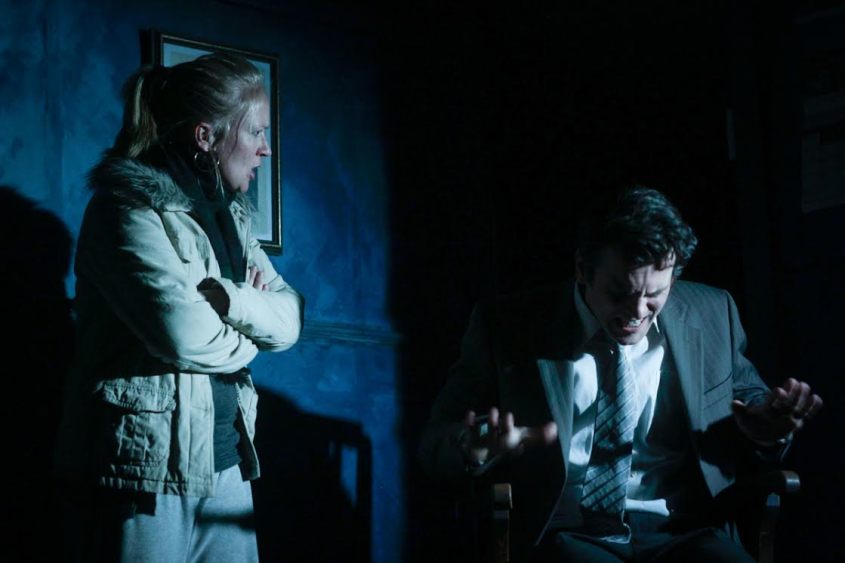
Set in Dublin, the story revolves around a therapist and his patient, each with his own set of demons to face, and it is another example of the exemplary work on which this theatre company is building its reputation.

Anthony Scundi is exceptional as Ian, an ex-priest struggling with his loss of faith who has just opened up a therapy clinic. While initially coming across as someone who has his life in order, the ensuing scenes paint a picture of a man who is gradually unraveling. Scundi is well-paired with Sebastian Gunner as John, his new patient and the rapport they share feels genuine. Gunner nails a lengthy monologue that requires him to find the right balance of a range of emotions as he recount the events leading up to the death of his wife.

Madeline Claire French as Ian’s wife Neasa, and Nick Cain as Laurence, deliver some strong work in their short but pivotal scenes in Shining City. The chemistry shared between Cain and Scundi in their scene is palpable, and Gabriella Rose-Carter‘s intimate direction clearly conveys Ian’s confusion and helplessness. This results in the most engrossing and intense scene of the play, and keep the audience guessing as to what is going to happen next and how the events are going to play out.

Rose-Carter once again creates engaging and captivating work from her actors, allowing them to embody their characters, and the interludes she instigates between the scenes are well-executed. There is no sense of time or being rushed during the show and Rose-Carter allows things to linger, so that we can interpret them as we like.

The scenic design by Casey-Scott Corless and construction by John Byrne functions as a great metaphor on our attempts to keep our true thoughts and feelings buried, and exposes a duality in our efforts to present ourselves as someone we feel we ought to be. This is supported by the subtle yet effective lighting design by John Collopy that really pushes the claustrophobia in the play.

Shining City is not just a play about John and Ian, but also Neasa and Laurence, and even then it’s about something bigger. It’s about people who are confused and have lost their way, and are doing whatever it is they can to do better – to be better. While set in Dublin, this could easily be any one of us in these characters’ shoes. It’s a lingering and thought-inducing show on people’s struggle to find meaning and connection in the world in which they live.

Venue: Q44 Theatre, 550 Swan St, Richmond

Season: Until 27 November | Wed- Sat 7:30pm, Sun 6:00pm

Tickets: $35 Full | $30 Conc

Bookings:Q44 Theatre

Theatre Works Presents ANTI-HAMLET

Fierce, funny and fraught

By Leeor Adar

Satirising the current state of Australian politics with the heady and destructive tendencies of the Prince of Denmark lends for a wild, funny, and at times utterly confusing production. Just as I’ve grasped one metaphor and issue, Mark Wilson’s Anti-Hamlet shifts us onto the next, expecting its audience to intelligently manoeuvre themselves through the multi-layered political arc Wilson has created.

Anti-Hamlet.jpg

This is the third of Wilson’s Shakespearean adaptations after Unsex Me and Richard II. Wilson comments that these productions “inherit from Shakespeare”, and fill the gaps. On this occasion, Wilson engages with the Australian inability to confront its history. History is the underlying theme of Anti-Hamlet, but I am deeply sceptical as to how tenuously Hamlet itself connects to a country’s collective blindness.  I will say in Wilson’s defence, his ability to bring Shakespeare’s Hamlet into contemporary ‘realness’ and embellish its themes with references to the Australian political climate is impressive. That is no easy feat. Despite this tenuous connection, the key issues rage on. A young man, both sexually and politically impotent – afraid and trying to find meaning at a time when ‘democracy’ feels more like forcing kool-aid down your throat.

Wilson is wildly funny and painfully irritating as Hamlet. Wilson is accompanied by some theatre-heavyweights in Marco Chiappi’s Claudius, Natasha Herbert’s Gertrude, and Brian Lipson’s marvellous contribution as Sigmund Freud. These actors brilliantly dive into Wilson’s writing and bring to life the characters in an exciting and relevant way. Herbert’s Gertrude is an indulgent, lazy queen whose concern is with turning her gaze towards her possessions rather than noticing that her power is waning. Chiappi’s Claudius is the fabulous politician in the blue tie (a wink to our political leaders), desperate to become President of Australia’s new Republic. A new addition is the role of Freud, and it’s so apt that Freud should show up as the family psychiatrist to stir Hamlet et al. Freud, like Hamlet in this production, is a self-aware character that almost recognises that he is party to a play and merely a plot device. It works very well, and adds yet another intricate layer to this complex work.

Anti-Hamlet unpacks two issues astonishingly well. Firstly, there’s the spin-doctoring behind politics, which takes on a seductive and serpentine fervour in Charles Purcell’s energetic American marketer, Edward Bernays. Secondly, there is the idealism of those politically-minded young Australians who succumb to the political machine in a feeble attempt to create change in the world. Ophelia (Natascha Flowers) is the modern woman; she’s no limp-limbed belle of Shakespeare’s imaginings. A Rhodes Scholar and Oxford graduate, Ophelia comes brimming with ambition for a better nation, but is the futile pawn to a more experienced and cynical power under Claudius and his newly-minted henchman, Bernays. Wilson’s Hamlet serves as the alternative to Ophelia – a politically awakened youth with nothing but privilege and a blossoming conscience who thinks taking back ‘blackface’ to undermine racism is an acceptable and intelligent statement. Hamlet is politically impotent, and this funnels through into his sexuality, which he attempts to mask. This is a striking point of discussion for this production, because it single-handedly takes on issues that are utterly relevant in Australian politics today, but does so in a manner that humours and pinches those politically aware within its audience.

Anti-Hamlet is self-indulgent and utterly self-aware. If you’re a Shakespeare puritan, perhaps step away. However, if you’re interested in a play that engages with the politics of today in an original way, you may be convinced to come down to Theatre Works and indulge yourself… and Wilson.

Anti-Hamlet continues to run Thursday-Saturday 8pm, and Sunday 5pm until November 13 at Theatre Works in St Kilda. Afternoon session at 2pm Saturday. Book your tickets here: http://www.theatreworks.org.au/whatson/buyeventtickets/?id=278

Image by Sarah Walker

Arts House Presents ANICCA

Elusive, engrossing and enlightening performance art

By Myron My

In Buddhism, anicca (impermanence) is seen as the first of three marks of existence, and evokes the idea that existence is, by nature, evanescent and inconstant. With his new show, Anicca, composer and performer Matthias Schack-Arnott manages to bring these beliefs into the thoughts of his audience as we reflect and ponder on the transient nature not only of moments in our lives, but of life itself.

Anicca.jpg

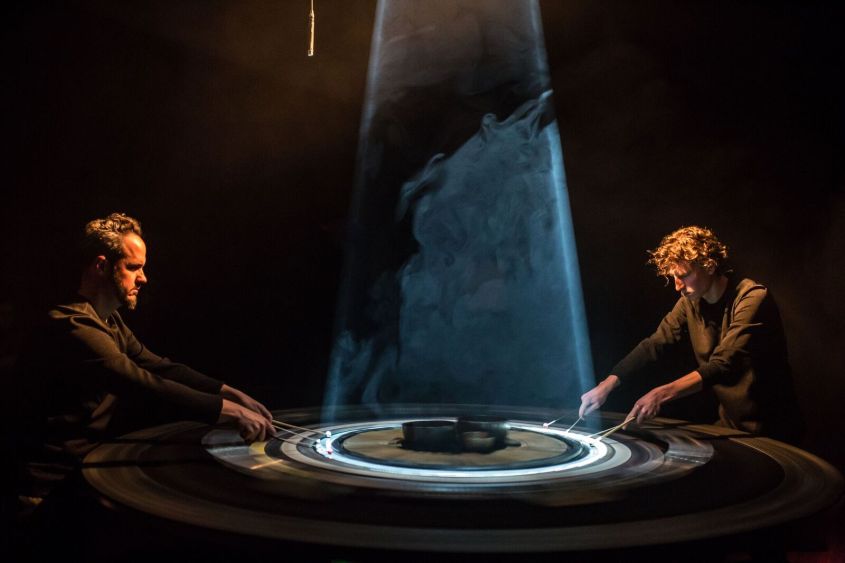
While his previous show Fluvial had its own impressive concept and visual design, Schack-Arnott has truly outdone himself with the design of the instrument for this performance. An array of bamboo sticks, pebbles, shells, felt and other tactile items are glued on to a flat round surface and with the use of a motor from an electric pottery wheel, Schack-Arnott gets the instrument spinning, where it begins to resemble a large roulette wheel. This variable-speed rotating instrument created with engineer Richard Allen has no name, and this adds to the mystery and wonder of the show.

Schack-Arnott teams up with Eugene Ughetti for this performance to use cymbals and bamboo sticks to scrape, strike and interact with the objects on the spinning wheel. Even though they are on stage together and using the same instrument, Anicca could almost be described as a solo performance with two performers. They may be occupying the same space yet there is little acknowledgement of each other, reminding you of the singular journey we ourselves are on.

Through their precision timing and expert speed, Schack-Arnott and Ughetti create music that quickly fades in and out, disappears or suddenly changes into something completely different. The exceptional lighting work by Richard Dinnen similarly creates an ever-changing environment where nothing is constant, and at times, where the performers are shrouded in darkness and mystery.

Schack-Arnott continues to build on his reputation as a musician and composer who is not afraid to experiment with what music can be, as well as what it can make people feel. Anicca is an incredibly thoughtful and inspiring piece of music that creates an opportunity for audiences to open themselves up, be vulnerable, and to consider and embrace the fleetingness that is life.

Venue: Arts House, North Melbourne Town Hall, 521 Queensberry St, North Melbourne

Season: Until 6 November | Thur-Sat 7:30pm, Sat 2pm, Sun 5pm

Tickets: $35 Full | $30 Conc | $25 Student

Bookings: Arts House

Image by Bryony Jackson