Malthouse Theatre Presents THE HOMOSEXUALS

Gleefully funny

By Leeor Adar

How dare we, or you, or anyone, be politically incorrect (PC is very in, in case you weren’t paying attention). Lee Lewis’ romp as director into taboo territory is loud, colourful, slapstick, and rainbow-shoots dance hits of the bygones. This production of The Homosexuals is everything you would expect it to be, and then a little more sardonic.

The Homosexuals.jpg

And it is funny. The shining light of this show isn’t the performers so much as their sharp dialogue catapulted from Declan Greene’s pen. I can see the delivery only sharpening as the season goes on, and like Greene’s usual work, is so right now. Right now, and reflected in the play is the war between white homosexual men and other sexual and racial minorities that continue to be marginalised by cookie-cutter ideals. It rages in this production, and offers a farcical gaze upon the pompous rhetoric of queer theorist ‘Bae-Bae’ (played with natural grace and disdain by the genderqueer Mama Alto).

The play is set in a tiny modern apartment in Darlinghurst where Warren (Simon Bourke), the identified ‘older gay gentleman’ looks through his lens at the young and chiselled Adonis (Lincoln Younes). Clichés aside, Warren attempts to hide his interest in the Adonis from his shrieky partner, Kim (Simon Corfield). Cue the realisation that married paradise does not exist even for the queer community. What is meant to be the night of the Mardi-Gras and offensive costume party (hint: blackface/Hiroshimaface/Naziface), turns into a comedy of near-misses as a druggie and part-time cook (Mama Alto) is mistaken for the gloriously self-righteous ‘Bae Bae’. A series of mad antics ensue in what is sure to be a night of laughs.

A real shout-out must go to the top-notch comic delivery of Diana (Genevieve Lemon), who propelled the silliness on stage and brought a sage moment towards the close of the fare. Unfortunately this is where the script diverts too sharply from the rest of the play; the tone suddenly shifts to a serious place that doesn’t have the same wondrous reality-shatter of other works that manage to take comedy to dark places. The point is already made in the piece itself – the audience knows. The show ultimately ends with a whimper, no bang in sight. I found this a touch disappointing given all the walls shattered earlier in the evening.

However, if you want to catch a show that pokes fun at itself and definitely makes you laugh – then by all means, enter the rainbow world of The Homosexuals, or ‘Faggots’, currently showing at the Malthouse Theatre until Sunday 12 March.

Book your tickets here: https://tickets.malthousetheatre.com.au/booking/production/syos/3205

Image by Brett Boardman
Sly Rat Theatre Presents THE TEMPEST

An enchanting event

By Margaret Wieringa

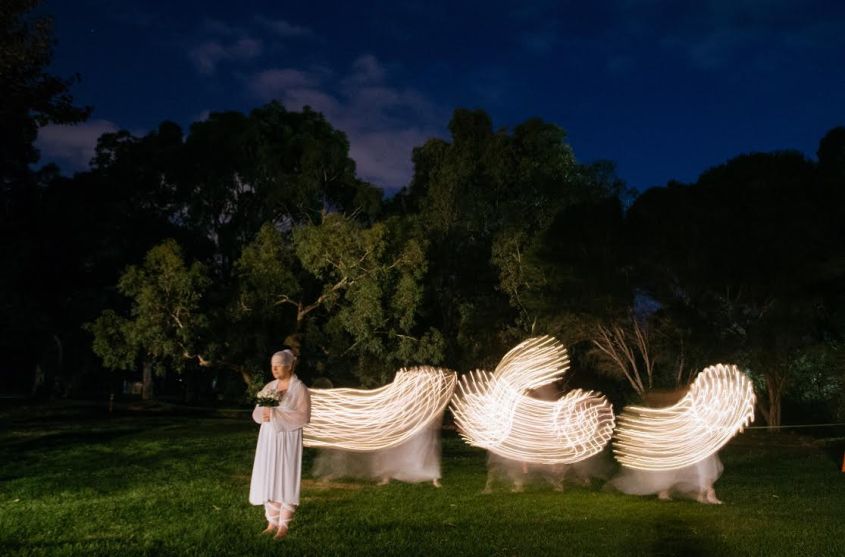
A small boat is wrecked in a magical tempest leaving the survivors to wander an island, guided by spirits and controlled by an ousted Italian noble. Sit back in your camping chair or spread out on your picnic rug; it’s time to be enchanted with some Shakespeare in the park.

The Tempest.jpg

This is the second Shakespearean performance that Sly Rat Theatre Company have put on in Pipemakers Park in Maribrynong and it was again a thoroughly enjoyable evening. We are introduced to the island by Prospero (Brendan Ewing) as he shows the power of his magic, controlling everyone and everything including his daughter and the very spirits of the island. Ewing starts the performance loud and dominant, unfortunately leaving himself very little room to expand the performance. Consequently, we get a strong sense of the outrage and anger of Prospero, but it far more difficult to glean his softer and more complex side.

For this production, artistic directors Alan Chambers and Andy Harmsen have gender-swapped many of the characters (the original play has only one or, depending on the reading of Ariel, two females) and this leads to a completely different reading of some parts of the performance. The idea of women dominating the society that they have left through dishonesty and deceit, and of a man rising up to take his true place – it adds a new level. It also meant that the royals, all female, were young, angry warriors dressed in wild Mad-Max/steampunk costumes and dominating the stage. These costumes contrasted vastly from the island spirits in wispy veils with lots of softness. Unfortunately, many seemed to be wearing poorly-fitting dresses, and while it was clear that the actresses were wearing skin-coloured undergarments, the sense of wardrobe malfunction was somewhat distracting.

Possibly the most impressive costume would have had to have been Caliban, played by Seton Pollock in a beige lyrca suit with all kinds of mutations built in – a hunchback with a distorted spine, one very large thigh and, most obviously, elongated arms with heavy, stumped ends which gave him an animalistic gait perfect for his portrayal of this tragic character.

One thing the production needed to consider further was the sound design. There were some scenes that worked really beautifully, creating the sense of the island (especially at the start, matched with sporadic giggles from the island spirits), but some of the other soundscapes really dominated, detracting from the acting.

However, this is a performance that is being crafted for everyone to enjoy – right down to the kids. There are many standout comedy moments, most notably the slapstick antics of the sailors and the other stand-out clowns of the evening, the wonderful drunks played hilariously by Katherine Moss and Tara Houghton.

Really, though, the performance is the icing on the cake of a delightful night out. You can relax, open some wine, eat a picnic or grab some food from the food truck. Enjoy the warmth in the air, the sun through the trees, and as the day draws to a close, let Shakespeare’s Tempest take you away.

Venue: Pipemakers Park, Van Ness Avenue, Maribrynong

Season: Feb 17-19 +24-26, March 3-5, 6:30pm

Tickets: It’s all free – just come on down!

Arts House Presents KAGEROU – STUDY OF TRANSLATING PERFORMANCE

Balancing emotion, art, tragedy, and connection

By Myron My

In 2011, Japan was hit by its most powerful earthquake ever recorded. With a magnitude of 9.0 – 9.1, it triggered a huge tsunami and resulted in the deaths of over 16,000 people and left thousands more injured. Referred to as “The Great East Japan Earthquake” it was a devastating blow for Japan, with sympathies and aide coming from around the world.

in-kagerou

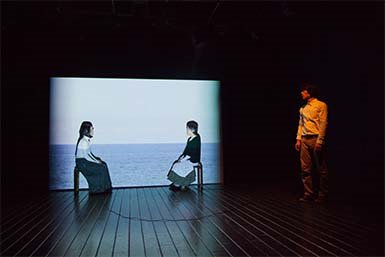
In Kagerou – Study of Translating Performance, director Shun Hamanaka uses the story of Kyoko Takagi – a woman in her 70s who lost her husband in the tsunami – and attempts to explore how sympathy and connection between strangers can be born from a tragedy such as this. Hamanaka has opted for a minimal set design, having just three chairs on stage with video footage being projected onto a screen with some effective shadow work by lighting designer Hiroshi Isaka, emphasising the documentary-style of the performance.

Actor Yoko Ito appears dressed in black with headphones on, and we hear a muffled voice speaking Japanese. Once this voice – Kyoko – finishes speaking, Ito begins to relay what she has said in English and the act of translating begins to be explored. Ito is not only translating what Kyoko is saying, but also the grief, sorrow and hope felt from a woman in a small port town in Japan all the way to a theatre audience in inner-city Melbourne.

Ito intentionally remains disconnected and detached when speaking, allowing the words of Kyoko’s to resonate with us and allow us to begin to gather an understanding of what she has gone through. However as she walks around the space, her body language begins to display a simultaneous representation of fragility and determination from Kyoko’s story.

Hamanaka succeeds in drawing sympathy from the audience through Ito’s “performance” as Kyoko, repeating the survivor’s words and keeping her own natural pauses and nuances. However, the video footage itself – while initially striking and offering a lens into understanding Kyoko’s town – becomes distant and alienating at times, pushing you further out of the story and hindering the opportunity to build on the connection with Kyoko and her experience.

Ultimately the achievement of Kagerou – Study of Translating Performance is in acknowledging that we can still share in the grief  and relate to the loss and devastation felt by the people of the The Great East Japan Earthquake – that sympathy can indeed translate.

Venue: Arts House, 521 Queensberry St, North Melbourne
Season: 
Until 18 February | Sat 7:30pm
Tickets: 
$45 Full | $35 Conc | $30 Student
Bookings: Arts House

Theatre Works Presents LIFETIME GUARANTEE

Talented hard-working cast enliven new Australian play

By Myron My

Written by Ross Mueller, Lifetime Guarantee is a story shared by five characters whose lives intertwine as they seek love and connection in the modern world. Julian Dibley-Hall and Charles Purcell play Charles and Daniel, a couple living together who don’t seem to actually want to be with each other despite their protestations. Charlie’s new assistant Jodie has some interesting sexual predilections and Daniel’s ex-wife Chloe is trying to move on with her life. And then there’s Francis, whose interactions with each character seems to lead to situations in which they’d rather not be.

Lifetime Guarantee.jpg

Unfortunately Mueller’s script feels under-developed, with some questionable character motivations throughout. The cast themselves do well with their characters’ limited development, and with direction that seems surprisingly over-the-top, awkward and unnatural. Candace Miles manages to breathe some life into the aggrieved Chloe, bringing pleasing nuance to her portrayal. Izabella Yena as Jodie is initially full of spark and creates interest in her character, but once the assistant’s “secret” is revealed, Jodie immediately becomes one-note and repetitive where even Yena’s energy and effort is unable to make her relevant again.

Jodie’s revelation, while intended to create shock and intrigue, is just ridiculous, and there seems to be no purpose in having this transpire except to make some sex-related puns. Similarly, the scene involving Francis visiting Daniel to fix his broken washing machine is preposterous, and becomes merely a plot function to drive the story go down the path Mueller wants.

For me, John Sheedy‘s direction is often jarring and prevents any emotional connection being established, with even intimate moments feeling cold and artificial. Simple actions like entering and exiting from the same side of the stage break the realism and if the production goes to all the trouble of having a working shower on stage, why did they decide to have an actor pretend to spit out coffee from an empty cup?

What is interesting about Lifetime Guarantee is the level of importance that ‘models’ of things have:  Charlie and his model house signify the life he idealises, Jodie and her model cars are symbolic of the kind of love she desires, and there’s Jodie’s friend who has been offered a job to create a model of the Great Wall of China. The idea that everyone is trying to build these perfect lives for themselves with intricate and minute care, but end up ignoring the significance of the things happening around them is fascinating, but sadly never fleshed out.

Lifetime Guarantee attempts to examine modern life and the ways people experience loneliness and struggle to connect with others. Unfortunately the writing and direction here cannot inspire any deeper thought beyond the surface of themes that have been staged many times before.

Venue: Theatreworks, 14 Acland St, St Kilda

Season: Until 26 February | Tues – Sat 7:30pm, Sat 2pm, Sun 5pm 

Tickets: $38 Full | $30 Conc 

Bookings: Theatreworks

Photo by Pier Carthew

Malthouse Presents LITTLE EMPERORS

Brave, beautiful and necessary

 By Leeor Adar

2016 saw the glass-globe political bubble of China’s One Child Policy shatter. Picking up the pieces of what is presented as a haunted generation of youth and families, the brave new work of Lachlan Philpott and director Wang Chong is both penetrating and poignant.

Little Emperors - Yuchen-Wang-Photo-by-Tim-Grey.jpg

A talented cast drive this absorbing story of Kaiwen (Yuchen Wang), separated from a family he is too young to remember and suddenly asked to return to the world that rejected him. His tenuous connection with his sister, Huishan, (Alice Qin) harbours a familiar Chinese communal secret, and we are plunged into a world built on memory, the subconscious and heartbreaking reality. Perhaps the most heart-wrenching character is that of their mother, played with such varied and breathtaking emotion by Diana [Xiaojie Lin] – a character so tormented by living the life she endured against her will.

Philpott’s writing is achingly familiar as it speaks to something even I, an outsider, can recognise as the universal desire for closeness with our kin. Philpott’s opportunity to visit Beijing and meet with local people whilst collaborating with Chong has given a real dimension to his work. It would be easy to dismiss Philpott’s writing as another outsider attempting to discuss the unrelatable, but Little Emperors provides a rare glimpse into a world rarely discussed or acknowledged by its own people. In the play, Kaiwen now living in Melbourne directs his own work to confront the One Child Policy, but his cast one by one vanish as they find unearthing their secrets either too painful or unspeakable.

Where this play is overall potent, the uncomfortable dialogue and acting between Kaiwen and his sound technician (Liam Maguire) distracts. While it would be easy to dismiss the relationship between these two characters, it reveals a savage loneliness of Kaiwen. This loneliness breathes throughout the play as our characters battle inner torments they find difficult to express to those around them. It is evident that those who live in Kaiwen’s originating home struggle with what occurred in their own way.

The staging of Little Emperors is visually and stylistically brilliant. The entire stage is one murky pool of water through which our characters navigate uniquely. Kaiwen walks in the water with ease, but he also uses it with a violence to convey his own turbulent mind. Little white chairs serve as stepping-stones for the women, as they, chair after chair, exhaustingly negotiate every social interaction with forced labour. In one scene, the mother beats her own body with the body of water, side to side, in an unrelenting force of self-flagellation. Romanie Harper’s set design is so effective I cannot think of a more fluid use of staging to convey the inner tumult and complexities of these characters. Nothing is left unused or unturned on the Little Emperors stage. James Paul’s sound design matches the staging with a moodiness that permeates everything around it – this little world created before us grips us in an oxymoron of vitality and gloom.

I walk out of the theatre feeling closer to a truth I heard about in passing, and I feel for a moment closer to a community I have had limited interaction with. Australian audiences can gain much by seeing this work, and it assists in breaking cultural boundaries and giving insights where none have really been offered before. This is brave, beautiful and necessary theatre.

Little Emperors will be performed until the 26 February at the Malthouse Theatre. Bookings: http://malthousetheatre.com.au/whats-on/little-emperors

Image by Tim Grey

Asia TOPA Presents TIME’S JOURNEY THROUGH A ROOM

Gliding through time and tragedy

By Myron My

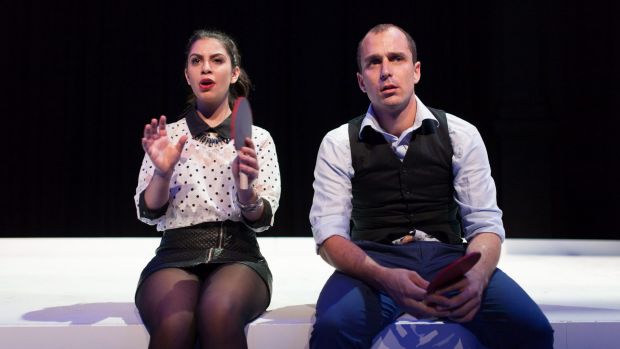
The inaugural Melbourne festival Asia TOPA is the opportunity for Australia to celebrate the contemporary arts with its neighbouring Asian countries. Time’s Journey Through a Room comes to Melbourne from Japanese theatre company chelfitsch, and is a meditative and meaningful exploration of life, death, the in-between and the hereafter. Written and directed by Toshiki Okada, the performance is set a few days after the 2011 earthquake and Fukushima nuclear accident, but if you think the performance is actually going to be about those events, think again. Okada instead focuses on the relationships a young man has with his deceased wife and his new girlfriend.

Times Journey Through a Room.jpg

The cast of three – Izumi Aoyagi, Mari Ando and Yo Yoshida – deliver deeply nuanced performances in roles that on the surface do not seem to demand much, but the subtleties of their characters and the delicate spoken nuances are where the complexities of hope and hopelessness are explored. There is an significant emotional detachment present by the performers throughout the show that is well-balanced and effectively manifested.

Okada’s direction is detailed and specific to the most minute of detail, including how Arisa holds onto a pleat in her skirt or the way Hanako’s feet stretch out when she is resting against the dining table. The contrast of Arisa’s unnatural movement and constricting sweater and skirt to Hanako’s ethereal-like movements and light, loose-fitting clothing further emphasises the idea of transformation and re-births in the face of tragedy in order to live a fulfilled life.

Tsuyoshi Hisakado‘s set design is simply ingenious, with the three actors spending virtually the entirety of the show on the far left hand side of the stage with a table and a few chairs as props. The rest of the space is adorned with fans, various lighting structures and other miscellany that build on the idea of timelessness, and along with Norimasa Ushikawa‘s sound direction and Tomomi Ohira‘s lighting design, create an environment of reflection and introspection while allowing us to follow the narrative on stage.

Time’s Journey Through a Room is an entrancing performance where you will both find yourself slipping into the moments that are being so vividly described on stage or allowing them to trigger memories of your own. Its exploration of hope is beautifully captured and gently insists we consider a different perspective when tragedy occurs.

Venue: Arts House, 521 Queensberry St, North Melbourne
Season: 
Until 12 February | Sat 7:30pm, Sun 5pm
Tickets: 
$45 Full | $35 Conc | $30 Student
Bookings: Arts House

Image by Bryony Jackson

Victorian Opera Presents ‘TIS PITY: AN OPERATIC FANTASIA OF SELLING THE SKIN AND TEETH

In praise of a cabaret goddess

By Bradley Storer

A sinister puppeteer dangles a dark-haired poppet on strings, twisting her to his amusement and satisfaction, as he sings of the evening ahead with hints of the debauchery and debasement to come. The star of the evening, the international cabaret star and dishevelled diva Meow Meow, misses her entrance to the Melbourne Recital Centre (of course) and is forced to drag around props and costumes before she ascends a staircase to become a glorious goddess of the ancient world. We are promised bite-sized pieces depicting the goddess’ many daughters throughout the ages, from Ancient Greece to the modern day.

Victorian-Opera-Tis-Pity-Meow-Meow-photo-by-Karl-Giant.jpg

Meow Meow is, as always, a combination of high-diva glamour and self-deprecating humour, always ready with an off-the-cuff remark that never fails to make the audience laugh. Her magnificent voice is on full show here, from a gutsy alto to a light classical soprano all utilized to maximum effect throughout the night. Her leading man Kanen Breen takes on many roles in the performance, from lover to pimp to bishop, with a ghoulish visage, an elastic physicality and a thrilling tenor voice that rings to every corner of the Recital Centre.

The text of the performance, from composer and librettist Richard Mills, is quite dense and delivered at a rapid pace – the performers are miked but not amplified loud enough, so often the words blended into a flurry of sound, and climatic lines to songs were drowned out by the orchestra. The vignette structure of the performance also seems extremely rushed, with one or two sections going by so quickly and without remark that I found it hard to decipher what they were.

The show also never seems to decide quite clearly what their subject matter is. At the start of the show the proclaimed intent seems to be examining the evolving perception of prostitution throughout history, but what emerges seems to be more a comment on attitudes towards women and femininity in general rather than prostitution. While this is certainly not a problem in itself, not making the focus of the work clear only serves to add to the audience’s confusion. The inclusion of three dancers (Alexander Bryce, Patrick Weir and Thomas Johansson) as bit players to Meow Meow and Breen’s escapades, while wonderful in their dancing and delivering good performances, never seem adequately utilized enough to justify having them in the show.

The only few moments that work and connect with the audience are those where Meow Meow is left alone onstage to simply sing – in these moments, she is tender, heart-breaking and most importantly real. In the finale where Meow Meow sings about the troubles of modern times, a line about ‘building a wall’ around her heart becomes an uncomfortably contemporary parallel to the path of current politics.

Tis Pity feels like it needs re-structuring and reconsideration of its overall message before it can truly work as a theatrical piece, but having a star such as Meow Meow back on our stage is a delight worth savouring.

Venue: Melbourne Recital Centre, Elisabeth Murdoch Hall, 31 Sturt St, Southbank

Dates: 4 – 8 February

Times: 7:30pm

Tickets: $118 – $30

Bookings: melbournerecital.com.au, (03) 9699 3333

Image by Karl Giant

Midsumma Festival 2017: BABY GOT BACK

It’s all about the bass

By Myron My

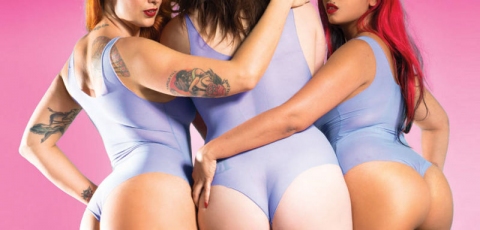
It’s time to honour the ass with this year’s Midsumma Festival show Baby Got Back. This one-hour burlesque-circus-performance art all-female homage to the derrière is an uninhibited celebration of woman. Slut-shaming or any degradation of women – whether by males or females – is not permitted here, where women are able to take pride in and control of their own bodies. Burlesque performers and producers of Baby Got Back, Vesper White and Frankie Valentine, ensure their show empowers women while entertaining the audience with some creative and ingenious performances.

Baby Got Back.jpeg

The show begins strongly with a montage of scenes from various cartoons, movies and social media clips of bums, which is a great reminder of how the human posterior has been used and perceived by society. The opening performance has three artists appear wearing elaborate monstrous “pussy” cat costumes, wearing large heart-shaped collars branded with “dyke” on one, “slut” on another and “whore” on the third. By the end of the performance, these collars are ripped of and from there, it’s a no-holds-barred booty-focused revelry.

Joining Vesper and Frankie on the stage are fellow burlesque performers Miss Jane Doe and 2016 Miss Burlesque Australia Bella de Jac. Rolling out the cast is our mischievous MC, Sydney’s Queen of Crude Memphis Mae, who ensures that the performers and the audience behave themselves – to an extent. Through her hilarious powers of persuasion she is even able to work up the entire crowd to get them to participate in “The Great Mooning”.

While all the acts have a strong push for body positivity, there are some that succeed in doing this better than other acts. The skipping-rope performance involving Doe, de Jac and White has a simultaneous air of childhood innocence – before women are bombarded with societal expectations on how they should look or present themselves – with a sense of liberation and rebelliousness in having these naked bodies be embraced and admired. The cheeky re-imagining of Celine Dion’s chart topping ballad “It’s All Coming Back To Me Now” is another highlight of the show, with its rich mix of humour and feminism.

Reminiscent of a Finucane and Smith show, Baby Got Back is also savvy enough to find the right balance of entertainment while pushing its message. Through its burlesque, comedy, circus, puppetry and dance, it encourages women to love their bodies and seeks to create an environment where women from all backgrounds can be accepted and free to be themselves.

Baby Got Back was performed at The Melba Spiegeltent between 2 – 4 February 2017.

Australian Premiere: THE BOOK OF MORMON

Truly crass, highly sophisticated, and utterly sensational

By Tania Herbert

Taglined as ‘The Only Book that Matters’, The Book of Mormon is the Tony-Award glutton and Broadway spectacular written by Trey Parker and Matt Stone (of South Park and Team America fame), joined by songwriter Robert (Bobby) Lopez (of Avenue Q and Frozen fame). The opening night of the long-awaited Australian premiere certainly met the definition of ‘gala’- prequelled by a cocktail party filled with every identifiable face in Melbourne (particularly if you’re a fan of The Bachelor), and concluded with a standing ovation as Trey and Matt joined the cast onstage for the final number. Even the actual Mormons are taking advantage of the hype, with giant posters currently framing Southern Cross Station.

Ryan-Bondy-Zahra-Newman-A.J.-Holmes-and-company-THE-BOOK-OF-MORMON-AUS-4604-c-Jeff-Busby-1024x774.jpg

The plot is the usual musical-esque small-town boy heading out into the world to make it big. Less usual though is the setting of the Church of Latter Day Saints. Elder Price (Ryan Bondy) is a newly-minted Mormon missionary, ready to change the world and fulfil his dream of ringing doorbells throughout Orlando Florida. However, his hopes are challenged once he finds himself paired with the goofy and inept Elder Cunningham (A.J. Holmes) and shipped off to remote Northern Uganda. Once there, the Brothers discover that The Lion King was way off the mark, and it’s all up to them to save the village from insurgent rebels.

The show is approachable for a range of audiences- 10-man acapella for the musicians, continual nods to musical comedy classics for the genre fans, and enough excessive costuming and production value to please any contemporary Broadway hedonist. However even those with no prior experience will be well entertained by the true hilarity of this piece of comedic genius that barely pauses for breath. Perhaps one of the most unique elements of the show is the working of humour into every element of production- set changes, exits, and lighting all feature as jokes and the humour ranges from the outright crass to artful parody.

The cast are universally stunning. Both leads come to Melbourne as Mormon veterans (Bondy performing in all three US companies, and Holmes in ‘every company.. thus far’), and the polish and passion shows in the truly flawless performances. The leads are backed up by two mostly separate ensembles- the Mormon brothers and the Ugandan villagers. The contrast in music, dance and characterisation styles for the two ensembles was one of the most rewarding parts of the production for me- adding more variety to an already exceptionally catchy bunch of tunes. Many of the cast also come from international productions of the show, along with the best of local talent. VCA graduate Zahra Newman was the particular standout as the adorable (yet still with a very impressive belt) Nabulungi, the chief’s daughter looking for a life ‘less shitty’.

Whilst only vaguely reminiscent of the of South Park episode All About Mormons (Season 7, Episode 12), fans of Matt and Trey are still rewarded, with South Park’s Jesus Christ making an appearance, and lead characters not so vaguely reminiscent of the pair themselves as they appeared in Baseketball.

For a show that spends so much time spoofing, The Book of Mormon is also truly unique, and covers a massive amount of ground in politics, comedy and moral ambiguities. The comic timing is flawless, the dancing immaculate, and the vocals spine tingling.

In typical Matt-and-Trey style though, the show is horrifyingly offensive and nothing is sacred. It’s a little like the Broadway version of Cards Against Humanity as you find yourself laughing at religion, African poverty, FGM and AIDS. If you don’t cringe at least once, you probably need to work on your politically correctness. Given all the inappropriateness, the show is also strangely sensitive, and a timely reminder that with a bit of tolerance, imagination and community, we can all be a lot happier.

The show is certainly not friendly for families, the politically sensitive or the easily offended, but if you don’t fall into one of those categories, it’s fair to say you’re going to have a pretty good night out with The Book of Mormon. With the new world of Brexit and Trump, it may seem like things are pretty grim at the moment, however this musical is the ultimate reminder that in the end, the world can still be a pretty funny place– as long as you don’t take it too seriously.

THE BOOK OF MORMON is currently playing at the Princess Theatre, Melbourne. Tickets are on sale until June 25, and can be purchased at bookofmormonmusical.com.au

Warning: Adult themes and coarse language!

Image by Jeff Busby

Midsumma Festival 2017: HIGH HEELS IN LOW PLACES

In praise of the ‘Queen of Ireland’

By Myron My

Drag artist Panti Bliss rose to prominence in 2014 after her speech about homophobia went viral, where even the Pet Shop Boy remixed her impassioned words into a song. As part of this year’s Midsumma Festival, Panti’s High Heels in Low Places is the opportunity for Melbourne audiences to be personally regaled by The Queen of Ireland’s stories, experiences and thoughts.

High Heels in Low Places.jpg

Panti has an innate ability in creating a welcoming, open and safe atmosphere in the room as she walks into the audience, introducing herself to various people, and on the evening I attended, actually meeting one of her cousins for the first time!

Her memorable social commentary covers many important issues, including HIV stigma, notions of masculinity and femininity, homophobia (including within the gay community) and sexuality and gender. While not much time is spent on each due to time constraints, Panti is so clear and succinct in her storytelling that it leaves its marks on the audience; we are entertained and engaged the entire time as she pithily questions attitudes on HIV and why a person’s sexuality is determined by if they choose to cross their legs or not when sitting down.

It’s testament to the consummate skill of a performer if they need nothing but a glass of gin and a single lighting cue (and what a cue it is) to captivate an entire room of people. Panti’s personal stories involving her childhood growing up in a small Irish town are heartfelt and touching, while the anecdote of her appearance on the Maury Povich Show episode “Please Turn My Daughter Back Into My Hunky Son!” had the audience in pure hysterics.

Being a National F*cking Treasure is not an easy feat, even when you have great hair and can hold your own in any lip-syncing arena, but Panti Bliss most certainly is one, and High Heels in Low Places makes this very clear in sharing her activism and support of equality in all its forms. If only there was a little bit of Panti in everyone, there would be a whole lot more embracing of each other’s – and our own – differences, and I am sure Panti would love that.

Panti: High Heels in Low Places was performed at Arts Centre Melbourne between 2 – 4 February 2017 for Midsumma Festival 2017.