Review: Ghost Quartet

Electrifying staging of beautiful music NOT to be missed

By Owen James

I’ll begin with a disclaimer: I have been a huge fan of the cast recording for Ghost Quartet for many years, and was very excited to see this staging as the Australian Premiere. Dave Malloy’s score is delightful and odd, filled with moments of beauty and confusion alike. Antipodes Theatre, relatively new on the Melbournian theatre scene, have proven they are one to watch with this beautiful and haunting production.

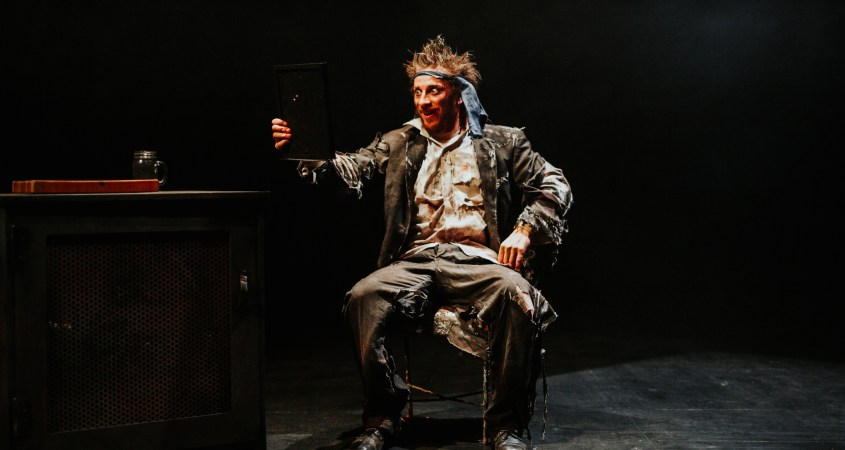
Director and designer Brandon Pape has conjured (no pun intended) an atmosphere that is playful and eerie for Ghost Quartet to enchant its audiences with numerous entangling tales and characters. This song cycle about “love, death, and whisky” is sometimes relaxing, sometimes humorous, and sometimes genuinely chilling – but always enchanting. Storytelling is at the heart of Ghost Quartet, and Pape’s loungeroom-reminiscent setting – a place we often feel most comfortable – becomes the home of unnerving spectres as both original and familiar fables unravel. Malloy’s text must be mined for meaning, and Pape has translated layers of riddles into a moving and theatrically rich staging.

Musical Director David Butler has masterfully interpreted Dave Malloy’s malleable (or Malloyable?) score with grit and slickly rehearsed precision. You would be hard-pressed to find four voices that harmonise and blend as seamlessly as this cast who also play every note live: across piano, cello, drums, ukulele, synthesizers, organ, and other musical oddities. Not only have these four performers memorised the entire 90-minute score (a feat many pit musicians would struggle with), but perform an entire fifteen-minute section in pitch darkness. Audience members are also sometimes given the chance to contribute with percussive instrumentation – take the invitation if it’s offered.

Melissa David’s voice is a powerhouse of passion, delivering mesmerising numbers such as ‘Starchild’ and finalé ‘The Wind and Rain’ with both severity and sensitivity. Willow Sizer’s bewitchingly unique voice can seemingly transcend substance and style, becoming a terrifying instrument of its own amid the darkness. David Butler charms with improvised dialogue and delivers striking, dynamic and controlled vocals, and Patrick Schnur is cellist extraordinaire (turn a cello on its side and it can become a quasi-banjo, who knew?), often rounding out the quartet with invigorating baritone vocals.

Lighting design by Brandon Pape and Lachlan McLean is some of the most effective and evocative I have ever seen. Each song has a distinct and specific flavour, and the intimate Studio space of Gasworks transforms seamlessly into countless locations, both physical and conceptual. Sound Designer Jedd Schaeche is presented with a difficult challenge – an audience seated in the round with acoustic instruments playing in the same space live makes replicating the same balance for every seat near impossible. Unfortunately this means lyrics are often difficult to hear when the music is driving hard, a hinderance to an already oftentimes confusing and complicated book by Malloy.

To quote one audience member as they were leaving the theatre, “that last section has left me feeling sleepy, like I’m in a trance.” Ghost Quartet is a warmly hypnotic experience and a rare gem of a show, which this cast and creative team have brought to life with perfection.

Playing only until August 23rd at Gasworks Arts Park (finishing with a special ghostly 10pm show on the Friday). Tickets: https://antipodestheatre.com/ghostquartet

Photography by Lauren Boeren
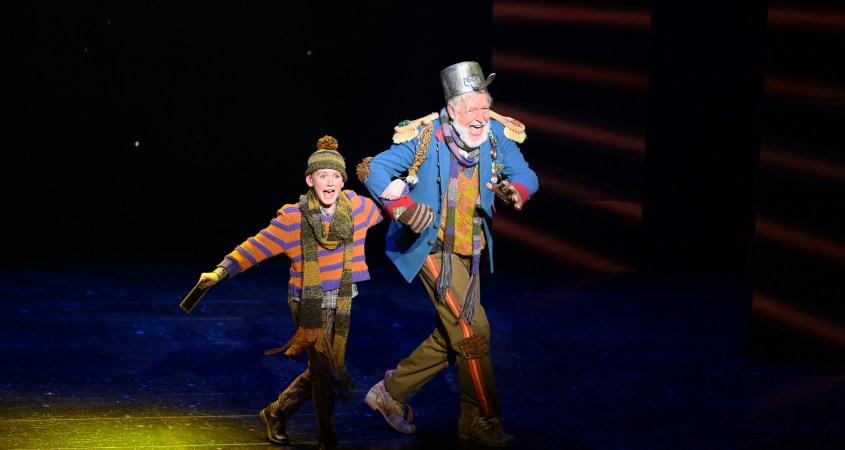
Review: Charlie and the Chocolate Factory

A colourful romp sure to delight

By Bradley Storer

The musical adaptation of Roald Dahl’s beloved childhood tale opened in Melbourne this week, and while children will surely be delighted by this colourful romp, I feel its charms may be lost on adults with fond memories of the 1971 film.

The problem is best encapsulated in the treatment of Wonka himself – here onstage from the very first moment of the show, the character loses the mystery and ambiguity of Gene Wilder’s portrayal. In his initial interactions with the unwitting Charlie, Wonka comes off as casually cruel in a way that makes it hard to stomach the rest of his journey, despite Paul Slade Smith’s natural charm and clear command of the role. The wonderment and entrancing beauty of the original story and movie only truly appears in the strains of the classic ‘Pure Imagination’, as video projections and LED lights transform the stage into Wonka’s Edenic candy-land.

On opening night Lenny Thomas was irresistibly loveable as Charlie, particularly in his final scene. Tony Sheldon wielded his stage expertise and comic timing to maximum effect as Grandpa Joe, dropping groan-worthy Aussie references and clearly having the time of his life. As Mrs Bucket, Lucy Maunder was radiant, as always, in a somewhat thankless role.

The quartet of Charlie’s fellow ticket winners are even more unlikeable than you remember, with the exception of Jake Fehily’s glowingly good natured Augustus Gloop (unfortunately buried under a cavalcade of one-note fat jokes). Karina Russell brings beautiful dancing to the screechingly awful Veruca Salt, and her eventual demise is one of the few shocking surprises of the evening. Harrison Riley nails the physical comedy of the sociopathic hacker Mick Teavee, but Jayde Westaby as Mrs Teavee has to deal with an introduction number so fast that the lyrics are completely lost. Backed up by the refreshing Madison McKoy as Mr Beauregard, stand out Jayme-Lee Hanekom is a miniature supernova of talent as ‘queen of pop’ Violet.

I found the new tunes for the show mostly prosaic, despite being lifted by the masterful musical direction of Kelly Dickerson. The ensemble in their multitude of roles are world class, and the appearance of the Oompa Loompas is quite possibly the high point of the entire evening.

Despite the uneven material, the talent, dedication and vitality of the Australian cast shines through, creating a worthwhile family-friendly night at the theatre.

Dates: 15th August – 1st December

Times: 7pm Wednesday, 7:30pm Thursday – Saturday, 2pm Saturday, 1pm Wednesday and Sunday, 6pm Sunday

Venue: Her Majesty’s Theatre, 219 Exhibition St, Melbourne VIC 3000

Bookings: ticketek.com.au, 13 28 49, at the box office or Ticketek Outlets.

Photography by Heidi Victoria

Review: Since Ali Died

Theatre making and storytelling at its simple best

By Owen James

Using nothing but words, an empty stage and some very simple lighting, wordsmith Omar Musa has concocted a beautiful and chaotic cacophony of language that inspires, amuses, and shocks with Since Ali Died. Musa is a master conductor of words, and this symphony reflects his passion for these art-forms – poetry and rap.

Using “the death of his hero Muhammad Ali as a lyrical springboard”, Musa launches into story after story, tackling love, loss, and divinity – and we are enthralled for the entire duration. There were many moments throughout the hour-long performance you could hear a pin drop. Musa is scathingly honest as he presents reflections on his life as a “brown man growing up on black land”, enduring episodes at primary school where he was told his “skin is the colour of shit”, and recounting encounters with racist politicians (inspiring the rap piece ‘Un-Australia’), tumultuous past loves, and perhaps his worst enemy, personal demons. There are insightful personal descriptions as he defines (and defies) wrestling with identity, and the expectations that stem from heritage and masculinity.

As this compelling performer rhymes and riffs, any notions of poetry being a boring and antiquated requirement confined to the high school classroom are demolished – every word is riveting and current, the atmosphere in the audience alive with anticipation. But it’s more than his gritty eloquence as a poet that makes the work so engaging; Musa is a storyteller who is charming and relaxed no matter the topic, always comfortable presenting his work mostly alone onstage, with the exception of guest performer Sarah Corry alongside for two pieces.

Fully deserving of the standing ovation he received at the end of the performance, Since Ali Died is a cutting and contemporary lyrical refraction of Musa’s powerful perspective on Australia and humanity. It’s a reminder of how powerful language can be, and a wake-up call to habitual Australian ignorance.

Don’t miss this intimate and intelligent work, playing a very short season at Arts Centre Melbourne until August 17th, as part of the third year of their ‘Big World, Up Close’ series. Tickets: https://www.artscentremelbourne.com.au/whats-on/2019/festivals-and-series/big-world-up-close/since-ali-died

Photography by Robert Catto


Review: ‘Night, Mother

A balanced of light, shade and reams of texture

By Ross Larkin

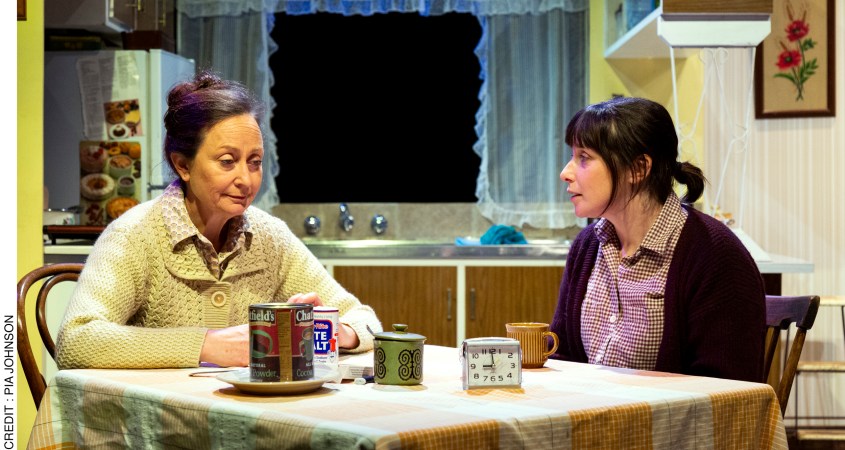
One could be forgiven for hesitating at the prospect of a two-hander, set in real time, staged in one act, and all about suicide. It sounds gruelling for the audience and more gruelling for the actors. And it is – intensely so. However, it’s also not to be missed.

Marsha Norman’s daring and brutal piece makes no apologies for its subject matter. Right off the bat, middle-aged divorcee, Jessie, reveals, quite calmly to her ageing mother Thelma, with whom she resides, that she’s decided to take her own life, and plans to do so later the same evening. 

What ensues is an emotional minefield of denial, fear, rage, nostalgia and revelation as the pair unpack Jessie’s reasoning and Thelma tries every approach she can muster to talk her daughter out of it. 

Aside from desperate and harrowing, ‘Night, Mother is a fascinating character study, enhanced by the fact that Jessie is level-headed and contented with her decision. This is offset by Thelma’s spiral into despair as she tackles every stage of grief in the space of 90 minutes.

It’s a tall order for the most capable of creatives to undertake, and thankfully, Iron Lung Theatre succeeds in dealing with the content intelligently and thoroughly. 

Imperative that such a dialogue heavy piece set in one location find all the right emotional beat changes, subtext and layers, director Briony Dunn fleshes these out for the most part, particularly in the final third of the piece when the tension really starts to wreak havoc. 

As the troubled Jessie, Esther van Doornum brings a beautiful subtlety to a role, which, in the wrong hands, might risk an overly depressive portrayal, but van Doornum hits the mark with her matter-of-fact, often peaceful resolution, only letting tinges of sadness emerge at the most poignant moments.

Caroline Lee as Thelma has her work cut out for her in a heavily demanding role that requires a plethora of intense emotional states, and she does a fine job where many an actor might struggle.

‘Night, Mother may not be for the faint hearted, but it’s every bit engrossing and rewarding in a rare instance where extremely heavy content is balanced with light, shade and reams of texture. Iron Lung’s version of it is definitely worth seeking out.

‘Night, Mother is playing now at Chapel off Chapel in Prahran until August 17. Tickets are available online at www.chapeloffchapel.com.au or by calling the box office on 03 8290 7000.

Photography by Pia Johnson

Review: A Midnight Visit

An immersive, choose-your-own-adventure, gothic experience

By Narelle Wood

 A Midnight Visit is an immersive, choose-your-own-adventure experience inspired by the works of Edgar Allen Poe. Poe, famous for his dark and morose themes, both captures and plays with the human psyche, and it is this intent that Broad Encounters attempts to capture in their gothic house of madness.

The audience are free to move in and out of rooms at their discretion, literally choosing the way they experience the performance. Characters also move about, blending the boundaries between audience participation and voyeuristic experiences. Just as the characters and audiences move from room to room, so do the performances. But with the exception of Poe’s work there is seemingly little to no thread to connect the different vignettes together, the only indication that a performance is taking place is the sound of a monologue or singing floating down the long black corridors.

The performances I stumbled upon – John Marc Desengano’s Detective Dupin, Sarochinee Sawakghim’s the Black Cat and Bri Emrich’s Madeline Usher – were amazing, and I would have been happy to sit for the hour and take in their interpretations of the different gothic tales. While I’m sure I missed significant parts of the various performances on offer, Danielle Harvey (Production Director) and Kirsten Siddle’s (Production Creative Producer) attention to detail throughout this production is astonishing. The rooms, thanks also to Loren Bell (Design Manager) and her team, are performance pieces in and of themselves. Close attention reveals minute details, such as tealeaves in the shape of a raven at the bottom of a teacup, adding to the authenticity of this gothic fantasy world that Harvey and Siddle have produced. Layer on top of the visual aesthetic a haunting soundtrack of beating hearts with other atmospheric music and sounds, as well as detailed costumes and make-up, it is obvious that A Midnight Visit has been realised through the collaborative efforts of some extremely talented people.

I did leave disappointed though. I was frustrated that I had missed bits of the performances and confused about how it all came together; I admit though I do prefer theatre with a clear narrative thread. My main gripe wasn’t to do with the show, but the pre-show theatrics. We were asked to sign a waiver before entering, but any indication of this is buried deep in the last line of the Frequently Asked Questions on the website. This seemed like information that needed to be more upfront. We were also asked to wear facemasks and while I understand the aesthetic behind this, it was presented as a fait accompli despite some people’s discomfort. It was clear that the pre-show is designed to heighten the sense of anticipation, and that may have been at the root of my disappointment; I left wanting more.

If your idea of a night at the theatre revolves around voyeuristic comfort and a clear storyline, this is not for you. But the premise of A Midnight Visit is so different and interesting that I think it would be an absolute delight for anyone who desires to be immersed in the gothic brain of Edgar Allen Poe or for theatregoers who revel in a show specifically designed to push some boundaries.

Venue: House of Usher – Funeral Services, Melbourne

Season: Until 15th September

Tickets: From $62

Bookings: https://amidnightvisit.com/#tickets

Photography by Graham Denholm


Review: My Dearworthy Darling

An inspired and thought-provoking work

By Leeor Adar

Feminist collaborators and visual provocateurs, The Rabble (Emma Valente and Kate Davis), bring audiences, My Dearworthy Darling, a thought-provoking work that is both entrancing and utterly disconnected all at once. I was particularly titillated that I’d be critiquing the work of the widely respected writer, Alison Croggon, a former critic that I both admire and who’s theatrical opinion I’ve revered. It is surprising to me then to find that I have a love-hate relationship with this work, which sets my mind into motion and confounds it equally.

My understanding is thus: our leading woman (Jennifer Vuletic) is struggling with her mental health as she wrestles her own image of herself away from her worst emotional abusers, her partner (Ben Grant) and her sister (Natalie Gamsu), who are also gripped with the torments of their life and its mundanity. In breaking free, Vuletic’s character strikes a chasm to the past, unravelling her own mind and reflecting the collective woes of womankind to a time where voicelessness was enshrined.

The chorus of medieval voices is perhaps the most breathtaking part of this production. Croggon’s inspiration here was taken from her residency in France’s monastery and centre for theatre writing, La Chartreuse. Inspired by Margery Kempe, a 14th century English Christian mystic, who’s book was considered to be the first autobiographical work, the chorus speaks the text of this work as Vuletic’s modern woman is grappling with telling her own truth, rather than through the twisted reflection of others.

It’s brilliant to me that in Croggon’s own words, the “writing is not so much about conscious intention as it is about process and discovery”, and My Dearworthy Darling achieves exactly that. Like an unfurling scent, I am at first overwhelmed and unable to see the notes for what they are, but with time I see with clarity the complexity of its character. The work on first impression, is a high-brow ‘art for art’s sake’ snobbery into the woman’s mind, with particularly gifted composing (Valente), and set and costume design (Davis). But with deeper introspection, I see where the Croggon/Rabble collaboration was reaching for.

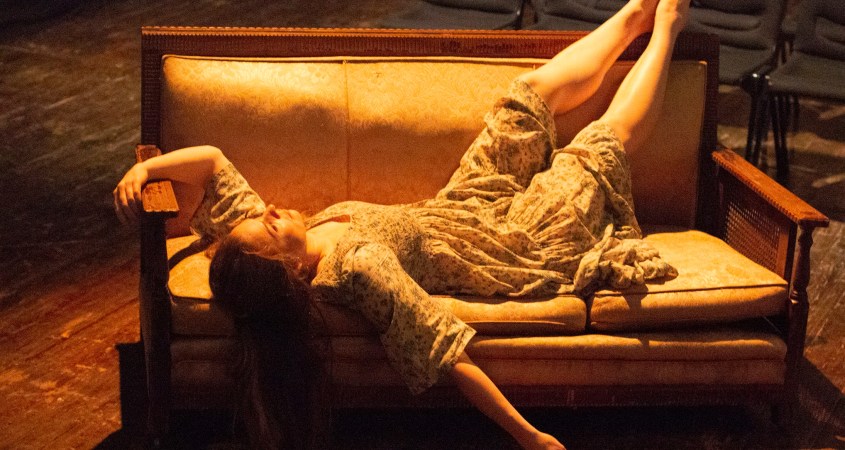
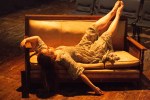
The play splits between often humorous and relatable daily modern drudgery, and the other realm of our lead’s enigmatic psyche. The work opens with Vuletic sprawled sensually upon a boulder, silk-satin, languid-limbs, describing in luscious detail how her body is exposed and caressed. This visual and erotic reverie is interrupted by her partner, accusing her of poor memory as he refuses to take responsibility, an assault upon the earlier voluptuousness. The woman here is servile, not in charge of her voice or body, but a vessel without steam. This emptiness continues to pierce her reality, and she is accused by her sister of being selfish and cruel, goading the partner’s disgust. Unsurprisingly, facing the internalised misogyny of the existing women of her life, Vuletic’s character retreats in her mind to a world where she is supported in body and mind by the hooded chorus. After a particularly brutal episode in her current reality, she is taken to a place without hard edges (a mental health care facility perhaps) and ascends to take a crowning place amongst the medieval chorus, eventually stripping herself bare of her life before.

My Dearworthy Darling will divide its audiences, and this is largely due to its disjointed and often confusing trajectory. What one can do is enjoy the lush language, stunning visuals and Old English choral pieces. It is an inspired and thought-provoking work, but I too left the theatre wanting to perch myself upon a rock, and contemplate what it is I’ve been exposed to, and if that’s all there really is.

My Dearworthy Darling will be performed at the Malthouse Theatre’s Beckett Theatre until 18 August 2019. https://malthousetheatre.com.au/whats-on/my-dearworthy-darling

Photography by Zan Wimberley


Review: Blackrock

Chilling tale of murder, misogyny and monstrous masculinity

By Bradley Storer

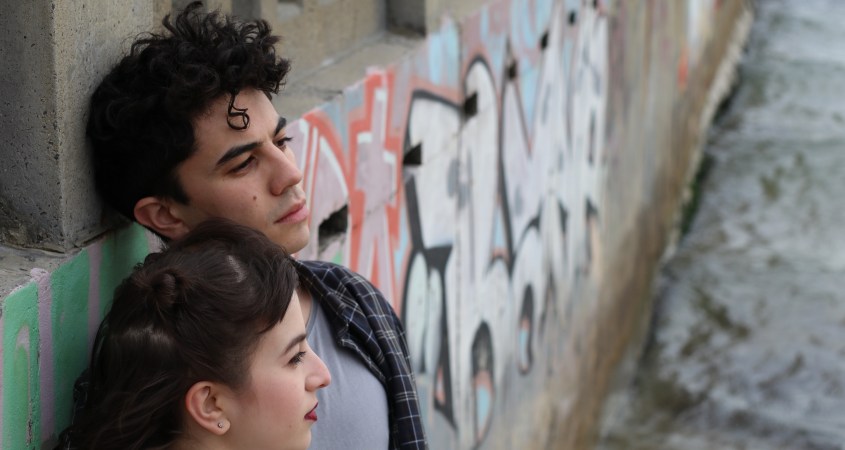
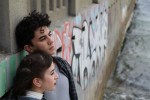
EbbFlow Theatre Company make their debut with a strong inaugural production of Blackrock, Nick Enright’s classic Australian work that remains as horrifically relevant as when it was first penned. This small town tale of murder, misogyny and monstrous masculinity proves that in the nearly twenty-five years since it was originally performed almost nothing has changed.

Every member of the cast feels perfectly suited to their role, managing the tricky transition between the broad comedy of the opening scenes to the darkening horror that engulfs the rest of the play. It is a credit to all the actors involved that I felt I knew every one of these characters from my own adolescence, laughing and cringing in recognition as they unfolded. Director Nicola Bowman wisely keeps the pace racing at high speed, although some of the scene transitions involving drums and metal scaffolding in the set slowed this down on opening night.

The standout of the cast is Jayden Popik as surfer legend Ricko, perfectly capturing the effortless and compelling charisma that slowly crumbles over the course of the story. Karl Richmond as Jared gives us a compelling portrait of a teenager caught between his own gentle spirit and the inexorable pull of masculine violence that envelops all around him. Luisa Scrofani ably handles Rachel’s transformation from lovestruck young girl to the strongest voice of moral outrage.

What must also be considered is the politics of a play (controversially based on the true murder of an 14-year-old girl) about rape culture that was written by a man and focuses primarily on male characters. While the exploration of male friendships and relationships feel painfully real and layered, the female characters seem curiously flattened and less textually complex. In addition to these questions is the implication of never having the female victim appear on stage or have any voice – she is essentially erased from the story of her own death.

While Bowman as director does an admirable job of emphasising the voices of women and the continuing marginalisation and violence against women in the modern day, the text feels inescapably planted in the male gaze and experience – the one aspect that has not aged well, though this is in no way the fault of this solid production.

An auspicious debut for an emerging company, and a strong take on an enduring classic that deserves viewing by anyone who loves Australian theatre!

Blackrock is being performed at St Martin’s Youth Theatre until 3 August. Tickets can be purchased online.

Photograph by Cameron Taylor featuring Luisa Scrofani and Karl Richmond.

Review: A Room of One’s Own

Sentient Theatre sets thoughts alight

 By Leeor Adar 

“Lock up your libraries if you like; but there is no gate, no lock, no bolt that you can set upon the freedom of my mind.” – V. Woolf

Virginia Woolf’s A Room of One’s Own remains so powerful it leaves my mind gaping at the beauty of her words, and the astonishing strength of what they carry. It is, and will always remain, a masterpiece by a woman, for women. Adaptor and director, Peta Hanrahan masterfully returns her adaptation to stage since its successful season in 2016 at La Mama.

Woolf’s A Room of One’s Own is a work ripe for adaptation and as Hanrahan points out, the words are no longer confined to their pages, breathing a new life into all that they offer – something which Woolf herself did in a lecture in 1928. In this adaptation, the dialogue is extracted from Woolf’s writing into a new medium and expressed by four narrators. The words restlessly turn the lived experiences of women and their sex across generations of voicelessness. Without the tools to articulate their insights and feelings, women have been historically forgotten and obscured by “reflecting the figure of man at twice its natural size”. We are reminded of all the doors closed in our faces, the education denied us, and the pleasures extricated from our lives from the pincer-like fingers of man and his indoctrinated disciples. The anger expressed in the language used to demean women in historical texts and even great literary works is a documented example of fear and an absolute lack of reason. Despite being such loathed creatures, Woolf clearly shows that women remain man’s obsession.

I absolutely loved how this production pulled the string of a history of mistreatment and fashioned it into a living and breathing criticism of the tired trope of women’s inferiority. It remains relevant both then and now, and without needing to examine the state of our world today, Hanrahan’s production sets our thoughts alight.

Much like Woolf’s A Room of One’s Own, the multi-narrator work is explored wonderfully through fluid dialogues on stage between The Questioner (Anthea Davis), The Diplomat (Marissa O’Reilly), The Sceptic (Anna Kennedy, also producer), and The World (Jackson Trickett). The strength of Hanrahan’s direction is evident in the engaging way her cast approaches the complex and eloquent material. The work feels like an enlightening reverie, and in this hour, we are invited into an articulate trance. Each actor embodies their role perfectly; Davis opens the dialogue like a seasoned lecturer, O’Reilly’s ethereal presence gently coaxes us to consider all viewpoints and Kennedy is magnetic with her casual wit that is both thought-provoking and on point. As the only masculine presence on stage, Trickett approaches the dialogue with respect – an outsider of sorts commenting from ‘the world’ at large.

Dagmara Gieysztor’s set design is minimalist to the unconcerned eye, but we are in fact surrounded by thousands of pages from books, strung up and fashioned like chains of history. Layer upon layer, laying down the foundations from one generation of writers to the next, androgynous minds unencumbered.

I think Woolf would have loved this production, grateful to see that her writing has inspired another generation of women to continue to create and explore fearlessly.


A Room of One’s Own runs until 28 July at fortyfivedownstairs. Tickets are available online or by calling the box office on (03) 9662 9966.

Photograph: Tommy Holt


Review: Come From Away

The theatre we need right now

By Kim Edwards

On the Canadian island of Newfoundland, if you’re not local, you’ve come from away. And in the remote little town of Gander, when 6579 strangers from all over the world suddenly arrived frightened, bewildered and angry on their doorsteps, the townspeople and their neighbours immediately took them all into their halls, schools and homes. They provided food, shelter, bedding, clothes, medication, toiletries and personal items, and supplied an even more generous wealth of kindness, support and friendship to their stranded guests – the international passengers of 38 planes diverted from New York on the morning of September 11, 2001.

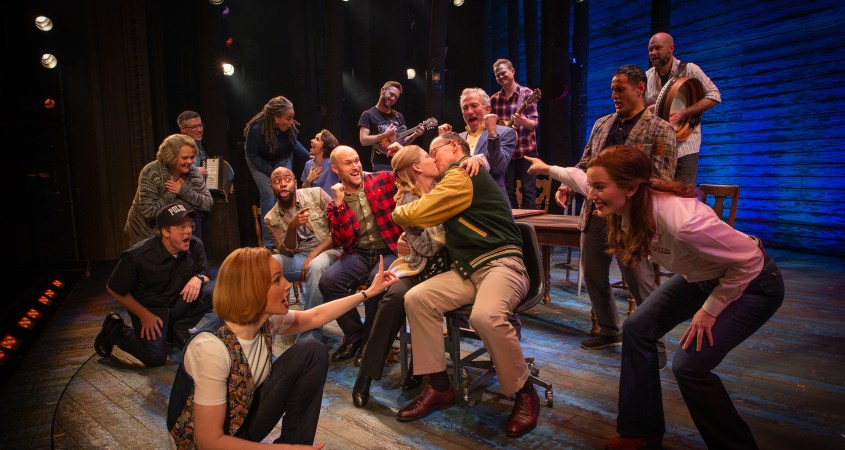
Come From Away is an utterly astounding, compelling, hilarious and profoundly moving theatre experience. In an era of jukebox musicals and movie-to-stage adaptations, this stunning creation written and composed by Irene Sankoff and David Hein is the epitome of what original music theatre as an art form can achieve. In ninety non-stop minutes, dozens of characters share their stories with us and the storytelling is both adroit and engrossing. Lyrics, dialogue, music and movement blend seamlessly and skilfully in weaving the varied tales and emotions together.

Extraordinary creative and technical achievements including Beowulf Boritt’s iconic timber set, Howell Binkley’s spectacular lighting design and Toni-Leslie James’ subtle and intelligent costume design work in visual harmony to establish landscape, character and atmosphere for the myriad of scenes, roles and locations. It is a triumph that you never lose track of who is playing whom where and when, which is grounded in Christopher Ashley’s direction and Kelly Devine’s musical staging.

Moreover, our yearning to hear and see more, and our burgeoning affection for the characters we discover rests powerfully with the individuals on stage. The cast of twelve (Kellie Rode, Emma Powell, Richard Piper, Sarah Morrison, Simon Maiden, Kolby Kindle, Douglas Hansell, Sharriese Hamilton, Zoe Gertz, Nathan Carter, Nicholas Brown and Angela Kennedy on the night reviewed) and the eight-piece band (Ben Smart, Xani Kolac, James Kempster, Matthew Horsley, Tim Hartwig, Caleb Garfinkel, Dave Beck and musical director Luke Hunter) are exemplary in their multifaceted performances. Actors meld easily from one memorable character to the next, musicians fluidly switch style, emotion or instrument, and we laugh at and cry for people we’ve only just met and songs we’ve just heard for the first time.

Come From Away at its heart is about people coming together in dark times to create something wonderfully good, and its true story and ensemble of storytellers reinforcing this poignant theme not only plays out in recognizing the amazing creatives who have built the production, but resounds in the audience experience as well. We are made at home and part of the story from the beginning. The constant addresses to the audience, uninterrupted performance time, well-crafted character arcs, the sweep and swell of songs and underscore, the fact every cast member is integral, the band are onstage in scene and get personal curtain calls, and our only moment to applaud mid-show is in unison with the performers makes for an experience where everyone matters. Everyone is part of the moment, we have all ‘come from away’, and it is little wonder the audience rose as one for a prolonged standing ovation when our journey together was over.

This was a unique experience. This is a special show. It’s wise and witty, inspirational and exhilarating. So if you’re feeling heartsore with life and the modern world lately, Come From Away has so much comfort, kindness, courage and comedy to share. This is a musical that welcomes you with open arms and sends you away more whole – and more hopeful.

You’ll be so glad you came.

Come From Away is currently playing at The Comedy Theatre, Melbourne. Tickets can be purchased online or by calling 1300 111 011.

Photograph: Jeff Busby

Review: AutoCannibal

Dark human habits on stage

By Lois Maskiell

The show kicks off with a voice over of a television reporter who announces the latest news. He speaks of poisoned livestock, catastrophic natural disasters and a perilous water shortage.

Next, a man is hanging upside-down by one foot. He takes a handsaw and slashes at the rope that suspends him. He crashes to the floor and you wonder, ‘why did he hang himself? Why did he free himself?’ Struck with the dilemma of extreme thirst, the man attempts to quench his craving. He works up such a sweat that he can wring dry his soaking sweatband into a glass. His face contorts as he gulps down the liquid.

Teetering with starvation this man is propelled into all manner of absurdities. Desperate for release, he has sex with a bag of rubbish shaped as a female figure. Desperate for food, he eats a fly. As he faces starvation, the man can’t shake the possibility of eating his own flesh. He stares at the rusty saws which hang from the ceiling.

AutoCannibal throws in your face the question of human will and its desire for self-destruction. Australian performer Mitch Jones, who has carved out a name of himself with Circus Oz and as Captain Ruin, explores the darker corners of the psyche through enchanting physical theatre. Jones is able to take his character’s pain to dark yet funny extremes in an atmosphere of industrial ruin designed by Michael Baxter.

Masha Terentieva, a talented performer in her own right who has toured with Cirque du Soleil and won five awards at Cirque de Demain 2017 (arguably the highest accolades in contemporary circus), turns her creativity to directing. Here, Terentieva showcases a keen directorial eye. In AutoCannibal each moment logically fits into the larger narrative despite how surreal it is. Bonnie Knight and Marco Cher-Gibard’s sound design and Paul Lim’s lighting generate heightened effects, creating powerful images.

The over-arching story of a man pushed to his limits is engrossing, and Jones’ ability to find comedy in the darkness of this vision is superb. Original, bold and disturbingly amusing, AutoCannibal is must-see physical theatre.

AutoCannibal runs until 21 July at Theatre Works, St Kilda. Tickets can be purchased online and by calling the box office on (03) 9534 3388.

Photograph: Jacinta Oaten