Category: Theatre

HOT BROWN HONEY: Return Melbourne Season

Superbly sassy, socially significant, and simply spectacular

By Jessica Cornish

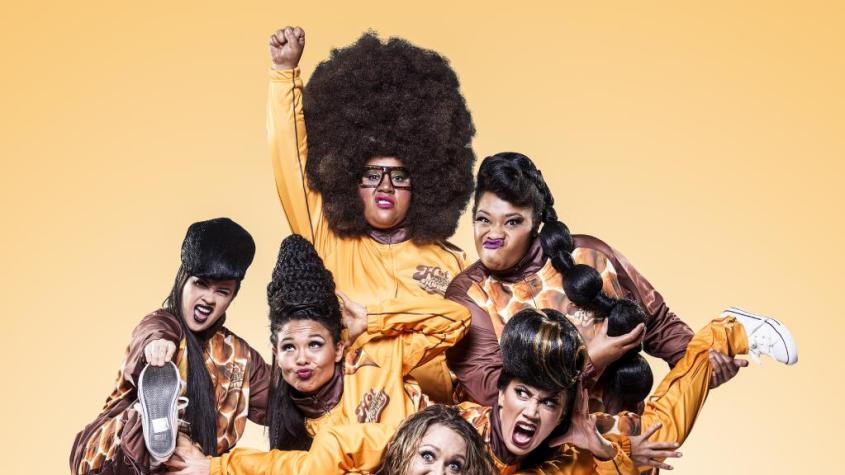
Hot Brown Honey is vivacious, provocative and highly entertaining. The all-female powerhouse cast has created an engaging and daring 75-minute package that  encourages the members of its audience to reflect on their social roles in challenging gender and race stereotypes. The production successfully managed to strike a perfect balance of playfulness and fun whilst addressing serious and troubling aspects of our society.
Hot Brown Honey 2.jpg

This raw production directed by Lisa Fa’alafi has immense potential to be an incredible piece of art, with only some further refinement needed to add complexity and sophistication to already good circus items, such as hoola hoop routines and an emotive aerial cloth number. The women cleverly weaved important quotes and messages about colonization, cultural appropriation, domestic violence and liberation throughout the performances enveloped by hilarious skits highlighting the all-too-familiar bogan-like behaviour often witnessed overseas in our neighboring city, Bali.

The music was well-chosen and arranged under the direction of the enigmatic Kim ‘Busty Beatz’ Bowers, although I sometimes felt the MC was a little out of breath. Overall the music was upbeat, bottom-heavy and just playful. I loved it all – plus the evening featured some impressive female beat-boxing.

The set was a dynamic beehive that was well-utilized with back light and a platform for the MC and others. Unfortunately, the lighting design seemed a bit under-developed and needs to be reviewed. There were often unused spotlights, performers were left dancing in the dark at times and weird beams of light fell across artists’ faces because of the follow-spot poorly blending with the stage lighting.

Overall, this show was completely fascinating, empowering and voiced an important message for each Australian to consider. The performance forces you to reflect on the role you play within broader society, our positions of vulnerability or privilege, and how we are perpetuating or fighting everyday stereotypes.

Hats off to the wonderful and talented women of Hot Brown Honey: Kim ‘Busty Beatz’ Bowers, Lisa Fa’alafi, Materharere Hope ‘Hope One’ Haami, Alexis West, Ofa Fotu and Crystal Stacey. Their voices deserve to be – and should be – heard.

6 – 11 December, 2016
Thursday 8 December, 7.30pm
Friday 9 December, 7.30pm
Saturday 10 December, 7.30pm
Saturday 10 December, 10.30pm
Sunday 11 December, 7.30pm

VENUE

Melbourne Arts Centre

BOOKING

https://www.artscentremelbourne.com.au/whats-on/2016/comedy-cabaret/hot-brown-honey

Twelve Angry Presents BACHELORETTE

Satisfyingly dark and disturbing

By Caitlin McGrane

Bachelorette by Leslye Headland is a razor-sharp tragi-comedy that exemplifies what I have been saying for years – we need more unlikeable female characters on stage and screen. The 2012 film of the same name is a classic in my house, although its final act never quite seemed able to live up to the saltiness promised in the set up. This latest version from Twelve Angry more than fulfils those promises.

Bachelorette.jpg

Twelve Angry is a Melbourne-based independent theatre company with the specific aim of championing the creative voices of women. In this production, director Matilda Dixon-Smith has created something so dark and twisted, yet utterly brilliant, in its illumination of how society treats women. Bachelorette is fucked up – none of the characters are likeable and, unlike the film version, they are irredeemable in this stage show; I promise this is a good thing.

The play opens as Gena (Rebekah Robertson) and Katie (Lucie Gavanon) enter a hotel room heavily stockpiled with booze and cocaine. They mope about, complain about their lives and discuss the upcoming nuptials of their “friend” Becky (Sara Tabitha Catchpole). The repeated references to Becky’s weight (she is almost exclusively referred to as ‘Pigface’) demonstrates how women are often valued only in relation to their fuckability – none of her high school friends can believe she is the first one to get married. Gena and Katie are kind of fine as characters, but I felt the show only really got interesting when Regan (Holly Brindley) showed up. Regan amps up the chaos and brings back the repugnant Jeff (Joshua Monaghan) and the pitiful Joe (Conor Misson).

Carnage reigns supreme in Headland’s script, and set designer Gabby Lewis (supported in the construction by Nick Sanders, Eva Stacey and Hanna O’Keeffe) has cleverly mirrored the depravity in the play in the set as the place actually starts to fall apart.  Costume designer Hannah Crone and wardrobe assistant Bec Hill’s carefully chosen outfits fit the characters well. Lighting design (Siobhain Geaney) and sound design (Jess Keeffe) was fine, but could probably do with some more subtlety to help enhance the performance. There was a notable and awkward lack of sound in the opening scene, which might easily be rectified.

It’s always a delight to see productions that support women in creative fields (in fact it’s ways good to see women supported in any field), but Bachelorette does something unusual in showing how nastiness and aggression aren’t the exclusive preserve of men, and unlikeable female characters reinforce the idea that women don’t need to be likeable – we’re not here to help you deal with your feelings and/or guilt. Katie, Regan, Gena and Becky are unashamed of their shortcomings, drug and alcohol abuse and disordered eating, but rather than glorify these traits, the play shows how truly tragic it is that we expect women to shut up and deal with this stuff – our problems aren’t any easier just because they’re unseen. In fact that might be the most tragic thing of all.

Twelve Angry presents BACHELORETTE

6-11 December 8.00 PM \ The Stables, Meat Market, North Melbourne

twelveangry.tumblr.com

Bookings: chook.as/twelve-angry/bachelorette

Poppy Seed Festival Presents F.

Making text about sex

By Myron My

It’s probably rarer now for parents to need to sit down and speak to their children about the birds and the bees. Books such as “Where Did I Come From?” now seem obsolete, and by the time teenagers are learning anything to do with sex education in school, they already seem to know it all. Presented by Riot Stage as part of the Poppy Seed Festival, F. attempts to explore how a group of teenagers come to terms with sex and sexuality as most people of the last decade have – through technology.

F..jpg

Unfortunately the execution is not always successful, as the production’s central concern with how technology is used with sex is at times completely ignored, or does not explore issues raised to any great depths. Thus, one of the main story lines – where two friends enter into a sexual relationship – is surprisingly developed without featuring the use of any social media or technology whatsoever, apart from one scene where the male character refers to the three voicemails he left her. In contrast, a female character’s revelation that an ex-partner has put a naked photo of her on the internet is initially met with mediocre disgust by her friends but is then immediately dropped and never mentioned again – nor do we see any impact this event has upon the character.

Despite being developed from online survey content and real-life narratives, the stories explored in this production never seem to come from a place of authenticity or honesty, and feel like they have been chosen or created in an ambitious attempt to cover every possible topic regarding teenagers and sex: masturbation, vaginas, homosexuality, suicide, porn, masculinity, and so on, and so on. Within this plethora of material, I felt the characters portrayed lacked motivation, and there appeared to be a need for more guidance in the young cast’s valiant attempts to show these teens as real people.

Katrina Cornwell‘s direction creates some strong visuals, especially during the musical interludes where all the characters appear on stage at various times before disappearing backstage again. The interesting solipsistic idea that all these characters’ emotions and thoughts belong to one person is best explored here and in the final moments of the show, where sentences begin to flow into one another as two microphones are shared between the cast of twelve.

With a tighter narrative structure and further thoughtful examinations of its characters’ desires and drives, F. could certainly be a piece of theatre with something important to say. But at this stage, investigating the role of the internet when it comes to learning about sex and life is not a new concept, and sadly, F. – in this current production – fails to add anything new to the mix.

Venue: Trades Hall, 54 Victoria St, Carlton
Season: until 11 December | Wed – Sat 8pm, Sat 2pm, Sun 4pm
Tickets: $35 Full | $25 Concession
Bookings: Poppy Seed Festival

 Image by Sarah Walker

Poppy Seed Festival Presents WHAT’S YOURS IS MINE

Ambitious attempt to traverse an Australian cultural landscape

By Myron My

“Give me a home among the gum trees, with lots of plum trees…” How the Australian dream has changed since 1974. But has it been for better of for worse? Presented as part of the Poppy Seed Festival, Hotel Now’s What’s Yours Is Mine explores Australian values and ownership of a land that was never ours to own, with an elaborate touch of campness.

Whats Yours is Mine.jpg

The show begins at a reunion for Olympic Games volunteers where three friends – Milly, Ollie and Syd – reconnect and decide to go on a road trip together; Milly has just quit her job, Ollie has a car and Syd just wants to get away from everything. Cue road-trip montage and offbeat adventures as the three friends travel through the country.

The performances from Hayden Burke, Simone French and Tom Halls are full of energy and commitment, and having seen French and Halls in Hotel Now‘s 2016 Melbourne Fringe Festival show, Nothing Special, I found the two continue to share some great chemistry on stage. The direction by Yvonne Virsik is insightful and provoking in the way she chooses to represent and display the ideas raised in show.

What worked brilliantly in Nothing Special was the focus on an aspect of modern culture that was explored to the extreme. Sadly, I feel this doesn’t work as well in What’s Yours Is Mine, as this look at Australian culture is far too broad in scope, and what we end up seeing is a whole lot of ideas, but a disjointed story that is difficult to connect with.

There is a scene where the three characters describe all the “ingredients” needed in explaining what makes ‘Australian culture’, and I couldn’t help wishing the creators had taken their own advice here and been more refined and less haphazard with what they chose to explore and how they choose to do it. As it stands, What’s Yours Is Mine is a pretty performance to look at on the outside, but on the inside I’m afraid it felt a bit of a mess.

Venue: The Butterfly Club, 5 Carson Place, Melbourne
Season: Until 4 December | 8.30pm
Tickets: $35 Full | $25 Conc
Bookings: The Butterfly Club

Western Edge Presents CALIBAN

Dynamic and captivating

By Leeor Adar

The culturally diverse Western Edge Youth Arts’ Edge Ensemble under the directorship of Dave Kelman and Tariro Mavondo delivers a spirited, vibrant and painfully accurate adaptation of William Shakespeare’s The Tempest with Caliban.

Caliban.jpg

Who is Caliban in this tale?

We are not dealing with a deformed witch’s son, but a native of an island, which carries the spirit of his mother – all mothers – in the sand, air and water. The Edge Ensemble’s Caliban (Oti Willoughby) is every pure thing, every angry living thing that despises the poisons inflicted by civilisation on the natural world.

In this tale Prospero is Prospera (Natalie Lucic), and Ariel (Piper Huynh) is a machine, not spirit, that can think up realities to save the planet from global warming and other ills that contribute to the inevitable downfall of our world. But Prospera needs capital. Propera needs wealth. Prospera’s adopted daughter, Miranda (Achai Deng), is shipped off with billionaire Afghani, Ferdinand (Abraham Herasan) for a better life, a life of opulence, but little freedom and incredible isolation. It is ironically a lonely and uncertain life at the top of the world, but all is not lost.

Caliban tackles big ideas with humour and poignancy. This is a remarkable and highly physical performance delivered by an ensemble with differing physicality. The performers are excellent, emotive, funny and totally humane. So much of the story told is delivered by this troupe through their bodies, and they each deliver something unique. Credit must be given to movement director, Amy MacPherson, who has successfully conjured the best of the cast. The set design by Lara Week, who previously worked with Mavondo in Greg Ulfan’s 3 Sisters, provides yet another bright and adaptable space that works well for the performers. Turquoise cylinders serve as podiums, seats, towers, and the ever-present reminder of man-made waste.

There is at the heart of this story a great longing for a home that is being stolen by land erosion and war. On one hand our lovers, Ferdinand and Miranda, each long for their homes, Afghanistan and the Sudanese Abyei Area, each torn, each broken by the worst of human nature. On the other, Phano (Rexson Pelman) longs for a Samoa with an uncertain future, and Caliban for his island home – two examples of the fate rendered by the hands of global warming, another ongoing man-made calamity.

The tragedy of our characters is that they each seek to do well, but fail fundamentally on their quest. It is deeply Shakespearean, but simply a timeless tale of humanity. Prospera is blinded by her mind, Ferdinand by his desire for respect, and Caliban by his anger. Their undoing is deeply psychological and a result of the previous ills of man-made affliction. And so is the cycle of human nature…

Caliban will be showing for its final night tonight, November 26 at 7pm at the Coopers Malthouse Theatre. Bookings: http://malthousetheatre.com.au/whats-on/caliban

Image by Nicola Dracoulis

La Mama Presents MADAME NIGHTSHADE’S POISON GARDEN

Fancy a drink?

By Myron My

When Madame Nightshade appears in her garden and welcomes the audience in her own unique style, you quickly realise that all bets are off and anything can happen in this absurdist clowning show and that, no matter where you sit, you are not safe. Performed as part of La Mama’s Explorations season for work in various stages of development, Madame Nightshade’s Poison Garden is a show that will leave you stunned and flabbergasted with plenty of laughs.

Madame-Nightshades-Poison-Garden.jpg

Madame Nightshade’s Poison Garden is like watching two shows. The first half has a twisted, macabre and imaginative whimsy to it. Vegetables are manipulated into hilarious firearms and grenades, and while there is a scene with liquids and test tubes that could cause some anxiety in audience members, there is a sadness and a disturbing sweetness to Madame Nightshade’s actions and behaviour. However, upon drinking her “poison” Madame Nightshade transforms into a creature that is difficult to describe, but one that closely resembles a Dr Jekyll and Mr Hyde situation.

Unfortunately, this is where the magic and charm of Madame Nightshade’s Poison Garden begins to wane for me. The time and effort that was spent in creating the picturesque garden environment is no longer relevant as this new world is created, and the latter is less thoughtful and more crude and obvious. Now we are dealing with sight gags that so many American comedies seem to rely on, with stories that seems to come from nowhere with no real purpose, and literal toilet humour. While there are some entertaining parts in the second half, it is the first half I so desperately wanted to see more of.

The show is conceived, devised and performed by Anna Lehmann Thomson who clearly has a knack for clowning and finding humour in the small things. She thinks well on her feet throughout the show and even when props are not where they should be, her improvisation is fast and clever.

Independents artists are very fortunate to be given the opportunity to perform new ideas and shows to an audience with La Mama’s Explorations season. While there is definitely a place for Madame Nightshade’s Poison Garden to exist in the theatre world, I feel Thomson needs to determine what kind of story and character Madame Nightshade is to be if it is to find an audience to stay with her for the whole adventure.

Madame Nightshade’s Poison Garden was performed between 19 – 21 November at La Mama Theatre.

Image by Mikey J White

Malthouse Theatre Presents BLAQUE SHOWGIRLS

Truly outstanding

By Caitlin McGrane

Nakkiah Lui’s searing portrait of white Australia’s treatment of Aboriginal people, Blaque Showgirls, is vital viewing for all white people. In this production, Lui does not shy away from intensely uncomfortable subjects, but her punchlines always hit their target.

blaque-showgirls

The show opens as Sarah Jane (Bessie Holland) starts performing her signature dance, the Peking Emu on stage in Chithole, Queensland. Sarah Jane is a white-skinned ‘blaque’ girl who dreams of making it as a dancer at the famous Blaque Showgirls show in Brisvegas, just like her mother. With a voice that could shatter glass, and dance moves that would not be out of place in any reputable club in Melbourne, Sarah Jane is unceremoniously booed offstage. Sarah Jane makes the journey to Brisvegas to begin her journey to stardom, where she meets the amazing Chandon (Elaine Crombie), Kyle McLaughlan (Guy Simon), and Molly (Emi Canavan). Chandon and Kyle are the owners of Blaque Showgirls, the best and toughest show in town; Molly meanwhile is Sarah Jane’s Japanese sidekick who gets continually cut off when she’s talking. As Sarah Jane (aka Ginny) begins to work on her dancing with TruLove Interest (spelling: uncertain, Guy Simon) she starts to discover her true culture through the ‘Sacred, Sacred Really Sacred Dance’ (never-before-seen).

By the end of the performance my face hurt from laughing so much. Director Sarah Giles has worked magic with Lui’s exceptional script, and with it the duo has delivered something truly outstanding – the production perfectly skewers Australia’s bonkers and backwards attitudes to race and cultural appropriation, while Ginny continues to wreak havoc and destruction on the lives of those around her, her life continues to get better and better. Even finding out the truth about her past fills her with unconscionable optimism.

The production is completed with wonderful set and costume design from Eugyeene Teh, lighting design from Paul Jackson, composition & sound design from Jed Palmer, and movement direction from Ben Graetz. The team obviously have a tremendous passion for the subject matter, which left me deeply sympathetic to the tiny bumps in the production, which should be ironed out once the cast gets further into the show’s run.

There is so much more I wish I could say about Blaque Showgirls, but you should just go see it, especially if you’re white.

Blaque Showgirls is now on at the Malthouse until 4 December 2016. More information and tickets at: http://malthousetheatre.com.au/whats-on/blaque-showgirls

Image by Pia Johnson

Theatre Works Presents ANIMAL

Core-shaking theatre

By Myron My

Watching Animal is a rare theatrical experience. It has such a visceral effect on you that you are left shaken and feeling extremely vulnerable and angry as you walk out. Created by Susie Dee, Kate Sherman and Nicci Wilks, it is an exploration of domestic violence and how women are meant to react in a world where violence against women and male brutishness are celebrated – and it is as gritty as physical theatre can be.

Animal.jpg

The stage design by Marg Horwell feels like a large shipping container; dark, cold and empty except for a number of small square cages. The two sisters climb and crawl over them, the whole time emoting that they are also caged, desperately looking for a way out. The tattered netting that covers the roof can be seen as protection from the outside, but with the many holes in it, it is only a matter of time before it is destroyed. 

Composer Kelly Ryall builds a suffocating and unsympathetic environment from the opening moments of the show, and is relentless in drawing you into the sisters’ world. There are moments in Animal where you feel like you need to look away as the horror unfolds, but even if you do (which you shouldn’t), the sounds are so vivid that they create the visuals for you regardless. There is one moment particular, where along with Andy Turner‘s lighting design, the shadows that form along the walls and menacingly envelops the two sisters involves some nail-biting tension and panic.

All these elements work meticulously together to support the two performers on stage. Sherman and Wilks show strong commitment, strength and stamina in their challenging roles. The duality (and also the blending) of playful sisters who depend on and support each other to hyper-aggressive fighters has a complexity that the two are able to authentically create on stage. The need to swap between these “characters” in seconds is not only a physical demand on their bodies but also an emotional and psychological one.

As with SHIT and The Long Pigs, Dee’s direction allows for moments that make us laugh, surprise us, and haunt us. With a show like Animal, pacing is extremely important and Dee ensures that there are adequate breaks between the truly dark moments of the show, so that by the time we reach the powerful conclusion we are completely engaged with the piece.
While there is no dialogue in Animal, it speaks volumes regarding the immense impact domestic violence and violence against women has on women: the violence that they experience and also the violence that it breeds. Compelling, gruelling and masterful work by Influx Theatre, Animal is raw theatre at its finest.

Venue: Theatre Works, 14 Acland St, St Kilda

Season: Until 27 November | Wed – Sat 8pm, Sun 5pm

Tickets: $35 Full | $26 Conc, Under 30, Groups 8+

Bookings: Theatre Works

Image by Pier Carthew

Red Stitch Presents UNCLE VANYA

Chekhov adaptation is both smart and stylish

By Leeor Adar

Nadia Tass continues her accomplished direction here in Annie Baker’s adaptation of Anton Chekhov’s Uncle Vanya. It is one of the best things I’ve seen this year, and Red Stitch delivers some of the best Australian theatre once again. Having witnessed a number of Chekhov productions recently, it is a delight to see such an accomplished and stylish cast bring to life one of Chekhov’s more titillating works. Uncle Vanya brings the longings for life, for land and for love in a way that embraces the depths of the emotional life rarely written so well. The melancholy acceptance of our lot rings true, we almost feel like tearing down the walls of the little world on stage and freeing the characters from their own reverie and turmoil.

 Uncle Vanya - Rosie Lockhart & Ben Prendergast c. David_Parker.jpg

Baker’s contemporary adaptation of Uncle Vanya captures the larger-than-life torment of the characters in a way we recognise as an audience. From the plight of the forests to the plight of the loss of youth and vigour to sedentary living, Chekhov’s world continues to make sense to contemporary audiences. While admittedly his world tends to drag (why any work should go beyond two hours is increasingly beyond me), the Chekhovian drag perfectly symbolises the endless days that follow in the pursuit of living – so aptly considered by the character of Sonya.

Long-time resident of Red Stitch, David Whiteley portrays the title role of Uncle Vanya with humour, bitterness and vitality. It’s hard playing a lovelorn, broken man, but Whiteley does it with panache. Whiteley is accompanied brilliantly by Ben Prendergast’s Astrov, the country doctor-cum-man of the earth. Both fall prey to the bored wanderlust of the leisurely Yelena, portrayed with so much grace, guile and allure by Rosie Lockhart. Lockhart’s mystery is balanced well with Sonya’s earthy kindness, played by Eva Seymour with astonishing conviction. The supporting cast bring their own, with a special mention to Justin Hosking’s tragi-comic Telegin, who’s timing and awkwardness are utterly endearing. Marta Kaczmarek’s ‘nanny’ Marina’s watchful, wise gaze pervades the production with the kind of certainty that only comes with a life lived and observed. Together this ensemble cast seamlessly delivers this universal family drama with an intimacy and tenderness that does justice to the writer’s work. My only displeasure is with the Russian accents deployed with too great a variety by the actors to genuinely contribute to the overall work.

Sophie Woodward’s set and costume design captures the country home feel astutely. The little window gazing towards the countryside that only the characters can see out of perfectly encapsulates the unending longing. The lounge sofa converts so well from the bed of the exhaustingly self-important Professor, Serebryakov (Kristof Kaczmarek), to the melancholy place where Voynitsky drowns his sorrows. The set is utilised very well, and the carefully thought-out production is aided by Woodward’s style.

There is great humour and poetry to Tass’ Uncle Vanya, and the excellent direction kites its audience along, observing all the moments that rupture, and all those softer moments in between. Chekhov fans will endure, and they will enjoy. For those who are unfamiliar with the work, this production would be a great place to start.

Uncle Vanya continues to be performed at Red Stitch until December 17.

http://redstitch.net/bookings/

Image by David Parker

La Mama Presents HANDS OVER EYES

Intelligent and engrossing new work

By Myron My

There were times while watching Hands Over Eyes that I felt like I was watching a live episode of Black Mirror, a TV series that looks at how our over-reliance on technology can have far darker consequences than we could have imagined. Presented as part of La Mama Theatre Explorations season for work in various stages of development, Peter Danastasio’s Hands Over Eyes raises discussion on perceptions of truth and honesty and how the impact this can have on people.

Hands Over Eyes.jpg

Danny Carroll plays Paul Havour, a conversationalist who works for a company that conducts simulated experience sessions to assist patients with their past traumas or phobic treatments. Through the course of the week he begins to question his beliefs and work ethics while attempting to assist his patients with treatments he finds troubling.

The issues being explored here do run the risk of making the audience feel as if they are drowning in information, especially given the clinically-themed dialogue. With the use of some well-timed breaks in speech, visual projections and subtle humour, Danastasio ensures that even though our utmost attention is required for its entirety, we still have time to process what is being said and the implications of what that means.

I do feel the relationships between the characters needed to be more strongly established, and the conversations between them – and how these conversations were had – to then be representative of that. There are scenes where Paul is speaking with his patient who seems to have an equal understanding of Paul’s specialist knowledge regarding the mind and human connection. The power dynamics within the company employees also needed to be more consistent.

The ensemble in Hands Over Eyes are extremely dedicated to their characters and for the most part, carry a firm sense of authority in what they say, further generating authenticity throughout the show. Carroll seems to be a natural in the highly demanding role of Paul, who is in virtually every minute of the 75-minute play. His ability to capture Paul’s initial suaveness and confidence and the subtle transformation to uncertainty and doubts that begin to creep into his own thoughts is well manifested. However, I would have liked the story to take his crisis further and create a much stronger impact on Paul’s life. The supporting cast of Ashton Sly, Ezekiel Day, Jim Coulson, Alex Rouse, Alex Rowe and Evangeline Stoios all bring depth and purpose to their characters and all have a motivation that is clear, even if they are only on stage for one scene.

The sound design by Ben Griffiths and the lighting and filmed components by Darcy Conlan are carefully constructed and further enhance the environment being portrayed. The active interactions the actors have with the visual projections are particularly great to watch as are Paul’s interactions with Karen.

It’s a comforting thought when independent theatre still in development can already be more thought-provoking and entertaining than some of the professional performances being produced. Hands Over Eyes is a rewarding watch that will have you questioning your own ideas based on your own reality and the repercussions of this.

Hands Over Eyes was performed between 16 – 18 November at La Mama Theatre.