Category: Review

Victorian Opera Presents THE SLEEPING BEAUTY

A classic reawakens

By Rachel Holkner

The Sleeping Beauty by Charles Perrault is one of the classic fairy tales, and one of my least favourites with its thin plot and troublesome resolution. I was not familiar at all with Respighi‘s opera before seeing this production, but I enjoyed it immensely. The story is fast-moving and compelling, and the music delightful. It was originally written in 1922 for an Italian puppetry company and it has been brought into the twenty-first century quite cleverly by Victorian Opera‘s artistic director Richard Mills and director Nancy Black.

The Sleeping Beauty.jpg

A cast of singers dressed in contemporary attire recount the story as it is acted out by talented puppeteers manipulating some remarkable puppets designed and built by Joe Blanck. They moved about an uncluttered stage with a gothic atmosphere, gorgeously lit by Philip Lethlean throughout.

Solely responsible for the movement and action, the puppeteers threw themselves, and occasionally each other, around the stage. In particular the humour and physicality of the Prince (performed by Vincent Crowley, sung by Carlos E. Bárcenas), with his Dirty-Dancing-era Patrick Swayze bearing, was spectacular. In gradually losing his puppetry aspects until nothing more than a pocket square remained, this became one of the strongest moments of the show as The Prince shed the trappings of privileged life to succeed in his arduous journey of discovery.

A large part of the production effort went into the lavish and eye-catching puppets. Although the inspiration for their design is said to have come from Danish illustrator Kay Nielsen, there are clear layers of influence from other Golden-Age fairytale illustrators such as Arthur Rackham and Ida Rentoul Outhwaite. There is some disjoint as a consequence, with the Blue Fairy being by far the weakest design in both shape and movement, yet one of the most prominent on stage. The smaller puppets such as the cat and spindle were far better developed, their movements lending Disney-esque moments of humour to the performance.

In bringing the story into the present – it is modern times apparently when the Princess is awoken –  there was the opportunity for the creative team to bring in some pop-culture references. This had a two-fold effect for me. Firstly I was annoyed that in trying to escape some of the less pleasant aspects today’s world they suddenly appeared on stage before me, and yet it gave a telling opportunity to reflect on that aforementioned “troublesome resolution”. The expectations for and treatment of young women today are at complete odds with the 1620s culture of the source tale. You could not conclude a story nowadays with a happy-ever-after via an non-consensual kiss. (Or more, should you choose to read further back than Perrault). Without giving anything away, on reflection, the recasting of Mister Dollar was very clever indeed.

The vocal performances of the entire cast were simply outstanding. Of especial note were the work of Elizabeth Barrow as the Blue Fairy and Raphael Wong as the King. One small wardrobe choice which did constantly irritate however was The King’s relaxed interpretation of the costumer’s memo as ‘casual wear’ instead of the neat casual the rest of the cast wore. I would hardly expect a King to ever be dressed in cargo pants and a hoodie.

The live score by Orchestra Victoria, conducted by Phoebe Briggs, was the finishing touch on this highly enjoyable evening. It would be a wonderful introduction to the world of opera, particularly for families.

Dates: 11-18 March 2017

Venue: Arts Centre Melbourne, Playhouse

Tickets: https://www.artscentremelbourne.com.au/whats-on/2017/opera/the-sleeping-beauty

Image by Charlie Kinross

Christina Bianco’s DIVA MOMENTS

Phenomenal.

By Adam Tonking

Diva Moments by award-winning performer and world-class impressionist Christina Bianco is an  exploration of dozens of the world’s greatest divas performing for you live through the magic of Bianco’s singular talent. If you think the idea of a series of impersonations sounds like a shallow gimmick, you are so very mistaken, because anchoring all of this is the incomparable Bianco.

Christina Bianco

Her talent as an impressionist is mind-blowing. She employs no props to assist her, using only the physical and more importantly vocal idiosyncrasies (of everyone from Marlene Dietrich to Shirley Bassey to Celine Dion to Adele) to bring them alive on stage, frequently exaggerating their quirks for comic effect, and that alone would have made for a fun and impressive evening. But she employs the art of impression is so many different ways that the act never gets old.

Accompanied at the piano by the amazing Michael Lavine, she performed “Wind Beneath My Wings,” first as Bette, but then switching through different singers to see how they may have treated it. She performed what she called her “Mega Mix,” where she sings snatches of famous songs as the amazing women who made them famous – a particular favourite was Dolly then Whitney, singing (of course) “I Will Always Love You.” She read from a book from one of her favourite divas in a variety of voices from Kathy Griffin to Keira Knightley in one of her most hilarious moments. And as a nod to her Australian fans, she performed songs made famous by Australian artists in a segment called “Unlikely Interpretations.” You haven’t heard “Land Down Under” until you’ve heard it performed by Ms Streisand, and Christina Aguilera’s take on Natalie Imbruglia’s “Torn” worked surprisingly well. She even attempted a few impressions of Australian divas, proving what a generous performer she is, and while she called her Olivia Newton-John a “work in progress,” I thought she nailed it.

But besides the many incredible women she channelled onstage, the greatest was Bianco herself. She chatted constantly between songs, telling hilarious stories about herself and the lives of the divas with impeccable comic timing, but still in a way that seemed like she was having the time of her life and we were all part of it. And most of all, she performed a few amazing, left-of-centre songs, as herself.

What can I say? More than her spine-tingling Piaf or her ridiculously spot-on Celine Dion, when she took to the stage as herself, it was better than all of her impressive impressions. She is a compelling storyteller, and her ability to colour her voice – and with such rapid ease – adds a multitude of rich layers to the songs she performed. “Wherever He Ain’t” and “What Did I Have That I Don’t Have” have never been performed with greater emotional expression. And her operatic “duet” between herself and “Kristin Chenoweth” was breathtaking in its breadth.

The skill to manage so many different vocal qualities, the athleticism required to perform with such engaging non-stop energy, and importantly, the vocal stamina to sing big song after big song, from the lowest alto to the highest soprano, is truly a phenomenon to behold. And poses the question; how many of Bianco’s homages could have done the same? She is truly a diva unto her self.

Christina Bianco played at Alex Theatre, 135 Fitzroy Street, St Kilda; unfortunately only 8-9 March 2017 and then Sydney at the Hayes Theatre, 19 Greenknowe Avenue, Potts Point
Sunday 12th March 20173.00pm & 7.00pm (sold out) www.hayestheatre.com.au.

But I insist you immediately check out her videos on YouTube and pray for her return.

Image by Darren Bell

StageArt Presents THE FULL MONTY

Yes, they do

By Tania Herbert

StageArt‘s production of the Broadway version of The Full Monty with book with Terrence McNally and score by David Yasbek opened to a full house and enthusiastic audience, and a vibrant cast and impressive production team certainly gave it their all.

the-full-monty2017-stageart-wem-etuknma-scott-mackenzie-giancarlo-salamanca.jpg

That said, there is a reason that The Full Monty doesn’t get regularly produced in Australia – unfortunately the show is, overall, fairly awful. The same storyline as the wonderful 1997 British film is more or less followed, however by Americianising the storyline and approach, nothing is gained but so very much is lost. Lacking depth, sensitivity, and self-insight, it’s inherently a limited script which doesn’t even get close to doing justice to the range of social and emotional issues that the original film touched upon.

That said, this cast certainly performed the heck out of it– managing to bring likeability to a series of fairly unlikable American stereotypes. Scott Mackenzie took on the lead of Jerry and did an admirable job of pulling the story along, and sidekick Dave, played by Giancarlo Salamanca, sang beautifully. However, the somewhat dragging first act was well and truly saved by the character roles-  Wem Etuknwa as ‘Horse’, Barbara Hughes as Jeanette and Ana Mitsikas as Vicki all enter the show quite late, but really added the comic element and brought about a much needed lift.

It said something that the musical’s showstopper was the filler number Jeanette’s Showbiz Number– although the better-paced second act not only brought a lot more laughs, but really built a sense of anticipation of the finale as the other big and highly enjoyable showstopper moment (and in case you’re wondering- yes, they do).

The music is neither memorable nor particularly interesting, with the exception of the exquisite funeral song You Walk With Me, touchingly performed here by Montgomery Wilson with Adam Perryman. Despite this, the musical direction (by Nathan Firmin) was superb, utilising the very vocally strong ensemble to the fullest.

The staging under the direction of Drew Downing was interesting and contemporary- a minimalist construction site set brought in lots of movement and levels, and the onstage band added a bit of a rock-musical feel.

The Full Monty is, unfortunately, not a great musical,- but StageArt’s production was still a highly enjoyable evening with a rocking cast, slick production and plenty of talent on show (pun intended).

The Full Monty is presented by StageArt and is playing at The National Theatre from March 3 until March 19.

Tickets: $49-$74 from www.stageart.com.au

Image by Belinda Strodder

Tim Finn’s THE LADIES IN BLACK

Get some colour – and music – in your life

By Jessica Cornish

The other night I attended the opening night of Ladies in Black at the Regent Theatre. As I sweltered away under the hot Melbourne sun watching the celebs dash out of their cars on to the red carpet, I was unsure how the night would unfold. Directed by Simon Phillips, Ladies in Black isn’t your run-of-the-mill drama drenched production laced with consistent emotive blows to the heart. Instead it captures a point in time when shops were closed on a Sunday, girls didn’t attend university, and Australia was experiencing an influx of ‘crazy continentals’ who fled the Second World War.

We follow leading lady Lisa (Sarah Morrison) as she gains a summer job at a high end Sydney department store in the 1950’s. Here she connects with her female colleagues and we explore the every-day domesticity of their lives and their genuine love and passion for style and fashion.

Ladies in Black.jpg

Based on Madeleine St John’s novel, and composed by Aussie rock icon Tim Finn with book by Carolyn Burns, this charming new musical was certainly well received the night I attended, with cheeky songs like ‘He’s A Bastard’ and ‘I Just Kissed a Continental’ proving definite crowd-pleasers. Don’t worry – it’s not at all as bitter or racist as this sounds, and sassy protagonist Fay (Ellen Simpson) is quickly hooked on the lips and heart of her new Hungarian flame (Bobby Fox) lips and heart despite his unusual food and accent.

The cast gave strong vocal performances and executed proficiently the simple but effective choreography  of Andrew Hallsworth, appropriate for the diverse female cast of broad ages and body shapes. Plus it’s always refreshing to hear Aussie accents in song, and to have local references to towns such as good old Wagga Wagga. Sarah Morrison (Lisa) in particular was appealingly believable, and had impressive vocal skills that worked a treat for her character and the show’s style.

Set design by Gabriela Tylesova was simple but slightly underwhelming, incorporating an upstage scrim and series of perspex pillars throughout the production, which for me unfortunately seemed to lack the imagination and playfulness needed to compliment the story. Lighting design by David Walters was similarly simple but certainly got the job done. In constrast were Tylesova’s glorious costumes, capturing elaborate 1950’s cocktail gowns and society dresses that shone in glamorous contrast to the sombre blacks of the sales ladies’ attire.

Ladies in Black is  a theatrical snapshot of a group of wonderful women living in a time where Australia was (and surely still is) trying to define itself, and this musical uniquely ties up the lives of all its protagonists into a bundle of happiness. And you know what? – sometimes it’s nice to leave a show feeling content with the world and people in it.

Venue: The Regent Theatre

Season: 25 Feb- 18th of March

Tickets: $65-$111

Booking: Ticketmaster.com or call 1300 111 011

Image by Lisa Tomasetti

The Butterfly Club Presents THE DIVINATION AGENCY

Foreseeing a promising future for this show

By Tania Herbert

The show premise here concerns two women who form ‘The Divination Agency’, running a quasi-scam providing clients with predictions of their future by calling on the dictionary for premonitions. The slightly awkwardly executed set-up, however, opened up a much more interesting issue – the line between charlatan and true clairvoyant.

The Divination Agency.jpg

Bernadette Trench-Thiedeman takes us on a journey through her mysterious history- of a Sri Lankan father filled with stories of joy despite a background of fighting through World War II, and of the undeniable psychic link she holds with a beloved grandmother.

The creativity of the piece was evident not only through the beautiful storytelling, but through the varied mediums used, with puppets, a shadow box, projections and an original score (composed by Clair Deak) to illustrate the continual contrast between fantasy and harsh reality.

The performance of Bernadette was truly lovely – her naturalistic acting, and clear emotional relationship with the material held for every moment of the performance, and there was a real sense of connectedness between audience, performer, and the material.

However, the show was largely performed ‘vignette-style’, in brief or even fleeting scenes moving from one presentation style to the next. Much as the The Butterfly Club holds the perfect ambiance for such a piece, it was impossible to maintain the flow with such continual scene cuts in such an intimate space, and the pace of the production just couldn’t keep up with the pace of the narrative.

Huge kudos to the tech who flawlessly executed an astounding number of cues, and to Kat Taylor as the ‘offsider’ who, whilst unable to meet the charm of her fellow performer, was well up to the demanding task of moving from actor to puppeteer, to stage hand and back to actor without a flaw.

The puppets were beautiful, the shadow box lovely, and there were some really moving visuals in juxtaposing war images with war-time swing music. There were also some deep themes there- ideas of cross-generational trauma, of reincarnation, and of the complexities of accepting ones own spirituality. There was definitely something very real happening on the stage, albeit in a performance piece in need of a lot of tightening up. As my review companion remarked after – “I had a lot of thoughts”, and really, what can be more satisfying that that in the alternative theatre scene?

The Divination Agency is playing at The Butterfly Club 2-5 March, 7pm.

Tickets: $25-32

Bookings: https://thebutterflyclub.com/show/the-divination-agency


The Butterfly Club Presents ARTS CAPTAIN

Excruciatingly funny

By Narelle Wood

Arts Captain details the triumphs and tribulations of over zealous Arts Captain Theodore Etherington in a show that can easily be described as The Office meets Glee.

Arts Captain.jpg

We first meet Theodore (Jayden Walker) just before the first school assembly of the year. Theodore’s plan is to literally make such a song and dance about his prefect position that no-one, including the new drama teacher will have any doubt over who’s really in charge. There is one small glitch in Theodore’s plan – he can’t sing and his dance moves are reminiscent of the uncoordinated kid at the back of the Rock Eisteddfod ensemble. It is very quickly established, at least for the audience, that Theodore is all glitter and glam and with not much of a gift for the musical theatre genre.

The story is a familiar one – ego temporarily crushed, dramatic unleashing of blame and venom upon anyone within spitting distance, and some salvation in the end. What makes this show work is the way Walker has carefully crafted the narrative, the ease with which he breaks the fourth wall and returns to character, and the nuanced (and overtly obvious) references to Broadway littered through out. As a teacher I appreciated the self-deprecating, self-awareness of what it’s like to teach a student of Theodore’s ilk. As far as musical selections go, I was impressed with the selection of songs and how they, mostly (by Walker’s own admission), fitted with the narrative. However, I will never quite be able to listen to I Dreamed a Dream again without conjuring up images of Walker’s tortured rendition.

There were only two things I struggled with. One, Walker was at times very quiet and it was hard to hear him above the ambient noise coming from outside the theatre space. And two, I wanted to hear if he could really sing; I’m sure there was an in-tune note there somewhere in his repertoire. Those two things aside, it was guffawingly brilliant in its cringe-worthiness.

Arts Captain is every bad high-school musical moment rolled into one and Theodore is so realistic that I found myself thinking “My God, I think I’ve taught this kid”. I hadn’t. Arts Captain is obnoxious and entertaining. If this is the calibre of show Walker is producing as he’s starting out, I can’t wait to see what he does as his career evolves.

Arts Captain was performed at The Butterfly Club, Carson Place, Melbourne at 7pm Sat 25th & Sun 26th February, 2017.

Melbourne Premiere of THE PLAY THAT GOES WRONG

Raucous and riotous hilarity guaranteed

By Myron My

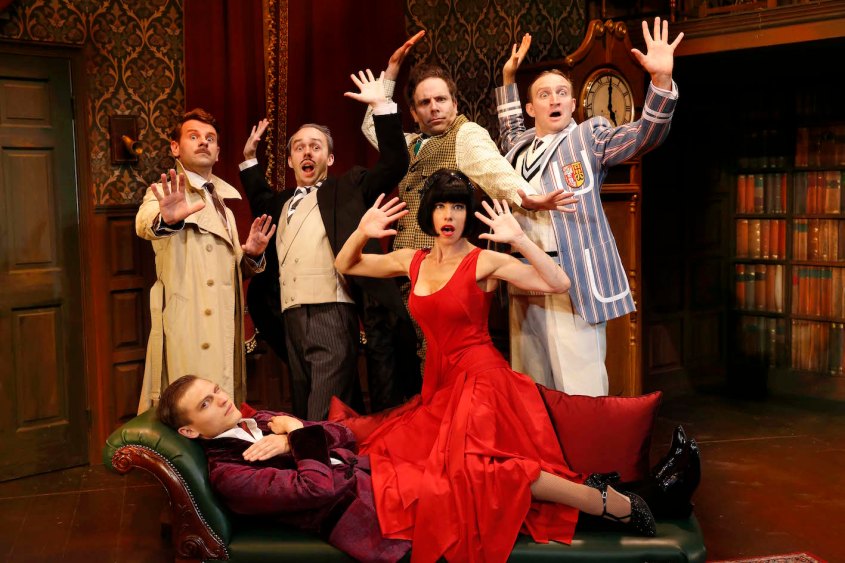
Before The Murder at Haversham Manor begins, the newly-elected president of Cornley Polytechnic Drama Society, Chris Bean (Nick Simpson-Deeks), appears on stage to welcome the audience. Bean is also the director of the play and assures us that this will be the most impressive performance ever put on by this thespian group. However, when this 1920’s themed whodunnit is a play within a play called The Play That Goes Wrong, well…it’s fair to say that nothing goes according to plan, but the show must go on. And so it does, with many laughs along the way.

the-play-that-goes-wrong-australia-nick-simpson-deeks-george-kemp-luke-joslin-james-marlowe-darcy-browne-brooke-satchwell

While The Murder at Haversham Manor plays out like an Agatha Christie-style plot, The Play That Goes Wrong reveals what happens on the Drama Society stage’s as the actors contend with missing items, breaking props, forgotten lines and unconscious colleagues. While comparisons to the classic Noises Off are undeniable, there is still a freshness to the performance with the fun and laughs remaining constant, even if there are a handful of times when jokes become slightly repetitive or are milked too much.

The entire cast embrace their characters, who in turn embrace their characters, and ultimately deliver near-perfect comedy timing. They are more than up to the challenge when it comes to meeting the physical demands of the production with high energy and dedication, while under the brilliant eye of Australian cast director Sean Turner. Darcy Brown (who plays Max Bennett who in turn plays Cecil Haversham and Arthur the Gardener), is particularly joyful to watch, especially when he’s giving his charades-like performance as he speaks his lines. Brooke Satchwell as Sandra, plays the grieving fiancée Florence Colleymoore – as does Tammy Weller, who also plays the stage manager Annie Twilloil. Both are energetic with Satchwell (or is that Sandra) playing the intentional melodramatics of Florence perfectly and Tammy as Twilloil’s transformation from shy stage manager to determined and ferocious actor is a joy to watch. If all this isn’t confusing enough, then you’re already ahead of the pack!

I initially attempted to hear every word that was being said, but with the riotous laughter that filled the Comedy Theatre, it was not always possible. Fortunately, it’s not simply the story that matters here. While Henry Lewis, Jonathan Sayer and Henry Shields have written a fun and surprisingly intelligent double narrative (for what we are watching), it is the visual aesthetics of Nigel Hook‘s impressive set design brimming with surprises and “danger” at every turn that reels you in.

While there is not much good that can be said about The Murder at Haversham Manor, it’s a completely different story for The Play That Goes Wrong. It’s a stylishly comic production that exists simply for laughs, and nothing but laughs; and from beginning to end – especially in the uproarious second act – there are plenty to be had. While everything that can go wrong goes wrong in the play within the play, this production itself itself hits all the right marks.

Venue: The Comedy Theatre, 240 Exhibition Street, Melbourne
Season:
In Melbourne until 26 March, before an Australian-wide tour
Tickets:
From $99.90
Bookings: The Play That Goes Wrong

Malthouse Theatre Presents THE HOMOSEXUALS

Gleefully funny

By Leeor Adar

How dare we, or you, or anyone, be politically incorrect (PC is very in, in case you weren’t paying attention). Lee Lewis’ romp as director into taboo territory is loud, colourful, slapstick, and rainbow-shoots dance hits of the bygones. This production of The Homosexuals is everything you would expect it to be, and then a little more sardonic.

The Homosexuals.jpg

And it is funny. The shining light of this show isn’t the performers so much as their sharp dialogue catapulted from Declan Greene’s pen. I can see the delivery only sharpening as the season goes on, and like Greene’s usual work, is so right now. Right now, and reflected in the play is the war between white homosexual men and other sexual and racial minorities that continue to be marginalised by cookie-cutter ideals. It rages in this production, and offers a farcical gaze upon the pompous rhetoric of queer theorist ‘Bae-Bae’ (played with natural grace and disdain by the genderqueer Mama Alto).

The play is set in a tiny modern apartment in Darlinghurst where Warren (Simon Bourke), the identified ‘older gay gentleman’ looks through his lens at the young and chiselled Adonis (Lincoln Younes). Clichés aside, Warren attempts to hide his interest in the Adonis from his shrieky partner, Kim (Simon Corfield). Cue the realisation that married paradise does not exist even for the queer community. What is meant to be the night of the Mardi-Gras and offensive costume party (hint: blackface/Hiroshimaface/Naziface), turns into a comedy of near-misses as a druggie and part-time cook (Mama Alto) is mistaken for the gloriously self-righteous ‘Bae Bae’. A series of mad antics ensue in what is sure to be a night of laughs.

A real shout-out must go to the top-notch comic delivery of Diana (Genevieve Lemon), who propelled the silliness on stage and brought a sage moment towards the close of the fare. Unfortunately this is where the script diverts too sharply from the rest of the play; the tone suddenly shifts to a serious place that doesn’t have the same wondrous reality-shatter of other works that manage to take comedy to dark places. The point is already made in the piece itself – the audience knows. The show ultimately ends with a whimper, no bang in sight. I found this a touch disappointing given all the walls shattered earlier in the evening.

However, if you want to catch a show that pokes fun at itself and definitely makes you laugh – then by all means, enter the rainbow world of The Homosexuals, or ‘Faggots’, currently showing at the Malthouse Theatre until Sunday 12 March.

Book your tickets here: https://tickets.malthousetheatre.com.au/booking/production/syos/3205

Image by Brett Boardman

Arts House Presents KAGEROU – STUDY OF TRANSLATING PERFORMANCE

Balancing emotion, art, tragedy, and connection

By Myron My

In 2011, Japan was hit by its most powerful earthquake ever recorded. With a magnitude of 9.0 – 9.1, it triggered a huge tsunami and resulted in the deaths of over 16,000 people and left thousands more injured. Referred to as “The Great East Japan Earthquake” it was a devastating blow for Japan, with sympathies and aide coming from around the world.

in-kagerou

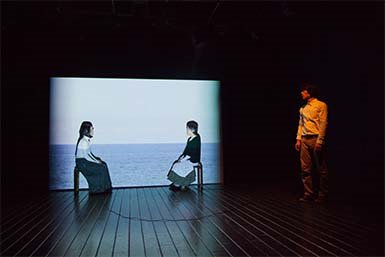
In Kagerou – Study of Translating Performance, director Shun Hamanaka uses the story of Kyoko Takagi – a woman in her 70s who lost her husband in the tsunami – and attempts to explore how sympathy and connection between strangers can be born from a tragedy such as this. Hamanaka has opted for a minimal set design, having just three chairs on stage with video footage being projected onto a screen with some effective shadow work by lighting designer Hiroshi Isaka, emphasising the documentary-style of the performance.

Actor Yoko Ito appears dressed in black with headphones on, and we hear a muffled voice speaking Japanese. Once this voice – Kyoko – finishes speaking, Ito begins to relay what she has said in English and the act of translating begins to be explored. Ito is not only translating what Kyoko is saying, but also the grief, sorrow and hope felt from a woman in a small port town in Japan all the way to a theatre audience in inner-city Melbourne.

Ito intentionally remains disconnected and detached when speaking, allowing the words of Kyoko’s to resonate with us and allow us to begin to gather an understanding of what she has gone through. However as she walks around the space, her body language begins to display a simultaneous representation of fragility and determination from Kyoko’s story.

Hamanaka succeeds in drawing sympathy from the audience through Ito’s “performance” as Kyoko, repeating the survivor’s words and keeping her own natural pauses and nuances. However, the video footage itself – while initially striking and offering a lens into understanding Kyoko’s town – becomes distant and alienating at times, pushing you further out of the story and hindering the opportunity to build on the connection with Kyoko and her experience.

Ultimately the achievement of Kagerou – Study of Translating Performance is in acknowledging that we can still share in the grief  and relate to the loss and devastation felt by the people of the The Great East Japan Earthquake – that sympathy can indeed translate.

Venue: Arts House, 521 Queensberry St, North Melbourne
Season: 
Until 18 February | Sat 7:30pm
Tickets: 
$45 Full | $35 Conc | $30 Student
Bookings: Arts House

Malthouse Presents LITTLE EMPERORS

Brave, beautiful and necessary

 By Leeor Adar

2016 saw the glass-globe political bubble of China’s One Child Policy shatter. Picking up the pieces of what is presented as a haunted generation of youth and families, the brave new work of Lachlan Philpott and director Wang Chong is both penetrating and poignant.

Little Emperors - Yuchen-Wang-Photo-by-Tim-Grey.jpg

A talented cast drive this absorbing story of Kaiwen (Yuchen Wang), separated from a family he is too young to remember and suddenly asked to return to the world that rejected him. His tenuous connection with his sister, Huishan, (Alice Qin) harbours a familiar Chinese communal secret, and we are plunged into a world built on memory, the subconscious and heartbreaking reality. Perhaps the most heart-wrenching character is that of their mother, played with such varied and breathtaking emotion by Diana [Xiaojie Lin] – a character so tormented by living the life she endured against her will.

Philpott’s writing is achingly familiar as it speaks to something even I, an outsider, can recognise as the universal desire for closeness with our kin. Philpott’s opportunity to visit Beijing and meet with local people whilst collaborating with Chong has given a real dimension to his work. It would be easy to dismiss Philpott’s writing as another outsider attempting to discuss the unrelatable, but Little Emperors provides a rare glimpse into a world rarely discussed or acknowledged by its own people. In the play, Kaiwen now living in Melbourne directs his own work to confront the One Child Policy, but his cast one by one vanish as they find unearthing their secrets either too painful or unspeakable.

Where this play is overall potent, the uncomfortable dialogue and acting between Kaiwen and his sound technician (Liam Maguire) distracts. While it would be easy to dismiss the relationship between these two characters, it reveals a savage loneliness of Kaiwen. This loneliness breathes throughout the play as our characters battle inner torments they find difficult to express to those around them. It is evident that those who live in Kaiwen’s originating home struggle with what occurred in their own way.

The staging of Little Emperors is visually and stylistically brilliant. The entire stage is one murky pool of water through which our characters navigate uniquely. Kaiwen walks in the water with ease, but he also uses it with a violence to convey his own turbulent mind. Little white chairs serve as stepping-stones for the women, as they, chair after chair, exhaustingly negotiate every social interaction with forced labour. In one scene, the mother beats her own body with the body of water, side to side, in an unrelenting force of self-flagellation. Romanie Harper’s set design is so effective I cannot think of a more fluid use of staging to convey the inner tumult and complexities of these characters. Nothing is left unused or unturned on the Little Emperors stage. James Paul’s sound design matches the staging with a moodiness that permeates everything around it – this little world created before us grips us in an oxymoron of vitality and gloom.

I walk out of the theatre feeling closer to a truth I heard about in passing, and I feel for a moment closer to a community I have had limited interaction with. Australian audiences can gain much by seeing this work, and it assists in breaking cultural boundaries and giving insights where none have really been offered before. This is brave, beautiful and necessary theatre.

Little Emperors will be performed until the 26 February at the Malthouse Theatre. Bookings: http://malthousetheatre.com.au/whats-on/little-emperors

Image by Tim Grey