Tag: Malthouse Theatre

REVIEW: PICNIC AT HANGING ROCK

An impressive experiment with palpable discomfort

by Rachel Holkner

This new adaptation of Joan Lindsay’s classic Australian novel, written by Tom Wright and directed by Matthew Lutton, is a stylish exploration of the themes of time, space, alternate dimensions, past, present and future. And hanging over it all, an ancient volcanic rock and the intolerable heat of an Australian summer.

picnicahr

The play requires some familiarity with the story whether from the novel or the 1975 film by Peter Weir. With a small cast it is necessary to recognise quickly the various characters and their place in the story, as the performers often leap from one to another without overt costume changes. Surtitles present chapter headings throughout, granting the original 1967 text an unnecessary supernatural presence. It remains unclear whether the production intends to seat the audience inside the novel as it suffers a sort of intrusion of the present, or develop an entirely new interpretation of the ‘disappearing girls’ story.

An extended opening in the style of a school reading, grounds the work. Re-admittance to the theatre is not permitted after this sequence as the entire room is plunged frequently and suddenly into complete darkness. It is this darkness that carries the emotional burden, as the audience slowly learn to fear what it may bring. This is not a performance suitable for children or those of nervous disposition!

Just five actors take on over a dozen roles in a commanding fashion. While each has a part they default to, they switch with ease into alternate characters, sharing the burden of story-telling evenly. Of note are Amber McMahon as the visiting English gentleman Michael, and Arielle Gray as the unloved outsider Sara. The character of Sara was particularly well conceived, her body distortions and hurried whispers reflecting her state of mind and lack of autonomy. Harriet Gordon-Anderson, Elizabeth Nabben and Nikki Shields round out the cast with assuredness.

The sound design by J. David Franzke and composer Ash Gibson Greig ranges as wildly as the natural environment it is attempting to evoke. As tensions rise sound effects evolve from precise recreations of the bush to a barrage of noise. Discomfort became palpable as the audience grasped at any moment in the dialogue which might relieve the tension.

The play’s weakness is that it tries to encompass too many themes at the same time. The final act is muddled, the costume choices and staging do not carry enough conviction as all the ideas of nature, time, legacy and even gender are attempted to be resolved in the final few minutes. The successful use of light, shadow, sound and minimalist staging earlier on have been forgotten in a flat-lit confusion of props.

Picnic at Hanging Rock is an impressive experiment in bringing the colonial inferiority and fear of the environment of the late 19thC into the beginning of the 21st under the heavy volcanic overhang of millions of years.


Venue: Malthouse Theatre

Season: 26 Feb – 20 March

Tickets: $35-$65

Bookings: http://malthousetheatre.com.au/whats-on/picnic-at-hanging-rock

REVIEW: Meow Meow’s LITTLE MERMAID

Blithely bewitching cabaret

By Amy Planner

Meow Meow’s Little Mermaid is a quirky take on Hans Christian Andersen’s fairy tale that looks into the modern gal’s plight for romance. This cabaret performance is a quest for love explored through music, a journey that discovers the two are sometimes unescapably intertwined and a tale that proves sometimes you’ll find it where you least expect it.

Meow Meow's Little Mermaid.jpg


With a little burlesque, a smidge o’ circus, a touch of mermaid-esque audience participation and a whole lot of cabaret, Meow Meow has created a truly original show based on an age-old tale.

Meow Meow is a real performer’s performer. She has a voice that would silence a riot and a performance capability that would have the rebels all in a conga line in no time. Comedy Director Cal McCrystal did a fantastic job keeping the hilarity rolling, and when paired with Meow Meow’s innate sense of farce, it was utterly entertaining.

Meow’s on stage lover, Chris Ryan, enters the show quite late but has the desired effect. He has an important charisma and deserves major kudos for singing wonderfully in German, not to mention pulling off some outrageous costume moments. Ryan had a subtle presence, but perhaps that was just in comparison to Meow Meow’s tremendous allure and sparkle that we know and love.

The flow of the cabaret style show was a little unsteady in parts: Meow Meow seemed to become so wrapped up in the audience’s favourable reception that there was a little rockiness created. However, it was barely a blip on the cabaret radar as the audience awaited the next unpredictably delightful moment.

The costuming by Anna Cordingley is unique and impressively well-fitted in Meow Meow’s case. She sparkled as she crowd-surfed over the unsuspecting audience, hung from the ceiling, wriggled and writhed in a net that swung over the stage, and hobbled around in a high heel and in a ballet toe point as her ‘land legs’ grew.

Meow Meow’s Little Mermaid is certainly not for the faint of heart, unless of course your heart is faint but in desperate need of a lesson on love and a night of superbly witty entertainment.

SHOW DETAILS
Venue: Merlyn Theatre, The Coopers Malthouse, 113 Sturt Street, Southbank
Season: 28 Jan – 14 Feb
Tickets: Adult $65, Senior $60, Concession $50, Student & Under 30s $35
Bookings: malthousetheatre.com.au

Image by Pia Johnston

REVIEW: Malthouse Theatre Presents ANTIGONE

Sophocles revitalised

By Margaret Wieringa

A shipping container stands, raised on stilts, above a desolate patch of dirt. A man carrying a naked woman slowly descends the staircase and places her on the ground, and is joined by two other figures who all partially undress and take grotesque poses. Industrial sounds fill the space, but are gradually joined by a lone woman singing. The audience is transfixed.

Antigone

Director Adena Jacobs has taken the ancient play by Sophocles and re-imagined it for 2015. It is barren and tough, with little movement yet the complexity of the original is present. Each scene seems long, yet sparse. It is fascinating.

Jane Montgomery Griffiths, who adapted the play, dominates as Creon, the leader who bows to public perception over what may be argued as the moral thing to do: to allow Antigone to bury her brother against societal rules. But when Antigone sounds her final song, her final prayer, her final ritual; this is the pinnacle of Emily Milledge’s performance.

I’ve always found the staging at Malthouse to be fascinating, and in this performance lighting director Paul Jackson uses exposed white lighting, at times dim and other times blindingly bright to add to the stark hopelessness of the play. And then there is the bloody water. A slow appearance that comes to dominate the scene, to reflect the torment, to disallow any character to escape the tragedy.

I’m not a classical scholar, I am very aware that there are far deeper readings to this piece. But what an interpretation like this does so well is to remind you why classic theatre needs to be adapted and performed again and again; universal truths are universal, and the tragedy of ancient times is just as relevant in the politically and morally-challenging present as ever.

WARNING: Contains adult themes, coarse language, partial nudity, strobe lighting, smoke and haze effects
Where: The Malthouse Theatre, Sturt St, Southbank
When: 21 Aug – 13 Sep
Tickets: $35 – $65
Book: http://malthousetheatre.com.au or call 9685 5111

REVIEW: Declan Greene’s I AM A MIRACLE

Grim tales woven together with heavenly music and powerful imagery

By Margaret Wieringa

Chairs are strewn across a bare stage, and a few other items, hard to distinguish, lie in piles. Three actors in the orange jumpsuits recognisable as those worn by people incarcerated in US prisons are in place around the stage. As the lights come down, one begins to address a prisoner on death row who has only a few minutes to live, while the others whisper, possibly prayers. Thus begins the intense journey of I Am A Miracle.

I Am A Miracle

The title comes from the last words of Marvin Lee Wilson, a man with an extremely low IQ who was executed in 2012. Such a low IQ should have prevented his death, but did not. Declan Greene wrote this play for Marvin, to document various miscarriages of justice. There is the story of a young Dutch solider in Africa in the eighteenth century, sent on a mission through the jungle to quell a slave uprising, and that of a man in Melbourne entrapped by his carer.

This is a hard production to watch; the Malthouse publicity has the message that this is “not for the timid”. The story of the Dutch soldier has images that are hard to forget, and while the boy is seventeen, Melita Jurisic brings an innocence and purity to the character that makes him seem so much younger, so much easier to be broken. Later, she plays the carer (and possibly partner?) of Bert LaBonté‘s character, and while this woman seems to have the emotional control, he is clearly physically able to overpower her. It is the music, notably the beautiful singing of Hana Lee Crisp, that ultimately brings the pieces of the play together. Crisp drifts through the performance, or stands aside, like some kind of angel.

At times, the combination of the soundscape and music and lighting are overwhelming, as though director Matthew Lutton is deliberately creating a religious experience. Indeed, the powerful climax is the world being reborn, blinding the audience with light and deafening with sound. While I must admit that I did not understand everything that happened, it was a theatrical event that I am very glad I experienced.

Where: Malthouse Theatre, Sturt St Southbank
When: July 18 – Aug 9.
Tickets: $30-$60
Box Office: www.malthousetheatre.com.au
WARNING: Contains dynamic sound, strobe lighting and some adult language.

REVIEW: Caryl Churchill’s LOVE AND INFORMATION

You’ve never seen anything like this

By Margaret Wieringa

The set gives the audience nothing to begin with– stark white, with white rectangular plinths arranged around the space. Then, as the audience are still settling in, a couple of people appear, the house lights drop suddenly and the rollercoaster is on.

Love and Information Photo Credit Pia Johnson

Every production of Love and Information will almost certainly be different to every other production ever staged because of the mysterious and challenging nature of the script. Caryl Churchill has written seventy-six scenes for the script, some of which are compulsory, some optional, and each production must have at least fifty-one of these scenes included. There is a set structure, yet within that structure there is flexibility both in the order of the scenes and the characters who speak the parts. Confused yet?

I love it when writers fool around with form – even should it not work, it is interesting to push what the audience expect and how messages can be delivered. But the unusual structure of Love and Information makes for a truly wonderful show.

The performance consists of a jigsaw of scenes of varying lengths and emotions. Some are long and drawn out, pulling the audience in; others are barely a thought, perhaps only a line or two. Between each, the performers run on and off stage, bringing along the props as required. It must be very organised chaos out the back with the number of props and costume changes that take place.

Initially, I thought that the loud music and extremely bright, colourful lighting that separated the scenes was going to get tedious pretty quickly. I learned pretty quickly to trust the work of director Kip Williams to create change within the similarities.

The cast are fabulous, so in tune with each other, tight on the changeovers and bringing a wide variety of characters. It is such a marvellous ensemble that each cast member is able to shine, though special mention must be made of Alison Whyte’s ability to stay extremely still in several scenes.

Love and Information is not a traditional story, but an exploration of emotion and relationships. It is hilarious, moving, beautiful, light, heavy and exciting. Go see it. Absolutely.

Venue: Malthouse Theatre, Sturt St Southbank
Dates: Jun 12 – Jul 4
Tickets: $35 – 60 via malthousetheatre.com.au/

Image by Pia Johnson

REVIEW: Malthouse Theatre Presents TIMESHARE

Excellent performances in eccentric new play

By Ross Larkin

Australian playwright Lally Katz is known for her offbeat, droll creations, and her latest effort, Timeshare, will no doubt please die-hard fans, though it is, as expected, an acquired taste which will not appeal to all.

Timeshare

Iconic comedienne Marg Downey plays Sandy, who is holidaying on a fictitious island resort positioned on the international dateline. Her lonely daughter Kristy (played by Brigid Gallacher) is vacationing with her, and looking for love with the likes of resort worker Juan-Fernando (Fayssal Bazzi​). Meanwhile, resort manager Carl (Bert LaBonte), is trying to sell timeshare packages to Sandy, while she becomes convinced Carl is romantically interested.

Touted primarily as a comedy, Timeshare unfolds more like a drama with the laughs thin on the ground. Downey is disappointingly responsible for virtually none of the laughter in, what is, a very sombre and vacant part. Naturally, however, Downey still delivers, although one might argue hers is more a support role than a lead. The rest of the cast also deliver – all equally as engaging and impressive in their performances.

The first half of the script is somewhat meandering and slow, with seemingly little purpose. Fortunately, the pace and stakes later pick up when the action is shifted to ‘yesterday’s’ side of the date line and the confusion which ensues reveals the sad truth of the situation.

Timeshare unexpectedly features singing and dancing throughout, enough to consider it a musical hybrid, though Katz insists it’s a play with musical numbers, as opposed to a musical. The songs by Jethro Woodward are appealing and often beautifully sung (in particular by LaBonte and Gallacher), but there are times when they seem ill-fitting with the story and characters, and the dancing especially is so self-aware and corny that it detracts from the show’s credibility.

There are some lovely metaphors which emerge here, and New York director Oliver Butler does mostly a fine job with this offbeat, peculiar piece, save for some of the more over-the-top, caricature moments. LaBonte’s solo singing finale about pools and chlorine for example, which, although performed incredibly well, felt like an inappropriate ending that seemed to make a mockery of the journey we’d just been on.

Timeshare is playing now at The Malthouse Theatre, 113 Sturt Street, Southbank until May 17. For bookings, visit http://malthousetheatre.com.au/whats-on/timeshare

REVIEW: Force Majeure Presents NOTHING TO LOSE

Unabashed and cheerful celebration of human bodies

By Margaret Wieringa

It’s rare to see an overweight body in underwear anywhere. The media is mostly about the traditional construct of ‘the body beautiful’, and even plus-sized models are posed to reveal only that which is deemed attractive – the curve of a large breast or the roundness of some junk in the trunk. But normal large men and women?

Nothing-to-Lose

Created by Force Majeure under the artistic direction of Kate Champion in collaboration with artist and activist Kelli Jean Drinkwater, Nothing to Lose is a performance art piece powerfully choreographed by Ghenoa Gela that uses personal experiences to embrace the fat body. It is at times confronting, challenging the audience to consider words and phrases they may have used or heard used toward large people: “What a pretty face”, “Haven’t you had enough?”, “Does your back hurt?”, and many more. At one stage, a group of audience volunteers were invited onstage to physically explore the bodies of the dancers – an exercise that mostly provoked awkward laughter.

The cast started onstage in near darkness as the audience moved into their seats, and when the house lights came down, they writhed about each other on the stage in very dim light. This continued for some time and had the feel of an exploratory exercise that the group may have completed in development of the work rather than a final piece. Unfortunately, it was not the only piece that felt under-prepared. At times some of the sequences felt longer than necessary, and I found the initial confrontation had lost its impact by the time the cast had moved onto the next scene.

Luckily, after a few scenes, the cast pushed pedestals into the space and arranged themselves on them to dance a beautifully synchronised piece. It was in this that I saw exactly how good the show could be. Each body was highlighted by the harsh lighting, frankly revealing the flaws and dimples that in daily life we mostly strive to hide. It was beautiful.

And then there was the jiggly dance – a delightful number with each body moving in a uniquely wobbly way and with exaggerated facial expressions that sent giggles rippling through the theatre. The performance ended on a high, with a hip-hop dance number performed by an extended cast that drew cheers from the audience. Nothing to Lose is at times awkward and a little uneven, but ultimately both triumphant and entertaining.

Nothing to Lose is playing at the Malthouse Theatre until March 21. Tickets can be booked at http://malthousetheatre.com.au/whats-on/nothing-to-lose

REVIEW: Cameron Lukey’s PLAYING ROCK HUDSON

The life and death of a silver screen star

By Myron My

It always seems to shock us when celebrities die. They exude a sense of invincibility that we are not as lucky to own. So when beloved movie legend Rock Hudson died in 1985 from an AIDS-related illness, the grief was on a grand scale. Such was the effect of his death that the US government doubled its funding towards AIDS research.

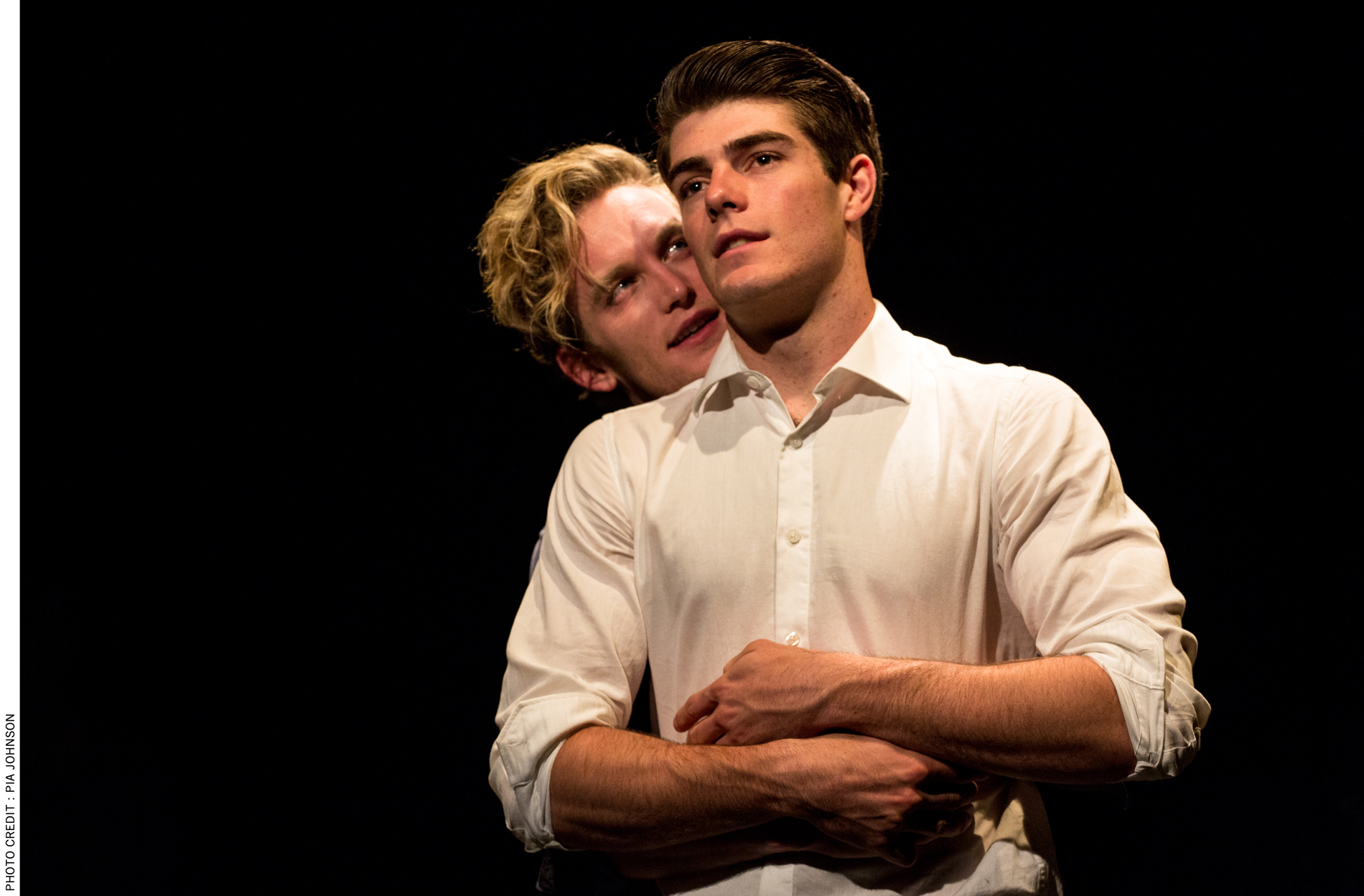
In his debut play, Playing Rock Hudson, Cameron Lukey looks at how Hudson’s diagnosis affected his relationships with close friends, such as Elizabeth Taylor (Odette Galbally), and also his secret romances and loves. On a deeper level, it also looks at the stigma attached to what was then referred to as ‘gay cancer’ and how Hudson’s diagnosis played a pivotal role in future research into and attitudes towards the illness.

Playing Rock Hudson_ Photo Pia Johnson

Some of the casting selections are questionable but Bartholomew Walsh as Rock Hudson is truly the perfect choice. He has the smouldering looks and physique of Hudson, and his performance of the character’s inner turmoil and showy bravado is well balanced. There is an old brat-pack Hollywood appeal to Walsh that Lukey was very fortunate to find.

With the cast playing a variety of characters there is every possibility that the story may get lost in the confusion of who is who when, but it works well here for the most part. In particular, Andrew Carolane and Sam Lavery made notable and then lasting impressions with their ability to play the nuances of their different characters convincingly. It is however problematic to have Walsh portray any other character but Hudson. He is our leading man and as such, needs to hold onto that power. Making him switch characters lessened his credibility.

Much of Playing Rock Hudson is told after Hudson’s death and based around a court room with Hudson’s ex-lover, Marc Christian (Shane Savage) seeking compensation for Hudson’s non-disclosure of his illness. I enjoyed Lukey’s direction and there are a number of well-timed and balanced monologues and confessionals by the various people involved in Hudson’s life. The story is elegantly paced and the intrigue and the tension remain constant throughout.

Playing Rock Hudson is a poignant love story of life and death and with the rate of HIV diagnosis’ gradually increasing, it is very much a story that still needs to be told.

Venue: Malthouse Theatre, 113 Sturt Street, Southbank

Season: Until 4 December | Tues-Wed, Sat 8:00pm, Thurs-Fri 7:00pm, Sat 3pm*, Sun 5:30pm

*The November 30 performance will be a benefit show, with half the ticket price going to the Victorian AIDS Council.

Tickets: $35 Full | $30 Conc

Bookings: 9685-5111 or http://www.malthousetheatre.com.au

REVIEW: Hey! Yeah! It’s Molly’s Travelling Worm Show

Yes – you read that correctly…

By Tania Herbert

Playschool on acid is probably the best way I can think of to describe Hey! Yeah! It’s Molly’s Travelling Worm Show. The plot is perhaps best explaineded by the show’s theme song: “Come with us on a s@#t tourist journey, Come with us, it’s ironic and sad”.

We find Molly (Melita Rowston) holed up in a shoddy country motel in the tiny town of Korumburra, where she has quit her corporate executive job in a quest to recapture a moment of joy from the late 70s, where a giant pink worm puppet explicably spawned a spate of fairly ordinary tourist attractions. Molly arrives with few leads, but a surreal crew of sidekicks, led by kidnapped once-famous Aussie puppets from long-dead TV shows. Fortunately for Molly, her victims quickly develop a case of Stockholm Syndrome, becoming willing participants in tracking down the giant pink worm of Molly’s childhood.

Worm Show

As a child of the (early) 80s, there are multitudes of flashback moments to one the lamer decades in Australian history, and we are taken back to the days of strawberry Big M’s, school excursions to Sovereign Hill, Hey Hey It’s Saturday, Shirl’s Neighbourhood, and to a time when icons were solid objects, not just updates on Facebook.

This is a brave piece of theatre in terms of typing together multiple elements, and in this the show well and truly succeeds, with a range of multimedia, puppetry and stacks of props – all of which are negotiated flawlessly. Puppets are masterfully “wrangled” by Benito Di Fonzo, and Narda Shanley plays a great sidekick and range of comic Aussie stereotypes.

Unfortunately however, for me the character of Molly was not my favourite part of the show. The hyperbolic characterisation did not draw me enough to Molly’s story, which made it difficult to be as invested in the outcome. The script had a number of clever elements and great one-liners, I would have been interested to see what another actor could have done with the same material, as perhaps this is one of these moments where the writer is a little too close to the material, perhaps to the detriment of comic timing and being on the right side of the line between comical and just over the top.

For absurdist theatre to work, there does need to be a sense of depth and sophistication underneath, which I felt that “Worm Show” lacked. I am sure that there is an audience for this type of bawdy comedy, but I’m not sure that the Malthouse is quite the right location for the show. The cast and crew definitely went all out with the show – there are giant worm decorations, souvenirs for purchase, and the cast has clearly been rehearsing the hell out of the thing. Despite what I found to be shortcomings, the Worm Show was overall entertaining, and the concluding pay-off was surprisingly touching. At risk of throwing out a spoiler, the giant pink worm is also pretty cool. I certainly left the theatre with a smile on my face. A quizzical smile, but a smile nonetheless.

Tickets for Molly’s Travelling Worm Show via malthousetheatre.com.au/helium-2013/ and melitarowston.com

13th – 24th August 2013
Tue – Fri at 8pm
Sat 3pm & 8pm

REVIEW: Declan Greene’s POMPEII, L.A.

A wry, absurdist take on the celebrity life

By Myron My

The Malthouse Theatre production of Declan Greene’s Pompeii, L.A. follows the fortunes of a troubled young child star after a terrible accident leaves him in hospital. Green looks at the influence and effects Hollywood has on such young impressionable people and speculates as to the ultimate fate that most of them will meet.

To begin with, Nick Schlieper’s slick set design was flawless: I would go so far as to say it was right up there with the most impressive stage designs I have seen.  There was so much attention paid to detail and ensuring the environment was as real as possible. Having such extravagant sets did run the risk of a clumsy transition with getting rid of and adding so many props and pieces, but scene changes were executed well and went very smoothly.

Also worth mentioning was the great play across such a large space. There were lavish scenes that spread out all over the stage which did create a sort of divide between us and the action and whether this was intentional or not, it worked well. In contrast, the scenes in the hospital which used a much a smaller space and moved closer to the audience created that intimacy and solitude one would expect.

I did find the story a little hard to follow, even somewhat convoluted. I appreciate what Greene was attempting to do in showing the surrealism existing between celebrity life and real life and exploring what can happen when the two worlds blur together but as an average audience member I was left wondering what was going on quite a few times which detracts from being able to immerse oneself into the experience. 

However, what the story lacked was more than made up by the actors, in particular David Harrison as the unnamed protagonist. Harrison played the role with realism and honesty, especially his scenes in hospital. Even when he was surrounded by exaggerated caricatures of people in those scenes, he still maintained the humanity and true emotion of his character. Belinda McClory was also great with her opening cameo as Judy Garland and continued to impress with the other characters she portrayed throughout. There were times I was unsure if there was a different actor performing, such were her chameleon ways.

Overall, Pompeii, L.A. is a thought-provoking production and considering how strongly obsessed our culture is with celebrities and their lifestyles, it’s an interesting piece of theatre that is well worth watching.

Venue: The Malthouse Theatre, 113 Sturt St, Southbank

Season: Until 9 December | 7:30pm, Sat 2:30pm, Sun 5:30pm

Tickets: $58 Full | $48 Concession | $28 Student

Bookings: https://boxoffice.malthousetheatre.com.au