Redfox 3 Presents THE WOMAN IN BLACK

Plenty to both love and dread in classic ghost tale

By Myron My

I will admit there was some trepidation as I sat down to see Redfox 3 Theatre Company‘s production of Susan Hill’s much loved ghost story The Woman In Black. It was not due to the anticipated horror of the novella-turned-play, but the hopes that the newly established company would be able to tell the tale just as masterfully as it has been told in the West End for over three decades.

The Woman in Black.jpg

I remember seeing Stephen Mallatratt‘s adaptation of the play for the first time in 2008, and feeling something I have never felt in theatre before; terror and fear. A genuine emotion of unease rippled throughout the audience and the walk home that evening was not a joyous experience. This experience repeated itself upon my second, third and fourth viewing of the play, and it’s fair to say that The Woman In Black is my favourite theatrical performance of all time.

Fortunately, in this local production, director Justin Stephens has maintained the overall apprehension and dread that slowly builds into the story, while also creating some original moments that even had me surprised at how certain events were executed. His direction of the woman in black herself ensures there are palpable “jump in your seat” moments and the relationship he creates between Kieran Tracey and Chris McLean‘s characters feels highly authentic.

Tracey’s switches from the Actor to the younger Arthur Kipps are well defined and he manages to keep the two characters distinct in mannerism and speech. As the story develops and the mystery deepens, Tracey expertly shows how both these men begin to be haunted by their experiences. McLean delivers a convincing effort as present-day Arthur Kipps, however I felt there needed to be a stronger weariness and alertness to him considering all he has endured. McLean’s portrayal of the various townspeople and minor characters were too often played for laughs rather than attempting to keep the serious nature of the story, though this is more a comment on the direction than McLean’s acting.

Set designer Merinda Backway‘s clever use of the space and darkness allows the audience to run off with their imagination. Lighting – or lack of – is imperative to a show like this and lighting designer Callum Robertson does an impeccable job in literally keeping the audience in the pitch dark while being able to see the actors on stage. Unfortunately, the use of the projections in Act 1 felt very much out of place with the rest of the performance and their use seemed to be more to manipulate the audience into feeling scared rather then letting us feel the terror organically. Considering they are never to be seen again in Act 2, perhaps it would even be better to leave them out completely.

Despite the mentioned issues, Redfox 3 Theatre Company has taken on an ambitious gamble in staging this classic book, and this production of The Woman In Black pays off handsomely. This conventional yet highly entertaining ghost story is full of chills and thrills that is bound to have people sleeping with their lights on.

Venue: The Memo, 235 Marrondah Hwy, Healesville, Victoria, 3777
Season: 4 September | Sun 2pm
Tickets: $28 Full | $24 Conc
Bookings: The Memo
Eddie Perfect’s THE BEAST

Relentless satire and fiercely funny

By Bradley Storer

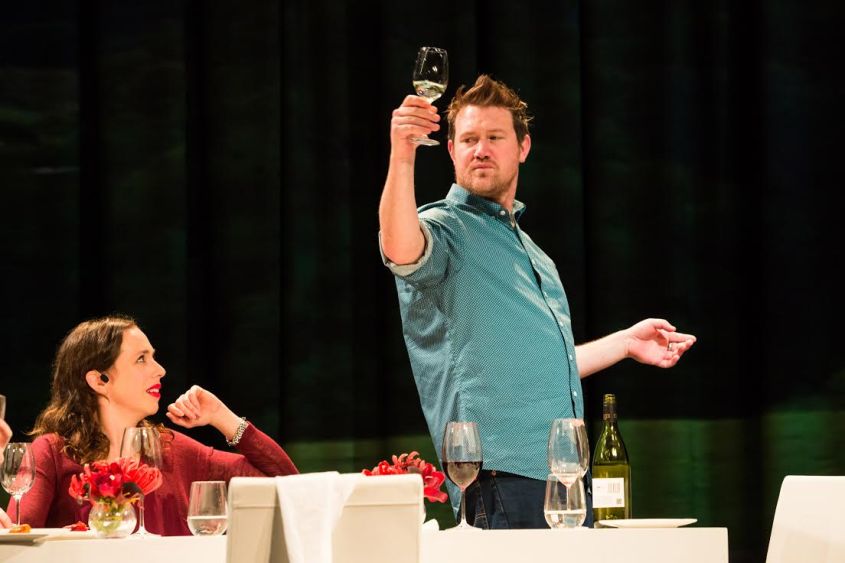
Eddie Perfect’s The Beast, under the direction of Simon Phillips, has made its return to Melbourne at the Comedy Theatre, and set its sights squarely on the Australian middle class. A vicious and satirical examination of class warfare of this ilk hasn’t been seen since the like of Yasmina Reza’s God of Carnagebe warned, there will be (literal) blood.

The Beast.jpg

The piece seems particularly suited to a Melbourne audience – the skewering of the affluent and aspirational upper middle class and their conflicts of status anxiety were met with uproarious laughter and applause, with a sense that these people were entirely familiar to those in the crowd.

Alison Bell as the acerbic outsider Marge drew big laughs with her biting wit, and a bone-dry sarcasm that was wielded to maximum effect in every scene. The warmth underneath the barbs was obvious in her interactions with her husband Baird, played by Perfect in addition to writing the text. Perfect touchingly conveys an average man doomed to the eternal ridicule of his pretentious friends while never fully understanding why – the character’s reversal of fortune in a cunning coup later in the piece, while satisfying to watch, feels almost too contrived and convenient to the plot.

Rohan Nichol was astonishingly awful as the smarmy self-appointed ‘leader’ of the male trio Simon, managing to elicit groans with his overbearing sense of entitlement and arrogance, while Christie Whelan Browne as his put-upon wife Gen was the perfect mixture of air-headed sweetness and burning resentment that exploded into some truly hilarious antics during the dinner party scene.

The only weakpoint of the sextet is the third couple – Toby Truslove as the rapidly crumbling Rob manages to find the underlying sweetness and sensitivity of the character but it never fully coalesces into a full characterization beyond the character’s overall oddball escapades and quirks. Heidi Arena as Sue fully commits to her character’s smiling and cheerful hypocrisies but has been directed to play so big that it feels self-consciously artificial to the point of caricature. Peter Houghton ably plays a variety of smaller roles, managed to shift chameleon-like into different characters so diverse that he is almost unrecognizable between them.

While the middle section of the play is wonderfully structured and cleverly written, with a scene involving the slaughter of a cow that had the audience falling out of their seats laughing, the opening scene and the underlying mystery which it wraps around the rest of the piece appears so out of place (and is dealt with so quickly at the conclusion) that it seems almost unnecessary to have them.  Watching these characters scrap and vie for dominion is so entertaining in itself and artfully depicted that I would have gladly watched it all night!

Venue: The Comedy Theatre, 240 Exhibition St, Melbourne VIC 3000

Date: 25th August – 10th September

Times: Wednesday – Saturday 7:30pm, Saturday 2pm, Sunday 1pm & 5pm

Prices: $79.90 – $129.90

Bookings: www.ticketmaster.com.au, Ph: 1300 723 038, at the box office.

Image by Ken Nakanishi

Ellis Productions Presents AROUND THE WORLD IN 80 DAYS

Frantic and frivolous fun

By Rebecca Waese

Adapted from Jules Verne’s 1873 novel, this production of Around the World in 80 Days (reinvented for the stage by Toby Hulse and directed by Terence O’Connell) is light-hearted, silly, and farcical fun. While the tone is inescapably dated in its colonial attitudes of English superiority, it has much to offer viewers who like slapstick comedy and don’t take stereotypes too seriously.

Around the World in 80 Days.jpg

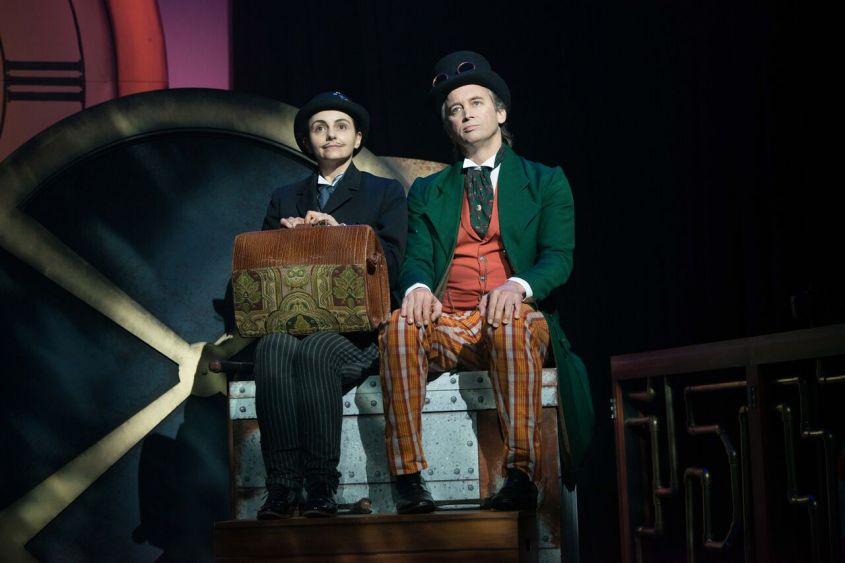
The play is self-aware, tongue-in-cheek and colludes with the audience at the impossibilities and the joys of staging such a massive production with just three actors playing 39 parts. Full of frenetic adventures and running gags, the play transports you back to the Great Victorian Age where Englishman Phileaus Fogg, (Ian Stenlake) wagers a fortune that he can circumnavigate the globe in just 80 days with his servant Passepartout (Pia Miranda) by his side. They are pursued throughout the adventure by Inspector Fix from Scotland Yard (Grant Piro) who is convinced that Fogg is a bank robber on the run.

Pia Miranda, as Passepartout, brings animated energy to the role and shows a knack for physical comedy. Grant Piro, is a stand-out as the obsessive Inspector Fix but even more captivating in his role as the storyteller with an illuminated map hat who guides the audience to imagine the journey through time and space, conjuring up so much with so little. Stenlake is a steady Fogg who may have been overshadowed on the night by the zeal and energy of the other outrageous characters but conveys a sense of the importance of order convincingly.

Merinda Backway’s set design is inventive and versatile using only a few crates and railings to create the elaborate transcontinental train, a ship, and one particularly delightful and wild hidden surprise. Lauren Richie’s gorgeous hats are worth a mention, adorned by miniature trains, binoculars, and other intricate symbols of the Victorian age.

Undoubtedly, Fogg’s Orientalist view of the world is outdated in 2016, and the Indian and Chinese accents rely on age-old wince-worthy stereotypes that reflect the time in which the novel was written. However, the scene in which Grant Piro plays the Indian Princess in drag at the end of the play is, unexpectedly, one of the finest moments of the show. Pico’s Indian Princess and Stenlake’s Fogg carry the audience’s hopes up in the air with them as Fogg leaves behind some of his earlier inhibitions and enjoys, with some subversive self-reflexivity, a bit of romance that has the audience rallying for him and his masculine princess.

The play is suitable for older children and fans of slapstick and physical humour but one scene may not be appropriate for young children, where the Indian princess widow is drugged and just about to burn on her husband’s funeral pyre before Passepartout performs a dramatic rescue. If old-fashioned farce is your cup of tea, this is fun physical humour from a simpler time of storytelling.

Around the World in 80 Days is playing at Alex Theatre in St. Kilda, Tues Aug 23- Sept 4 at 7:30 with matinees on Sat (2 pm) and Sun (3 pm).

Tickets: http://premier.ticketek.com.au/shows/show.aspx?sh=AROUNDTH16

Image by James Terry

Rebecca Waese is a Lecturer in Creative Arts and English at La Trobe University.

The Production Company Presents CURTAINS

 Marvelous music and joyously good fun

By Bradley Storer

The madcap trials and tribulations of a Broadway-bound musical falling apart at the seams, a classic ‘whodunnit’ murder-mystery, a romantic comedy as well as a tribute to all people with passion for the theatre, all bound together by the final score devised by the legendary team of Kander and Ebb – who could ask for anything more in a show?

Curtains

Simon Gleeson in the role of Lt. Frank Cioffi – lead investigator of the aforementioned murder – is a revelation, his leading man charisma channeled into a role that would be the comedic sidekick in any other piece but here is the focal point of this ode to the theatre world and its people. His comedic timing is exceedingly precise and his rendition of the wistful ‘Coffee Shop Nights’ is absolutely mesmerizing, his rich resonant voice peeking through at a few artfully chosen moments.

The rest of the cast work wonderfully as an ensemble but a mixed bag in terms of individual success. Melissa Langton as the brassy producer of the show nails her character’s bitter (and hilarious) one-liners, but her big number ‘It’s a Business’ falls slightly flat despite her magnificent belt. Alex Rathgeber finds the heartfelt sincerity in his caddish composer, and his touching ballad ‘I Miss the Music’ is a highlight of the show – Lucy Maunder is radiant as his estranged lyricist/wife. Alinta Chidzey sang beautifully as the ingénue Niki Harris but tended to vanish in a role that seems bland and underwritten.

Colin Lane was slightly off-kilter at first as the British director of the show within the show, his accent seeming a little wobbly, but found his feet with pithy non-sequiturs punctuated throughout the evening. Nicki Wendt as the woefully untalented diva whose demise launches the plot delivers a performance of such scene-stealing awfulness that it feels slightly disappointing (in the best possible way) to see her for only the first five minutes of the show.

The ensemble had clearly worked hard at creating individuated background characters, devising moments of sneaky comedy for those looking hard enough, and danced brilliantly in all their numbers, with the orchestra under musical director John Foreman giving the glorious Kander and Ebb score the magnificent treatment it deserved at all times.

Balancing an incredibly tricky mixture of narrative tones, The Production Company delivers this Australian professional premiere with panache, this tribute to the ‘theatre people’ of the world as a whole shining with warm-hearted joy.

Venue: The State Theatre, The Arts Centre, 100 St Kilda Rd, Melbourne.

Date: 20th August – 28th August

Times: 7:30pm Wednesday – Saturday, Matinees 1pm Wed/2pm Saturday/3pm Sunday

Prices: $42 – $130

Bookings: www.artscentremelbourne.com.au , 1300 182 183, or at the box office.

Finn and Porter’s THE FIERY MAZE

Sink into the music

By Leeor Adar

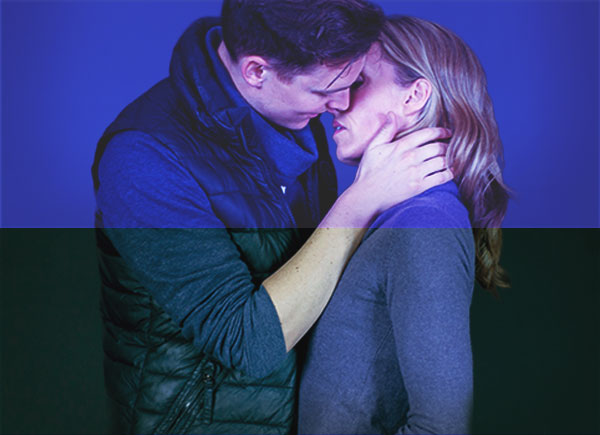
Twenty years later and the unburied treasure of Tim Finn and Dorothy Porter surfaces into a smoky, enchanted space at the Malthouse’s Beckett Theatre. It’s a minimalist space with a ring of lights surrounding the performing trio, Tim Finn, Brett Adams, and Abi Tucker.

The Fiery Maze.jpg

Tucker howls and serenades us with Porter’s visceral and haunting words, as if the very spirit of Porter possesses Tucker. Tucker’s performance is moody and earthy, and she breathes life with her voice into the stories of the stormy, moon-gazing kind of love that evokes something forgotten in her audience. Like quicksand, we are enveloped into the private world of Porter.

Finn’s music is gorgeous, and we expected it. Brett Adams on guitar is a revelation, and a perfect suitor for the music. The real core shakers, This World, My Magic Friend and Black Water are interspersed with the jagged energy of New Friends, Bride Doll and Making You Happy. Each song delivers a truth behind the kind of love that we remember and carry even if it’s not in our very present. Porter’s words are utterly relatable, even if we can’t admit it. Like in January, we hope for a tomorrow that may bring us something new, something better. Understandably, even decades later, Tucker asked after Black Water, wanting to revisit the music and words that never left her from that recording in 1995.

As an audience we feel no different. With Black Water still swimming in my veins, I too want to return to the balmy darkness of The Fiery Maze.

It’s a real treat for those seeking a soulful experience with this unique blend of poetry and music by world-class artists.

The Fiery Maze continues until 4 September at the Malthouse Theatre: http://malthousetheatre.com.au/whats-on/the-fiery-maze

Image by Pia Johnson

Q44 Theatre Presents SEX WITH STRANGERS

Writers meet, and the story unfurls

By Myron My

In Laura Eason’s Sex With Strangers, a female novelist meets a male blogger at a bed and breakfast in rural Michigan. She loves books, he prefers ebooks. She likes reading the classics, he prefers living writers. She prefers to keep her private life private, he lives his life on-line. Despite their differences, the two are drawn to each other and are forced to question the choices they’ve made in their lives and the ones they are going to have to make in the future.

Sex With Strangers.jpg

Will Atkinson offers a strong performance as Ethan, finding the right balance of brashness, cockiness and arrogance to his sweet, charismatic and endearing nature. Ethan is the type of guy that many of us despise but secretly want to be, and it’s Atkinson’s work in Sex With Strangers that really has you debating that position.

Atkinson’s pairing with Carissa McAllen as Olivia is a great casting choice and the two play off each other well. McAllen convincingly portrays the uncertainty and insecurities Olivia feels in being judged by the public on her writing; however, there were scenes in which I felt McAllen needed to express her character’s anger and frustrations more deeply than what was displayed on the night I attended.

While the space at Q44 Theatre is on the small side and the set itself is more compact than other productions, directors Gabriella Rose-Carter and Casey-Scott Corless use it to their advantage. They adroitly create an intimate world for Olivia and Ethan, that – while certainly influenced by outside factors – ensures the important moments of their lives are captured within the confines of the four walls.

The set and lighting design by Corless and sound design by Justin Gardam effectively show the differences of the two lifestyles being featured. We witness what feels like a battle between a time when life involved face-to-face interaction and real talent being rewarded, and present-day life with its iPhone obsession and the ability to be famous for being famous.

In the bed and breakfast, there is no television and the Internet has dropped out, wherepon an incredulous Ethan exclaims, “How will I look stuff up?” as he repeatedly checks his phone in vain. The environment here is therefore quiet and calm, just like our initial impressions of Olivia. The transition between scenes occur with a flash of light from an imagined Polaroid camera and the photo developing, often capturing an embrace or a kiss shared before the lights dim and calming music plays as the actors perform a quick costume change or set up the next scene.

By contrast, the second act in Olivia’s Chicago apartment has both characters constantly on their phones or their computers. They are no longer giving each other their undivided attention and it’s this technology that could be the doom for their relationship. The scene changes now occur with thumping club music and a red strobe light, reminiscent of an alarm warning of impending danger.

Q44 Theatre is fast building a reputation for producing a varied repertoire of excellent shows, and Sex With Strangers is another success story. Despite being first performed in 2009, the play still has plenty of relevance in the struggles to find meaningful connections – not only in what we do, but also with each other. In a society where there is a constant cacophony of ringing, buzzing and tapping, making these connections and having these experiences is becoming more difficult, ultimately leaving us wondering what we have missed out on, much like Ethan and Olivia.

Venue: Q44 Theatre, 550 Swan St, Richmond
Season:
 Until 3 September | Wed- Sat 7:30pm, Sun 6:00p
Tickets:
 $35 Full | $30 Con
Bookings:
 Q44 Theatre

Victorian Opera and Circus Oz Presents LAUGHTER AND TEARS

Brave ascent into arias and airy new ground

By Leeor Adar

It is a wonderful idea in theory to create an amalgamation of opera and circus in production. Both disciplines embody the drama of the human condition, whether through the astonishing highs of an operatic voice to the deep dive taken by the circus performer.

Laughter and Tears.jpg

Victorian Opera and the State Opera of South Australia merge here with Circus Oz to bring to life Ruggero Leoncavallo’s Pagliacci. The production begins in humour as one of our characters throws open the curtains and insists on joining the wonderful Orchestra Victoria under concertmaster Roger Jonsson. It’s a clever breakage of the fourth wall, and a nod at the fact we are watching a play within a play, which becomes of greater importance as we move towards Act II.

The dress rehearsal of a Commedia dell’Arte pantomime is slapstick in true tradition, with Circus Oz performers Kate Fryer, Geoffrey Dunstan, D J Garner and Luke Taylor as stage hands, essentially stealing the show from the main action of the dress rehearsal. The stage hands are so effortless in their expression, humour and movement that we as an audience implicitly trust them to flip their bodies and hang off ladders without batting an eye. Unfortunately, Act I is bordering on dull, and when the curtains closed at interval, it was difficult to fathom where Laughter and Tears would take us.

Act II is a very different turn from Act I, undoubtedly as we’ve moved on from the slapstick and now entered the Tears. Tonio, performed with brooding viciousness by the talented baritone James Clayton, is the prologue to the Tears, reminding us that the customs of Commedia are over, and we are now going to witness passion, blood and flesh in Act II.

Enter Pagliacci.

Disappointingly, the amalgamation of circus and opera does not work well here. There is one exception, and it is occurs when Nedda (soprano Elvira Fatykhova) describes the freedom of birds in nature as Geoffrey Dunstan leaps upon ropes, ever-escalating in height, inspiring awe and heightened pulse rates amongst the audience. This is the amalgamation I was seeking. It was the beauty of Fatykhova’s voice soaring as the body of the performer flung itself into careless abandon. It was breathtaking and brief. Circus Oz took a backseat to the drama of Pagliacci from here on, and it will be worthwhile to utilise their skill in more astonishing ways in future exercises.

It is wonderful to see the famous tenor aria, Vesti La Giubba, performed live by such a talented tenor as Rosario La Spina. As Canio (La Spina) breaks down during this performance, the heart simply stops. The warmth and pathos of his voice is heartbreaking. I was very moved, and in that moment Tears delivered. La Spina’s shaking rage and vulnerability prior to slaying his wife and her lover showcased La Spina’s marvellous talent as a performer.

To see the death-defying leap of bird-song, and the leap of faith taken by Victorian Opera and Circus Oz, you can see Laughter and Tears on Tuesday 16, and Thursday 18 of August at 7:30pm, at The Palais Theatre: http://www.victorianopera.com.au/what-s-on/season-2016/laughter-and-tears/

Image by Jeff Busby

German Cornejo’s TANGO FIRE

Let the dance enthrall you

By Leeor Adar

It’s a cold winter night in Melbourne, the storm clouds are threatening overhead, but inside the Arts Centre’s Playhouse, there’s a heat emanating from the stage.

Tango Fire

German Cornejo choreographs five couples for over two hours, including himself with the mesmerizing Gisela Galeassi. This show is highly energetic, sensuous, and immersing. By the close of the night, audiences rose to their feet, clapping and cheering for this attractive troupe of skilled dancers. With every effortless movement, Tango Fire was a taste of the Argentinian soul.

Part One of Tango Fire was slow to begin, with the company engaging in a Tango Foxtrot. Soon enough the rhythm, the style and energy quickened, and we were in the thick of varying tangoes. Argentine Tango has many varietals, and the dancers took their audience through these fluid, playful, and at times raw performances that exposed love stories, flirtations and sorrows.

Part One could have easily been dismissed as light entertainment, a nod to the Argentinian dance hall, but as soon as Cornejo and Galeassi stepped out into a midnight scene, with the Quarteto Fuego (the band) to dance a classic tango, we were in no doubt we were in the presence of greatness. Galeassi’s finesse, agility and beauty as a dancer are breathtaking. The eroticism of the dance came to the fore, and it is now undisputed in my mind that the tango in its varying forms is the dance of lovers.

As Tango Fire moved into Part Two, the couples performed independently. Aside from Cornejo and Galeassi, standouts included Ezequiel Lopez and Camila Alegre, who beguiled us in a partnership of heated synchronicity, and Sebastian Alvarez and Victoria Saudelli who performed a modern tango of gymnastic proportions, which conveyed a violence of love that was both beautiful and terrifying.

The standout performance for the troupe was Oblivion, where the pace softened, and the performers costumes embodied the ethereal quality of the tango. It was a tango suspended in time of languid movements, captivating the audience in a dream-like trance for its duration.

Tango Fire is a celebration of tango in its many guises, and a gorgeous troupe of performers with varying qualities to bring it to life. For those who admire the tango, this is an exciting education in its form.

You can catch Tango Fire for its final Melbourne performance on Sunday the 14 of August before it tours to Adelaide, Bendigo, Canberra and Brisbane.

https://www.artscentremelbourne.com.au/whats-on/2016/dance/tango-fire

http://www.tango-fire.com/

Prince Moo Productions Presents AVENUE Q

Uproariously funny and supremely entertaining

By Jessica Cornish

Growing up as a teenager obsessed with the music of Avenue Q, I was pretty ambivalent as to how the recent Australian production playing at Her Majesty’s Theatre would compare to my original cast recording memories, but as the show began, my anxiety quickly evaporated. It was one of the most engrossing and entertaining musical productions I have seen in the last few years.

Avenue Q.jpg

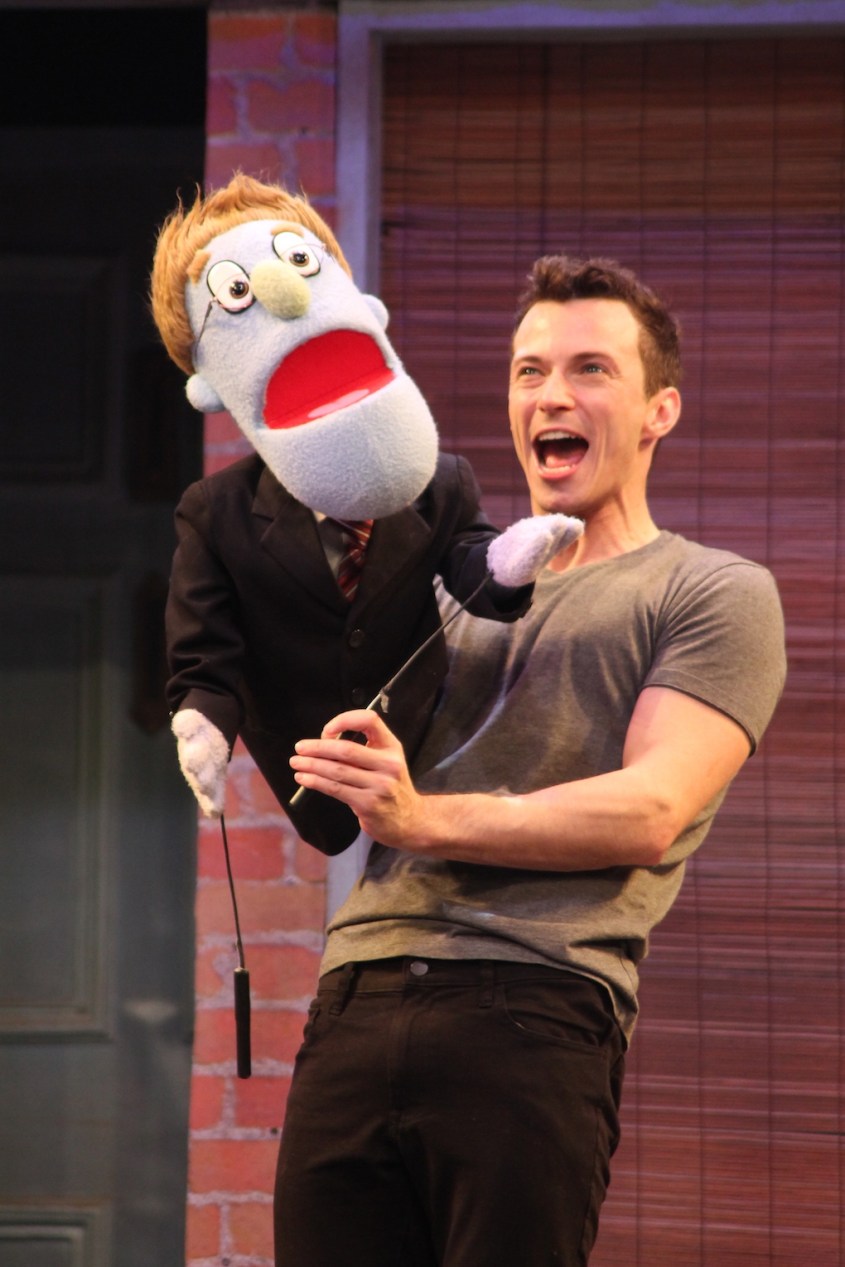
The story follows recent college grad, Princeton, who moves into a colourful apartment block in a diverse neighbourhood filled with Sesame Street-style monsters, puppets and even humans. Throughout the quirky two-hour (and adults’ only) musical journey, we see the youngster settle down, find romance, lose romance, have a fling, and even gain a life purpose along the way.

The dynamic and often dual characters were well cast with Ross Hannaford (Princeton/Rod), Vincent Hooper (Nicky/Trekkie Monster) and Andrew Hondromatidis (Brian), however exceptional performances belonged to Sophie Write (Kate Monster/Lucy the Slut) and Sun Park (Christmas Eve), who between them stole the show. Both women were vocal standouts: pitch perfect, perfect tone and with great resonance. The vocals for superintendent Gary Coleman (Zuleikah Khan) were less secure at times, although it’s a notoriously tricky part which can often challenge a female’s lower vocal range and demand sacrificing power for pitch. As minor characters that weave themselves in and out of the story, the Bad Behaviour Bears performed by Lulu McClatchy and Hooper were also particularly high energy, hilarious and well-worthy of note.

John Kerr‘s set design was simple but effective and the puppeteers draped in black were well-choreographed and transitioned smoothly in and out of different roles all night. Whether you watched the puppet or a puppeteer, both were equally engaging and emotive. Unfortunately the lighting operation was slightly under whelming and patchy at times on the night I attended, with shadows cast on puppet faces and a couple of sloppy follow-spot pickups: however, I’m sure this will sharpen up as the season progresses. The sound was clear and well balanced, however it would have been nice to bump up the volume for an excited opening night audience.

This was, overall, a brilliant production directed by Peter Snee and musically directed by Trevor Jones, and I honestly could not stop smiling the evening. With those witty lyrics and music written by Robert Lopez and Jeff Marx, and Jeff Whitty‘s book helping offer a raunchy insight into the lives of puppets dealing with homosexuality, racism and sex, this new production of Avenue Q is as good as theatre gets.

Season: Performances every night until August 14 (no performances Monday)

Venue: Her Majesty’s Theatre

Bookings: Ticketek

Image by Nichole Riseley

Optic Nerve Presents THE MILL ON THE FLOSS

Where waters run deep

By Rebecca Waese

Optic Nerve’s The Mill on the Floss directed by Tanya Gerstle, delivers a thrilling, sensual, and physically-charged performance about Maggie Tulliver, who, growing up in a provincial town in nineteenth-century England, learns that her choices in life are damningly limited by her gender.

The Mill on the Floss

In this intelligent and immersive production, originally adapted by Helen Edmundson for Shared Experience Theatre Company from George Eliot’s novel, three actors play Maggie at different stages in her life in a moving embodiment of how we experience inner conflict when faced with making heart-breaking decisions. Young Maggie, played by Maddie Nunn with joy and irreverence, supports the more somber second Maggie, hauntingly portrayed by Zahra Newman, and convinces her to return the affections of her first suitor Philip Wakeham, (Tom Heath), who is the son of the lawyer who has taken over Maggie’s father’s mill. Rosie Lockhart delivers a beautifully tempered yet volatile third evolution of Maggie, who becomes entangled in an impossible love triangle with her cousin’s betrothed, Stephen Guest (George Lingard), and has to choose between respecting her brother’s wishes for her and her own desires that will leave her disowned by her family and a societal outcast.

Gerstle’s Pulse style of actor training, where actors follow physical and emotional impulses to give body to the text, allows for some unforgettable ensemble moments. Eight actors commit fully to their 17 roles and create a moving experience of a flood using only chairs and an upturned table in a simple yet evocative light and soundscape. The ghost of a drowned witch emerges from an unseen crevice under the stage to try and drown Maggie in the river. The scenes with the Aunties who selfishly expose their self-interest when Mrs Tulliver (Luisa Hastings Edge) and Mr Tulliver (James O’Connell) lose everything reveal the underside of family divided by class. Music enhances the production and Zahra Newman’s powerful instrument of a voice, worth the price of admission alone, sings a primal call-to-arms of the pain of women who centuries earlier were drowned for being witches.

This adaptation maintains a strong connection to the novel, written in 1860 by Mary Ann Evans under the male pseudonym George Eliot, for its unflinching and unnervingly contemporary portrait of the stirring passions of a young woman bound by the social forces of her time. There is less focus on Tom, Maggie’s brother (Grant Cartwright) than in the novel although his over-physical relationship with Maggie resonates with the intense childhood bond George Eliot describes having with her brother before they were estranged in her autobiographical poem “Brother and Sister.” The weakest part comes in the love affair between third Maggie and Stephen Guest where the affair feels somewhat rushed and not as consuming as it could be if Lingard were able to bring a deeper maturity to the role.

Mill on the Floss injects the past into the contemporary with its rousing themes of how women react passionately against being held down in society. In the theatre foyer, a collage depicting fifteenth-century witch trials and Eddie McGuire’s recent comments about how he would pay to see his female colleague’s head held under a pool of iced water, tracks a chilling legacy that makes Maggie’s struggles even more vital today. This a triumph you do not want to miss; it’s history in the making.

Date: 28 Jul 2016 – 13 Aug 2016. Extra show added Tues Aug 9.

Time: Tues to Sat at 7:30pm and 1:30pm on Sat 6, Sat 13 Aug

Price: $35 Full / $26 Conc, Under 30, Groups 8+ /$20 Preview [plus $2.50 booking fee per ticket]

Presented by: Theatre Works and Optic Nerve

Bookings: (03) 9534 3388

Image by Pia Johnson

Rebecca Waese is a Lecturer in Creative Arts and English at La Trobe University.