Review: Lottie in the Late Afternoon

Offbeat comedy loaded with idiosyncratic characters

By Lois Maskiell

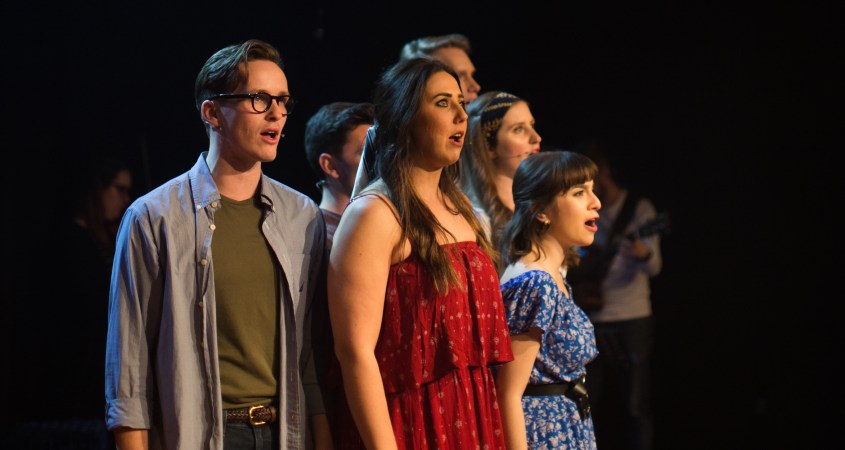
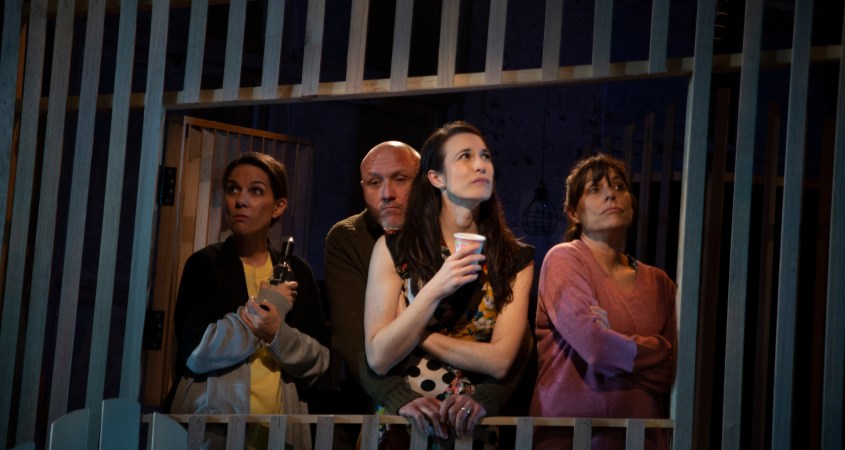
It’s not even a long weekend, but Lottie has convinced her friends to join her and her partner for a brief weekend getaway in New Haven. Played by a superbly skilled cast, Amelia Roper’s play is an offbeat comedy loaded with lively and idiosyncratic characters.

Lottie is an intriguing woman. She’s dominant, odd and oddly narcissistic, though utterly endearing all at once. Like all the personalities in Roper’s light-hearted and amusing comedy, she’s full of contradictions and good intentions.

When Lottie (Laura Maitland) and her partner Ryan (Linc Hasler) arrive at a picturesque cottage for their holiday, the first disappointment hits when they discover an enormous cliff nearby. With their expectations beginning to erode, Lottie and Ryan’s perfect vacation is further destroyed when they receive a phone call from their friend Anne and her partner who can no longer make it due to a sudden hospital visit.

The drama takes an unexpected turn when Clara (Michala Banas), Lottie’s long-time single and closest friend, arrives and admits she’s been having an ongoing affair with Anne. Lottie’s shock and surprise are further compounded when Anne (Ally Fowler) unpredictably shows up and confesses she’s just had an abortion despite her partner’s disapproval.

Presented by indie-theatre group, The KIN Collective, the quality of this production is of an extremely high calibre. Under the direction of Marg Downey, the entire cast make Roper’s diverse and well balanced characters shine. Hasler’s Ryan goes beyond masculine clichés with his boyish enthusiasm and frequent panic attacks. Banas’ Clara is tough and nonchalant, though the cracks begin to show when her relationship with Anne falls apart. Ally Fowler’s Anne is probably the most perplexing of all. A journalist praised as the intelligent one, Anne’s life is completely out of order between her secret affair and bouts of sloshed dancing.

Half the fun is watching the cast dart around Tim Roper’s exquisitely built set. Featuring a house made entirely of wood, Roper’s set perfectly contains the characters’ awkward attempts to connect with each other during their unfortunate weekend vacation.

The comedy remains elevated in its light-hearted humour so that the suffering of these characters never arouses much sympathy. Overarching themes of loneliness and the effect of work and income on relationships renders the story at once relatable and accessible to a broad audience. Lottie in the Late Afternoon is a brilliant comedy brimming with outlandish dialogue, played to the hilt by a superbly talented cast.

Lottie in the Late Afternoon is being performed at Fortyfivedownstairs until 30 September. Tickets can be purchased online and by calling the box office on 03 9662 9966.

Photograph: supplied.

Fringe presents Night Terrors

Four haunting tales brilliantly animated

By Joana Simmons

Aesthetically and rhetorically pleasing with a touch of unhinged brilliance is an apt way to describe Night Terrors. The 2018 Melbourne Fringe brings a plethora of all sorts of unexpected art including this show of literary terror which explores four ghost stories inside a church, all told by an incredible performer. There are so many elements that have gone into this production to make it a top-notch experience, not to mention the fact that it genuinely made me shiver and clutch my face in delight.

Bluestone Church Arts Space was the perfect setting for this night of spooky storytelling. The way the giant door creaked open to reveal the stained-glass window in the background had me ready to be entertained right from the start.

The star that is Caitlin Mathieson commanded the space for just over an hour, embodying different characters as she told four classic tales of terror. The first was The Tell-Tale Heart by Edgar Allan Poe which describes the story of a woman driven mad by guilt after committing murder. Second was The Yellow Wallpaper by Charlotte Perkins Gilman which tells of a woman confined to her room. Next were The Keepsake by Briony Kidd and The Open Window by Saki, both exciting in content and structure and moved with dexterous detail from beginning to climax. The drama was further heightened by the soundtrack which smoothly weaved all the stories together.

Creator Stefan Taylor has done an incredible job to bring such a sophisticated piece from paper to stage. I loved how refined it was and that it did not try cheap tricks for laughs. Joining Taylor was director Simon J Green, whose contribution added to this highly polished production. The lighting gave great contrast between scenes and provided both moody and spooky qualities without ever being over the top.

Overall, I was in awe of Caitlin Mathieson’s ability to smoothly glide from scene to scene, from character to character with a great command of text. There were points where she absolutely embodied the people in the stories, moving around the church with her wonderfully expressive voice and face which drew the audience in. Ever so gracious and in a tweed two piece, Mathieson gave us a sense of refinement and class belonging to an older world.

If you are looking for a delightful night of spooky entertainment, do not look further than Night Terrors. Not only is Night Terrors a memorable production, it is a hoard of times better than any creepy Netflix series.

Night Terrors is being performed at Bluestone Church Arts Space until 30 September. Bluestone Church Arts Space is an accessible venue and there are Auslan interpreted performances and open captioning. See here for more information and tickets.

Photograph: David Edmonds


Review: The Australian Ballet School Showcase

A chance to witness Australia’s up and coming classical dancers

By Leeor Adar

Entranced from the moment the curtains open upon the dancers, it is evident that there is no such thing more beautiful than the artistry and skill of the ballet.

The Australian Ballet School prides itself on its high quality training opportunities for talented young performers, and I am thrilled to say that the talent very much shines in the 2018 Showcase directed by Lisa Pavane. Dancers from Level 1 – 8 perform under the direction of some of the best teachers Australia has to offer, and the pieces vary from contemporary to fairy tale, flamenco-inspired to the tongue-in-cheek.

The Showcase opens with a tiny ballet dancer lifting the veil upon the scene, and we begin with the masterwork of choreographer Paul Knobloch, an Australian Ballet School alumnus with the capacity to arrange 121 dancers into stunning visual formations with the Grand Défilé (a grand parade in literal translation). The Défilé is really a glorious start to this production, as the choreography is just gorgeously cinematic in its scope. Knobloch has an enormous task on hand, but manages to make this a triumph. This was the perfect opportunity to let any doubt of the calibre of the young performers disappear into the tulle.

If the audience had any doubts about the extent The Australian Ballet School could stretch its flavour, the Alegrías choreographed by Areti Boyaci which featured on stage Spanish guitar by Werner Neumann established the Showcase as something to be reckoned with. The flair with which the performers managed keep to the 12 beat rhythm of the flamenco was an excellent choice for exhibiting the performers’ versatility.

The Don Quixote, Dryads, Act II was a charming nod to tradition, featuring Ludwig Minkus’ music, with extraordinary costumes. I enjoyed the sweep into fantasy, but admittedly craved something bolder, which I had begun to really expect after such enticing earlier numbers. I was delighted by the Wolfgang Dance choreographed by the excellent Simon Dow to Mozart’s Allegro from Eine Kleine Nachtmusik (which we know as ‘A Little Night Music’). The Level 4 students were brilliant and able to bring an enormous humour and spirit to the performance, which featured baroque white wigs and many laughs from the audience.

A standout performance for me was the wonderful troupe of male dancers in the Knobloch choreographed Valetta. Knobloch establishes himself as a master of ballet ensemble here, and the dancers are absolutely breathtaking moving works of art as they perform the classical movement which featured the flair of the late 1950s Metro-Goldwyn-Mayer musicals.

The final act featured the elegant and fluid wonder of the Ballo Barocco, choreographed by Stephen Baynes, featuring the beautiful music of Bach. Initially created for Level 8 dancers, the Level 6 dancers took on this piece with astonishing mastery. Heart Strings was a poignant series of dances choreographed by Margaret Wilson showcasing the experiences of the Level 6 students. With humour and incredible maturity, these pieces were navigated by the students, with notable standouts in Enter the Protagonists and the Bullied.

The final performance of the night, the Danza de la Vida choreographed by Simon Dow borrowed from the tango traditions of Argentina. I found this performance a nice piece to cap the Showcase, however there was a pool of talent that I felt had been under-utilised. Despite that, it was an elegant way to end the evening, and certainly proved that The Australian Ballet School harnesses and hones the astonishing talent of its young performers.

The Australian Ballet School’s 2018 Showcase is headed next to Canberra for a showing on the 22 September. Tickets can be purchased online. 

Photograph: Supplied

Review: The Dumb Waiter

Absurdist play toys with tension and information

By Owen James

Two men waiting for another man, killing time with circular conversations and inane activities – sound familiar? Harold Pinter’s The Dumb Waiter was undoubtedly inspired by Beckett’s Waiting for Godot, but the occupation and character of these two men raises the stakes to a new level. It’s engrossing and fascinating to watch people discussing ordinary subjects, and it’s that underlying and undiscussed reality that builds tension. To say more would be giving too much away, but this comedy/drama explores a breakdown of communication in a way that only absurdist theatre can.

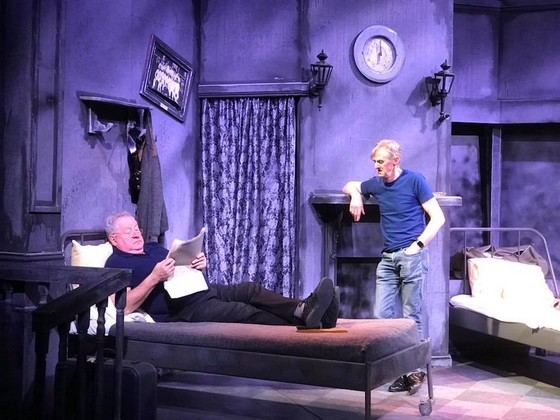
Director Paul Watson has given Pinter’s 1950s play a very faithful reproduction, noting that “staging directions are very deliberate and precise from Pinter and we’ve honoured that closely”. Watson has crafted a world of impatience and intrigue, with every increasingly heated exchange between Ben and Gus playing on our minds without a single dull moment.

John Wood brings subdued menace to the role of Ben. A seasoned and admired actor, the gravitas of Wood contributes a lion’s share of intensity to this dramatic pressure cooker. Does he suspect what we suspect? The calm, apathetic demeanour of Ben is juxtaposed by the irritability of Gus (played by Don Bridges), which sinks into our skin. As his patience wears thin, his craving for information becomes obsessive.

Lighting by Jason Bovaird is simple but powerful, breathing life into the highly detailed and realistic set by Michael Watson. Together, Watson’s set and Bovaird’s lighting extend the world of the play far beyond what we see onstage, adding depth and possibility to the intimate Chapel.

It’s Reservoir Dogs meets Waiting for Godot in this absurd but intense basement, where the power of information shapes men. Authority is defined by who knows the most, and the trickle-down nature of information in this world deems who the loser will be.

Seeing The Dumb Waiter professionally performed is rare, and this production would make Pinter proud.

The Dumb Waiter runs at Chapel Off Chapel until 9 September. Tickets can be purchased online and by calling the box office on 03 8290 7000.

Review: Emil and the Detectives

Slingsby Productions presents Emil and the Detectives

By Narelle Wood

Emil and The Detectives brings to life the 1929 German children’s classic by the same name written by Erich Kästner, adapted for the stage by Nick Bloom. Part detective mystery and part tale in friendship, the story follows Emil’s adventures from his small town to the big city, as he tries to catch a thief and the friends he meets along the way.

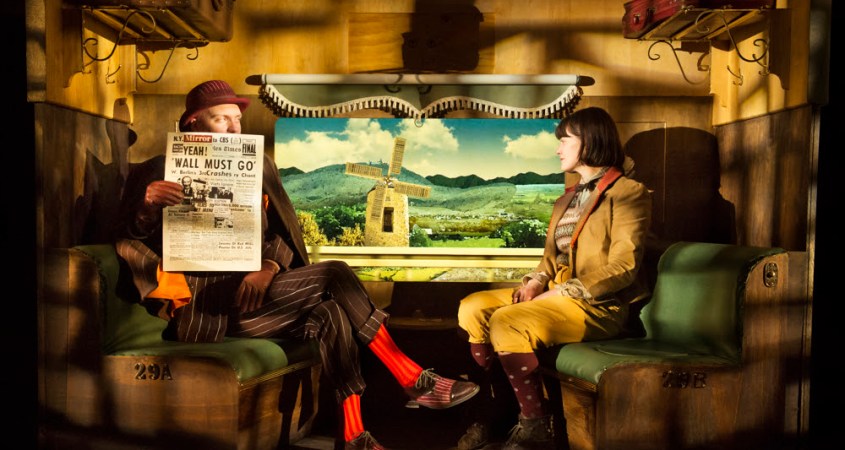
The adventure begins at Newtown as Emil (Danielle Catanzaritti) is given money from her mother to take to her grandmother. Emil embarks on a train journey and meets a peculiar man, Max Grundeis, in a bowler hat. Emil wakes up on the train to find both Grundeis and his money gone. Terrified of what his mother will say, Emil chases the man through the city streets and on the way meets a number of other children and engages their help to catch the thief. Nathan O’Keefe – who plays all the other characters including Grundeis and the mother – helps narrate the story as it goes along.

The story is aimed at age 7 and above, but it does seem as though it would be better suited for a slightly older audience. O’Keefe is great as all the different characters; the nuanced differences between each of the characters was brilliant, but occasionally the transitions from character to character were lost on the young person I was with. I found the storyline itself was full of exposition, which was good, but I was left wanting some more action. That said, the staging and production value (designers Wendy Todd and Ailsa Paterson and lighting designer Chris Petridis) was amazing, featuring miniatures, lighting and shadow effects, digital animations and hidden shelves in amongst the set. The costumes and music are reminiscent of something out of a Sherlock Holmes’ mystery, which helps to add to the detective-adventure genre feel.

Emil and the Detectives is a lovely story with some great morals and good feels as Emil learns to ask for help and what it means to be a part of a small town community.

Emil and the Detectives was performed 8 September at the Alexander Theatre, Monash University, Clayton. See here for more information about the 2018 MLIVE program.

Review: Ich Nibber Dibber

Witty, gritty conversation draws laughter and reflection

 By Leeor Adar

Ich Nibber Dibber is really as it sounds, a nonsense phrase dressed up as “a woman’s work” in German, and if this is women’s work, Post co-creators Zoë Coombs Marr, Natalie Rose and Mish Grigor make it look fabulously funny.

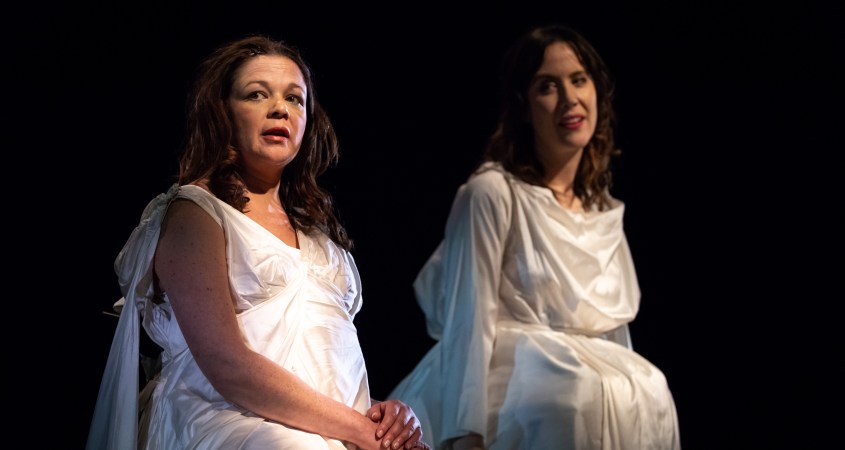
Descending from the heavens, these three angelic women draped in white come to be upon the stage. Make whatever metaphor you want from it – exiting the womb, descending like messengers from heaven – the women have something to say, and it starts with plenty of cussing and fussing about being trashed at a party.

Welcome to the human experience.

If you thought poo jokes didn’t captivate theatre goers, then listen here, you are gravely wrong. But there is so much more to this wonderful production than the humdrum of day-to-day life – my friend and I, and so many more in the audience can remember conversations like these with our friends, a combination of the profound and the banal. On a superficial level, the blokes in the audience will laugh, but for the women, we will laugh because we see ourselves in these three very human characters (even Gywneth Paltrow would agree).

The women inhabit personas we all recognise within our friendships – the sardonic, the naïve, the progressive, and it’s all tongue in cheek. If they poke fun at each other, they do it with profound love, in only the way the closest of kindred spirits can. Nat, Mish and Zoë admit that this is all them – they are just hanging out on stage having the really silly and gritty conversations close friends do. It’s really refreshing and welcoming, and it’s incredibly easy for the audience to connect and relate to the work.

The 70 minutes of Ich Nibber Dibber is all talk, but it’s the talk of over a decade of friendship. The women party, break up, and give birth in the span of the decade, and their conversations continue to shift with the times of their lives and the eras they fall within. It’s a glimpse into the past for many in the audience, from the choices of music to the socio-political backdrop of the noughties and today. There are serious issues the women face: sexual and racial discrimination, the disintegration of intimate relationships, haphazard views of the self – and it’s all handled with an impressive amount of subtlety and humour.

There are some poignant moments within this spectrum, particularly when the writer John Berger is quoted as they cannot recall whether John Berger or John Burgess was the first celebrity death of 2017. Berger’s quote on women surveying themselves as a man alters the atmosphere reminds us that while we are watching women inhabit the stories of their lives, they are still a spectacle of the male gaze.

I find Ich Nibber Dibber intelligently comments and navigates the complex terrain it raises with a lightness of being, and its capacity to make its audience laugh under such examinations makes for powerful theatre.


Ich Nibber Dibber is being performed at Malthouse Theatre until 23 September. Tickets can be purchased online and by calling the box office on 03 9685 5111.

Photograph: Jacquie Manning

Review: Disenchanted

Has the damsel in distress had her day?

By Narelle Wood 

It’s a tale as old as time: pretty damsel finds herself in distress and is rescued by a handsome prince. Well woodland creatures, princes and enchanted rodents beware; these damsels are disenchanted with their lot and they’re not afraid to sing about it.

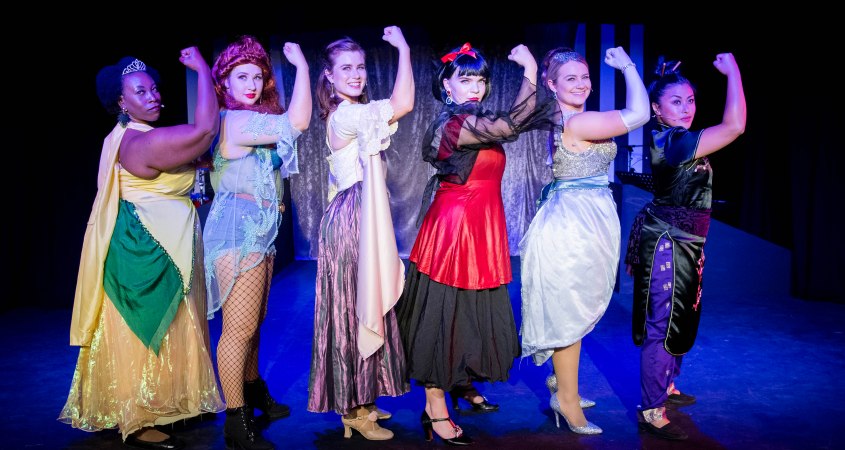
Disenchanted, directed by (Madison Thew-Keyworth) is a cabaret-style show lead by Snow White (Ellie Nunan), Cinderella (Courtney Underhill) and the occasionally conscious Sleeping Beauty (Tayla Johnston). To highlight the many issues with what the princesses term “the princess complex” the trio of merry maidens are joined on stage by some other famous females including Mulan, Pocahontas and Princess Badroulbadour – or as we now know her, Princess Jasmine –  (all played by Jennifer Trijo), Belle, Ariel, Rapunzel (all played by Demi Phillips) and Tiana (Asabi Goodman), the first African American Disney princess, who also happened to kiss a frog.

Together the princesses take a slightly more realistic, some may say a little cynical but much needed, look at their fairy-tale storylines, and in doing so raise a few questions around the types of messages these stories are sending and whether the idea of a damsel in distress has had its day.

There are songs about cultural appropriation, the Disney-fixation on making grim tales more palpable to children, and the capitalist venture that is princess entertainment. Cinderella’s anthem for an image-obsessed generation, All I Wanna Do is Eat, is just one of many songs that touch on body image issues, which are suggested to stem from the unrealistic proportions often used to portray the feminine physique. My favourite song though is Snow White’s truthful version of what she would like to be singing while she worked, and despite being an upbeat and perky number called A Happy Tune, Snow White drives home some pretty hard-hitting messages about household equality.

The show’s a hoot. The band – under the musical direction of Bradley McCaw – look like they’re having a blast. The cast has charm, wit and beauty, which is everything you could want in a prince, and is all wrapped up in a feisty fairy-tale princess package. Snow White is cool, calm and in control and Cinderella’s comic timing is perfect. Sleeping Beauty is, when she’s not asleep, a little over sexed – which is a good opportunity to point out that this show is not recommended for anyone under the age of 15. Best leave the little princesses at home.

Disenchanted was an Off-Broadway hit and it’s not hard to see why. It’s not the fairy-tale we know, but it is very much the modern take on these fairy-tale classics that we need to hear.

Disenchanted, presented by Mad About Theatre, is being performed at Athenaeum Theatre 6 – 8 September.  Tickets can be purchased online and by calling the box office on 13 28 49.

Photograph: Rick Monk

Review: Fugitive Songs

Fugitives, runaways and a sublime musical score

By Owen James

Sonder Theatre Company have produced an extraordinary production of this rarely performed musical. Both this company and this director, Dirk Hoult, are clearly ones to watch in the Melbourne theatre scene.

Fugitive Songs rotates characters and settings around the theme of running away – although not in the same sense as other “fugitive musicals” such as Bonnie and Clyde or Thrill Me. These are regular people pushed to their limits, they are victims of circumstance, avoiding or escaping their past or future. Each song gives us a new moment, a new perspective or intrinsic human value such as fear, resilience or recovery to consider.

Composers Nathan Tysen (music) and Chris Miller (lyrics) (a team also known for musicals Tuck Everlasting and The Burnt Part Boys) have shaped these unique stories with a folky score reminiscent of early works of Pasek & Paul or of Jason Robert Brown’s Songs for a New World, packed with humour and warmth. Musical Director Caleb Garfinkel has brought this difficult score to life with love, precision, and a team of electrifying voices and musicians – proving Garfinkel’s consistently impressive musical direction.

Director Dirk Hoult has done an extraordinary job physicalising this score, creating ensemble movement that elevates every lyric without ever becoming distracting. He has ensured that in this intimate world of diatribes and confessions each song has a distinctly unique flavour. I’d rush out to see any productions Hoult has a part in.

Every member of this six-person ensemble brings their all to this fugitive world and by portraying their numerous characters with realistic humour and pain, they keep us engaged in every new chapter. This show is the perfect vehicle for each of them, giving every performer a chance to shine. Though, special mentions are due to Bailey Dunnage and Luisa Scrofani who both have a magical stage presence that induces laughter and heartache at every new turn.

Lighting by Jason Crick is sharp and precise, embracing each song and character with a personalised glow. His work is sublime, transforming this small black box theatre into dozens of locations both large and small.

Fugitive Songs likely won’t be seen in Melbourne again for a long time. It is a credit to this emerging company that they have chosen this rarely-presented piece and pulled it off close to perfection. I can’t wait to see what comes next for Sonder.

Fugitive Songs was performed at Chapel Off Chapel 27 August – 2 September. See here for more information about Sonder Theatre Company.

Photograph: Lissa & Laz Photography

Review: Blasted

Violence is violence, is violence, as Kane reminds us

By Leeor Adar

When I think of Sarah Kane I imagine a rawness of writing, and Blasted is as brutish and raw as it gets. There is no line between the private violence of the domestic and the intrusion of war upon private citizens. Blasted drags us in not with string but with rope, and we are gripped in the hideousness of a reality we want to forget.

Anne-Louise Sarks directs her cast through treacherous material, and each rises to the occasion, despite how confronting it would be to wade through the play’s material on a daily basis.

Blasted begins in such banality. A woman (Eloise Mignon) and man (David Woods) with an obvious power imbalance, share a hotel room for a night. We are on edge, because the man plays with his gun like it’s an extension of his ego. The woman, a former lover we eventually learn, is subjected to his sexual, emotional and physical violence. It’s all shrouded in the banter of their conversation, all strangely accepted by the audience as the currency of their relationship, until we are rudely awoken to the scene of war as a soldier (Fayssal Bazzi) urges his way into their private space.

This production is hard to watch, and it is hard to listen to. The audience has no doubt heard of the atrocities of war and of the extremities of domestic violence, but how many transgressions do we forgive in our every day lives – what is the difference between a lover raping his partner and the stranger taking the same liberty as part of the “spoils” of war? Violence is violence, is violence, as Kane reminds us. While it was not received well by critics upon its first foray into the London theatre scene in 1995, this production has gathered momentum in its relevance like never before. Timely, is what I would call this production for the Malthouse Theatre.

Marg Horwell’s stagecraft and choice of costuming is on point; the cleanliness of the hotel and its beige colours contrasts wonderfully with what’s to come. The space gradually turns from the rubble of domestic violence to the thunderous destruction of the entire space. It’s a titanic feat to turn a hotel room into a rung of hell in under a minute, but the production team smash it. My only criticism is the use of the screen above the stage to capture the small intimacies of the play. It was an unexpected and unnecessary touch. There was enough on stage to convey the power and cruelty of the work without having to contrast it with rotting petals.

Woods’ performance is strong and sustained. As he journeys through the terrain of this play, we feel fear, disgust and ultimately pity for his character. Mignon’s woman is mercurial, childlike and random, which contrasts well with the intensity of the men she shares the stage with. Bazzi’s soldier is relatable and poignant, perhaps more relatable than the others as he is able to convey reason within the madness of the play’s world, despite being a terrifying presence.

The soldier goads the journalist, questioning whether he understands what it is to commit atrocities, but on some level, they are both brutes made from the fibres of their society and circumstance. How did we become so indifferent to violence? I find it to be the core of what Kane raises in Blasted, and a question I continue to ask myself after leaving the theatre.

Kane has succeeded.

Written by Sarah Kane. Directed by Anne-Louise Sarks. Performed by Fayssal Bazzi, Eloise Mignon and David Woods. Set and costume by Marg Horwell and lighting by Paul Jackson. Photograph by Pia Johnson.

Blasted is being performed at Malthouse Theatre until 16 September.  Tickets can be purchased online and by calling the box office on 03 9685 5111.


Review: Crawl Me Blood

Audio drama unearths colonial ghosts 

By Lois Maskiell

Inspired by Jean Rhys’ Wide Sargasso Sea, which earned canonical status for telling the story behind Charlotte Brontë’s madwoman in the attic, Crawl Me Blood is an immersive experience that looks at the Caribbean Creole identity in today’s context.

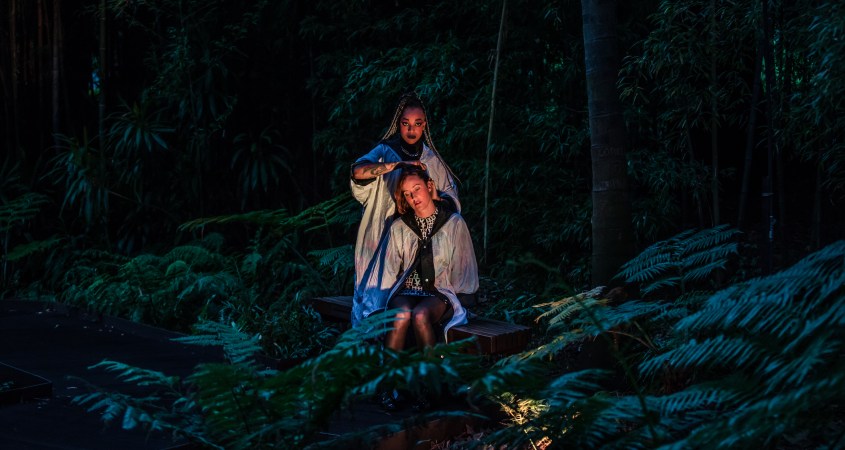
Set in the Royal Botanic Gardens Victoria and presented by Aphids and the Melbourne Writers Festival, this primarily audio-based drama boasts a spectacular backdrop that evokes the landscape of an unspecified Caribbean island full of over-ripe guavas, rustling palms and tropical heat.

Director/writer duo, Halcyon Macleod and Willoh S. Weiland each have their own connection to the Caribbean: Halcyon is of Jamaican heritage and Willoh was born in Belize to white Australian parents. Their connection to the region’s complex histories and identity politics lays the foundation for the drama that involves three generations of Creole women.

When 18-year-old Antoinette leaves Australia and visits her mother Gwen’s birthplace to attend her grandmother’s funeral, she discovers why her mother’s memories of the island are fraught with hostility. With small radio speakers in hand, the participants stroll through the gardens listening to the experiences of these women as narrated by Zahra Newman (Melbourne Theatre Company, Book of Mormon).

As tensions develop between Antoinette’s mother and her relatives, we hear a woman wonder why the Creoles of European descent still hold the majority of money and property, despite the emancipation law of 1833. The others dismiss this comment and the conversation shifts subject.

Like in Jean Rhys’ Wide Sargasso Sea, the effects of colonialism on racial tensions are displayed in a personal account of family, heritage and belonging – amid wild and secretive surroundings.

Crawl Me Blood lives up to its title by digging up our colonial pasts to present their ongoing impressions and what better location to stage it in than the Royal Botanic Gardens Victoria, one of Australia’s very own haunts.

Co-created by Halcyon Macleod and Willoh S. Weiland. Composed by Felix Cross, performed by Natasha Jynel and Zahra Newman. System design by Matt Daniels, video by Lucy Benson, Lighting by Lucy Birkinshaw and photograph by Bryony Jackson. 

Crawl Me Blood was performed at Royal Botanic Gardens Victoria for one evening only, 29 August. See here for more information.