
Review: Close Encounters

Deliciously camp sci-fi burlesque

By Bradley Storer

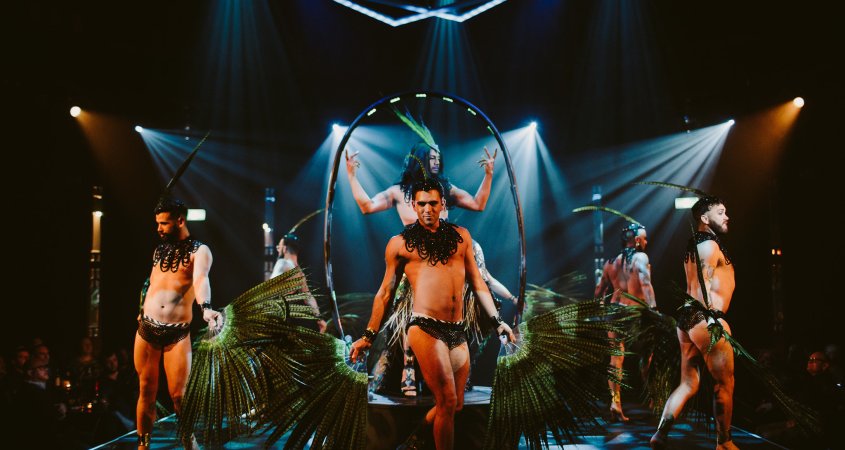
Australian all male burlesque group Briefs return to Melbourne with their latest work Close Encounters,and without a doubt the boys are better then ever! This time around the troupe have a thematic link tying the show together, the idea of ‘close encounters’ in terms of both science fiction and the connection between human beings as a whole. We’re invited aboard ‘the mother of all motherships’ by host and drag performer Shivanna (AKA Fez Fa’anana) as the boys of Briefs deliver a hopeful message from the future.

The audience is treated to a stunning array of burlesque, acrobatics, dance and comedy across the evening. Highpoints include a science experiment/juggling routine that first thrills then tantalizes with balls flying through the air and volcanoes exploding as a lab uniform vanishes. A sensual, spacey strip show featuring an astronaut floating through space in nothing but a g-string. A gorgeous and gawky ballet set to the futuristic thrum of Kate Bush. And all throughout, an inexplicable but wonderfully grouchy white rabbit who continually points to a ringing alarm clock – suggesting the inescapable tugging of time as it drags us into the future, perhaps? At every twist and turn of the performance, the audience were whooping and hollering in ecstatic joy.

Across the board, Close Encounters takes the aesthetic previously established by Briefs – queer, cheeky, joyful, political and daring – and deepens it in beautiful ways. The highlight of the entire show is a gorgeous sequence exploring the limits of the human body with Shivanna as icy extra-terrestrial mistress manipulating and contorting her aerialist test subject. Campy, deliciously overwrought elements crystallise into a stunning whole that can only be described as a piece of pure art.

Briefs continues to offer up work that arouses, disturbs and most of all, delights the audience. While it admittedly offers no solutions to the problems of humanity, it does give a glimpse of a time in which humanity has moved towards a more joyous tomorrow – and that is more than consolation enough.

Close Encounters ran at the Playhouse, Arts Centre Melbourne 20 – 24 March. See here for more information.

Photograph: Kate Pardey
Review: The Girl Green as Elderflower

Mesmerising, musical drama

By Samuel Barson 

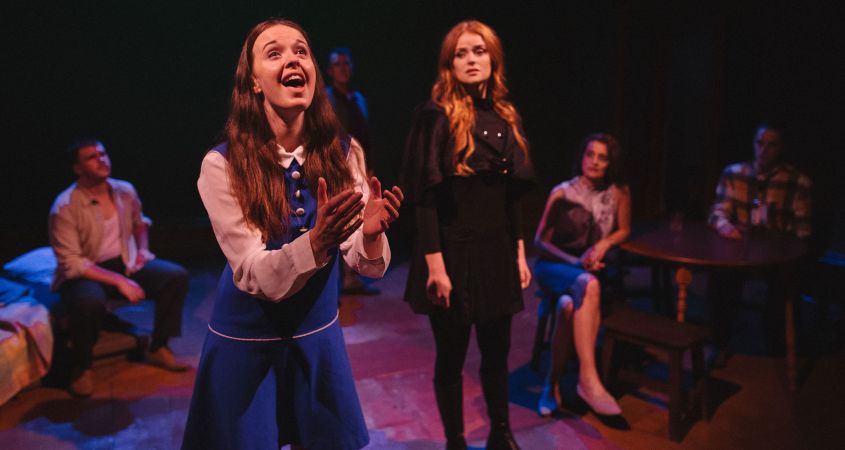
Five years since his death, Australian-born author Randolph Stow remains an elusive, mesmerising and mysterious presence in Australia’s literary landscape. His stories continue to multiply and grow, yet Stow’s audiences are still unable to fully understand who the man truly was. His 1980 novel, The Girl Green as Elderflower is as close as we get to a biography of his. The tale of its protagonist Crispin Clare and his task of putting together life’s broken pieces as he recuperates from a life-threatening disease almost echoes the aftermath of the author’s mental and physical breakdown, which he experienced after serving as a patrol officer in the Trobriand Islands.

Stow’s original novel has been competently adapted for the stage by Richard Davies, and celebrated Australian director Sara Grenfell has orchestrated a vibrant and talented ensemble cast for La Mama’s Courthouse Theatre, that (mostly) honours Stow’s original work to a high standard.

Leading the cast is Billy Sloane as Cris. Sloane brings some solid moments of charisma and empathy to the role and has a gorgeous voice to match. Highlights amongst the cast included the compulsively watchable Nicholas Bell in his dual role of Mikey/Robin, Alice Albon as the cheeky (and at times seriously scary) Malkin and Liam Dodds as the smooth and charming Matthew. The rest of the ensemble all brought considerable contributions throughout the night however it was sometimes hard to avoid the feeling certain actors may not have had the necessary understanding of the text to really do their characters justice.

Lighting and sound design by Shane Grant and Ryan Smedley was positively consuming and certainly came to be appreciated during some moments where the script’s action became a bit dry and un-evolving. The mystical elements of the play were brilliantly showcased by both designers’ decisions to tap into the absurd and exaggerated in their designs. Christina Logan-Bell’s set design was impressively adaptable and multi-faceted with scene changes often occurring before the audience had even realised.

The play certainly could have run the risk of falling into poetic monotony if it weren’t for the inclusion of Davies’ music score. The range of musical numbers throughout the play was highly appreciated, and musical director Shelley Dunlop did a superb job of creating such an entertaining musical landscape. There was not a fault when it came to the cast’s singing talents.

Grenfell is to be applauded for tackling such a complex narrative and for bringing it to life for audiences. Despite the often overly slow pace and actors’ detachment from the script, it was a solid production with all the desired bells and whistles.

The Girl Green As Elderflower plays at La Mama Courthouse Theatre until 31 March. Tickets can be purchased online or by contacting the box office at 03 9347 6948.

Photograph: Jack Dixon Gunn

Review: Dance Nation

An ironic spin on the world of dance

By Leeor Adar 

Clare Barron’s Dance Nation is the kind of charming macabre well suited to the world of dance. Directed by the excellent Maude Davey and assistant director Angelica Clunes, I am not surprised to see Davey has injected her wacky charm into directing this work for Red Stitch. What you ultimately have is a glorious unicorn of a play performed by adults acting as children. The irony of the dance world through this lens is great, particularly as audiences will be well acquainted with the fierce and devastating early maturity for youngsters caught up in the competitive world of dance.

It all starts as expected, our herd of dancers preparing for a big competition for exposure and FAME! Peter Farnan’s sound design is perfect here, sound bites of sighing and breathing intersperse scene changes with Clare Springett’s sharp lighting design. We’re off to a good start with a formation of dancers’ legs waving about to an amused audience. The scene quickly descends into that macabre goo when one has severed her leg – the price of fame!

Before auditions for the leading role of Gandhi, a brilliant cliché of the creepster dance teacher Pat (Brett Cousins), it is evident friendship will be tested. Zuzu (Zoe Boesen) and Amina (Tariro Mavondo) are the two glory girls of the troupe, who somehow manage to sustain a level of sweetness up until the big first night of the competition.

Adrienne Chisholm’s set and costume design are perfectly sparkly and quirky, and you will enjoy seeing what she serves up for the competition. Choreographer Holly Durant sets us into a barrel of laughs with zombie dance moves and extra dagginess to boot.

The cast is fantastic, and the characters are completely engaging throughout. Natalie Gamsu’s odd young Maeve is downright the funniest of the bunch, and in the most unexpected ways. Somehow her subtle smile as the moon passing over Connie’s bedroom (played by Georgina Naidu) is a bit of a low-key show stealer. Caroline Lee’s monologue as the quietly ambitious and hyper-sexualised Ashlee is perhaps the greatest personal pep-talk I’ve ever heard, and Hannah Fredericksen’s tomboy/cool girl Sofia is utterly brazen and suitably goofy. Token dance boy, Luke, played by Casey Filips is delightfully at home amongst the feminine, waiting for a chance at Zuzu’s affection, and Zuzu’s dance mum (Shayne Francis) is the kind of child-soul-killer you’d see forcing Vaseline onto her child’s teeth in USA’s Dance Moms.

Despite all the laughs, Dance Nation has a litany of poignant moments for its characters. Sofia’s need to be tough is brought back down to earth when the most feminine of life occurrences strikes at a critical moment. Connie’s need to be seen is so vital to her, that her little heart breaks throughout the play are all the more tragic and are handled beautifully by Naidu. As events try and tear the dancers apart, they still manage to lift each other up by imagining themselves as they will be some day. I find that childlike wonder uplifting despite the gravity of adulthood weighing in upon their hopes and dreams.

Dance Nation runs until 14 April at Red Stitch Actors’ Theatre. Tickets can be purchased online and by calling the box office on 03 9544 8083.

Photograph: Teresa Noble

Review: The Importance of Being Earnest

An interpretation not to be missed

By Ross Larkin

Oscar Wilde is arguably one of the most celebrated playwrights of the nineteenth century and The Importance of Being Earnest is rightfully among his best known offerings for its playful sass and dry wit.

Set in 1880’s Britain, two upper class friends, Algernon and Jack, become caught up in their own game when the women they wish to marry, Gwendolen and Cecily, grow wise to the men’s spirited untruths and a web of hilarious confrontation ensues.

Melbourne’s All Sorts Productions have shrewdly crafted the play as an immersive piece on location at the stunning Labassa Mansion in Caulfield to great effect, utilising an outdoor garden area and several indoor ones.

As the lively host, Basil, and the cast move around the Victorian era surrounds, so do the audience along with the occasional interactive moment.

First time director, Maurice Mammoliti, succeeds particularly well in creating an entire world for the show (as opposed to isolated scenes), whereby characters and activities subtly link the action from one location to the next.

The ensemble cast are strong, with standout performances from Patrick Hill and Katherine Innes as Algernon and Gwendolen, who bring a sharp, energetic and sophisticated charm that would make Wilde himself proud, while Ruby Gabriella is also delightful as the whimsical Cecily.

There is much attention to detail where costumes and accessories are concerned, which only adds to the immersive experience, transporting viewers in every sense for the duration.

Although the full season of The Importance of Being Earnest has already sold out, it is well worth adding your details to the waiting list, as All Sorts’ immersive interpretation of Wilde’s classic is definitely one not to be missed.


The Importance of Being Earnest runs 7 – 31 March at Labassa Mansion Caulfield North. See here for ticketing information.

Photograph: Tameika Brumby


Review: World Problems

Heartfelt examination of life and memory

By Irene Bell

World Problems, written and performed by Emma Mary Hall, is a tender look at the way we experience life. Hall recounts memories for the audience, giving equal weight to insignificant memories such as seeing her dad pick his nose and life changing ones such as divorce and the death of family members. In this way, she takes us from childhood through the aging process beginning in the ’80s and ending in a dystopian future.

With her kind tone and casual breaking of the fourth wall, Hall makes you feel welcome and able to reflect on your own life. This is definitely a show to share with a loved one. It’s difficult know whether to laugh or cry, as every memory she tells feels poignant (even the future death of George Clooney).

All the while Hall builds. Taking metal rods strewn across the stage, she puts them together like a puzzle even asking help from the audience when something is not fitting right.

There is no pacing of the stage, as usually permeates solo performances: watching Hall build her set and wondering which piece will come next is engaging in a childlike way.

Hall’s performance is spectacular. The accompanying music and lighting create an atmosphere of intimacy. The set is beautiful in its simplicity, there is a celestial vortex constantly spinning on the wall that reminds us of the otherworldly route this story takes, and the audience sits surrounded by pot plants. At one point, I realised that as I listened to Hall reach the dystopian part of the story, I was lightly stroking my neighboring pot plant – a subconscious need to reconnect with nature had awoken in me.

World Problems is simple in its presentation though grand in its ideas. It will make you feel calm and grateful, it will inspire you to appreciate every part of you, every good and embarrassing memory, and all the people in your life.

World Problems runs 14 – 24 March at Fortyfivedownstairs. Tickets are available online or by calling the box office at (03) 9662 9966.

Review: Yo Carmen

Look out for Yo Carmen

By Lois Maskiell

Carmen has thrived on world stages since Georges Bizet’s opera of the same name was first performed in Paris 1875. In María Pagés’ Yo Carmen the legendary character is treated to a contemporary flamenco makeover in a performance that drew a lasting standing ovation and proved this classic work continues to be relevant today.

Seville-born dancer and choreographer María Pagés reinvents Bizet’s tale of passion and revenge in an interpretation that ends on a very different note. There’s no blood spilt by a jealous man or woman punished for her strength, but there is a celebration of womanhood.

Seven elite dancers perform alongside Pagés and incorporate Bizet’s compositions and new, original music into their numbers. Co-directed by Pagés and playwright El Arbi El Harti the well structured production fuses movement, music and dialogue in a spectacular narrative.

María Pagés is completely at ease with the audience. At 55 years she’s honed her craft and is a commanding presence on stage, exemplifying how flamenco embraces the female figure at all ages, unlike ballet and other dance forms.

Raw and rhythmical, the cante flamenco of singers Ana María Ramon Munoz and Sara Garcia Romero is backed by musicians Rubén Diaz Levaniegos and Isaac Munoz Casado (guitar), David Moniz Ordonez (violin), Sergio Fernando Menem (cello) and José María Uriarte Serrano (percussion).

A pioneer of contemporary flamenco, María Pagés has toured with Antonio Gades Company, worked on Carlos Saura’s dance films and since 1990 has produced a steady output of award-winning productions under her own company.

Yo Carmen is a rare opportunity for Australian audiences to experience María Pagés’ incomparable contemporary flamenco style that’s steeped in folk traditions.

Yo Carmen ran at Arts Centre Melbourne 12 & 13 March after additional performances 8 & 9 March at WOMADelaide, Adelaide.  

Dancers:  Marta Galvez Lastre, Julia Gimeno Asins, Nuria Martinez Dominguez, Eva Varela Rubio, Chatal Soler Payano, Tatiana Cuevas Calzado, Natalia Gonzalez Alcala

Photograph: David Ruano

Review: Girl

Masterful, heartwarming coming-of-age tale 

By Ross Larkin

One can generally always be assured that the Alliance Française French Film Festival will deliver an array of thought-provoking, innovative and entertaining flicks from a nation who arguably does art house better than any other.

If Lukas Dhont’s Girl is an indication of the calibre of this year’s selection, then 2019 will certainly live up to expectation.

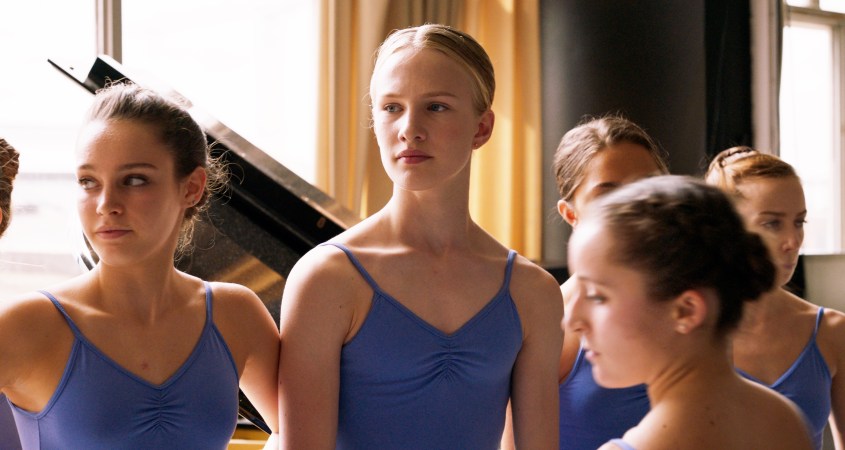
Girl is a coming-of-age tale about a female teenager, Lara, trapped inside the body of a male and the struggles she faces while awaiting gender reassignment surgery.

Lara, played with incredible poignancy and sensitivity by newcomer Victor Polster, is training relentlessly as a ballerina at a top dance academy in an environment where her peers and teachers are all aware of her transitioning.

As is her single father, in a wonderfully touching portrayal by Arieh Worthalter, whose support is determined, passionate and full of love.

Save for the occasional upsetting moments of external bigotry, most of the demons Lara face are within herself, as she battles with a body she despises and feels all but foreign to.

Director Dhont manages to hit just the right chord with the tone and pace of the film, without labouring too indulgently on the darker aspects, and the performances he coaxes from his actors are exquisitely subtle, natural and endearing.

The subject matter is explored delicately, yet realistically, and while aspects of the story are at times harrowing, there is an equal measure of tenderness and joy as well as some beautiful symbols and metaphors the French are so renowned for.

One of very few films to include a transgendered protagonist, it is heartwarming to see such a masterful exploration by way of Girl, and I urge all film lovers to partake in the experience.

Girl screens 5 March – 10 April at selected Palace Cinemas across Australia as part of the 30th Alliance Française French Film Festival. Tickets can be purchased online.


Review: Keep Going

Redemption and new beginnings in contemporary Western

By Lois Maskiell

In the dry and mountainous Kyrgyzstan countryside, a desperate mother takes her troubled son on a horseback journey. Her reasons for the trip are initially unknown, but slowly and purposefully director Joachim Lafosse invites us into their histories and into a web of trauma, redemption and new beginnings.

Keep Going (Continuer)
premieres in Australia as part of the 30th Alliance Française French Film Festival after its nomination for best film at Venice International Film Festival in 2018. Making a strong addition to Lafosse’s steadily growing filmography (Our Love, The White Knights, Our Children), this tightly knit two-hander allows the Belgian director-screenwriter to flex his skills in adaptation as it is based on Laurent Mauvignier’s French-language book of the same title.

Prompted by the death of Samuel’s (Kacey Mottet Klein) grandfather, Sybille (Virginie Efira) takes her son on a cross-country trek with high hopes. Absent throughout Samuel’s childhood, she has returned to find her teenage son drifting. He has had violent run-ins with school staff and risks being sentenced to a correctional facility.

Desperate to pierce through Samuel’s anger and build a connection, Sybille forges through the stark countryside and her son’s wild temperament. Kacey Mottet Klein (Sister, Being 17) plays the conflicted Samuel impressively, balancing fury and desire for love in a captivating and convincing performance.

The stunning location captured by the skilled hand of cinematographer Jean-François Hensgens is featured in an abundance of extreme long shots. The union of expansive landscapes and bouts of silence in the dialogue creates a lean sensory experience allowing the psychological events between Sybille and Samuel to strike harder.

The soundtrack choices sometimes worked, particularly the scene where Samuel dances on top of a mountain to an EDM song, but the more emotional tracks seemed to force sentimentality rather than allow the plot and acting to do the heavy lifting.

Joachim Lafosse successfully depicts the complex bond between a mother and son who seek hope in their lives. Sophisticated in its simplicity, moving its psychology, Keep Going (Continuer) captivates and surprises.

Keep Going (Continuer) screens 5 March – 10 April at selected Palace Cinemas across Australia as part of the 30th Alliance Française French Film Festival. Tickets can be purchased online.

Review: Celebration Yves Saint Laurent

The man behind the iconic Parisian fashion house 

By Narelle Wood

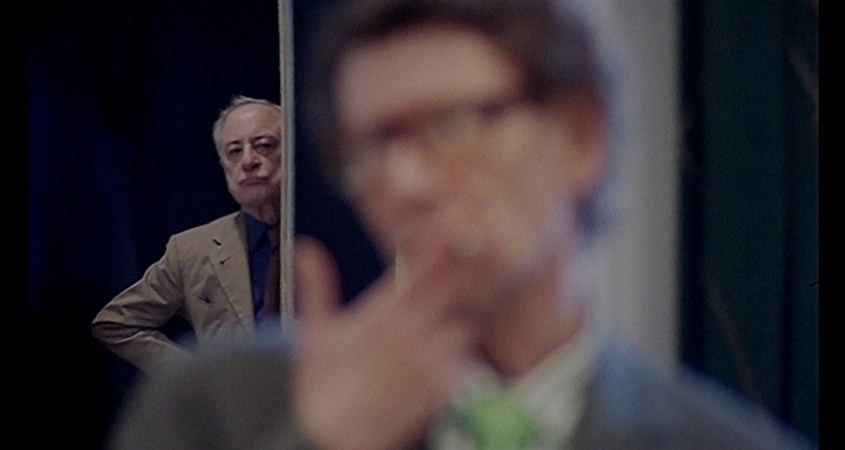
Celebration: Yves Saint Laurent, directed and written by Olivier Meyrou, is a behind the scenes exploration of Yves Saint Laurent, the man and the Parisian fashion house.

There is no, one discernable narrative. Filmed over a period between 1998 and 2001, the documentary combines snippets of film from interviews with Saint Laurent, scenes from fashion shows, fittings, the workshops inside the fashion house and some more personal scenes of Saint Laurent at work and at home. There is some fascinating footage from the many vaults containing the vast array of collections spanning the 40-year career, as well as brief glimpses at the monumental YSL fashion show that preceded the 1998 World Cup soccer final, bringing Haute Couture to the television and millions of people.

Yves Saint Laurent is depicted as a fragile recluse, whose creativity and vision took both a personal and physical toll. Nevertheless, many he worked with comment that his contributions to fashion, his sharp eye and attention to detail never wavered. Pierre Bergé, carefully manages Saint Laurent and it’s perhaps not a surprise that he, until recently, suppressed the film’s release. At times almost tyrannical in his control, it is clear that Bergé was, and perhaps still is, fiercely protective of Saint Laurent and the brand they built.

The footage was taken nearly 20 years ago, and at permission to release the film in 2016, Meyrou revisited the film, to produce, what at times feels disjointed, documentary. However, like the couture the film is capturing, there are small threads that carefully and purposefully hang the overall narrative together. Black and white footage of Saint Laurent is juxtaposed with the more colourful and bustling world of the workshop and fashion shows. The soundtrack is at times disruptive and unsettling, but it calls your attention to what is happening on screen. There is no narration, only the conversations of the documentary’s subjects that are captured, often interrupted and unfinished. Meyrou’s documentary seems to be void of an agenda, except to immerse his audience in the everyday world of fashion designed and worn by very few.

I was left still not knowing very much about Yves Saint Laurent himself, perhaps with the exception of his penchant for French bulldogs. I was, however, left with a new appreciation for the work and accomplishments of Yves Saint Laurent and the people who brought his vision to life.

Celebration: Yves Saint Laurent screens 5 March – 10 April at selected Palace Cinemas across Australia as part of the 30th Alliance Française French Film Festival. Tickets can be purchased online. 

Review: Our Happy Holiday

From Tinder to the Bulgarian countryside

By Leeor Adar

Australian audiences will adore the quirky treasure of a film, Our Happy Holiday (Premières vacances). Somehow, French romantic comedies hit the spot that their American and British contemporaries can never quite tickle. You have your eccentric characters, and their eccentric situations, without a moment contrived from the rule book.

Like so many modern romances, Marion (Camille Chamoux) begins with enlightening her tinder date Ben (Jonathan Cohen) to the gamut of her Tinder dating experience. Things rapidly escalate into an impromptu holiday to Bulgaria, comfortably between Biarritz and Beirut where the characters are respectively intending to go prior to their quick night of passion.

Our Happy Holiday is a first-time direction from writer Patrick Cassir, and in the first half of the film it shows. The emphasis on the dialogue, particularly the first conversations between our lovers has a tendency to feel forced, despite excellent acting from the leads. It’s unsurprising that Cassir becomes hooked on the dialogue, but like magic, the writing and direction take flight in the second part of the film when we are very much in the depths of a Bulgarian sextopia of a retreat.

Frustrated with Marion’s excessively carefree ways in a dirty local’s home for a first stop, I am eventually enlightened to her way of thinking after watching Ben stand by for a dull afternoon shared with a repugnant six-year-old. There are some fantastically poignant moments as our characters learn to engage with each other despite their vastly different approaches to taking a break. For anyone else, this plot could have been a silly mess, but Our Happy Holiday is a shining benchmark for what we should expect of our romantic comedies.

Some standouts include the gorgeous Camille Cottin’s monologue whilst holding an iron, a James Bond style escape from a moving train, and a very French way of insulting someone and expecting that person to still pay for your goods.

Despite a shaky start, I absolutely loved this film, and it will certainly make for a memorable romantic comedy.


Our Happy Holiday screens 5 March – 10 April at selected Palace Cinemas across Australia as part of the 30th Alliance Française French Film Festival. Tickets can be purchased online.