REVIEW: Melbourne Jazz Festival’s CHUCHO VALDES AND THE AFRO-CUBAN MESSENGERS

A glorious experience

By Christine Moffat

Chucho Valdés is truly a genius.  He is an innovative virtuoso who, after more than 50 years as a pianist and band leader, is still composing and playing with panache and energy.  He also has a long history of award-winning composition and performances, and is a teacher and practitioner of Afrocuban-Jazz.

Chucho Valdes

His band The Afro-Cuban Messengers (Gaston Joya on bass, Rodney Barreto on drums, Yaroldy Abreu Robles on congas and Dreiser Durruty Bambole on bata) are labelled on Valdés’ official website as “a group of Cuban phenoms” – this is an apt description, as they are the epitome of artistry and dynamism.

The composition ‘Blues Scherezada’, one of the few songs with minimal percussion, was a masterclass in jazz fusion, with amazing bowing work by bassist Joya.  The majority of the pieces performed involved driving rhythms of Barreto, Robles and Bambole in a truly Afrocuban way, intertwinging classic African call and response vocals with a Latin beat.

Last night’s performance was a testament to the effect jazz can have on the body and mind.  Valdés’ style of Aftocuban-Jazz is a heady combination of sophisticated piano and bass with those powerful drums.

The mixture of sound sparkled and bounced around Hamer Hall like light refracting off a polished gemstone.  The audience was transported by the music, and rose for a standing ovation for the final number, and for the encore that we were given in response.

If you have the opportunity to see this act live, do not miss it.  You will be rewarded with an evening of unparalleled jazz, from a fabulous ensemble led by a man well and truly in his musical prime. Amazing.

Chucho Valdés and the Afro-Cuban Messengers performed at Arts Centre Melbourne, Hamer Hall on 8 June 2013 pm as part of the Melbourne International Jazz Festival. See www.melbournejazz.com for more details.
REVIEW: Theatreworks Presents PALACE OF THE END

Gritty and gripping tales of war

By Myron My

Written by Judith Thompson, Palace of the End is a touching and eye-opening look at war in Iraq and its devastating impact through three monologues that are inspired by real stories of people who have been damaged by the everlasting effects of war.

It’s a unique set design at Theatreworks: the stage is constructed into a narrow ten seat wide performance area, creating an intimate (if not claustrophobic) environment, which allows these monologues to reach us to more dramatic level. Furthermore, each performer is given a designated area where their monologue is to take place with minimal props that are simply but effectively used to create the scene.

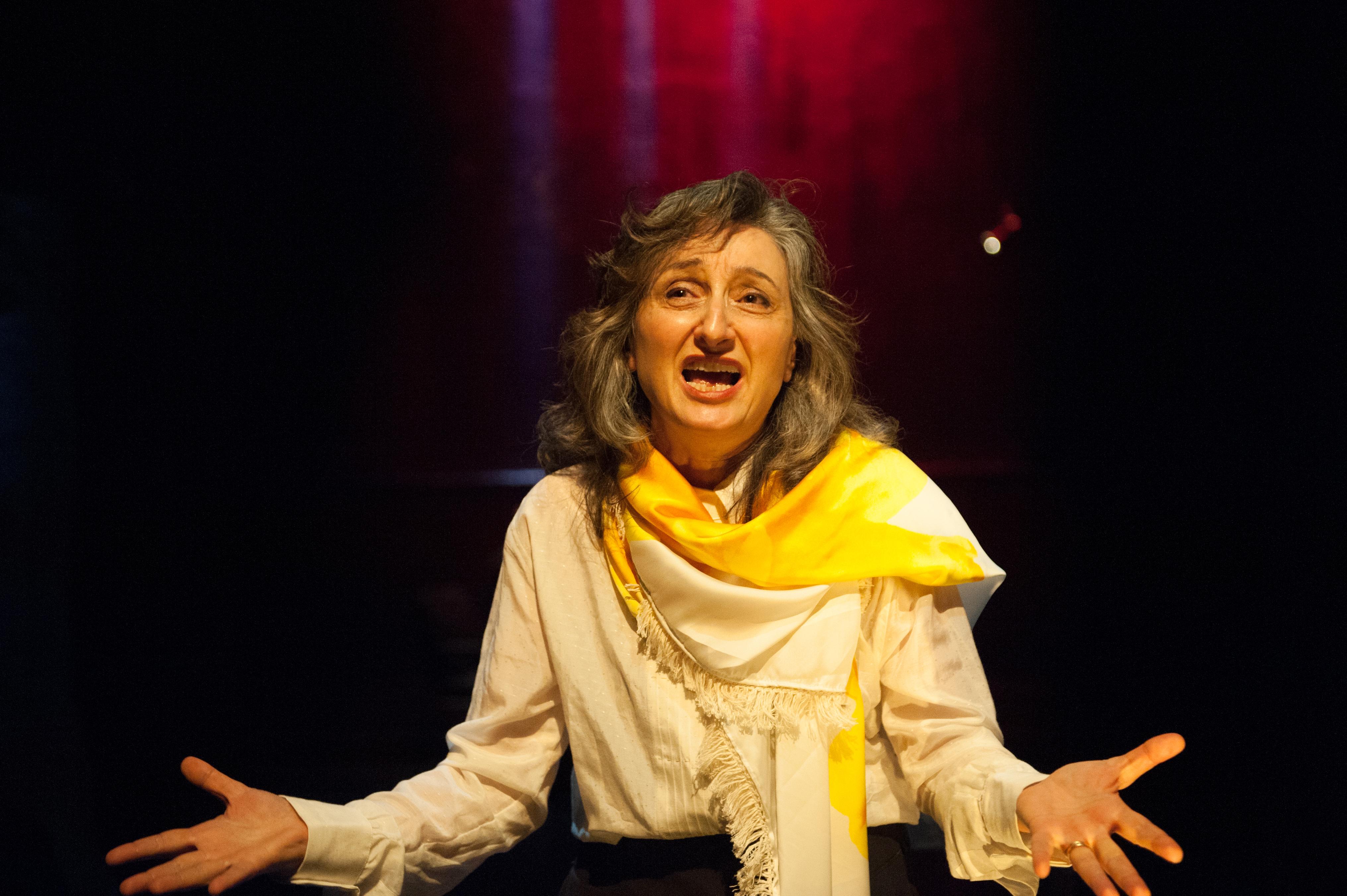
Eugenia Fragos as Nehrjas al Saffarh - Photo credit Sarah Walker

Some interesting direction by Daniel Clarke had the actors on stage from the very beginning, remaining static in their respective environments. Occasional small movements or subtle reactions to what someone else was saying were made thhroughout, reminding us that even though these three people never met, their lives are very much intertwined and affected by this war.

As an audience member, it could be quite difficult to watch three half-hour monologues and remain engaged, but the talented cast are more than able to convincingly draw us into their world. Hannah Norris plays A Soldier, a character inspired by Lynndie England the American soldier who was involved in the abuse of detainees at Abu Ghraib. The unlikeable and redneck soldier shows no remorse for her actions and sees herself as the all-American hero. Following Norris, and showing a distinctly softer and calming perspective is Robert Meldrum as David Kelly, the British weapons inspector who died upon revealing that the weapons of mass destruction were a lie told to justify the invasion in Iraq.

However, it was Eugenia Fragos as Nehrjas Al Saffarh who really imparts to us the horrors of the war. Married to the leader of the Communist Party in Iraq at the time of the Ba’athist Coup, Saffarh’s story of her and her family’s torture is a harrowing tale and Fragos captures the emotion, trauma and pain she experienced and you will find yourself hanging on her every word.

This  production of Thompson’s Palace of the End has taken a sensitive issue and rather than preaching about whether this war is right or wrong allows the stories to speak for themselves. It challenges our notions of right and wrong and demands that in all war we consider exactly what it is we are fighting for.

Venue: Theatreworks, 14 Acland St, St Kilda

Season: Until 16 June | Tues- Sat 8:00pm, 15 June 2:00pm & 16 June 5:00pm

Tickets: $32 Full | $25 Conc

Bookings: 9534 3388 or http://www.theatreworks.org.au

REVIEW: The Australian Ballet Presents VANGUARD

Mesmerising modern ballet reaches new audiences

By Ross Larkin

Few art forms command the same degree of discipline as that of dance. The absence of external tools, leaving solely the body as instrument, requires as much stability and fine-tuning as any solidly, hand-crafted alternative. The commitment is therefore not only a full-time one, but one which must be lived and breathed.

Vanguard

The Australian Ballet showcase this lifestyle to its full extent in their current production of Vanguard at the State Theatre. Three strikingly different pieces are presented back to back by highly accomplished choreographers George Balanchine, Jiri Kylian and Wayne McGregor with a beautifully, flawless outcome.

Opening with ‘The Four Temperaments’, originally choreographed by George Balanchine, performers are exposed under a stark, white light for the duration, with no external theatrical aids, save for the varied and glorious accompanying Orchestra Victoria. Viewers are hard-pressed to withdraw focus from the dancers’ palpable control and beautiful unity displayed with seemingly effortless execution.

Second offering, ‘Bella Figura’, raises the bar to stunning and mesmerising heights that impact the audience almost conspicuously. Rarely does one witness such effortless command of an audience’s attention. The moments of stillness and silence were breathtaking and captivating, and, unlike its predecessor, dramatic lighting and clever use of external elements were present in abundance, with particularly intriguing use of stage curtains.

The poignant direction of Kylian’s choreography encapsulated tasteful eroticism and tenderly seductive bodily engagement throughout, with unexpected comical moments in the form of puppetry dance.

Third piece, ‘Dyad 1929’, faces the challenge of following the former spectacular act, and initially feels slightly random and less focused, as the ensemble move frenziedly about a black polka-dot background to jarring, discordant music. Further into McGregor’s piece, however, the focus materialises with spirited passion and the gorgeously fluid dance proves as striking as its cousins, climaxing with the first male interaction of the evening.

The entire ensemble of Vanguard, each present for all acts, are graceful and flawless. Daniel Gaudiello, Lana Jones, Miwako Kubota and Calvin Hannaford leave impacting and lasting impressions, though every performer is worthy of mention.

Powerful and accessible, the Australian Ballet’s production of Vanguard is an experience deserving of a universal audience, and succeeds in moving viewers across all emotions.

Vanguard is playing now at the Arts Centre’s State Theatre with Orchestra Victoria until June 17, 2013

REVIEW: Maria Schneider and Darcy James Argue with the JAZZGROOVE MOTHERSHIP ORCHESTRA

Jazz queen reigns with a wave of her hand

By Anastasia Slipper

Maria Schneider

The anticipation was palpable as one of the world’s foremost jazz musicians walked onto the stage. Yet she didn’t hold an instrument or approach a microphone. In fact she didn’t make any sound at all. She merely held up a hand, and with a few gestures created exciting, complex and subtle music.

This mysteriously silent musician whom everyone had come to see was arguably the premiere big band composer and arranger of the last three decades – Maria Schneider. And her instrument? An eighteen-piece jazz orchestra, that she played like a puppet master, pulling all the strings to elicit finely-tuned dynamics and expressive solos.

From boisterous grooves such as ‘Gumba Blue’ to the haunting hymn-like lyricism of ‘Sky Blue’ the Sydney-based Jazzgroove Mothership Orchestra effortlessly rose to the task of interpreting Schneider’s sumptuous works under the watchful eye (and hand) of the composer herself.

Members of the band were given plenty of soloistic freedom and space, resulting in some exciting improvisation, especially from sax players Roger Manins and Richard Maegraith. The blend of finely-crafted structure and precision together with sections of improvisatory exploration was exquisite, and a real feature of Schneider’s work.

Earlier in the evening, the band opened with a set of tunes by young Canadian composer Darcy James Argue, who also conducted his works. While not in the same league as Schneider, Argue’s style was innovative and energetic, using colour and effects extremely well. An early trumpet solo from Ken Allars featured half-valve techniques set against a backdrop of muted trombones, and set the tone for an enjoyable first set.

These two internationally-acclaimed composers, along with a fabulous Australian band, are proof that the big band era lives on – and has a great future ahead of it.

Maria Schneider, Darcy James Argue and the Jazzgroove Mothership Orchestra  performed on June 6, 2013 as part of the Melbourne Intermational Jazz Festival.

REVIEW: Daniel Nellor’s DISTANCE

Torn apart and drawn together by an act of violence

By Myron My

Directed by Chris Thompson, Distance comes into focus over two parents who are dealing with their son having been arrested after an incident in which another child has ended up in a coma. They grapple with the repercussions of what their son has done, and attempt to deal with their own guilt and grief as parents who have ‘failed’.

Distance

The range of emotions that this estranged couple go through are brilliantly played by Margot Fenley and Kevin Hopkins. Fenley’s portrayal of Ellen, who attempts to keep herself together as she tries to fully understand what has happened, is raw and authentic. Her character is in direct contrast to Hopkins’ Andrew, who initially is more concerned about having his boy home with him and trying to justify what has happened because his son is “just a child”, rather than accepting and dealing the situation. Hopkins shows this man (who in his own way is also struggling with the events that have transpired) with great believability.

Daniel Nellor’s script, whilst predominantly a character piece, still has a strong narrative presence. Nellor doesn’t describe everything that has happened and opens the way for speculation by his audience, which allows us to be strongly included in the creative process. His writing is honest and real and doesn’t delve into melodrama. However I must confess the final scene of Distance did confuse me as to how much time had elapsed, and having been through such an emotional experience with the two characters, I felt a bit deflated by this finale.

It is worth commenting on the number of students and recent graduates who worked on this production including lighting designer, Yossi Torbiner, whose work helped create a claustrophobic and engulfing environment and delicately reflect the moods and emotions of the two leads. The musical interludes used throughout also added to the confusion and conflict felt by not only the parents but also (we are invited to imagine) their son.

Distance offers a rare look into the lives of a perpetrator’s family and how this act of violence affects them. It is a strong collaborative production that is well worth seeing.

Venue: La Mama Theatre, 205 Faraday Street Carlton

Season: Until 16 June | Wed, Fri 6:30pm, Thurs, Sat 8:30pm Sun 4:30pm

Tickets: $25 Full | $15 Conc

Bookings: http://lamama.com.au or 9347 6142

REVIEW: Melbourne Jazz Festival Presents SNARKY PUPPY

Top dogs won new fans

By Anastasia and Peter Slipper

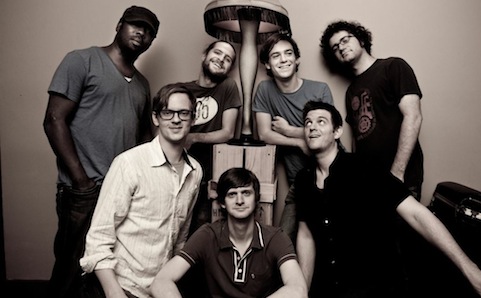
The Melbourne International Jazz Festival audience was treated to a genre-hopping jazz-fusion spectacle by young US band Snarky Puppy at the Forum last night. Perhaps serendipitously, numbers were boosted for this still relatively obscure ensemble by jilted ticket-holders who missed out on seeing legendary New Orleans band Rebirth Brass Band after they had to suddenly pull out of the festival. However disappointed the punters may have been to miss the Rebirth second-line parade earlier in the day, they were certainly not disappointed by the end of the night!

snarkypuppy

Vocalist Alison Wedding (who was first responsible for alerting festival Artistic Director Michael Tortoni to the existence of the band) warmed up the room with a short set of her own material. “Too Tight” was a stand-out, reggae-inspired declaration against unhealthy body image.

After a short break, the band again took the stage, this time sans vocalist, lead by bass player extraordinaire Michael League. His whole body became part of the instrument, as he impressed the audience with extended virtuosic solos, and laid down some seriously funky grooves.

Each member of the band had plenty of chances to shine as they worked their way through a labyrinth of constantly changing styles and moods. Every solo was thoughtfully constructed and carefully built towards an exciting climax, and even in their supporting roles, all band members were responsive, showing how tightly knit they are after years of touring. Crowd-favourite “Quarter Master” was a highlight of the night, switching from New Orleans second line-eque grooves to gospel harmonies.

Throughout the gig, time changes and horn stabs were super-tight, but the band never drifted into vulgar displays of virtuosity. A special mention must go to Justin Stanton, who consistently excelled, whether on trumpet, moog synth or Hammond organ. An epic drum and percussion solo from Nate Werth and Robert Searight was musically and dramatically exciting, while never migrating into self-indulgence.

If you like funky grooves, a few 80s-synth effects, and exciting twists and turns Snarky Puppy are one to keep an eye out for!

Snarky Puppy performed at The Forum Theatre on Saturday 1 June for the Melbourne International Jazz Festival which ends June 9.

REVIEW: 5Pound Theatre Present 2SHORT RUSSIANS

An excellent odd couple of short plays

By Myron My

With 2Short Russians, 5Pound Theatre has brought two very different plays to the stage of The Owl and the Pussycat.

First we have the Australian premiere of ‘Vodka, Fucking and Television’ by one of Russia’s newest playwrights Maksym Kurochkin, which is followed by Anton Chekhov’s classic ‘The Bear’. With a very capable cast comprised of Jack Beeby, Clare Callow, Susannah Frith and Dmitri Pronin, each play offers a very different experience for the audience.

2Short Russians

In the first, our modern-day Hero (Beeby) is a struggling writer who blames three things for holding him back in life: namely, vodka, fucking  and television. These three vices (played by Frith, Callow and Pronin) physically manifest, and plead their individual cases as to why they should not be discarded. An impressive entrance by Fucking provided a few gasps from the audience and the use of different forms of media to represent Vodka and Television was quite unique and kept engagement levels with the audience high. Beeby handles his conflicted character with great aplomb and provides significant insight into the problems facing man in the modern age.

With its more classical backdrop, ‘The Bear’ is a farcical tale about a grieving widow, Popova (Callow), and Smirnoff (Pronin) the man who has come to collect his debt. The direction by Jason Kavanagh is quite different to the earlier play with some hilarious monologues and wonderful play with silences between characters.

Pronin triumphantly brought down the house with his fiery Smirnoff and Frith was perfect as the exasperated and mourning widow Popova. Their interactions together were a joy to watch and their comic timing was spot on. Beeby as Popova’s manservant Luka displays great versatility as a young actor and is definitely one to keep an eye on in future.

5Pound Theatre has returned for their 2013 Melbourne season with an impressive production in 2Short Russians and if they continue to provide plays and performances of this calibre, it is going to be a fantastic year for them.

Venue: The Owl and the Pussycat, 34 Swan St, Richmond

Season: Extended until 14 June | 7:30pm, Sat 2:00pm

Tickets: $25 Full | $20 Conc

Bookings: http://www.5pound.com.au

REVIEW: Barry Lowe’s THE DEATH OF PETER PAN

Boyish bildungsroman and lingering love story

By Myron My

Barry Lowe’s The Death of Peter Pan is a tragic and beautiful story of growing up and becoming a man. Set during the 1920’s, it follows the life of Michael Llewelyn-Davies – the adopted (and favourite) son of Peter Pan author, James Barrie – and his chance encounter with fellow student Rupert Buxton.

Death of Peter Pan Photo credit - MarcOpitz

Kieran McShane and Jordan Armstrong do a flawless job as the two protagonists, Michael and Rupert respectively. Rupert’s arrogance and brashness is a perfect contrast to Michael’s ambivalence and fear of what is happening, and this dynamic ultimately leads to a first kiss, first love and first heartbreak for Michael. There are some strong relationship-defining moments on stage, including the scene at the Parisian whorehouse and Michael’s swimming lesson. The affection and tenderness between the characters has a heartfelt authenticity, and this is mainly due to the talents of these two performers.

The two are supported by a more-than-capable ensemble cast including Sean Paisley Collins as Roger Senhouse, Michael’s flirtatious college friend. Collins is superb in his role: not overdone and revealing a serious and sensitive side that (when it does come to the surface) leaves quite an impact. Similarly, Ian Rooney’s J.M. Barrie is impressive as he plays out the nuances of a man still trying to live in his own Peter Pan moment.

Robert Chuter returns to the Chapel to direct The Death of Peter Pan and his focus on and image of this production is breathtaking. He has put together a very fine cast and crew, including costume designer Elissa Hullah and hair and make-up artist Rebecca Vaughan whose efforts warrant particular mention. The show does use blackouts between scenes and although I am not generally a fan of these visual interruptions, the haunting musical score by Andrew Bishop was able to keep us utterly absorbed in the moment.

The Death of Peter Pan is Australian theatre at its unrivaled best. It’s always a joy to be enveloped by a production that has brought everything so seamlessly together and its effects will still be felt long after having seen it.

Venue: Chapel Off Chapel, 12 Little Chapel St, Prahran

Season: Until 2 June | Wed-Sat 8:00pm, Sun 6:30pm

Tickets: $30 Full | $28 Conc

Bookings: www.chapeloffchapel.com.au or 8290 7000

REVIEW: Heaven at LA MAMA

Teen drama tackles big issues

By Myron My

What happens when we die? What happens when we are confronted with death and begin to question our own mortality? Heaven attempts to deal with these questions when a young girl (Jessica Clarke) is killed by a bakery van and three classmates attempt to bring her back from the afterlife.

Heaven

It’s only been two years since Heaven was written but unfortunately it already has an outdated feel with regards to its language. I did not feel convinced 15-year olds speak like this – but perhaps I am way out of touch with the youth of today. I do understand what writer/director Kit Brookman was attempting to achieve here, but the switches from child-like behavior (playing with toy robots in one scene) to the characters dealing with profound issues like life after death ended up seeming contrived. The ending left me with many questions that did not necessarily need to be answered but would have benefited from having some clarity brought to them. 

I felt the characters could also have been developed more as they appeared to be mere familiar teen stereotypes: the nerd, the goth, the jock, and the brain. Having said that, the cast do their best (appropriately) to bring life to them. Lachlan Woods as Stewart was very good in displaying not only the jock’s bravado but also his emotional insecurities. Another special mention goes to Sarah Ogden, who brings some incredibly touching scenes to the stage as Sally.

Furthermore, there are a number of great ensemble moments in this play, in particular the séance between Max (Andre Jewson), Sally and Stewart, which has some genuinely funny dialogue. There is a good blend of humour and truth in Heaven, with the final scene being quite a touching one. 

On the technical side, the score by Tom Hogan and lighting design by Richard Vabre added strong emotive elements to the narrative. When used, they not only created an intimacy and the almost claustrophobic environment that Heaven required, but were able to increase the tension and heighten the mood of what was coming.

Heaven tries to cover a vast array of topics in the spectrum of life and death. Some it does quite well, and others it should have stayed away from. Overall, the admirable acting and production elements are let down by a story whose script doesn’t quite hit the mark.

Venue: La Mama Theatre, 205 Faraday Street Carlton

Season: Until 2 June | Wed-Fri 8:30pm, Sat-Sun 6:30pm

Tickets: $25 Full | $15 Conc

Bookings: http://lamama.com.au or 9347 6142

REVIEW: RePlay Theatre’s THE WOMAN TAMER

Ambitious production of an Australian classic

By Myron My

Originally written in 1911, The Woman Tamer by Australian playwright Louis Esson has just been given a makeover over a 100 years later by RePlay Theatre for a limited run this week at The Owl and the Pussycat.

The play begins in the foyer of the theatre with a man and a woman (Jack Beeby and Clara Pagone) dressed in period costume, singing a song with a ukulele. However, they are also covered in ghoulish make-up and at the end of the song they guide us into the theatre. The two stand in the doorway strumming away until the doors close, evoking a strong and uneasy emotional response and offering a hint of the horror that is to come.

TheWomanTamer

Unfortunately, I found the story very difficult to follow due to the overwhelming visuals: the choreographed ‘dances’, the make-up and costumes, the music and at times, the two completely different scenes occurring at the same time. Whilst all this was engaging and captivating to watch, it resulted in me losing a lot of the actual narrative.

Robert Reid‘s direction is strong overall, but does allows things to get a little convoluted and left us trying to figure out what’s going on. There are some profound themes in this play including an examination of domestic violence against women, so adding all these other layers and levels to it jeopardized the focus on the issues and created a haphazard experience for the audience.

However, the cast (Beeby, Pagone, Tom Molyneux and Kate Brennan) were quite skilled in their roles. This play is peopled with emotionally and physically-demanding characters, and they were all committed, with particular mention going to Beeby who seemed to relish his character and really gave it his all.

RePlay Theatre have succeeded in producing an interesting contemporary reinterpretation of the original text of The Woman Tamer, but  unfortunately have managed to also ostracize the audience in our endeavours to connect with the play.

Venue: The Owl and the Pussycat, 34 Swan St, Richmond

Season: Until 25 May | 7:00pm

Tickets: $25 Full | $20 Conc

Bookings: http://www.owlandcat.com.au/thewomantamer.html