Category: Theatre

Review: The Girl Green as Elderflower

Mesmerising, musical drama

By Samuel Barson 

Five years since his death, Australian-born author Randolph Stow remains an elusive, mesmerising and mysterious presence in Australia’s literary landscape. His stories continue to multiply and grow, yet Stow’s audiences are still unable to fully understand who the man truly was. His 1980 novel, The Girl Green as Elderflower is as close as we get to a biography of his. The tale of its protagonist Crispin Clare and his task of putting together life’s broken pieces as he recuperates from a life-threatening disease almost echoes the aftermath of the author’s mental and physical breakdown, which he experienced after serving as a patrol officer in the Trobriand Islands.

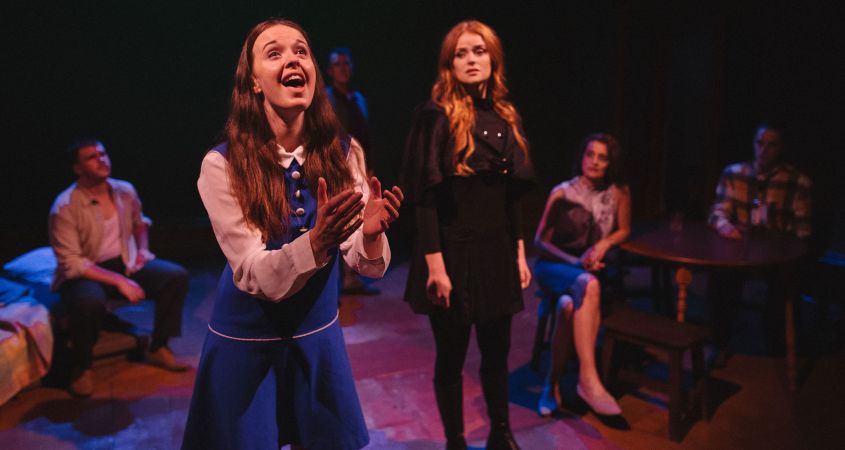
Stow’s original novel has been competently adapted for the stage by Richard Davies, and celebrated Australian director Sara Grenfell has orchestrated a vibrant and talented ensemble cast for La Mama’s Courthouse Theatre, that (mostly) honours Stow’s original work to a high standard.

Leading the cast is Billy Sloane as Cris. Sloane brings some solid moments of charisma and empathy to the role and has a gorgeous voice to match. Highlights amongst the cast included the compulsively watchable Nicholas Bell in his dual role of Mikey/Robin, Alice Albon as the cheeky (and at times seriously scary) Malkin and Liam Dodds as the smooth and charming Matthew. The rest of the ensemble all brought considerable contributions throughout the night however it was sometimes hard to avoid the feeling certain actors may not have had the necessary understanding of the text to really do their characters justice.

Lighting and sound design by Shane Grant and Ryan Smedley was positively consuming and certainly came to be appreciated during some moments where the script’s action became a bit dry and un-evolving. The mystical elements of the play were brilliantly showcased by both designers’ decisions to tap into the absurd and exaggerated in their designs. Christina Logan-Bell’s set design was impressively adaptable and multi-faceted with scene changes often occurring before the audience had even realised.

The play certainly could have run the risk of falling into poetic monotony if it weren’t for the inclusion of Davies’ music score. The range of musical numbers throughout the play was highly appreciated, and musical director Shelley Dunlop did a superb job of creating such an entertaining musical landscape. There was not a fault when it came to the cast’s singing talents.

Grenfell is to be applauded for tackling such a complex narrative and for bringing it to life for audiences. Despite the often overly slow pace and actors’ detachment from the script, it was a solid production with all the desired bells and whistles.

The Girl Green As Elderflower plays at La Mama Courthouse Theatre until 31 March. Tickets can be purchased online or by contacting the box office at 03 9347 6948.

Photograph: Jack Dixon Gunn

Review: Dance Nation

An ironic spin on the world of dance

By Leeor Adar 

Clare Barron’s Dance Nation is the kind of charming macabre well suited to the world of dance. Directed by the excellent Maude Davey and assistant director Angelica Clunes, I am not surprised to see Davey has injected her wacky charm into directing this work for Red Stitch. What you ultimately have is a glorious unicorn of a play performed by adults acting as children. The irony of the dance world through this lens is great, particularly as audiences will be well acquainted with the fierce and devastating early maturity for youngsters caught up in the competitive world of dance.

It all starts as expected, our herd of dancers preparing for a big competition for exposure and FAME! Peter Farnan’s sound design is perfect here, sound bites of sighing and breathing intersperse scene changes with Clare Springett’s sharp lighting design. We’re off to a good start with a formation of dancers’ legs waving about to an amused audience. The scene quickly descends into that macabre goo when one has severed her leg – the price of fame!

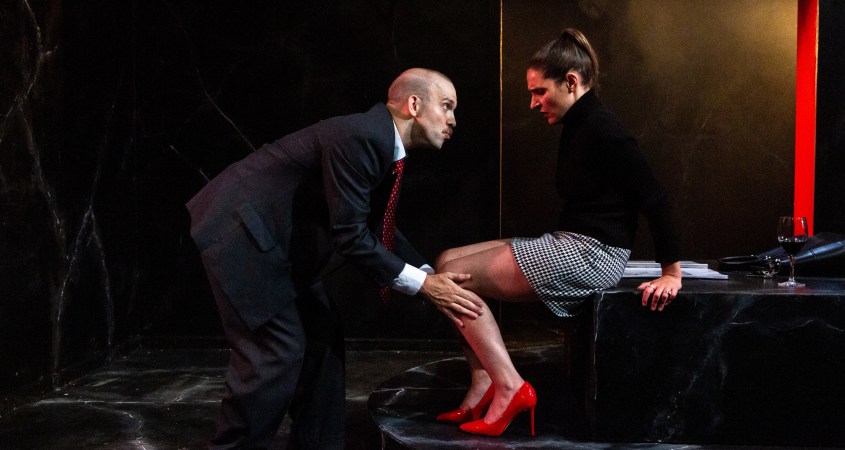
Before auditions for the leading role of Gandhi, a brilliant cliché of the creepster dance teacher Pat (Brett Cousins), it is evident friendship will be tested. Zuzu (Zoe Boesen) and Amina (Tariro Mavondo) are the two glory girls of the troupe, who somehow manage to sustain a level of sweetness up until the big first night of the competition.

Adrienne Chisholm’s set and costume design are perfectly sparkly and quirky, and you will enjoy seeing what she serves up for the competition. Choreographer Holly Durant sets us into a barrel of laughs with zombie dance moves and extra dagginess to boot.

The cast is fantastic, and the characters are completely engaging throughout. Natalie Gamsu’s odd young Maeve is downright the funniest of the bunch, and in the most unexpected ways. Somehow her subtle smile as the moon passing over Connie’s bedroom (played by Georgina Naidu) is a bit of a low-key show stealer. Caroline Lee’s monologue as the quietly ambitious and hyper-sexualised Ashlee is perhaps the greatest personal pep-talk I’ve ever heard, and Hannah Fredericksen’s tomboy/cool girl Sofia is utterly brazen and suitably goofy. Token dance boy, Luke, played by Casey Filips is delightfully at home amongst the feminine, waiting for a chance at Zuzu’s affection, and Zuzu’s dance mum (Shayne Francis) is the kind of child-soul-killer you’d see forcing Vaseline onto her child’s teeth in USA’s Dance Moms.

Despite all the laughs, Dance Nation has a litany of poignant moments for its characters. Sofia’s need to be tough is brought back down to earth when the most feminine of life occurrences strikes at a critical moment. Connie’s need to be seen is so vital to her, that her little heart breaks throughout the play are all the more tragic and are handled beautifully by Naidu. As events try and tear the dancers apart, they still manage to lift each other up by imagining themselves as they will be some day. I find that childlike wonder uplifting despite the gravity of adulthood weighing in upon their hopes and dreams.

Dance Nation runs until 14 April at Red Stitch Actors’ Theatre. Tickets can be purchased online and by calling the box office on 03 9544 8083.

Photograph: Teresa Noble

Review: The Importance of Being Earnest

An interpretation not to be missed

By Ross Larkin

Oscar Wilde is arguably one of the most celebrated playwrights of the nineteenth century and The Importance of Being Earnest is rightfully among his best known offerings for its playful sass and dry wit.

Set in 1880’s Britain, two upper class friends, Algernon and Jack, become caught up in their own game when the women they wish to marry, Gwendolen and Cecily, grow wise to the men’s spirited untruths and a web of hilarious confrontation ensues.

Melbourne’s All Sorts Productions have shrewdly crafted the play as an immersive piece on location at the stunning Labassa Mansion in Caulfield to great effect, utilising an outdoor garden area and several indoor ones.

As the lively host, Basil, and the cast move around the Victorian era surrounds, so do the audience along with the occasional interactive moment.

First time director, Maurice Mammoliti, succeeds particularly well in creating an entire world for the show (as opposed to isolated scenes), whereby characters and activities subtly link the action from one location to the next.

The ensemble cast are strong, with standout performances from Patrick Hill and Katherine Innes as Algernon and Gwendolen, who bring a sharp, energetic and sophisticated charm that would make Wilde himself proud, while Ruby Gabriella is also delightful as the whimsical Cecily.

There is much attention to detail where costumes and accessories are concerned, which only adds to the immersive experience, transporting viewers in every sense for the duration.

Although the full season of The Importance of Being Earnest has already sold out, it is well worth adding your details to the waiting list, as All Sorts’ immersive interpretation of Wilde’s classic is definitely one not to be missed.


The Importance of Being Earnest runs 7 – 31 March at Labassa Mansion Caulfield North. See here for ticketing information.

Photograph: Tameika Brumby


Review: World Problems

Heartfelt examination of life and memory

By Irene Bell

World Problems, written and performed by Emma Mary Hall, is a tender look at the way we experience life. Hall recounts memories for the audience, giving equal weight to insignificant memories such as seeing her dad pick his nose and life changing ones such as divorce and the death of family members. In this way, she takes us from childhood through the aging process beginning in the ’80s and ending in a dystopian future.

With her kind tone and casual breaking of the fourth wall, Hall makes you feel welcome and able to reflect on your own life. This is definitely a show to share with a loved one. It’s difficult know whether to laugh or cry, as every memory she tells feels poignant (even the future death of George Clooney).

All the while Hall builds. Taking metal rods strewn across the stage, she puts them together like a puzzle even asking help from the audience when something is not fitting right.

There is no pacing of the stage, as usually permeates solo performances: watching Hall build her set and wondering which piece will come next is engaging in a childlike way.

Hall’s performance is spectacular. The accompanying music and lighting create an atmosphere of intimacy. The set is beautiful in its simplicity, there is a celestial vortex constantly spinning on the wall that reminds us of the otherworldly route this story takes, and the audience sits surrounded by pot plants. At one point, I realised that as I listened to Hall reach the dystopian part of the story, I was lightly stroking my neighboring pot plant – a subconscious need to reconnect with nature had awoken in me.

World Problems is simple in its presentation though grand in its ideas. It will make you feel calm and grateful, it will inspire you to appreciate every part of you, every good and embarrassing memory, and all the people in your life.

World Problems runs 14 – 24 March at Fortyfivedownstairs. Tickets are available online or by calling the box office at (03) 9662 9966.

Review: Forgotten Places

A theatrical playground to choose your own adventure

By Owen James

Step into a place you might have forgotten – your colourful and playful childhood – with Citizen Theatre’s Forgotten Places. As you follow your nose between the Water Room, Mirror Room, Fun Room and Gift Room, this choose-your-own-adventure theatrical playground is calming and joyful.

With minimal dialogue and colourful costumes, director Jayde Kirchert has created a world that explores the boundaries between theatre and performance art that brings out the wide-eyed child hidden inside everyone. It’s impossible not to have fun in this magical place. A useful map guides us between each space, with a new act of music, dance, clowning, marshmallow snacks or paper treats to find behind each wall.

Designer Stu Brown is behind the transformation of the (recently renovated) Chapel mezzanine into this world fascinated with colour and meditative stimuli, without which there would be no show. It’s a perfect use for this unique space – no regular theatre show would be at home here like Forgotten Places is. Brown’s open-plan layout reminds us of the importance of removing division and borders from creativity.

But it’s the five-strong ensemble that really brings Kirchert’s ideas to life, embodying theatre as play in every stylised movement and moment. Willow Sizer’s voice is utterly mesmerising, Tomas Parrish can gleefully gestate any name into a personalised movement, Jordan Barr makes me cackle with perfectly spoken nonsense and a lesson in how to properly eat a marshmallow, Margot Tanjutco is hypnotising with beautiful uninhibited movement, and Kayla Hamill’s perfect sense of comedy makes me laugh over and over by simply saying “art over here, art over there”.

Music composed (and performed live) by Imogen Cycler is integral to creating the magical feeling that hovers throughout the air in this place. Her music is cyclic (no relation), repeating lyrics to emphasise their value, set to heavenly and haunting melodies that linger long after they finish.

Devising thematic content around the “four pillars of the City of Stonnington’s strategic plan for an inclusive, healthy, creative, sustainable and smart community” is a concept admittedly a little on the nose (though surely very receptive to council funding applications), but thankfully has inspired Citizen Theatre to create this very successful production.

It’s a sign of well-crafted escapism when at the end of an interactive experience as colourful and playful as Forgotten Places, I realise I hadn’t thought for a whole sixty minutes about my upcoming house move or the long to-do list waiting for me at work tomorrow – a cherished moment of calm. Forgotten Places is relaxing, safe and silly in the best of ways – not to mention very child friendly (the toddlers at our performance were having the time of their lives). Congratulations to Citizen Theatre for their latest fascinating, immersive, and calming outing – and for daring to create a world so special.

Forgotten Places was performed at Chapel off Chapel 13 – 17 February 2019.

Photograph: supplied

Review: Ron and Isobel

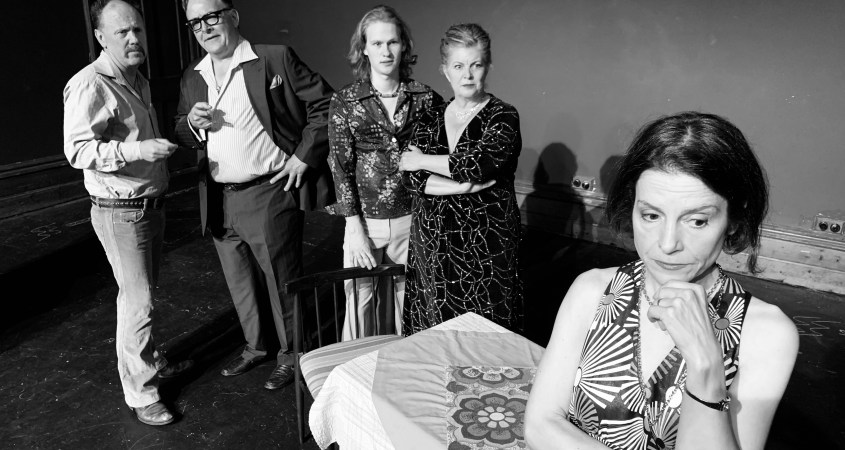
Politically charged suburban drama

By Samuel Barson
 

Australia, November 1975. The country is at its most divided, as the Whitlam Government is dismissed and replaced by the vindicated opposition lead by Malcom Fraser.

As these tumultuous political happenings play on in the background, Ron and Isobel, the titular, die-hard Labor characters, invite into their home new neighbours, the die-hard Liberal Slaters. What results is a night of heated discussion on a range of topics: divisions play out on stage between and amongst the couples, constantly reminding the audiences of the pending political battle occurring in the background at that time in history.

The tension here is immediately clear for audiences and is shown through a fluid range of comedic and dramatic moments played beautifully by the show’s cast. Shannon Woollard was perfectly smug and suave as the Fraser-loving real estate agent Paul and matched perfectly with Nadia Andary’s subdued yet clearly frustrated interpretation of Paul’s wife, Sandra.

Taylor Smith-Morvell brought some welcomed comedy and charisma to the stage in the semi-narrational role of Jack, the son of Ron and Isobel.

The clear standouts of the show however were the actors who portrayed the titular characters. Justin Harris-Parslow as Ron was magically boisterous and balanced his clear and aggressive opinions with an equally measured warm heart and non-judgmental outlook on life. Kelly Nash as Isobel was gorgeously passionate and strong-willed, undoubtedly an inspiration for the more submissive Sandra, as well as many other women in that male-dominated era.

Maureen White’s design was fittingly simple with the lighting fading in and out beautifully at each end of the play to both welcome and dismiss audiences from Ron and Isobel’s world. The use of a kitchen table and lounge chair was practical for the characters to inhabit in a very realistic sense.

Director Bruce Langdon has curated Anna Lall’s tight and rich piece of writing and has provided audiences with a piece of theatre that makes them think, laugh, empathise and reflect. Blessed with a high-quality cast and generous writing, Ron and Isobel is a must-see for lovers of politics, domestic disputes and arguments between neighbours.

Ron and Isobel is being performed at La Mama Courthouse 13 – 17 February. Tickets can be purchased online or by calling the box office on 03 9347 6948.

Photograph:  Bruce Langdon

Review: Barbara and the Camp Dogs

Half rock musical half gig slices straight to the heart

By Bradley Storer 

As the audience shuffled into the Merlyn Theatre for opening night of Ursula Yovich and Alana Valentine’s stunning musical play Barbara and the Camp Dogs, they were greeted with bar stools, faded couches and blackboards advertising happy-hour specials and upcoming bands. The well-worn atmosphere of a typical Aussie pub was contained entirely within the space.

Director Lecticia Cáceres uses the setting to represent both the fictitious band’s regular venues and a microcosm of Australian culture. The classic Aussie pub is the perfect liminal space to explore this story that crosses the landscape of the entire country and confronts the mythos embedded in our very culture.

Barbara (Yovich) and Rene (Elaine Crombie) are two Indigenous siblings who eke out their living in Sydney by playing live shows and singing with their back-up band, the Camp Dogs. What starts out as a charming comedy with Yovich and Crombie careening from one incident to the next while letting loose their explosively powerful vocals, becomes a gut-wrenching examination of the bonds of family and the devastating consequences of colonisation and its impact on current and future generations of Indigenous Australians. Rock music (a style we must remember was first appropriated by mainstream white culture from people of colour) feels like the ideal medium to convey the pain, tragedy and resilience of these characters.

Yovich as the eponymous Barbara delivers a performance of titanic scale: commandingly charismatic, ferociously funny and yet undeniably wounded. As Barbara travels from Sydney to Darwin and further on to the rural town of Katherine, we journey deeper and deeper into her character’s complex psyche and the roots of her traumas. Yovich is so thoroughly and authentically immersed in the character that it is, at times, almost unbearable to watch. When Yovich unleashes her searing and soulful voice in song (co-composed by both Yovich and Valentine), she slices straight to the heart.

Rene, as the calmer sister, is fantastic foil to the belligerent Barbara. Though Rene is no wallflower, with Crombie playing her with a personality and presence just as big as Barbara despite having a cooler head to balance things out. When the pair lift their voices together, they threaten to tear the roof off the theatre with their sheer passion and power. Troy Jungaji Brady expertly provides backing vocals, sound balancing and discreet mic transfers throughout the show and is granted an extra special opportunity which I won’t spoil here. When Brady’s voice is allowed to fly free it is possibly the most powerful of the entire cast as it reverberates in every corner of the space, and his gentle presence rounds out the trio perfectly.

The Camp Dogs, the backing band for Barbara’s pub-gig career and for the show in general, are an excellent trio of female-identifying musicians who bring brilliant light and shade to both the heavier rock numbers as well as the lighter, emotional sections. Sorcha Albuquerque seductively shreds on lead guitar, drawing the audience in during her massive solo. Michelle Vincent ably handles drums, with Jessica Dunn pulling double duty as both bass player and musical director. Karen Norris’ lighting design invaluably navigates the multitude of spaces Barbara and Renee encounter in their journey.

Barbara and the Camp Dogs performs throughout February, not long after Australia Day reminding us how we still grapple with the effects of colonisation. The show confronts, on a deeply personal and individual level, the dark and uncomfortable truth that lies at the heart of Australia: the continual structural oppression of our indigenous people which feels not only inescapable, but an inherent part of our cultural identity.

The tension to reconcile this reality with the move towards healing is the central struggle of this piece and the reason why this show is not only a must-see for theatre goers, but for any Australian.

Barbara and the Camp Dogs runs 7 February – 3 March at Malthouse Theatre. Tickets can be purchased online and by calling the box office on (03) 9685 5111.

Photograph by Brett Boardman featuring Elaine Crombie and Ursula Yovich.

Review: As You Like It

Endearing, romantic and droll

By Irene Bell 

Seemingly every character who is in any way interesting is banished from the duchy and flees to the Forest of Arden in the first act of Shakespeare’s revered comedy, As You Like It. This is just as well for the audience, as we get to enjoy all the silliness that ensues: there are disguises, musical numbers, cases of mistaken identity and an odd off-stage punch-on with a lion.

In the Park Productions’ As You Like It is a whimsical play with the action on stage never producing a dull moment, and the fitting outdoor location creates a lovely family-friendly atmosphere. Creator, Meg Deyell has crafted a production that gets to the very heart of the play.

The main premise is cute and romantic: The courtship of two lovers, Rosalind and Orlando, is cut very short as Rosalind is banished from the kingdom and Orlando flees for his own safety. Both find themselves in the forest though Rosalind is now in the guise of a man, Ganymede. The two meet and proceed to strike a deal in which Orlando and the disguised Rosalind play out a pretend romance, allowing Orlando to practice his moves.

Dana McMillan is powerful as Rosalind, she fully embodies both the wit and tenderness of her character. McMillan’s diction is a joy to hear and her physical comedy is incredibly engaging. Shae Kelly’s Orlando is wonderfully post-emo in both manner and dress, and while Kelly took a couple of scenes to find a rhythm, once there he performed great comedy.

Besides these performances, there is a wonderful array of characters who are all as funny and unwittingly wise as each other. For a production with such a limited cast and space, the actors build a sense of a friendly, odd-ball community incredibly well. On stage, there is a strong sense of chemistry particularly from David Harris – who plays both Touchstone and Adam – and anyone with whom he shares a scene.

I found the stripped down, steampunk-esque aesthetic clashed with the more by-the-book costumes of secondary characters like Corin the shepherd and Phoebe. Though it was the small details that made this production feel fully-realised – a personal favourite was Corin’s name written on his lunch bag, very endearing!

As You Like It is a fun and goofy way to spend an evening with friends and family. What could be better than enjoying a classic comedy while having a picnic?

As You Like It plays in Alistair Knox Park Eltham 8 – 10 February and Watkins St Reserve Diamond Creek 14 – 16 February. Tickets can be purchases online or by calling the box office on 1300 302 448.  

Review: Merciless Gods

Gods and monsters rendered achingly human 

By Bradley Storer

Queer performance collective Little Ones Theatre returns to the stage with the critically acclaimed production Merciless Gods for Midsumma Festival. In this production playwright Dan Giovannoni adapts Christos Tsiolkas’ collection of short stories to present a series of vignettes which encompass lives across the social and economic strata of Australian society. It’s a thrilling reminder of the burning necessity for Australian stories on our stages.

What remains most striking in the memory is director Stephen Nicolazzo’s powerful use of imagery as he channels the divine forces that give the play their name and inspiration. We see a heroin addict bathed in the heavenly halo of a Christian saint, we see a murderer locked in the gracefully muscular pose of a Grecian statue and we see a bedraggled and defiantly grotesque old woman sipping from a cask of cheap wine. This magnificent imagery is only made possible through the transporting simplicity of Eugyeene Teh’s set design, the glorious lighting of Katie Sfetkidis and the seductively mysterious sound design of Daniel Nixon.

The ensemble are excellent across the board, never more so than in the opening scene where they bounce off each other effortlessly in a seemingly normal suburban story that morphs into an unsettling and disturbing account of human brutality.

Each actor is given their moment to shine. Brigid Gallacher plays the voluptuous mother disgusted by the baseness of her own offspring. Paul Blenheim plays a drug addict enraptured by the twin figures of his straight best friend and the Lord Jesus Christ. Stefan Bramble stars as an imprisoned murderer both terrifying and tender in equal measure. Charles Purcell embodies a grieving gay son of a dying man. And Sapidah Kian, in the final glorious sequence, stars as the domestic Delphic Oracle relaying a vision of ecstasy.

The only negative, since there was seemingly no vocal amplification used, was the loss of textual and vocal clarity whenever the actors would play upstage away from the audience – an unfortunate side effect from a space as acoustically unforgiving as the Fairfax.

If forced to pick a standout performance it would have to be Jennifer Vuletic’s. Whether she is prowling the stage proudly nude as a pretentiously provocative German novelist, curling and contorting in spasms of pain as an aged Australian patriarch or bowed over in operatic fits of grief as an Italian mother mourning the loss of her son, Vuletic is a charismatic chameleon.

This unapologetically queer production, centred on the outsiders and outcasts of society even at their most reprehensible, is so luscious and commandingly seductive in its urgency and power that it’s impossible to resist. The cast and creatives of Merciless Gods have crafted a piece overflowing with horror and love, and is a must see this Midsumma season!

Merciless Gods plays at Arts Centre Melbourne until 10 February as part of Midsumma Festival. Tickets can be purchased online and by calling the box office on 1300 182 183.

Photograph: Pier Carthew 


Review: Sweet Phoebe

Dog sitting takes a disastrous turn in punchy performance


By Owen James

Sweet Phoebe is beloved Australian playwright Michael Gow’s intimate saga of resilience and obsession. Celebrating its 25th anniversary this year, it tackles one young couple’s swelling fixation on finding lost dog Phoebe and the search’s dire consequences on their marriage and wellbeing.

Far more isolated than Gow’s most famous play Away, Sweet Phoebe takes place entirely in one room: the living room of ambitious, hard-working couple Helen and Frazer. Director Mark Wilson utilises the confined setting to its full advantage, staging a production that held my attention every step of the way. With nothing but one stagnant room, two actors, and Gow’s strong script, Wilson has concocted great theatre.

Outside these lightning-lined walls (a simple but incredibly effective set by Laura Jean Hawkins), the rising tide of industrial modernity and its career-driven pressures laps at the door and seeps in through the cracks. Marcus McKenzie and Olivia Monticciolo as Frazer and Helen bring this pressure and its debilitating effects into their house.

As their search for Phoebe increases in desperation and aggression, McKenzie and Monticciolo fiercely control the stage, doing their best to overcome Gow’s monologue-heavy tail end of the play with rich and compelling characters. Their heightened intensity from the very beginning of the play leaves them little room to climb, but Monticciolo and McKenzie successfully take us beneath the layers of Helen and Frazer to a warped reality down Gow’s rabbit hole.

Sound by Daniel Nixon amplifies the frantic characters’ inner torment and is timed to perfection with every scene change. The set and sound are complemented by precise and intricate lighting by Lisa Mibus, all three elements blend seamlessly to create a palate of evocative and measured unified design.

Sweet Phoebe combines clever writing, effective design and powerhouse performances into a punchy, intriguing 80 minutes that matches Red Stitch’s usual exceptional standard. Full credit to every creative in this team for staging this devolving, distorted mirage with fiery tenacity.


Sweet Phoebe is being performed at Red Stitch Actors’ Theatre until 3 March. Tickets can be purchased online and by calling the box office on 03 9533 8083.

Photograph: Teresa Noble