Category: Theatre

REVIEW: La Mama Presents THE UNSPOKEN WORD IS ‘JOE’

Mesmerizing meta-theatre

By Myron My

Remounted by MKA Theatre, The Unspoken Word Is ‘Joe’ is a play about a play about a play. I think. Things get confusing very early on. But ultimately it’s what happens when actors no longer have a script with which to protect themselves and must face life, real life. It’s about what you do when the shit really hits the fan and find yourself losing control for the sake of your art.

The Unspoken Word is Joe

I will admit it took me a while to realize that this was not an actual staged reading, such was the convincing nature of the cast, especially Natasha Herbert as the “straight” stage director. She manages to steal every scene she is in and even some of the ones she isn’t in. Fortunately, once the off-script action starts, Herbert is cleverly placed in the background so focus remains on the four actors.

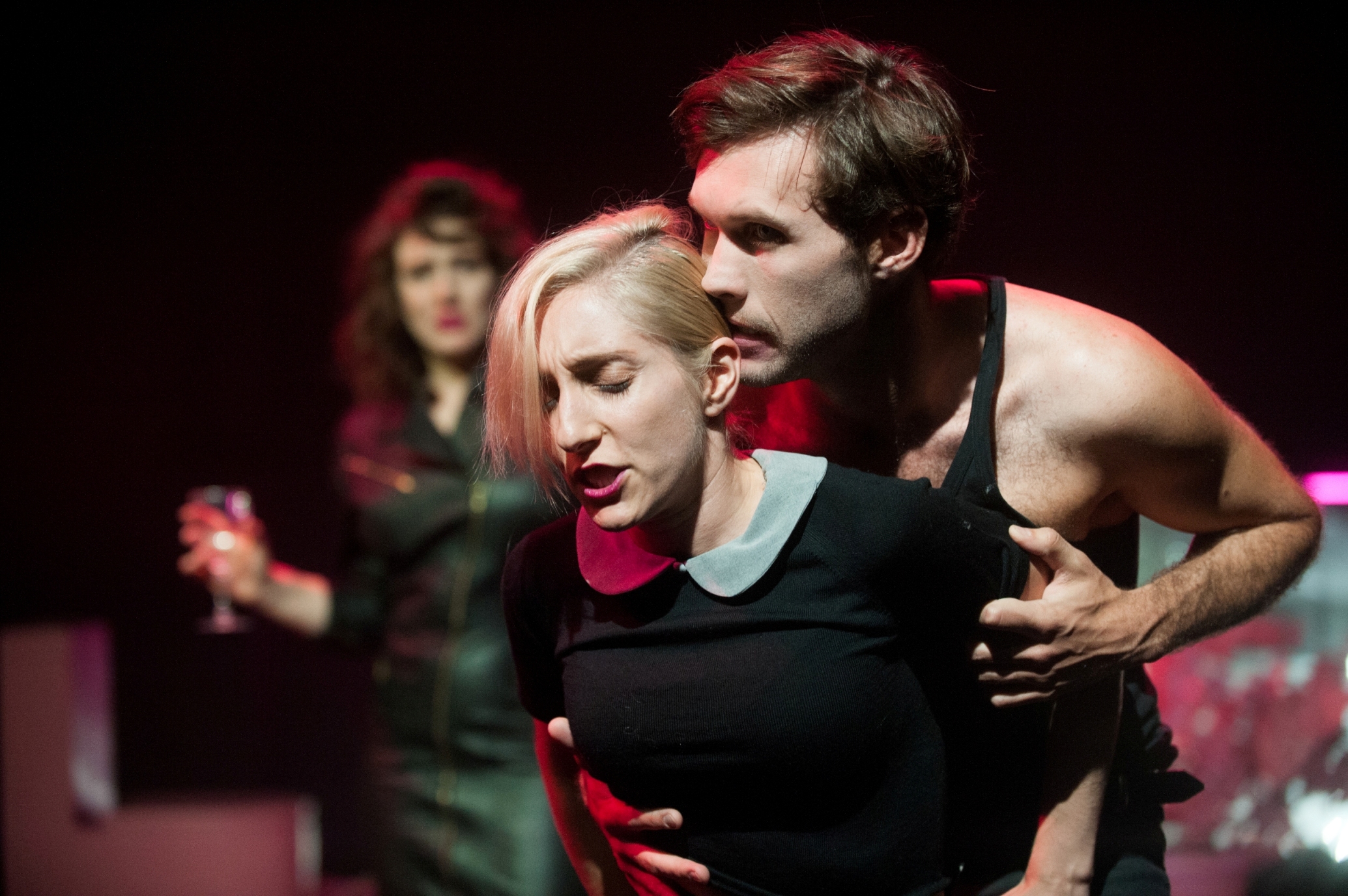
Nikki Shiels is particularly wonderful to watch portraying Zoey Dawson, one of Australia’s emerging playwrights (and the actual writer of the play), who slowly and (melo)dramatically unravels as the cracks in her happy façade begin to surface. I recall seeing Shiels in MTC’s True Minds two years ago and her comedy timing was apparent then. With The Unspoken Word is ‘Joe’, she has a lot more freedom to explore this zany and controlling ability and goes at it with full speed.

The two male leads – Matt Hickey and Aaron Orzech – are great as the catalysts and foils to Zoey’s eventual downfall. Annie Last is so wonderfully over the top as the craaaayyyzyyy girl that she does risk becoming more of a caricature than a person until Dawson (the writer not the character) dials her character down a notch with a strong emotive scene between her and Dawson (the character not the writer).

Dawson’s script is filled with hilarious moments, somber moments and honest moments. There are a few times where the dialogue get a little clunky or long-winded but these can be overlooked for the overall brilliance and wittiness of her writing.

The Unspoken Word is ‘Joe’ not a straightforward theatre performance. The meaning gets hidden within the story within the story, and a bit muddled in the meta-ness of the script but then, that is what life (and theatre-making) is like sometimes. It’s not always clear and it’s not always pretty to watch but it’s compelling and it’s something we can’t take our eyes off.

Venue: La Mama Theatre, 205 Faraday Street, Carlton

Season: Until 1 March | Wed 6.30pm, Thurs-Sat 7:30pm, Sun 4:00pm

Tickets: $25 Full | $15 Conc

Bookings:http://lamama.com.au
 or 9347 6142
REVIEW: Barking Spider Visual Theatre’s PSYCHOPOMP & SEETHING

Down into dream worlds

By Myron My

Barking Spider Visual Theatre has consistently created shows and performances that have a lingering effect on their audiences. Collaborating with MUST (Monash Uni Student Theatre), their newest production Psychopomp & Seething delivers on this reputation yet again. In two short pieces, they transport the audience to two very different dream-like worlds that are paradoxically calming yet unsettling.

Psychopomp & Seething

The audience seating area has been specifically designed for this show and only seats twenty people in its very intimate structure. As we take our seats, the doors close in on the stage, boxing us in, and we begin to move. Yes, the seating bank moves. With nothing but a blue spotlight sporadically shining above us, I get images of the boat ride in Willy Wonka and the Chocolate Factory and the hurricane from The Wizard of Oz, which is fitting as this is the type of intriguing experience I’ve come to expect from Barking Spider.

Once we “arrive” at our “destination”, the doors open to Seething. The stage is bare except for a woman (Vanessa O’Neil) standing in a lit up sound booth. She begins reading a poem revolving around sex, the body and image. As she begins, a person (Kate Brennan) appears from the darkness and brings her words to life through dance and movements. Brennan is like a marionette to O’Neil’s words and there is a strong sense that the two need to co-exist in order to be here. The words spoken have a lingering effect on my mind and I find myself lost and overcome by the visual and aural beauty on stage.

Upon its conclusion, the doors are shut and we are transported to Psychopomp, which has a very different feel to Seething. This is a two-by-two square box stage, with each square occupied by a performer (James Cerche, Nicola Grear, Aislinn Murray and Lindsay Templeton). In a whimsical setting reminiscent of Alice in Wonderland, the four individuals recount their own experiences with death where, as in the previous piece, they are bound together yet separated from each other.

The stunning set designs, detailed costuming and makeup, and strong performances in particular by Murray and Templeton, make Psychopomp highly memorable. However, I feel more clarity was needed with the narrative. It took quite some time to understand who these characters were and what their story was. After the audience being so visually overwhelmed, with a 30-minute show there is a need to be more direct and clear with the story.

While walking home after the show, and even as I write this review, there is still much of Psychopomp & Seething that remains in my thoughts. The fact that this is not the type of theatre that leaves you the next day makes it a must-see experience. Barking Spider constantly aim to produce original and unique theatre for its audiences, with no performance experience the same. It is risky but so far, they are hitting all the right spots.

Venue: La Mama Courthouse, 349 Drummond Street, Carlton

Season: Until 1 March | Wed-Sat 6.30pm & 8pm, Sun 4pm & 5.30pm

Tickets: $25 Full | $15 Conc

Bookings:http://lamama.com.au
 or 9347 6948

Image by Sarah Walker

REVIEW: Red Stitch Presents THE RITUAL SLAUGHTER OF GORGE MASTROMAS

The evils of success

By Caitlin McGrane

The opening of this interesting postmodern production is explicit in its scene setting: the five members of the ensemble cast explain the circumstances of Gorge Mastromas’ conception, birth and childhood. It is immediately apparent that this will be a performance that will both show and tell its protagonist’s story. Written by Dennis Kelly, the Australian premier of The Ritual Slaughter of Gorge Mastromas is well executed by director Mark Wilson; the staging is highly stylistic and minimalist – sleek, sharp lines frame the performance space and projectors are gainfully employed to immerse the audience in Wilson’s vision.

The Ritual Slaughter of Gorge Mastromas

Initially Gorge, excellently played by Richard Cawthorne, is unassuming and almost unbearably feckless. Then, after a particularly tense business deal, Gorge’s temperament changes; he becomes convinced that the only way to succeed is to live by three rules, all of which revolve around lying. The rest of the play unfurls while Gorge’s morals crumble and dissolve as he manipulates his way to personal and financial success.

The rest of the cast beautifully bring to life this darkly comic morality tale; Jordan Fraser-Trumble, Olga Makeeva and Dion Mills inject so much humour into the narration that the exposition rarely feels unnecessary or laborious. However, there are certainly moments where the play drags, particularly in the second act. The first travels at such a cracking pace that it was surprising over an hour had passed since we first entered the theatre; but this was sadly not repeated in the second act. This lack of continuity was distracting, yet the performance was saved by the strength of the script, and the combination of lighting (Clare Springett), sound and video design (Robert D Jordan). Red Stitch’s small performance space has been well utilised by stage manager Melissa Place.

There are some very, very dark themes in this play: scenes of suicide and child abuse, scenes with blood and implied violence. Never gratuitous, it wasn’t until the end of some scenes that I noticed my hands had formed tight fists. And that’s how I felt when I left the theatre, like I had been hit by a well-placed, well-timed punch to the gut.

The Ritual Slaughter of Gorge Mastromas is showing at Red Stitch Actors’ Theatre until 7 March 2015. Tickets are $20-$39 available here: http://redstitch.net/bookings/.

Photo credit: Jodie Hutchinson

REVIEW: Midsumma Festival Presents BAD ADAM and PONY

Religion and evolution collide

By Myron My

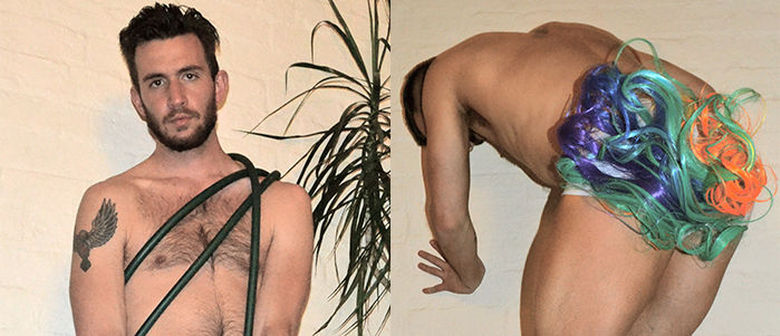
On the surface, the double bill of Bad Adam and Pony during this year’s Midsumma Festival appears to be constrasting highly different pieces of work with distinct moods and tones. However both these shows leave us questioning what it means to be a gay man and how gay male sexuality is perceived both by society – but more importantly – by us.

Bad Adam_Pony

In Bad Adam, the title character (creator and performer Dosh Luckwell) spends his time in “Club Eden”, a sex on-premises venue, where we follow his various experiences and are privy to his thoughts during these moments. The overt religious imagery and themes throughout Bad Adam, such as the apples, the lit-up cross on the floor and our protagonist’s name for example, worked well in subtly exploring the idea of sexual repression and suppression and the conflict the two forms of pressure often present with each other.

Given Luckwell is the creator of the live art project Sex Poetry Booth, it is not surprising he has a way with words and the language used and the way it is presented in Bad Adam is indeed quite poetic and intriguing at times. Yet while we see a vulnerable, lonely and conflicted side to Adam, a number of scenes were too similar in execution. This lessened the impact of the overall work and impeded us in retaining an interest in Adam which, in a one-man show, is pivotal to its success.

The second part of this double bill, Jay Robinson’s Pony, looks at similar ideas of sex and sexuality but with fewer dark overtones than Bad Adam. Here, we see the evolution of man and then more specifically the evolution of a person exploring and experimenting and with his own sexuality.

Robinson has a strong presence on stage and this helps with his demanding physical performance. He uses his body to its full extent and fully commits to the moment, however there are a number highly obscure scenes that left me confused as to their purpose and significance, such as the moment when Robinson transforms into a dog.

The final moments of Pony though are quite positive and playful and the idea that once you are at ease with yourself and can be what you want to be, then there’s no reason to not feel complete and free.

Both Bad Adam and Pony offer some interesting thoughts and ideas on gay male sexuality but I felt they need to focus more on how they share these thoughts and ideas. With further development, these two pieces have the potential to be a profound commentary on the society and an important voice for the community in which gay men live.

Venue: Theatreworks, 14 Acland St, St Kilda.
Season: Until 7 February | Fri 9pm, Sat 3pm and 7pm
Tickets: $23 Full | $18 Concession
Bookings: www.midsumma.org.au, http://www.theatreworks.org.au, or 9534 3388

REVIEW: Paul Capsis in LITTLE BIRD

Fascinating fable enchants all

By Bradley Storer

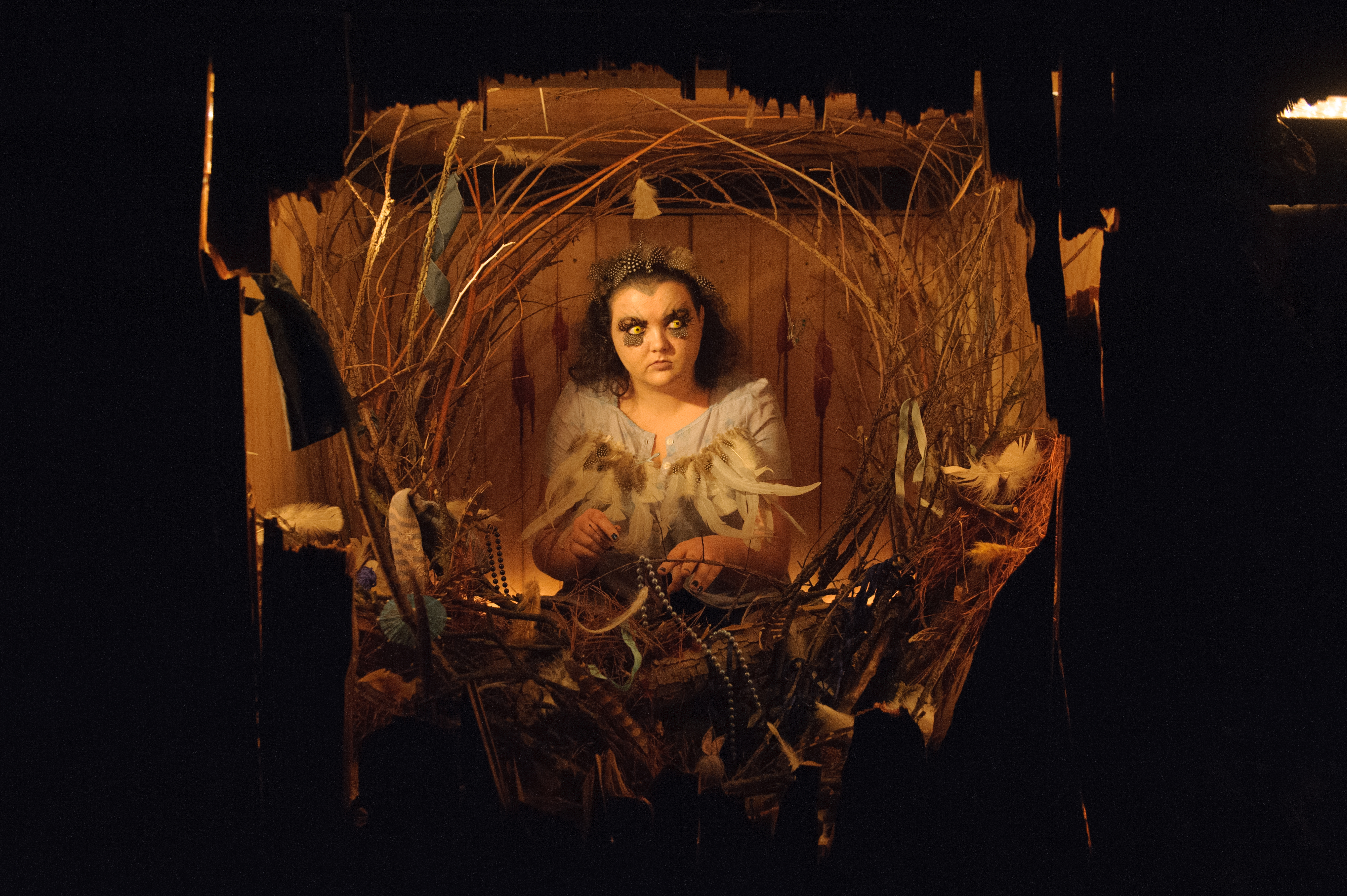
Australian cabaret and musical theatre star Paul Capsis comes to Melbourne with Little Bird, a dark modern fairytale by playwright Nicki Bloom, with music and songs by Cameron Goodall and Quentin Grant.

Little Bird

Little Bird tells the story of a young boy named Wren, magically conceived by the fall of feather on a winter’s day, and his journey to find a missing parent as well as discover his own identity. Bloom’s writing thrillingly mines a vein of moral and sexual ambiguity to create a bewitching narrative that draws questions of gender, love and the essential idea of the self.

The show works best when it stays within the realm of the fantastical and fey – the first section of the show, interwoven with the voice of a mysterious and bird-like narrator, is intensely engaging in its sparse poetical prose that draws on all the tropes of fairy tales while twisting and subverting them in thrilling new ways. When the tale reaches a metropolitan city and touches on the story of a cross-dressing woodcutter, the narrative takes a turn into punk rock territory, reminiscent of Hedwig and the Angry Inch, which although entertaining jars against the overall tone of the show in a way that makes it far less compelling.

Capsis himself is never less than completely spell-binding, his use of body and voice a masterclass in story-telling, summoning up all the characters with a simple shift in posture and voice while always maintaining the clarity of Wren’s own central development and journey reacting against these other characters. His androgynous rock-star charisma is used to great effect at various points, roaring glam-rock ballads that recall the work of Queen and David Bowie along with scintillating gypsy rhythms, but always finding the deep vulnerability and sadness of Wren to tear-inducing effect. The simple but surprisingly versatile set and incredibly nuanced lighting provided by Geoff Cobham must also be praised, responding to the mood and rhythm of the story in ways that heighten the drama and atmosphere invaluably.

This rich, luscious fable starring one of our best country’s best performers is truly an event not to be missed, drawing us into a dream-like, magical (but on some level, still achingly real) landscape that leaves the audience with the visceral and satisfying joy of a story well told.

Venue: Playhouse, The Arts Centre, 100 St Kilda Rd
Time: 8pm, 5pm Tuesday February 1st
Dates: 29th January – 4th February
Price: $49 Premium, $39 A-Reserve, $30 Under 30’s, Concession also available.
Bookings: www.artscentremelbourne.com.au, 1300 182 183, at the box office.

REVIEW: Midsumma Festival’s SILVERTOP ASH

Raising the profound issues

By Myron My

Upon walking out of the theatre after having seen Wayne Tunk’s Silvertop Ash, I was left feeling quite conflicted as to my thoughts on this production. I want to like it and say it is powerful and important theatre because of its focus on gay youth suicide, which absolutely needs more coverage and attention but at the same time, there were some intrinsic problems with the show that stop me from feeling so.

Silvertop Ash

Most of my issues with Silvertop Ash arose from the script. The dialogue with the characters often felt forced, and it seemed that everyone was nothing but a mere cog in the machine to tell the story that Tunks wants to tell rather than the characters being allowed to tell their own story. The play was written in 2007 and perhaps now, eight years later, audiences have progressed in terms of what we expect from these types of narratives.

The shocks and twists that were included could unfortunately be anticipated well before they occurred, and the stock character are familiar from a multitude of film, TV shows and stage productions to the point where they stop being real and vital: the macho father who is disgusted his son would rather read Austen than watch a car race for example, and the homophobic bully who harbors a secret of his own.

However, there are some good performances in the play, especially by James Coley as our protagonist Hamish, and Perri Cummings as Penny, Hamish’s mother. The scenes they share are poignant, heartfelt and often imbued with subtle humour. Despite not being overly convinced by Geoff Wallis’s portrayal as Hamish’s father, in the final few scenes he is in he came through with the goods and took my breath away with how powerful his performance then was.

Designer Hannah Gott has done a great job of using and filling the large space the show was performed in and yet was able to maintain the intimate setting required for the characters to function together. The backdrop projection of the town was a brilliant touch that built on the environment and remained there as a constant reminder of where we were.

Silvertop Ash is an all-too-tragic story of bullying and suicide amongst gay youths. Discussion needs to be maintained and promoted in order to have any effect in overcoming the rising statistics of youth suicide – and the show must be congratulated for doing that. However, as a piece of theatre, I ultimately wanted more from the writing and more from the performances.

Silvertop Ash is being performed as part of the 2015 Midsumma Festival.

Venue: Gasworks Arts Park, 21 Graham St, Albert Park
Season: Until 31 January | Tues – Sat 8:00pm
Tickets: $25 /$21 Conc
Bookings: midsumma.org.au

REVIEW: Midsumma Festival’s THE FASTEST CLOCK IN THE UNIVERSE

An intriguing time piece

By Caitlin McGrane

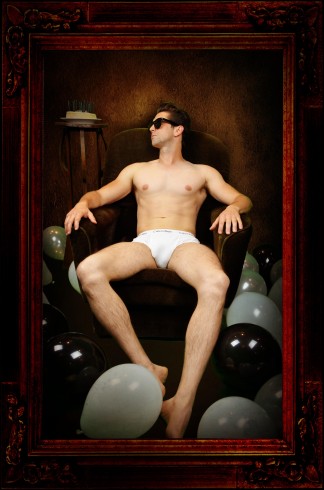
An intriguing presentation as part of the 2015 Midsumma Festival, the drama is uneasy and disquieting in The Fastest Clock in the Universe by Phillip Ridley. The play opens as Cougar Glass (Robert Ricks) lounges luxuriously in only his briefs under a sun lamp; his friend/man-servant/lover (?)/lackey Captain Tock (Ian Rose) appears as the portentous messenger to remind Cougar about his birthday party. The unsettling narrative continues apace as Cougar has invited only one person to his birthday, a boy of 15 named Foxtrot Darling (William Freeman). The obvious comparison is to The Picture of Dorian Gray, and the first act is certainly reminiscent of the young man who cannot bear to accept responsibility, while remaining perpetually 19. When Cougar’s age is alluded to it is only Cheetah Bee (Brenda Palmer), the landlady who lives downstairs, who can soothe him. Inside the tiny apartment, as the wind screams outside, Foxtrot arrives with an uninvited guest.

The Fastest Clock in the Universe

Each individual performance was excellent, but Scout Boxall really stole the show as the hilarious yet bonkers Sherbert Gravel in the second act. Ricks’ increasingly deranged Cougar almost became part of the furniture while she dominated the stage with her handbag, and Foxtrot, in tow. Rose’s Captain ratcheted up the tension; his glee mirroring Cougar’s insanity. It was clear the play was set in London, so I found Palmer’s Australian accent slightly out-of-place.

While the first act was dynamic, interesting and dark, the second act failed to live up to expectations. It is difficult to pin down exactly what didn’t work, but it felt like scenes ran on for too long, and after a particularly affective split-stage scene, the mood of the play shifted into absurdity as Foxtrot and Sherbert remained in a desperately uncomfortable situation. Was that the intention? One cannot be sure, but by the time Cheetah Bee delivered her final monologue, it was clear that something had gone awry. A moment that should have been poignant became somewhat clichéd.

However, overall this production is gripping and edgy; Director Robert Chuter has managed to create something both wildly funny and thrillingly tense. Robert Smith (Set Designer, Graphic Designer and Producer) has done wonders with the small space; the set is imbued with a sense of unwilling decay. There is similarly excellent work from Tom Backhaus (Sound Designer) whose soundtrack is almost reminiscent of Blade Runner. It may need some creases ironed out, but The Fastest Clock in the Universe certainly gives audiences pause.

The Fastest Clock in the Universe is showing until 31 January 2015 in The Loft at Chapel off Chapel. Tickets are $38 Full, $32 Concession, $30 Group 5+ (+ transaction fee) and available from http://chapeloffchapel.com.au/melbourne-comedy-theatre-art/melbourne-events/midsumma-festival/the-fastest-clock-in-the-universe-21-31-jan/.
Be advised: The Fastest Clock in the Universe does contain some nudity and scenes of violence against women.

REVIEW: Revolt Productions Presents KINDRED

Getting inside domestic violence

By Myron My

Every week in Australia a woman is killed by a current or former partner. It is an astonishingly frightening statistic and yet doesn’t seem to be reported by much of the media. Produced by Goldfish Creative, Rachael Blackwood’s new play Kindred brings this issue to the surface as she explores one woman’s struggle to escape from a violent relationship.

Kindred

We are introduced to this relationship between Princess (Aimee Sanderson) and Knight (Ben Ridgwell) through the eyes of Princess’ various “personalities”: the childlike Minnie (Jessica Martin), the sexual Selina (Madeleine Mackenzie), the motherly Faun (Gabrielle Sing), the wise June (Aisha Jakszewicz) and the aggressive Diana (Blackwood herself).
From the initial fairy-tale beginnings of meeting the charming knight, through the gradual abuse suffered by Princess, right up to the difficult-to-watch final moments, Blackwood’s script is brutal, honest and unflinching.

There were instances where scenes got repetitive however, such as arguments between Knight and Princess in which he would storm out only to return and demand that Princess rectify the situation. Whilst it showed the cycle of helplessness that Princess was feeling, some more overt variation to these scenes would have resulted in higher audience engagement.

I was extremely impressed by the five women in the “personality” roles, as they all seem to have grasped their personas thoroughly and successfully. From the individual ways they smiled and even the unique ways they looked at each other – they were the true embodiments of Princess’ inner turmoil. The interactions, dialogue and tone used between them highlights the combined skill of Blackwood, the actors and director Lisa Treloar.

However, their monologues directed at Knight seemed out of place with the rest of the natural dialogue. Having them engage in long-winded poetic speech to express their thoughts resulted in scenes not seeming as authentic as they could have been.

Sanderson does well with what is the most challenging performance in Kindred. She found the right balance of a hopelessly-in-love yet utterly petrified person and as Princess sunk deeper into fear and despair, Sanderson ensured the audience felt exactly what she felt. Unfortunately I was severely underwhelmed by Ridgwell’s Knight. He seemed to struggle playing the nuances of the character and his delivery felt flat and almost monotonous, except for the scenes when he was shouting at Princess.

Overall, Kindred is a strong production with an important message to spread. With some fine-tuning in scripting and performance, it will be even more effective in raising awareness and provoking discussion and action over violence against women.

Venue: Revolt, 12 Elizabeth St, Kensington

Season: Until 13 December| 7:30pm, Sat 2pm

Tickets: $25 Full | $19.50 Conc

Bookings: http://revoltproductions.com

REVIEW: La Mama Presents DOG DAY TRIO

Three tales collide and cohere

By Myron My

Michael Olsen’s Dog Day Trio presents a trilogy of monologues of people lamenting and reminiscing about their contrasting and varied lives. While the narratives are linked by themes of love, loss, death, and life passing us by, they are highly individual stories about an assassin, a widower and a hotel housekeeper.

We open with Cynthia (Rosa Nix), as she irons her handkerchiefs and gradually reveals that she was – and still is – an assassin. As she teaches us the 9 steps to being an assassin, she beguiles us with her past identities and kills: “You always remember your first,” she fondly says.

Dog Day Trio

The story is intriguing and filled with light comedic moments from this seemingly gentle murderess, in an intelligent believable performance by Nix. All the elements of writing, directing and acting come together so seamlessly in this piece that I could easily have watched Cynthia’s story unfold for an hour.

Unfortunately I felt the other two stories of mournful George (Kirk Alexander) and hotel housekeeper Betty (Kelly Jane Harrison) are not as absorbing. With Betty’s narrative timeline traveling back and forth, and with many characters introduced, her story is difficult to keep up with. On the contrary, while George’s narrative is more linear, it felt a little too long to sustain audience interest. Both these stories have potential to be just as affecting as Cynthia’s with some fine-tuning to the narrative. Despite these issues, Alexander and Harrison’s performances are also well-thought-out and authentic.

Hanna Riley’s sound design in Dog Day Trio is integrated into the show quite well, and I’d like to see this element incorporated further into the monologues as the overall work develops, to build on creating the individual worlds.

Given the already limited space at La Mama, you would think isolating the actors into three different spaces would not be a wise choice but by doing so, director Tammie Kite creates a highly intimate environment that actually gives the stories life and connection. Visually, the stage ends up resembling a Venn diagram: three different experiences ultimately linked by the fleeting moment that is, in fact, life.

Dog Day Trio is on until Wednesday 10 December at La Mama Theatre as part of their Explorations season, which supports new works in various stages of development.

http://lamama.com.au/spring-2014/explorations-2014/dog-day-trio/

REVIEW: Little Ones Theatre Presents THE HOUSE OF YES

Dysfunctional comedy all in the family

By Myron My

It took me exactly 37 seconds to realize that I was going to be in pure bliss watching Little Ones Theatre‘s production of The House Of Yes, a bizarre yet hilariously witty play by Wendy Macleod.

The House of Yes_Photo Credit_ Sarah Walker Photography

It’s Thanksgiving in 1983, and Marty (Benjamin Rigby) has returned home with his fiancée Lesly (Anna McCarthy). As we meet the rest of the family – his mentally unstable and Kennedy-obsessed twin sister “Jackie O” (Genevieve Giuffre), younger brother Anthony (Paul Blenheim) and matriarch, Mrs. Pascal (Josh Price, in a superb casting decision) – the domestic Pandora’s box is well and truly opened in this satirical play on class, incest and mental illness.

For the most part, Giuffre succeeds in bringing out the fragility and loneliness in the challenging role of Jackie O but it is the scenes involving McCarthy and Blenheim that allow for a deeper honesty and vulnerability to be present. Unfortunately I was not at all convinced by Rigby’s performance as Marty, who really only shines in his scenes with Giuffre which are filled with an infinite amount of palpable sexual chemistry.

Price as Mrs. Pascal is truly an unusual choice, but at the same time a perfect decision to convey the dysfunctional ties of the family, and personify the desires and morals that otherwise seem to be lacking in the Pascal household.

Director Stephen Nicolazzo has done a great job in crafting the pace and delivery in The House of Yes, and there is never a dull moment on stage. The set and lighting design of the Pascal home further articulates the misguided values and the mindset of a family that is caught up in its own bourgeois reality. Eugyeene Teh’s all-pink set contrasts with the darkness that envelops the family, and the lighting by Katie Sfetkidis successfully builds the tension towards the climatic final scene, even with all the laughs and antics.

Little Ones Theatre have managed to bring their own unique touch to this compelling story of a family whose desires and wishes to lead the lives they want only ends in devastation for themselves and each other. The House of Yes gets a resounding yes from me.

Venue: Theatreworks, 14 Acland St, St Kilda.

Season: Until 13 December | Tues – Sat 8:00pm

Tickets: $30 Full | $25 Concession

Bookings: 9534 3388 or http://www.theatreworks.org.au