Category: Review

Melbourne Shakespeare Company Presents THE COMEDY OF ERRORS

Faultless farce

By Leeor Adar

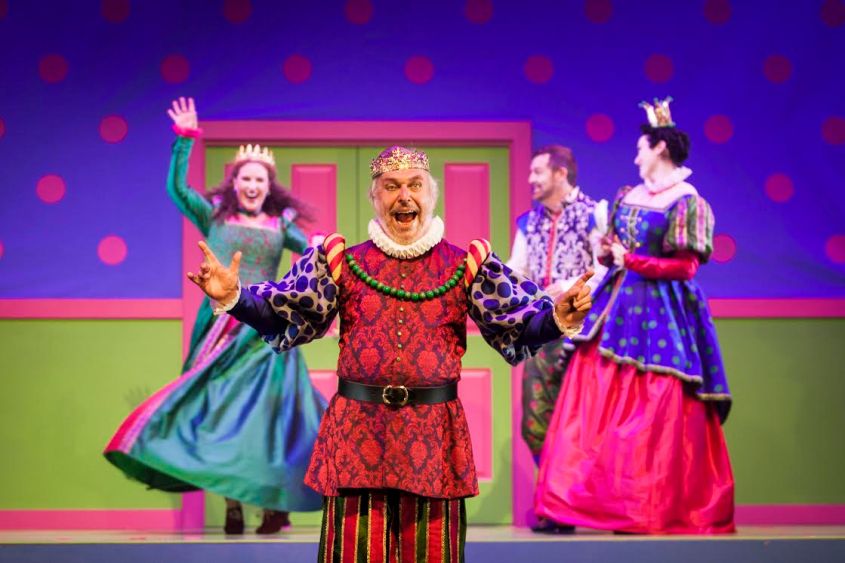
Shakespeare is reimagined in this marvellously funny production of the Melbourne Shakespeare Company. No one left Brunswick’s Siteworks where the production was held without having cackled with joy.

The Comedy of Errors.jpg

Shakespeare’s comedies are at times something to be endured with gritted smiles at out-dated jokes that haven’t been reined in for their times, but director Jennifer Sarah Dean and assistant director Paul Robertson have masterfully done justice to the work.

The production follows the usual case of mistaken identity of two long-lost twin brothers (Nathaniel Schneider and Jonathan Peck) and their forlorn father (Hunter Perske). Throw in two tumbling manservants (Nicola Bowman and Madeleine Stewart), sisters of differing temperament (Jaqueline Whiting and Lelda Kapsis), a courtesan (Annabelle Tudor), and a magician-esque doctor (Bridget Sweeney), and you have a comedy of seismic proportions.

I rarely get the chance to commend a production for all its elements, but The Comedy of Errors is perfection. The cast delivered with humour and panache in such synchronicity that their talent coupled with the direction of the performance provided an unprecedented professionalism (other companies should take note). Costuming by Rhiannon Irving was unique, colourful and striking. Each cast member donned a wig, which appeared to be put together by some seriously talented arts-and-craft person. A special mention must be made to the costuming of the a capella group (Andrew Isles, Ryan Smedley, Mitch Ralston and Patrick Hill), who sported brightly-coloured stripes and matching beards and lipstick. Irving’s creation was so imaginative and charming, the entrance of each character brought more marvels to admire.

Musical director Ben Adams concocted a mix of delightful old and new-school tunes for the a capella group to perform at opportune moments of the show. At times our quartet would enter from an unsuspecting part of the outdoor setting with a flourish and in unison, that would send the audience into fits of laughter. It was a modern touch that provided plenty of entertainment throughout the show. Further, the choice and use of Siteworks’ outdoor space from varying entrances, exits and positions made for an excellent and surprising use of space. The cast of characters had full use of the performance arena, and as an audience, we would shift our heads in wonder at all the happenings around us.

Overall, I am absolutely thrilled with the choices made in this production at every level. I would happily sit through the performance again and cart out every person I know in what would surely be a lively and enjoyable night.

The Comedy of Errors was performed March 25 – April 2, 2017. For upcoming productions, visit https://www.melbourneshakespeare.com/

The Substation Presents THE TRIBE

A personal and beautiful story-telling experience

By Christine Young

The Tribe is perhaps what the world needs right now. At the very least, in a time of heightened Islamophobia, racism and bigoted politics, it’s what’s missing from public life: the voices and stories of Arab immigrant families.

The Tribe.jpg

This reviewer jumped at the chance to attend the opening night of The Tribe which is based on Michael Mohammed Ahmad’s novel of the same name, and presented by The Substation theatre company and Urban Theatre Projects. The play is a series of monologues/memories told by an adult Bani but through the eyes of his child self at ages five, seven and eleven. It was adapted for the stage by author Ahmad and Janice Muller who also directed solo actor Hazem Shammas.

Bani belongs to the first generation of his big Lebanese family born in Australia with whom he lives on Caitlin Street in Lakemba. Lakemba is a suburb 15km south-west of Sydney’s CBD and well-known as a hub for Lebanese Muslim Australians. As Bani tells us, the Caitlin Street residents are overwhelmingly Muslim and living there carries a certain credibility. When the most rebellious kid in his class, Omar, finds out they live opposite each other, he decides they are best mates on the spot. Neither child knows anything about Omar being a Sunni Muslim and Bani being an Ahmadi Muslim which would have ruled out a friendship in Lebanon.

Bani’s stories from 1980s Lakemba centre on the family’s matriarch Taytar (grandmother). These stories also reach beyond Lakemba and back to a Lebanon that Bani has never known. Shammas renders beautiful the poignant and moving anecdotes from Bani’s childhood. Every time Bani utters ‘Taytar’, his voice changes and it’s said in a gentle tone of affection and respect.

Hazem Shammas is joined on stage by composer Oonagh Sherrard on cello which is aptly matched to the emotion and life of the storytelling. My seat was remarkably close to Sherrard which gave me a unique chance to watch the beauty and dexterity of cello-playing up close.

For the Melbourne season, The Substation in Newport has arranged for the play to be performed at homes in the area. The audience meets at The Substation and is taken, by foot, to the previously undisclosed location, and experiencing The Tribe is all the more special because it’s performed in the privacy and intimacy of a volunteer family’s backyard.

The Tribe was performed on March 30, 31 and April 1 2017 in Newport, Melbourne.

Melbourne International Comedy Festival 2017: CREEPY DUMMY

Witty and winning

By Myron My

It’s a weird show for weird people, or that’s what Sarah Jones tells the audience during Creepy Dummy, which is presented as part of this year’s Melbourne International Comedy Festival. Jones is a ventriloquist and through the course of the evening she is joined by a number of special “guests”, and together we try to determine why ventriloquist dummies / dolls have received such a bad rap, and for people who have seen Annabelle or Magic, it’s not hard to tell why.

Creepy Dummy.jpg

Jones explains how people often declare how creepy puppets are or expressing their automatonophobia (fear of ventriloquist’s dummies) whenever she reveals her profession to them. In order to dispel this fear, Jones shares some interesting stories and facts regarding ventriloquism and dolls through stand-up, shadow play and of course puppets.

What is particularly enjoyable about Creepy Dummy is that, despite the topic, the show cleverly remains light-hearted. It gets to the point where you begin to understand that nothing is creepy unless you let it be, and this includes a range of fears that are touched on, such as dummies, ghosts, spiders and even babies.

Jones’ relaxed nature and structuring of the performance allows for her interactions with the audience to be friendly and playful. Even when certain interactions don’t go according to plan, as happened on the night I attended, Jones does not skip a beat and happily accepts the curve ball and continues on with the show. However, the final, pivotal minutes of the show could do with a little fine-tuning to ensure it ends on the high that has been maintained throughout.

There are plenty of laughs to be had with Creepy Dummy but meeting Jones’ Aunt Catherine is definitely worth the ticket price alone. While the show might not have you loving puppets and dummies, it will definitely give you the courage to go back for second helpings of this highly talented and funny ventriloquist.

Venue: The Butterfly Club, 5 Carson Place, Melbourne 

Season: until 10 April | until 2 April 8.30pm, 3 – 6 April 5:30pm, 10 April 7pm 

Length: 55 minutes 

Tickets: $32.30 Full | $28.30 Conc 

Bookings: MICF website

Victorian Opera Presents THE PRINCESS AND THE PEA

Clever, charming and tons of fun

By Leeor Adar

Squeals and giggles erupted from the audience of Victorian Opera’s The Princess and the Pea on Saturday afternoon. The audience is very young – the youngest I’ve seen for the Victorian Opera, and it fills me with gladness. The lingering question for opera remains as to how to attract future generations, and the Fables for Season 2017 is an operatic call to arms for Victoria’s smallest residents.

The Princess and the Pea.jpg

Hans Christian Andersen’s tale is reimagined under the clever guardianship of Victorian Opera’s developing artists Candice MacAllister (Design) and Alastair Clark (Direction). This colourful and vibrant production is short and sweet at only 40 minutes, and enough to ensure the little attendees don’t go stir crazy. Composed by the late Weimar Germany’s Austrian-born Ernst Toch, the singers clearly take pleasure in performing to their craft to such a young audience.

This production was a clever way to present the tale and the marvels of the opera to its young audience. Set as a show on television station, ‘Mythical Mysteries!’ the story is presented with the humour of forgotten lines, dropped scripts and the hustle and bustle of a television set. It’s slapstick and generally silly, but the appealing performances of the cast ensured that despite the German accents, the audience understood the action. MacAllister’s set and costume design was bright and artful, which consisted of a giant television frame that lifted the veil to behind the scenes.

The story follows as expected, with a desperately in love Prince (James Egglestone), a humbly dressed Princess (Olivia Cranwell), and a Queen (Kathryn Radcliffe) who has high hopes for her princely boy. Looks are deceiving, as the moral of the story drums into the chirpy youngsters, and a plan concocted by the crafty and energetic TV Host (Dimity Shepherd) to plant a pea in the Princess’ mattress reveals the lost girl’s true identity… and they all lived happily after.

You can check out the Victorian Opera’s Fables 2017 season here: https://www.artscentremelbourne.com.au/discover/seasons/victorian-opera-2017 which will showcase work that will entertain audiences of varying age groups.

Image by Charlie Kinross

New Stage Presents ISLAMOPHILIA

Intense and intriguing

By Narelle Wood

There is no denying that David George’s Islamophilia is a very topical concept for a play; it is also perhaps a very timely and important one as well.

17268120_725466707661914_1616510164184072192_n

Set in Melbourne, and based on a true story, Islamophilia deals with many of the misconceived, troublesome and ambiguous interpretations of Islam and what it means in contemporary society. It does so by using the story of Shadahan’s (Laura Lattuada) family to explore the multiple perspectives of both devout believers and those struggling to believe and understand. Shadahan and Fariz (Chris Jackson) – a scholar and Shadahan’s love interest – are both devout believers, while Daanish (Gerard Lane), also a scholar and Shadahn’s husband, is a convert. Freddy (Adam Direen), Daanish’s brother, is a sceptic, although considering the idea of conversion. And Aisha (Indea Quinn) is Shadahan’s daughter and represents the eager voice of those seeking to understand. The family and Fariz are drawn together by a common purpose; the production of a new Islamic Journal that is seeking to find a future for Islam in a world that is not very accepting.

The play is dialogue and content-heavy, and weaves in a great deal detail about Islam, which is to be expected; but it doesn’t come up for breath. The ideas, questions and challenges were all really interesting but at times I struggled to keep up and digest everything that was artfully been tossed around the stage. There was a nice balance between assumed knowledge and new ideas, and the discussion often returned often to addressing concepts of extremism and the multi-understandings of the Quran. These discussions were often intertwined with references to art and beauty, but always lingering in the background is the threat of violence, intolerance and prejudice.

While the dialogue is fast-paced – the cast do an amazing job under director Helen Trenos to move seamlessly through it – the staging is very minimalist. There are a few lighting transitions used to denote the passing of time and allow for the elegant transitions between scenes. The limited use of music is effective punctuating the discussions of traditions and beauty. Everything, other than the characters’ interactions, is understated; there is nothing to compete with the key ideas.

Educational, thought-provoking and at times confronting, this is an important play that gives a strong voice to the intricacies, beauty and nuances of Islam. Intense and intriguing, Islamophilia is one of those plays that will still have you thinking well after it ends.

Website: www.islamophilia.info

Dance Massive Presents DIVERCITY

An experience of joy

By Joana Simmons

DIVERCITY.jpg

When you live away from home and reside in the city, on someone else’s land, does it change your relationship to country?”

In Divercity, Bundjalung/Yaegl choreographer Mariaa Randall guides us with dance, colour and conversation to explore this idea. Presented by Arts House and performed Henrietta Baird and Waiata Telfer (who also choreographed) this was one show to catch this season. Set in front of a projection; the movement, dialogue and structure are all impeccably defined. This work is a look at indigenous cultural celebration delivered in a beautifully artistic way.

Individuals self-identifying as women of the audience are invited in first to learn some simple movement and words for ‘woman’ ‘girl’ and ‘feminine’ in the language of their country. It is lighthearted and Randall eases the tension. There was a sense of hesitation initially, but it felt special to be part of the performance, and fostered a sense of community among us. lluminated by an evocative filmic backdrop by video artist Keith Deverell, Baird and Telfer performed traditional and contemporary dance whilst speaking native tongues and English. The choreography is dynamic and looked fantastic with the projection. The use of coloured chalk on their clothes that they swept up and banged in the floor work was stunning. The extension, energy and execution of the movement was breathtaking, and this wonderful intensity was sustained for so long.

The conversational nature of the dialogue draws us in and is at points authentically funny, making the performance enjoyable on so many levels. I was impressed by the stamina of the performers; twisting and rolling into and out of the floor, covered in vibrant colourful chalk, connecting with each other and the audience the whole way through. Randall is a genuine creative star and should be highly commended for bringing this work together. Deverell’s sound design fits well with the projection and movement and allows the spoken word to be heard and the movement to pick up and become complex and thrilling. The space was used well and performers captured from the light from the four follow spots on the corners. The stage is left covered in vibrant colour from the chalk on the performers’ bodies, with the shapes from the tape they pulled up stencilled in the tarquet, and we the audience sit in silence as we soak up and share the clever cultural creation we just experienced.

This show, structured around Aboriginal spiritual and traditional cultures of Women’s Business created and performed by indigenous women, is one that gives us so much inspiration and excitement. Divercity shows us, no matter where we are from, where we are now, what gender we identify with or what our heritage and language is, we all have bodies which can be beautiful vessels for communication and expression.  I loved every part of it- the celebration of community and how movement brings people together: the playful nature and the synchronisity of the projection and language and being made part of the performance. If you got a ticket before it sold out, you too enjoyed a real treat.

Divercity played in March 2017 as part of Dance Massive at North Melbourne Town Hall.

Image by Keith Deverell

Red Stitch Presents RULES FOR LIVING

Uproariously funny

By Caitlin McGrane

As the audience walked into the theatre on the opening night of Red Stitch’s new production Rules for Living, I was feeling slightly apprehensive. There’s something about the idea of a play about families at Christmas that can make even the most hardy feel slightly uneasy, like it all the potential to go horrifically, horribly wrong. And, indeed, it does; but I have honestly never laughed so much at a piece of theatre in all my life.

Rules for Living.jpg

The script for Rules for Living is sharp in a way that sometimes beggars belief – the cast and crew are so tight, they have their finger held so firmly on the pulse of playwright Sam Holcroft’s wonderful script that at times I thought they might be ad-libbing. The story is of a British family at Christmas: they’re dysfunctional in a recognisably empathetic way, oozing with pathos, and steering pretty well clear of the ‘wacky family does Christmas’ tropes we’ve all seen 8000 times before.

There’s brothers Matthew, (the always wonderful Rory Kelly) a charming/horrific liar and Adam (Mark Dickinson) who’s almost pathologically unable or unwilling to show weakness. Then there’s their mother the neurotic pill-popping matriarch, Edith (Caroline Lee), and Adam’s deeply tragic alcoholic wife Sheena (Jessica Clarke); but for my money the standout performer was Jem Nicholas as Matthew’s actress-cum-comedienne girlfriend, Carrie. Nicholas carries so many of the scenes, she’s truly the life and soul of the ensemble; there are times when I longed for her to return to the stage so I could see what this magnificent incarnation of the ‘Essex girl’ would do next. Ella Newton has a minor role as Adam and Sheena’s daughter Emma, and Ian Rooney makes an appearance as Matthew and Adam’s wheelchair-bound father Francis, an utterly detestable man who leers over women, and shouts ‘fuck off’ at his wife Edith; confused he may be, but without sense he is not.

The behaviour of all three men on stage gets to the very heart of what I loved so much about this play – the women. All the characters all abide by ‘rules’ for how they live their lives but the women have to constantly put up with so much deplorable behaviour from their partners that it’s no wonder they retreat into alcohol, drugs, and playing the clown. The male characters in this play are deeply funny, but they’re also awful, recognisably awful in a way that’s almost frighteningly realistic. The women on the other hand are by no means flawless, sometimes almost cruel, but it seemed to me they’d been conditioned into it, their actions a way of coping with the men in their lives.

Director Kim Farrant has done a magnificent job with this work, and the play hangs together like a carefully-placed bauble on a Christmas tree – balancing just the right amounts of humour and tragedy across the two acts. The only thing I think that could have really improved it was a reduction in length – the 2.5 hour running time was probably too much, and there were scenes that could have been cut down slightly just to keep the pace up.

Sets and costumes (Sophie Woodward) worked wonderfully: almost too well, as there were moments when it was like being at my nan’s for Christmas; lighting (Clare Springett) and sound design (Daniel Nixon) really enhanced the play’s mood, and created just the right slightly tense atmosphere round the kitchen table.

Overall I don’t think I could speak highly enough of this production, it is another Red Stitch triumph where a clear, clever, well-constructed script together with a strong, dynamic cast brings so much joy, good cheer and a huge dose of fun. Go and see this play.

Rules for Living is now on at Red Stitch until 16 April as a part of the Melbourne International Comedy Festival. For more information and tickets visit: http://redstitch.net/gallery/rules-for-living

Image by Teresa Noble

The Butterfly Club Presents THE GOSPEL ACCORDING TO MATTHEW

All praise for the songs

By Jessica Cornish

With its creator standing upstage, arms spread wide and hands busy below the waist, The Gospel According to Matthew began. This fifty-minute cabaret production encapsulated the world through the eyes of Matthew Semple, with his inner thoughts and views splashed across the stage in form of song and story-telling.

The Gospel According to Matthew.jpg

The music-theatre-born-and-bred Semple performed his self-professed ‘shitty cabaret’ to his cosy audience, happily huddled into the intimate performance space of The Butterfly Club. This young performer had a pleasing amount of confidence and a strong stage presence; he performed with the polished hallmarks and training of a musical-theatre babe with clear diction, a strong tone and a nice dash of vibrato.

Despite the thoroughly scripted and rehearsed narrative, Semple was also comfortable enough to partake in some impromptu banter with his audience, which provoked some of the funnier moments of the night.

Unfortunately I felt the performance overall lacked a strong and clear overarching theme to its detriment, and throughout the show there were a number of one-off and throwaway jokes that for me often missed the mark. Substituting the satire and wit for cheap shots and crude humour- small dick jokes and making fun of paraolympians for example – certainly wasn’t my favourite comic styling. There was also not much character development of the main man himself: Semple touched on being recently single and ending a long-term relationship for example, however this wasn’t really explored in any detail, and considering the show’s title, it would have been interesting to hear more personal stories and self-reflection.

My favourite moments of the night were easily when Matthew at his piano took the limelight. His songs were well-constructed and entertaining, and focused more adroitly and wittily on numerous social issues currently trending in Australia such as our dubious offshore detention centres and questionable conservative MPs like Dutton and Hanson, which made for both enjoyable and thought-provoking musical numbers. Perhaps some more of these upbeat playful songs added into the mix would better support and inform the less successful moments of story-telling.

In conclusion, Matthew preaches to his crowd to ‘shout your truth’ and go forth: therefore, in truth I believe this cabaret show has the potential to grow and flourish, and hope the narrative can thus become sharper and snappier and as appealing as the music as time goes on.

The Gospel According to Matthew played at The Butterfly Club, 5 Carson Place Melbourne in March 2017.

Lyric Opera Presents THE JAPANESE PRINCESS

Delightful

By Joanna Simmons

Lyric Opera presents the first in its’ trio for the 2017 season, and Camille Saint Saens’ The Japanese Princess is a wonderful choice of work. Having never been performed in Australia; this one-act comic opera is accessible and excellent. The story is simple so the main feature is the music; played beautifully by the Lyric Chamber orchestra and sung by the experienced cast of three. It’s a treat for the ears, and with dialogue in English and subtitles for all the French Songs it defies any old notions that opera is dusty fat ladies warbling in foreign tongues for hours.

The Japanese Princess.jpg

We follow the story of Kornelis, an art student who becomes infatuated with all things Japanese, and much to his fiancée (and cousin in the libretto) Lena’s dismay, becomes obsessed with the portrait of a mysterious Japanese Princess, Ming (not a Japanese name.) Ming makes Lena question herself, her relationship and Kornelis’ sanity. The voluptuous orchestra ornately guides the story with a nod to the orient with songs with colourful language and robust emotions.

Lena, played by Kimberly Coleman (and alternated with Kate Macfarlane) was naturalistic and strong.  She plays up the comedy where needed and connects with the other players and the music. Robert Macfarlane as Cornelius’s (alternated with Hew Wagner) dulcet tenor tones were right on the money. I wish his acting was as strong, as there were a lot of comedic moments that could have been more detailed with facial expression and timing, and other moments that felt forced. Arisa Yura as Ming, is subtlely woven into the story and is captivating to watch. She dances skillfully with a fan, her delicate hands well placed; yet then does some turns and steps that break character and genre, which feels disjointed alongside the music and set.

The intricate set designed by Christina Logan Bell that feels like the inside of a Japanese fan or tea house, complete with tatami mats, is beautiful and memorable. It, combined with the well-plotted lighting by Lucy Birkinshaw, transports us to this wonderous other world. Lucy Wilkins’ costume design fits well with the set and the era, adding colour and beauty with Ming’s kimono, and a neutral- everyday feel to Cornelius and Lena. Director Miki Oikawa has tastefully bought this production out to be one that is accessible in our modern day, in partnership with artistic director and conductor Pat Miller, whose passion and knowledge is evident, and should be highly commended.

The part I loved the most about this show was the beginning, where Miller turned around from facing the orchestra and invited us to ensure that our phones weren’t going to disturb the performance, but encouraged us to use them, to share with people what we are doing, and push opera to become something that is spoken about, shared, liked, snapchatted, hashtagged and all. In our world of watching videos for 30 seconds before getting distracted, it can be difficult to produce theatre to challenge our palates whilst tickling them too. This show is engaging and enchanting, simple and satisfying for the ears and eyes.

Lyric Opera’s The Japanese Princess played at Chapel Off Chapel, 11-18 March, 2017

Image by Sarah Walker

AsiaTopa Presents DANCING WITH DEATH

Confronting and experimental

By Leeor Adar

As part of AsiaTopa, renowned Thai choreographer Pichet Klunchun presents Australian audiences with what he calls a dance representing a state of “limbo”.

Dancing With Death.jpg

Based on the teachings of nineteenth-century Buddhist monk Luang Pu Dulaya, “Dun” Atulo, the meaning of “limbo”, is unpacked as all creatures sharing the same “citta”, a form of consciousness. Klunchun and his performers create a collective, and often arduous dance that signifies unpredictable shifts in power, whether within the individual or in wider society.

We really don’t get what we bargain for as an audience. Admittedly, a great number of those attending the performance are unfamiliar with Klunchun’s work, the creation of a revered and formidable dancer who contemporises traditional Thai dance. At first masked and colourful dancers parade about the stage and we think: of course, traditional. Moments later, a lone figure emerges in white, movements so precise and slow that they utterly contradict the colour and wildness of the more traditional movements. The lone figure moves in a manner that recalls Japan’s own Butoh, but Klunchun is about to take us on an entirely different journey as we soon discover.

Filed onto the performance space of the State Theatre, a stage is created upon a stage. A curved and sloping giant circle, which recalls a skateboard-rink lit in a brilliant yellow is our focus. The lone figure soon climbs onto this rink, only to be followed by others, also in white, also sharing in the lone figure’s limbo. The collective movements of the dancers is hauntingly soothing at first, and the monotony of the action hypnotises. Sound designer Hiroshi Iguchi masterfully creates a soundtrack that matches the dancers in their energy – a blend of modern, ardent and repetitive sound blasts through the audience.

As the pace quickens, we, like the dancers are simply exhausted. There are noticeable shifts in the dynamic of the dancers, representing desire for closeness, conflict and desperation. Our original lone figure continues to wander in the abyss, and the other dancers leap from the limbo rink into a celebration of contemporary dance with new additions. This is a joyous moment, but the lone figure continues to wander, and Klunchun’s world eclipses on this figure.

As an audience we did not know when to clap, or what to do. Klunchun succeeded in presenting an entirely new mode of dance theatre for this audience, but it was ultimately draining and unsettling. Unfortunately the result of this is alienation; perhaps that is what Klunchun intended in the hopes of showing our own tendency to “shun the unknown and change”, falling into a “vicious cycle” of lost opportunities in relating.

Dancing With Death was performed from the 2-4 March at the Arts Centre, Melbourne. You can learn more about Klunchun’s work here: http://pkdancecompany.com/