Category: Events

REVIEW: Kin Collaborative’s GAGA & ASSANGE

Cheeky musical mayhem as celebrities collide

By Christine Moffat

A hypothetical romp laced with club hits, Europop anthems and moving piano ballads in the style of Mother Monster herself, drawing on themes of hypocrisy, tolerance, censorship and the cult of celebrity, all the while holding its tongue firmly in its cheek.”  This extract from the program is an apt description; this is indeed an old-fashioned romp, set in the world of modern notoriety.
kin-collaborative-gaga-assange

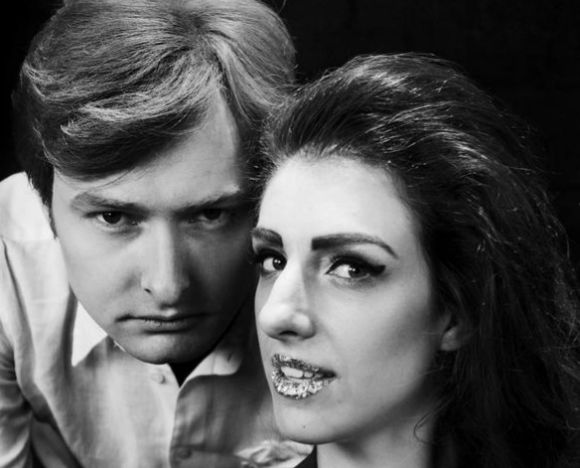
The story of Gaga & Assange revolves around the imagined reasoning for the pair’s real meeting at the Ecuadorian Embassy in London in 2012.  Writer William Hannagan takes this scenario and runs with it to create a stylish mash-up of morals, media and music.  At one and a half hours, the show seems a little long, and some of the most elegant plot points appear to be tacked on as an afterthought in the last 25 minutes.  That being said, there is a lot to like about this show.  Hannagan manages to create a world where the audience doesn’t just accept Gaga and Assange as confidentes, but relishes their stilted frisson.

Laura Raiti and Christopher Runciman are entertaining as the awkward, mismatched lovers with ethics as big as their egos.  Both are great comic performers.  Runciman is painfully unhip as Assange, the counterbalance for Raiti’s outrageous, over-the-top (and therefore uncannily accurate) Gaga.  Raiti’s musical performance was so close to the real thing that it made the original songs seem like Gaga anthems.

The concept and writing were entertaining and unusual, but the script needs a little polishing, as currently it seems to have a natural ending, and then an epilogue.  This loosely-defined conclusion is the main flaw in what is otherwise a show with great promise and appeal.  The costuming by Hannah Cantwell, Sabella Dsouza and Sooah Jee was fantastic, created character and added to the comedy greatly.  Although the staging was basic, it was designed to be versatile and effective.  The original songs (Hannagan) were a great addition to the show, and deserve full musical production in any future seasons.

New work can be difficult to review, as it is often raw.  It wears its heart of its sleeve, for good or for bad.  This is the case with Gaga & Assange: there were a few areas that needed work, but many highlights.  Overall, it was fresh, engaging, intelligent and gave the audience a good laugh.

Gaga & Assange was performed on Friday 23rd & Saturday 24th August at The Guild Theatre, Univeristy of Melbourne as part of MUDfest 2013.
REVIEW: night maybe at THEATREWORKS

Into the darkness…

By Myron My

night maybe

Entering the theatre space at Theatreworks for night maybe felt like I was venturing into an ethereal world. I immediately felt the stillness of my surroundings whilst a swirl of fog hid much of the set; all I could see was grass and I half-expected some zombies to come staggering out like Michael Jackson’s Thriller, such was the intensity.

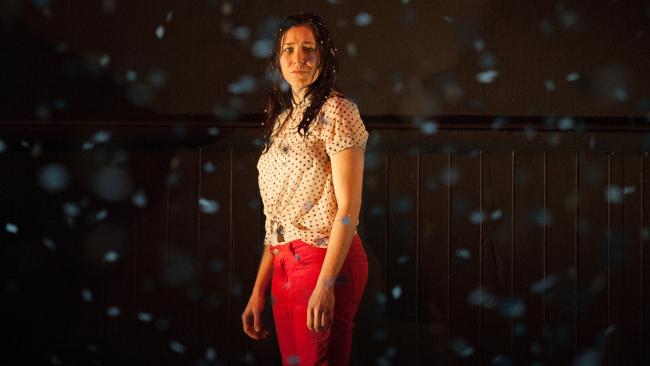
Instead, two siblings Tom and Sasha (Tom Conroy and Sarah Ogden), appear and they are lost in a park. They argue and Tom disappears leaving Sasha alone. From there, she meets a variety of characters, and it’s up to us to determine if they are real or imaginary. It’s like Alice has stepped into Wonderland again but the darkness dial has been turned up a few notches. It’s a world where time seems to be ignored: watches are broken and people are running late.

Both leads are strong and show their versatility with a demanding script that could easily have resulted in them getting too caught up in the complexities and rushing through or losing their momentum, but they stay true to their characters and the themes of the show. The supporting cast of Marcus McKenzie and Brian Lipson further solidify the remarkable acting in night maybe.

Kit Brookman’s script is like a cloud of black smoke which slowly envelops us as it deals with issues of love, being alone and abandonment. The lines are delivered fast, which is a nice contrast to the minimal action happening on stage. This is a wordy play with lots to think about so it’s good not to be too overwhelmed especially with the technical styling.

Mel Page’s set creation is one of the simplest yet most effective ones I have seen for some time: there is real grass laid out covering the stage, with three leafless trees hidden in the mist and darkness. Richard Vabre’s lighting design and his use of shadows, darkness and depth suggests that the park we find ourselves in extends for eternity, adding a supernatural overtone to the show. I particularly enjoyed the effectiveness of characters coming out from within the shadows and disappearing back into them.

However, it was James Brown’s haunting music and sound that really and aptly struck a chord with me. From eerie soundtrack moments to a lone piano key being played – there is reason and purpose to everything he creates. Without giving too much away, one particular scene had me almost gasping for breath and provoked a very strong visual response from me too.

It is rare when all the elements of a show come together in such a perfect way to create a special piece of theatre. night maybe is a glorious example of this.  

Venue: Theatreworks, 14 Acland St, St Kilda

Season: Until 1 September | Tues- Sat 8:00pm, Sun 5:00pm

Tickets: $30 Full | $25 Conc

Bookings: 9534 3388 or http://www.theatreworks.org.au

REVIEW: Patricia Cornelius’ SAVAGES

Seething, unsettling – and superb

By Scarlett Harris

This may make for a boring review of Patricia Cornelius’ Savages at fortyfive downstairs as I really couldn’t fault it. The acting, writing, lighting, sound and blocking were flawless, not to mention the grave subject matter that left the audience truly affected.

Savages Photo Credit Sarah Walker

Savages centres around four late-thirty-something/early-forty-something men on the boys’ trip of a lifetime aboard a cruise. George, Runt, Rabbit and Craze discuss their failed relationships, unfulfilling jobs, fragmented childhoods and for those with kids, their struggles raising them. There’s a lot that’s implied but not outright said: Runt was beaten by his father; George is seeing Craze’s ex-wife; not to mention the ambiguous and utterly frightening ending.

Through the choreography, we see the impact that competition among mates can have: comparing scars, running races, the exhilaration of brawling. Savages explores themes of modern masculinity, fatherhood, love, sex and violence, tapping into notions of pack mentality, the phenomenon of “nice guys”, domestic and intimate partner abuse and drug-facilitated date rape.

Said intimations of date rape occur in the cruise nightclub, which is created with only the use of thumping bass and strobe lights by sound engineer Kelly Ryall and lighting technician Andy Turner, respectively, evoking the breathless, menacing machismo that the club experience can so often be.

The acting by Lyall Brooks (George), Luke Elliot (Runt), James O’Connell (Rabbit) and Mark Tregonning (Craze) was exceptional, and the juxtapositioning of the redeeming qualities of “nice guys” – loving their mothers, kids, women in general – with the misogynistic underbelly these characters possess is a truly haunting representation of modern manhood that, for some men, isn’t necessarily inaccurate.

The use of the slanted, exposed floorboards to construct the stage really conjures not only the cruise ship (not to mention the continued use of water metaphors – drowning, rebirth) but the hierarchy of mateship, with Runt on the bottom and (arguably) Craze at the helm.

One thing I did find a bit disconcerting at first was the “highly rhythmic, poetic” dialogue, and the only actor whose portrayal I couldn’t 100% connect with was O’Connell’s, but I put that down to nerves, perhaps.

At once a funny, sad, pitiful, scary and altogether realistic portrayal of modern masculinity – and the inherent “savage” misogyny that sometimes goes with it – in all its glory.

* contains some nudity and disturbing content, and employs the use of strobe lights.

Savages is on at fortyfive downstairs until 8th September Tuesday to Friday at 7:30pm, Saturdays at 5pm and 8pm and Sundays at 5pm. Tickets $45 full, $37.50 concession.

http://www.fortyfivedownstairs.com/events/savages-written-by-patricia-cornelius-directed-by-susie-dee/

REVIEW: Candlelight Productions Presents OUTSIDE THE BOX

Real tales of home, heart and hope

By Myron My

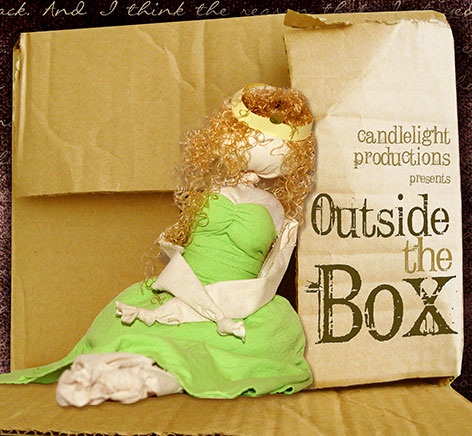
Boxes. When we’re children, we use them to make cubby houses. When we got older, we used them for moving. Sadly, some of us use them as homes when life throws us a curveball. Candlelight Productions in partnership with Servants Community Housing have worked together to bring to life stories relating to the idea of home and what it means for different people.

Outside the Box

A lot of time and effort has gone into this show: from the simple yet highly effective set design, to the marketing and packaging of the program guide and the accompanying book which inspired the stories. In 2010, two Scotch College students, Anthony Antoniadis and Jeremy Kong, spent time getting to know the residents of Servants Community Housing and published Anthology: Stories of respect, dignity and hope. These stories help create a greater context in which to appreciate Outside The Box and really expand upon the notion of home and explore how it’s something we all yearn after.

The five actors – Adam Balales, Tarah Carey, Harlene Hercules, Ryan A. Murphy and Aaron Steele – have previously met with these residents and through various forms and styles, relay their stories to us. It takes a certain level of skill and sensitivity to be able to tell these stories with integrity and truth and the whole cast are exemplary in this. There are twenty acts/stories told in Outside The Box and the majority of them are captivating and warrant your attention, however I do feel some of them were a little too abstract to connect with.

Despite some stories working better than others, the actors’ commitment does not waver. I particularly enjoyed Murphy’s characterizations of Eddie and George and also Balale’s story of Jack. The latter was treated beautifully with flashbacks to his younger years, and the short yet poignant story of a soldier returning home was also quite touching.

On the surface, this group-devised performance is quite an enjoyable show but upon reflection it made me appreciate how fortunate and lucky I am to have a home and to not take for granted something as perceivably simple as a roof over my head. Outside the Box is an intense theatrical performance that helps you put your priorities in order.

Venue: Chapel Off Chapel, 12 Little Chapel St, Prahran
Season: Until 31 August | Thurs-Sat 8:00pm, Sun 5:00pm
Tickets: $30 Full | $25 Conc
Bookings: www.chapeloffchapel.com.au or 8290 7000

REVIEW: George Tabori’s MEIN KAMPF

Bold and confronting comedy

By Myron My

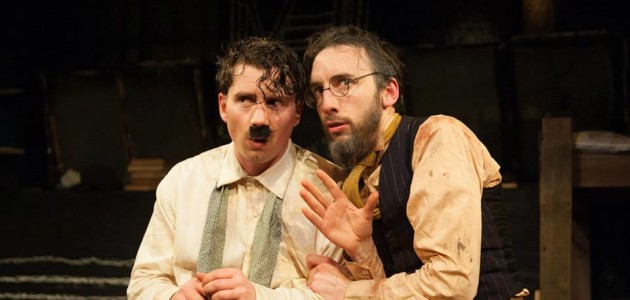
The farce Mein Kampf revolves around Hitler’s younger years as a man who is struggling to become an artist (and to secretly take over the world – including New Zealand). In Vienna, he meets a well-educated, bible selling Jewish man Shlomo Herzl, and through this chance encounter, chaos ensues. Written in 1987 by George Tabori – himself a survivor of the holocaust – it is somewhat autobiographical yet it is also a complete fabrication, and knowing this really sets the mood quite fittingly for Mein Kampf.

Mein Kampf

The three leads; Mark Wilson (Shlomo), Glenn van Oosterom (Hitler) and Mark Bonanno (Lobkowitz) are just phenomenal. Their comedy timing is impeccable and their superb facial expressions and physicality are a testament to the skills and dedication they have brought to the roles. The three of them ensure that every line they deliver is with utter conviction. Wilson is on stage for the whole show – nearly 2 hours – and there is not one scene where he wavers or his energy lowers in this demanding role. Van Oosterom is most impressive as the man with the short and fiery temper, especially when he threw himself into one of his many angry speech-giving tirades the vehemence of which would turn the character’s face red from frustration.

The humour in Mein Kampf is used not to poke fun at the atrocities that occurred under Hitler’s regime but behind the entertainment, we are reminded of the tragedy. Shlomo attempts to persuade Hitler to get into politics and later Hitler comments he will purchase Shlomo a gift: an oven, so he can keep warm.  Tabori famously wants us to recognise that the holocaust and events surrounding it “are taboos that must be broken or they will continue to choke us”. The writing is sharp and witty, and despite its plentiful laughs there are poignant moments in the script with dark forebodings of what’s to come. There are a couple of times where the momentum did get lost ever so slightly, including when Frau Death (Uschi Felix) comes to visit and a long scene between Shlomo and his love Gretchen (Stephania Pountney).

I really enjoyed Mein Kampf as I am a firm believer in the idea of there being comic value in everything and through humour we can be educated and informed. The cast were flawless and the laughs kept coming. However – and this is where I feel quite conflicted – there were about ten minutes where I was left morally dubious and extremely uncomfortable. I’m a vegetarian and I don’t impose this view on others but in one scene, a dead chicken is brought on stage and hacked up and drained of its blood with various parts being ripped out, all  by Himmlisch, a young Himmler (Samuel Macdonald). It may have been dead, but I was still shocked and disgusted at seeing this and it really dampened my whole experience of this otherwise impressive performance. I feel that as a theatre production, there should be other creative and more sophisticated ways of conveying these visuals and ideas.

Nonetheless, director Beng Oh has done a great job in putting this production together and the importance of having Mein Kampf performed is highlighted with what has been occurring in the world recently. Even after all these years it is very easy for society to discriminate and be hateful towards people because of perceived differences. The absurdity of Tabori’s play succeeds in insisting that we don’t forget, and more importantly, don’t allow anything like those events to happen again.

Venue: La Mama Theatre, 205 Faraday Street Carlton
Season: Until 25 August | Wed-Sat 8:30pm, Sun 6:30pm
Tickets: $25 Full | $15 Conc
Bookings: http://lamama.com.au or 9347 6142

REVIEW: Melbourne Writers’ Theatre Presents HOW TO SURVIVE AN EARTHQUAKE

Traumatic tale powerfully realised

By Darcy Whitsed

How To Survive An Earthquake could easily be named How To Affect Your Audience With An Incredibly Sad And Harrowing Narrative. It is written by Christine Croyden and details the relationship of two estranged sisters, Stephanie (Jessica Gerger) and Jane (Sarah Plummer) after the death of their mother.

How to Survive an Earthquake

The difference in the sisters’ lives and attitudes is immediately apparent, with Stephanie returning from her duties as a UN peacekeeper to be met by Jane, a Melbournian who has given up the past few years of her life to be a full-time carer for their mother.

The actors relish in the challenge of the show, being required to transform characters, ages and places within split seconds and they achieve this with impressive ease. I did however feel as though the emotional range of the characters was only from sad to sadder to distraught. This is likely due to the content of the play but I personally would have loved to have seen some upbeat moments to contrast with and heighten the tragic ones, especially during the scenes when the sisters where reflecting nostalgically.

How To Survive An Earthquake’s director Glenda Linscott flexes her directorial muscle in the realisation of the story, utilizing lots of non-naturalistic theatrical elements and conventions.  The narrative jumps back and forth in time, displaying the sisters’ often painful memories. These transitions are effectively marked with a repeated line or moment that has a visible effect on the characters. This is extremely effective in segueing between scenes and also showing how the memories still affect the characters emotionally and physically.

The technical elements of How To Survive An Earthquake are also superbly integrated into the action. With a combination of live and pre-recorded music composed for the show, the soundscape is gorgeous. Sound designers Dom Buckham and Millie O’Sullivan both perform live from behind the audience: an extremely effective addition, with drums, guitars and other instruments being used with impeccable timing to enhance the dramatic moments of the show and cater perfectly to the audience.

The lighting designed by Jason Bouvaird is also stunning. It utilizes symbolic colours and gobo effects perfectly to mark varying time frames, flashbacks and memories throughout the story’s disjointed narrative.

Overall, this production of How To Survive An Earthquake is a technically well-rounded piece of theatre that tackles how emotional pain can stand between redemption – and forgiveness.

Location: La Mama Courthouse, 349 Drummond Street Carlton

Dates: Aug 14 to Sept 1, Wed to Sat 8pm, Sun 5pm.

Tickets: $30/conc $20.

Bookings: 03 9347 6948 or lamama.com.au

REVIEW: Fernando Arrabal’s THE TWO EXECUTIONERS

Parodoxes of humanity and morality brought to light

By Myron My

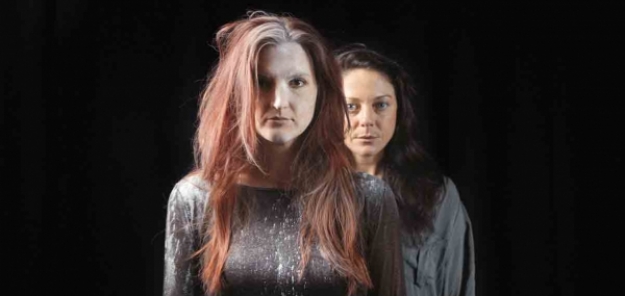
Directed by Mammad Aidani, The Two Executioners deals with the repercussions of a woman who reports her husband to the authorities for an unnamed crime. As he is tortured upstairs, the woman and her two sons argue over their guilt and betrayal.

There are many questions raised throughout the play: why has Francoise reported her husband? What crime has Jean committed? How has this woman created such a strong hold over her sons?

The-Two-Executioners

None of these are fully answered and we are left to our own creative devices to ponder and resolve. The lighting also plays a part in creating this intense and ambiguous atmosphere with a lot of shadows being deliberately cast on the actors. The stage is never fully lit with only small pockets given light at a time, thus literally keeping us in the dark as to what is truly happening and who is in control. Another effective direction of Aidani’s was to have the torture of Jean occur off stage – with the audience able to hear his screams of pain our imaginations are forced to create the horror.

Wahibe Moussa is exceptional as Francoise. She initially comes across as a desperate woman and a victim, but slowly crosses the line to manipulator and betrayer. It’s not always clear which way she will go and as Moussa plays the role full of subtleties, you are left guessing even after the play has ended as to whether Francoise was indeed a good person with high morals – or the true villain of this story.

Clearly Francoise is the protagonist of this tale, but I would have liked to see more character exploration with her sons, Maurice and Benoit (Shahin Shafaei and Osamah Sami). Maurice has a lot of anger but also displays conflicting emotions towards his mother which needed justification, and would have been great to see Shafaei able to deal with these contradictions in the narrative. Sami may have had a few opening night nerves but quickly found his way and established his character as Francoise’s ‘favourite’ son, but I felt the ensuing tension between him and his brother needed to be developed further.

There are times when the story does flounder and get repetitive in its dialogue which can sometimes take you out of the moment and undercut the drama. However, what draws you back in is the beautiful and poetic language used throughout the play, which is not surprising given playwright Fernando Arrabal‘s background in poetry.

Overall, The Two Executioners has some strong performances, some lovely writing, and brings to surface many dark questions about good and evil and right and wrong that will keep you thinking long after the lights come down.

Venue: La Mama Theatre, 205 Faraday Street Carlton

Season: Until 25 August | Wed-Sat 6:30pm, Sun 4:30pm

Tickets: $25 Full | $15 Conc

Bookings: http://lamama.com.au or 9347 6142

REVIEW: 2013 Australian Tour of HOT SHOE SHUFFLE

Tap into this!

By Christine Moffat

The story of Hot Shoe Shuffle, in essence, is of the seven ‘Tap Brothers’ who are called to New York for the reading of their father’s will and to meet April, their long-lost sister.  To gain their inheritance, they must recreate their father’s famous act ‘The Hot Shoe Shuffle’, and it must include the dance-challenged April.

Hot Shoe Shuffle

Hot Shoe Shuffle is an original Australian show, but created in the form of an old-time movie musical, and the current season at Her Majesty’s Theatre is the 21st anniversary production.  Despite the show’s classic format, it is hard to believe it was written two decades ago, as it has all the vibrancy and energy of a debut season.

The first half of the show is like tutti-frutti icecream: a brightly coloured sugar-rush of comedy, condensed plot twists, slapstick humour, great music and dynamic tap numbers.  The second half, mainly the famous review act ‘The Hot Show Shuffle’, is like champagne sorbet.  It is elegant, ritzy, and jam-packed with dance routines reminiscent of a black-and-white Fred Astaire film.

The score is a who’s who of timeless composers, including songs from Duke Ellington, Cab Calloway, Ira Gershwin and Peter Allen.  The costumes for this production by Janet E Hine are a master class in what wonderful costuming can bring to a show, contributing to creating and developing the characters before our eyes.  And the choreography (David Atkins, Dein Perry, Drew Anthony) showcases the versatility of tap, including routines that were romantic, drop-dead glamorous and a sensational drunken dance by the brothers.

Jaz Flowers as April is reminiscent of a young Lucille Ball, using comedy, sex appeal and her knockout voice to full advantage.  Bobby Fox as Spring is surprisingly funny, vulnerable, almost accidentally charming, and refreshingly different to a stereotypical ‘leading man’.

David Atkins (also producer and director) makes a classy transition from his role as Spring in original production to wise mentor/slave-driver Max in this run, and yes, he can definitely still dance!  All of the cast are excellent dancers and their dance solos were fantastic, but stand-out performances includded Morgan Junor-Larwood as the gung-ho Slap and Mason Schaube as the adorable, but a bit slow on the uptake Slide.

The level of entertainment and fun in this show is phenomenal.  At the preview the cast received a well-deserved standing ovation.  A word of caution though – The Hot Shoe Shuffle is infectious: if you see the show, you may feel compelled to take tap lessons…

Melbourne dates: Aug 12 – Sept 8

Show times: Tues 1pm/ Wed 1pm & 8pm/ Thurs & Fri 8pm/ Sat 2pm & 8pm/ Sun 3pm

Venue: Her Majesty’s Theatre, 219 Exhibition St

Tickets: Premium from $110*/ A Reserve from $89*/ Groups 10+ from $69*/ Family from $276*/ Schools/Dance Schools groups 10+ $50* *(*booking fees apply)

Bookings: http://premier.ticketek.com.au/shows/show.aspx?sh=HOTSHOE13

Official website: www.hotshoeshuffle.com

REVIEW: Mockingbird Theatre Presents EQUUS

Intensely moving

By Vikki Doig

A mere 40 years after it was written, Equus still packs a powerful punch. Originally penned in 1973, Peter Shaffer‘s play follows the case of Alan Strang, a 17 year-old boy who is taken into a mental health institution to be treated after his pathological religious fascination with horses causes him to commit an act of unspeakable violence. Shaffer was inspired to write the play after hearing a story about a boy blinding six horses, as a means of trying to make such an act comprehensible.

Equus - Scott Middleton

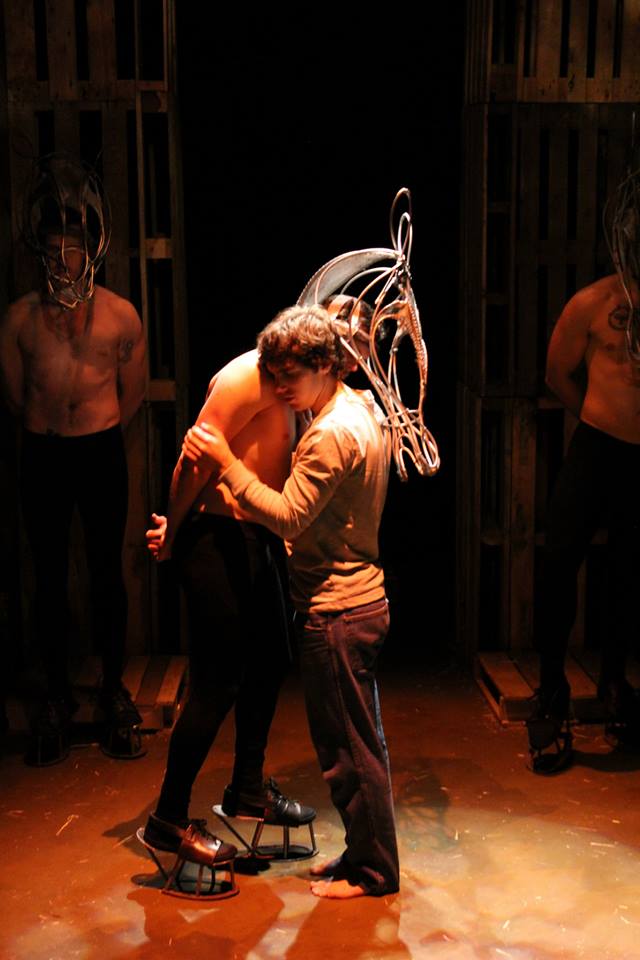
The format of the play is a kind of medical whodunit, with the audience acting as witnesses to the unfolding story and development of trust between the two main characters (which, my partner pointed out, was akin to breaking-in a horse). Equus is Mockingbird Theatre‘s current production, and upon entering director Chris Baldock’s eerie world, which is somewhere between a stable and a temple, I was immediately struck by the wonderful overall design, the image of the horseheads hanging on the wall like trophies and the strong, almost tribal, presence of the horse-chorus.

We meet Dr. Martin Dysart, portrayed by a wonderfully well-cast Jeremy Kewley, who expresses his frustration at his profession and questions his own purpose. After a bit of a shaky start to the show (I found myself willing him to slow down his dialogue) his commitment to the role was absolute. Scott Middleton portrayed a beautifully vulnerable and fragile Alan Strang – menacing at first, but more human as the play went on – and the growing relationship between these two characters was a real strength of the show.

Other characters joined and left the action seamlessly, creating a very immediate space in which the motivations of the young boy, his relationship with his parents (played exceptionally well and, at times, comically, by Soren Jensen and Amanda McKay) and his eventual violent contact with the horses could be played out and reflected upon. The horse chorus, all-seeing and all-knowing, mirrored Alan’s emotion in their every movement and maintained strength and focus from the minute the audience entered the space (it was a nice touch to bring them out last at the curtain call!). Particular mention should go to Maggie Chrétien, whose portrayal of the sassy Jill Mason was, although only having a small amount of stage time, one of the strongest performances of the night.

Chris Baldock has created a production faithful to Shaffer’s original script and clearly has great passion for the words and concepts explored in the text. However, having seen an extremely powerful contemporised interpretation of the play in the UK a few years back, I personally felt detached from this version which seemed to historicise the key themes of reason versus passion and rehabilitation versus medication rather than present them as significant and culturally relevant questions which still resonate with contemporary audiences. For this reason and for me, I felt that the production didn’t quite have the power and impact it could have and this was compounded by the questionable English accents from some of the cast.

Despite this, I certainly enjoyed the show and was left with a poignant comment from Dysart running through my head: “Passion can only be destroyed by doctors. It cannot be created”, for working with children in education and the arts always makes this play and its conflict between (seemingly) necessary medication and a natural capacity for passion and emotion profoundly affecting. Because once that passion is gone, can we ever really get it back?

VENUE: Mechanics Institute Performing Arts Centre, cnr Glenlyon & Sydney Rds, Brunswick

DATES: 3rd – 17th Aug

TIME: Tue 6th – Sat 10th 8pm, Wed 14th – Sat 17th 8pm

TICKETS: $30 Full/ $25 Con or Groups 10+/ $20 Tue 6th

BOOKINGS: www.trybooking.com/40833 or bookings@mockingbirdtheatre.com.au

REVIEW: Blue Cow Theatre Presents ART

We know what we like

By Myron My

How many times do we see a movie with a friend and we love it and they hate it? Or we go to a museum and are taken in by a piece of art but our friend thinks it’s rubbish. Generally we put it down to a simple difference of opinion, but not in Art.

Art

Produced by Blue Cow Theatre, Art is a French language play by Yasmina Reza and translated here by Christopher Hampton, and aesthetic conflict is at the heart of this comic yet dramatic play.

Serge (Jeff Michel) has bought a painting: a very expensive painting. A painting that is completely white. He loves it but one of his best friends Marc (Robert Jarman) thinks it is awful– to put it mildly – and can’t move on from this. Yvan (John Xintavelonis) is stuck in the middle of this argument trying to pacify the two, but eventually gets embroiled in their fight.

Michel, Jarman and Xintavelonis are perfectly cast in their roles. Their rapport and the strength with which they take on their respective characters was imperative for the success of a play such as this, as it relies so heavily on an emotional response from the audience.

I was particularly impressed with Xintavelonis’ nuanced performance as Yvan, especially in the excellent scene when he’s explaining why he is late for dinner.

The play uses a mixture of monologues, duologues and then ultimately a group scene to tell the story. As an audience member, your state of mind is constantly fluctuating between feeling like an uninvited voyeur to being made the privileged listener in a confessional.

This unease keeps you intensely engaged and wondering what is going to be revealed next and how the characters’ personal thoughts will compare and contrast to their conversations with each other .

Art looks at the fragility of friendship and how vulnerable we can become by letting people in. With a lovely blend of comedy and drama, this play explores the value of friendship, through the issues of art, personal opinion and aesthetic appeal and the importance we place on them.

This production was performed at GasWorks Arts Park on August 1st to 3rd 2013.