Film Review: Night Shift

A multi-dimensional exploration of the human condition

By Ross Larkin

Few nations are as adept at storytelling as the French, who consistently unearth the interesting in the everyday and find meaning in the unexpected. 

Night Shift (also known as Police) is one such example. At first glance, perhaps an unusual crime drama. On further inspection, however, a multi-dimensional exploration of the human condition, with virtually no reliance on the likes of gunfights, murder or explosions, often synonymous with such a genre.

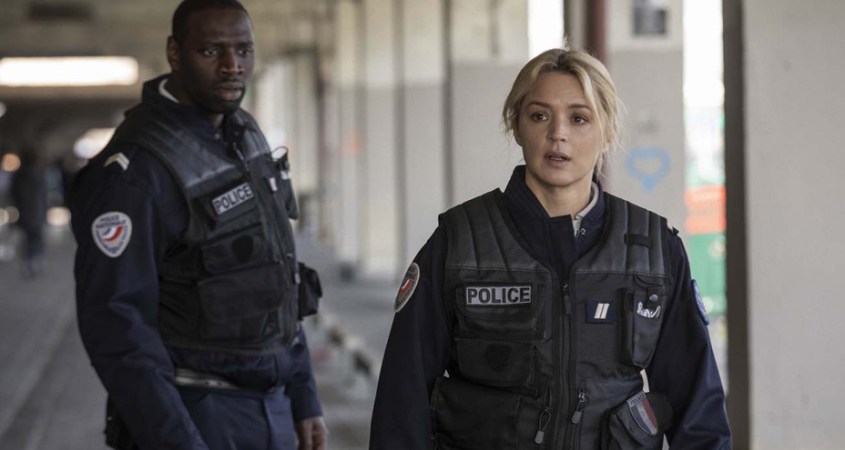
Three police officers are saddled with transporting an illegal Tajikistani immigrant to the airport for deportation. En route, however, they learn of the man’s past and the conditions he was initially fleeing, and find themselves conflicted as to whether sending him back is morally acceptable. 

As one might expect from French arthouse tropes, the foundation is thoroughly established with much character development and emotional examination well before the arc of the story takes shape.

Knowing our three officers prior to their predicament, and understanding how and why they have such varying viewpoints on the subject become essential aspects to the success of the tension and conflict, as they come to loggerheads over the immigrant’s fate. 

Director Anne Fontaine avoids the temptation of excessive sentimentality and rather, allows her viewers to consider all sides and ultimately share in the conflicted perspectives. Even by the end, one isn’t quite sure how to feel, or what the full truth entailed, which are arguably the key ingredients to a satisfying and thought-provoking cinematic experience. 

Virginie Efira, Omar Sy and Gregory Gadebois play the three starkly different cops, combining subtle angst amidst moments of high-pressure strain with the utmost realism and poise. Likewise, Payman Maadi as the immigrant, conveys a world of emotion in very few words, only adding to the escalating tension. 

As one unexpected moment leads to the next, and no outcome seems off the table, Night Shift will undoubtedly have viewers in intense anticipation of the conclusion, the stakes all the higher due its naturalistic approach, believable context and very relevant and significant subject matter.

Night Shift is screening as part of the Alliance Francaise French Film Festival at a variety of cinemas across Melbourne until the 31st of March. For tickets and session times go here: https://www.affrenchfilmfestival.org/ 

Photo courtesy of Studiocanal GmbH/Thibault Grabherr

Film Review: Then Came You

A delightful piece of escapism

By Narelle Wood

Then Came You, written by Kathy Lee Gifford and directed by Adriana Trigiani, is a slow-burn romance, set amongst the spectacular scenery of Scotland.

Howard (Craig Ferguson) is the owner of a Scottish Inn that has been in his family for generations. Annabelle (Kathy Lee Gifford) is a bereaved American, embarking on a world tour in the wake of her husband’s passing. From the moment they meet the chemistry and the inevitable clash of cultures, tastes and dreams are all evident. Howard is determined to keep the Inn working and part of his family, while Annabelle is ready to find new dreams, lamenting those dreams she once had and abandoned in pursuit of a different kind of life. Gavin (Ford Kiernan), Howard’s best friend, cuts a clownish figure but plays the wise truth telling confidant to both Howard and Annabelle, especially when it starts to become clear that Howard’s and Annabelle’s bickering is symptomatic of an increasing affection for each other.

Gifford’s take on a later in life romance is refreshing. It’s understated, and while the banter is full of double entendre and miscommunication, there is a maturity and wisdom that is seldom seen in films of this genre. Even with the inclusion of Clare (Elizabeth Hurley) there are clear points of conflict and the two women are very different, but Gifford does not trot out the tired trope of two women fighting over of a man, and finds another resolution. The direction by Trigiani matches the pace of the storyline beautifully, except for one moment about three quarters the way through the film. I’m sure this moment was supposed to be a homage to a past era or film, but it was one that was lost on me and I found that it only managed to disrupt what until that point felt like a gentle walk through the Scottish countryside with a couple of friends who happen to be falling in love.

While there is a lot understated about Then Came You, the scenery is certainly not; the green sweeping mountains, the Scottish Lochs, and the small Scottish roads lined with the sheep make this film worth watching even if you’re not a fan of love stories. It’s a delightful piece of escapism, that’s heart-warming and calming without being too overly sentimental.

In cinemas now.

Film Review: Cosmic Sin

A sci-fi film with a social conscience

By Nicola Sum

We are living in a time of protest. A level of activism, essential to our sense of community, continues to play out around the world. What of colonization? What of intention? Too much drama? Welcome to the grand scale of Cosmic Sin; a sci-fi meets social conscience film, filmed in 2020 against the backdrop of the global pandemic.

Director, Edward Drake, explores ideas of civilizations, cultures and erasures through a human versus aliens scenario. In 2524, mining companies claim planets, a global alliance looks for first contact (FC incidents) and back on earth we still drive SUVs on motorways. Sorry!

An FC incident on a faraway planet leads General Ryle (Frank Grillo) to gather his specialist team, headed by Ford (Bruce Willis), Goss (Perrey Reeves) and Tieve (Costas Mandylor). As the team engage the FC survivors, it becomes apparent that the aliens have plans for an invasion. Goss quotes her own thesis, “To kill a culture is to kill the very idea of creation. It is a sin against the cosmos”. Ergo- operation Cosmic Sin is launched, or as Ford puts it “Better them than us”.

The storyline is a mix of some poetic scripting, some intimate chatter across the main characters, and many scientific references to all things quantum – displacement, bomb, leap and so forth. Much kitting out later (courtesy of Hex Morris for his Icarus suits), and with some cool special effects (supervised by Ian Duncan), the rogue team go to war on the remote planet. The rest is for watching with a warning from the parasitic aliens about erasure of our species.

Ford leads with the confidence of his past experience, while Braxton, played by Brandon Thomas Lee, is the counter-balance of the promising young soldier. There are moments of mood shifting humour in the character of Dash (Corey Large, who also co-wrote this with Drake) and much serious-faced decision-making from Ryle.

Watch this for sci-fi entertainment. Watch it for the drama of war. Watch it because it is aiming to hold a mirror to our discourses of kingdoms, colonies and liberties. Not necessarily all in that order or that heavy a fashion, but the film is trying to say something, and it’s worth a listen.

In cinemas now.

Review: The Winter’s Tale

A Shakespearean dramedy with a killer soundtrack and quality performances.

By Narelle Wood

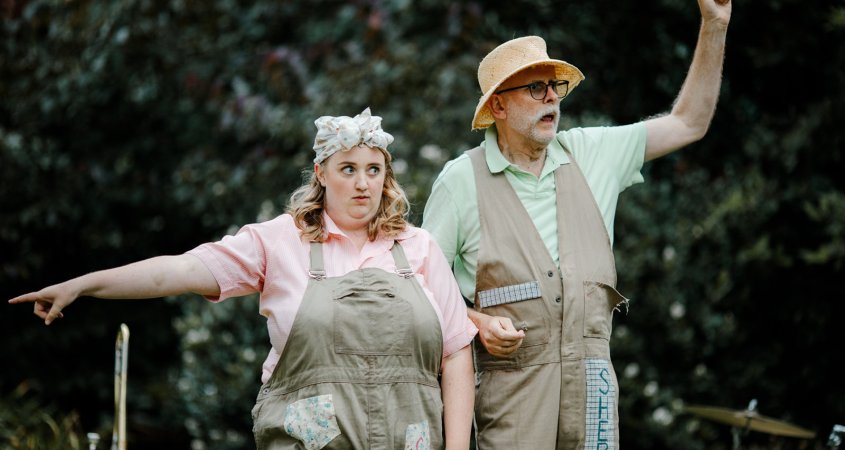
Set amongst the greenery of Central Park, the Melbourne Shakespeare Company presents its interpretation of The Winter’s Tale.

The tale begins, as many Shakespearean tragedies do, with a husband – in this case Leontes (David Meadows) – accusing his pregnant wife Hermione (Melanie Gleeson) – of infidelity. Leontes decides to kill Polixenes (Anton Berezin), the apparent object of Hermoine’s affections but Camillo (Bridget Sweeny) warns Polixenes, and he Camillo escape to Bohemia. Leontes takes this as confirmation of Hermione’s treachery. Struck with grief Leontes’ son dies, then Hermione dies, and Leontes commands that Antigonus (Caleb Whittaker) burn the newly born child. Cleomenes (Adam Canny) and Dion (Jessica Barton) arrive, rebuke Leontes, declaring his accusations incorrect. Meanwhile, Antigonus, who has a conscience, hides the child in Bohemia, before exiting being pursued by bear, never to be seen again. Time passes and the tone shifts to something more comedic and more lively. There are people in disguise, secret plots for marriage, and the workings of the manipulative thief Autolycus (also played by Whittaker). All parties are reunited, and, as is the case for many Shakespearean plays – for those who survive, all is forgiven.

The performances are great, from Emma Austin’s initial jovial interactions with the crowd all the way through to the final bow. Tref Gare is hilarious as the shepherd and May Jasper brings a whole lot of sass to her performance as Time. The vocals, predominantly performed by Jasper, Canny and Barton are great, and Erin McIntosh’s portrayal of Perdita has just the right amount of sweet naivety you would expect. In fact, the show is extremely well cast; Florizel (Jackson Peele) is charming but not smarmy and Paulina (Elizabeth Slattery) is in equal parts devout to Leontes and to Hermione. Andrew Dang rounds out the cast as Lord Hampton, and like many of the other actors, seamlessly transitions between a few different parts and into the band when necessary.

Melbourne Shakespeare Company have done a remarkable job of hitting the key points of what can be a rather long and convoluted narrative. There are parts of the storyline that are a little uncomfortable in modern times; Leontes’ power to condemn people to death based on falsehoods he created and puts too much faith in, rather than actually listening to Hermione speaks not only to the time the play was written, but how hard it still can be to question those in power today. The King’s mostly unchecked power aside, the company finds many a comedic moment to lighten the mood, helped by ‘Time’ – the singing trio – and some song and dance numbers that set tone and provide insight into character. Artistic Director Jennifer Sarah Dean has included other details, such as character names on costumes, small changes in set and character accents, to help the audience follow the storyline and keep track of who’s dead, as well as the passage of time.

This is a fun and charming production, and a good introduction for anyone not familiar with or unsure about Shakespeare. It won’t suit the tastes of any uptight traditionalists with the musical numbers and some witty modern interludes amongst the dialogue, but I thought it was a delightful way to spend some time on a sunny Saturday afternoon. The social distancing has been extremely well thought through and the outdoor location makes this a perfect re-introduction to theatre. Pack a picnic, add some sunscreen for the matinees and a rain jacket no matter what, because well it is Melbourne, and sit back and enjoy watching a Shakespearean dramedy with a killer soundtrack and quality performances.

Venue: Central Park, Malvern

Season: Until the 20th March

Tickets: $20-$30

Bookings: https://www.eventbrite.com.au/e/melbourne-shakespeare-company-presents-the-winters-tale-tickets-141577047761

Film review: Wrong Turn

Hipsters embroiled in hiking horror for not heeding warning

By Margaret Wieringa

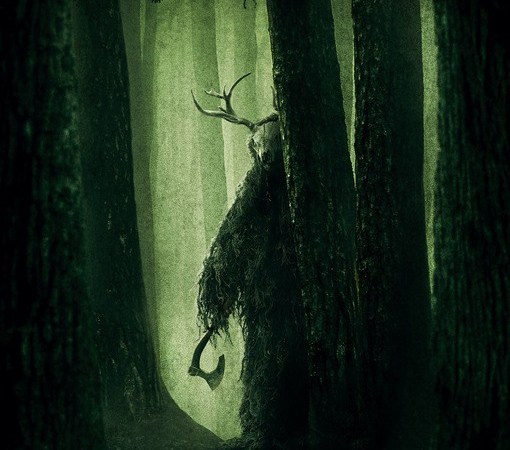
Wrong Turn, directed by Mike P. Nelson, follows the adventures of a group of city-dwelling hipsters, heading out to hike the Appalachian Trail. As they embark on their adventure they are warned by the unfriendly small-townsfolk to stick to the marked path. Yet seemingly immediately, they deviate to visit a Civil War site and the horrors start. When you leave the road, you end up in the territory of The Foundation, a strange community who live far removed from modern society. And when you meet The Foundation, you don’t leave; alive or dead.

The Foundation members dress in camouflage – not the army pattern type, but covered head to toe in greenery topped with animal skulls. This is their home, and the audience is challenged about whether the barbaric snares and traps set up to protect their land from strangers are justified. Certainly, the interloping hikers are set up to be annoying and privileged, the opposite of the earthy, hard-living Foundation folks. It’s hard to be sympathetic to the plight of rich kids searching for an “authentic” experience, though it’s also hard to fall on the side of a group who have unwritten, unspoken rules and barriers and an inflexible method for justice. I struggled to side with either, which made me, at times, less invested in the outcome than perhaps I should have been.

I’m not a great horror film watcher; I’m really far too much of scaredy-cat. Right from the start, the soundtrack had an intermittent, disturbing drone which had me on edge. As the sequences became choppier, the discordant music and speedy camera movements nearly did me in. Add to that the intense, wide-eyed fearful stares of Charlotte Vega and Adain Bradley (playing Jen’s boyfriend, Darius), and the sudden, sharp and extremely graphic action sequences, and I was left with a horror film which I actually thoroughly enjoyed.

My recommendation is that you don’t watch Wrong Turn immediately before going camping. That was probably not my smartest decision. I can only hope I make it through without discovering a strange, cult-like group of folks living on the outskirts of Melbourne, though the film has given me some handy hints on how I might survive.

Wrong Turn is currently screening in cinemas across Australia.

Review: Come From Away

Moments of levity and uplifting human connection set against a backdrop of tragedy

By Narelle Wood

With the return to live theatre also comes the return of Come From Away. Directed by Christopher Ashley, the production captures all the fear, joy, heart-break, break-ups and friendships of spending time in an unfamiliar place, plagued by the uncertainty and fear watching the aftermath of a terrorist attack.

The story begins in the town of Gander where the townsfolk are going about their business like any other day. There are people chatting in the local diner, a reporter starting her first day for the local TV station, teachers negotiating the first day back at school, and the town’s Mayor negotiating with the local bus drivers who are on strike. But it isn’t any ordinary day; it’s the morning of September 11th 2001. With an unprecedented number of planes being diverted to Gander airport, the townspeople rally together to work out how a small town in Newfoundland, in the far reaches of Canada, can accommodate 7000 guests.

Over the next 100 minutes we’re introduced to a range characters, from the town and the planes, whose stories interweave and overlap. There is a couple whose relationship is becoming increasingly strained, while new relationships and friendships are steadily forging. Some characters are confronted by racial stereotypes, while others are facing language barriers, or trying to reconcile the destruction caused by the terror attacks with the city that they love. Buelah (Emma Powell) jumps to action at the local school organising everything from spaces to sleep, to food, telephones and televisions, as well as offering emotional support to a number of the plane people such as Hannah (Sharriese Hamilton) whose son, a New York fire fighter, is missing. Beverley (Zoe Gertz), Captain of one of the planes, shares her concerned for her passengers, her plane, her colleagues, her family, and the approaching storm that may keep them grounded for even longer than expected.

It’s a true ensemble piece, each character stands out but doesn’t over shadow the others. It’s hard not to adore Bonnie’s (Kellie Rode) passion to care for the animals trapped on the planes or Bob’s (Kolby Kindle) gradual acceptance of Gander and the surrounding towns as a place he can feel safe. Each actor plays multiple characters, seamlessly transiting from one to another, and it is a testament to the quality of the book (by Irene Sankoff and David Hein), direction and performances that no one story is lost along the way. The effortless transformations are complimented by the simple staging (Beowulf Boritt) which quickly transforms from planes to buses, to a diner, bar, school cafeteria, a cargo hold of the plane, and back again.

It’s really hard to fathom how a story, set against so much tragedy, can capture the fear, sadness and terror of September 11th, whilst finding moments of levity and uplifting human connection. But Come From Away does exactly that, helped along in no small way by a powerful and gutsy soundtrack (music and lyrics by Irene Sankoff and David Hein, musical direction by Luke Hunter).

Come From Away made me both laugh and cry, sometimes at the same time. It is quite possibly one of the best shows of all time, and it’s just as good the second and third time as it was the first.

Come From Away is on now until 21st March at the Comedy Theatre. Tickets for the Melbourne performance are available via the link below.

Review: Jack Frost: The Musical

A timely fairy-esque tale

By Bradley Storer

Despite the industry wide instability currently decimating the Australian theatre scene, opening night of new Australian musical Jack Frost luckily proceeded. A fairy-esque tale that follows the journey of a young girl travelling both backwards into her past and headfirst into her future, the tale feels eerily appropriate for the current global situation. A small town facing environmental chaos, a political struggle between a conservative past and the pull of progress, and the rise of a charismatic but underhanded leader.

The absolute crowning glory of the piece is composer/writer Joseph May-Dessmann’s score, a lush and inviting affair under the musical direction of Jayla McLennan. While no specific number stands massively above the rest (with the possible exception of Frost’s solo number ‘Take Care’) the songs of Jack Frost are truly a wonder, lifting the cast and audience towards musical theatre magic.

The script and book need some further work, with some character motivations and plot points still a little unclear textually. A little more exploration and explanation of the world in which the characters inhabit may also solve some tonal and linguistic shifts from scene to scene that felt slightly jarring. Despite this, director Lauren McKenna has done a wonderful job of crafting the dramatic journey and stage imagery to a polished gleam.

Tayla Muir as Stella Forte, the heroine of the story, is the guiding light of the production. With an exquisite voice and a lovely stage presence, Muir is absolutely captivating – when the stage lights go down to focus on only her face and voice, it is almost impossible to turn away. As her best friend Michael, Ben Hallam is adorably campy, and stage veteran Samm Hagen rounds out the central trio as mayoress Violet Flowers. Hagen commands the stage from her very first moment, wielding her massive voice with finesse and lifting the performances of everyone around her with her presence alone.

As the ostensible antagonist Leo, Joseph Spanti offers both incredible singing and a refreshingly natural and truthful performance of the agonized character, flowing with ease into the charismatic showmanship of the second act. Callum Andreas, in a very grounded and gentle performance, has only one song as the mystical Jack Frost but easily turns it into the highlight of the show with his stunning voice. Ambrose Steinmetz and Penny Larkins, as Stella’s mother and grandmother respectively, radiate warmth and love, lifting the mood in the second act with their charming comedic duet.

While the rest of the season has been cancelled in light of recent developments, with as amazing a cast and an sublime a score as this Jack Frost definitely deserves a wider audience and further development and we can only hope it will return.

Venue: St Martin’s Youth Theatre, 28 St Martins Lane, South Yarra

Bookings: No longer available

Review: END. OF.

Dark sensibility and deep vulnerability

By Bradley Storer

Comedic writer/performer extraordinaire Ash Flanders returns with his latest work, END. OF. Beginning in the doldrums of police transcriptions, Flanders moves down the river of memory in a journey that spans childhood, death and the eternal quest to be the funniest one in the room. Looming over proceedings is the long shadow cast by the indomitable Flanders matriarch, Heather Flanders, whose bombastic catch phrase gives the show its title.

Flanders’ usual mix of caustic camp and neurotic melancholy is underlaid here by a darker sensibility. Acid trips gone haywire and a trip to the slaughter house provide imagery bordering on true horror, Rachel Burke’s lighting and Tom Backhaus’ sound design combining with the text to create some deeply chilling moments.

Flanders is, as always, an effortlessly charismatic performer, needing little more than Nathan Burmeister’s simple (but quietly effective) set, his own comically lithe physicality and incisive turn of phrase to carry the entire show. The loveable narcissism of previous shows is tempered here by a deeper vulnerability in later sections and a beautifully realized joy that draws the work to its conclusion.

In a show that searches to unpick the meaning in making story and structure, Flanders wryly comments: ‘It’s hard to know what to hold on to when you believe in so little.’ Even as the show leaps through time and place within seconds (and it could be argued that some sections of the piece could be trimmed slightly), it is a credit to both the strength of Flanders’ writing and the canny direction of Stephen Nicolazzo that the whole flows together in emotional seamlessness.

A wonderful new work from an established comic performer that solidifies his continuing artistry, as well as expands his range into gorgeously new and beautiful territory!

Venue: Northcote Town Hall, 189 High St, Northcote Town Hall

Date: 11 – 22 March

Times: Wed – Saturday 8:30pm, Sunday 6pm

Prices: $28 – $35

Bookings: www.darebinarts.com.au, ticketing@darebin.vic.gov.au, (03) 8470 8280

Review: Running with Emus

Beautiful and thought provoking

By Ross Larkin

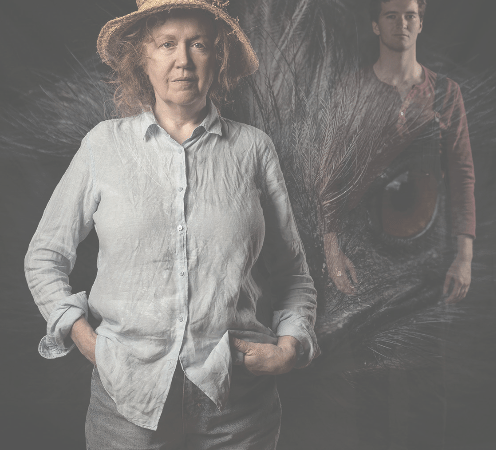
Local playwright, Merrilee Moss’s new work, Running with Emus, is a comedy drama about a small outback community which is considering becoming ‘refugee friendly.’ 

Part of the current VCE curriculum, the play explores themes of hope, identity and change with surreal elements (namely, a ghost) in an otherwise naturalistic and contemporary setting. 

When Pat’s granddaughter Krystal arrives on her doorstep unexpectedly, her youthful spirit and drive immediately makes ripples through a seemingly narrow-minded town, where the idea of refugees and immigrants is a totally foreign concept, pun intended.

As Pat and Krystal’s differing personalities and opinions clash, Krystal begins to assimilate to a new life in the town while learning the truth about her grandmother’s past. 

Acting luminary, Julie Nihill, is ideally suited to the introspective and detached Pat, more at ease with the birdlife than the few humans in her predominantly isolated world. 

The small, yet strong, supporting cast are all worthy of note, particularly the ever versatile and deft Kevin Dee as well as Sam Baxter, who is excellent as the charismatic Italian ghost, Raffaele, injecting some necessary spice to the mix.

Director Kim Durban takes a minimal and simplistic approach with the staging of the work, which mostly serves it well, but for such a dialogue heavy and arguably lengthy piece in need of trimming, it might have benefited from some more dynamic blocking.

Overall, Running with Emus has some beautiful and thought provoking moments, a stellar cast and plenty of poignance and relevance to the current political climate to warrant a viewing of a piece which will no doubt go on to become a staple in the library of important Australian works. 

Running with Emus is playing now at La Mama’s Courthouse Theatre in Carlton until March 22nd. For bookings go to https://lamama.com.au/


Review: Slut

Pertinent and permeating progressive perfection

By Owen James

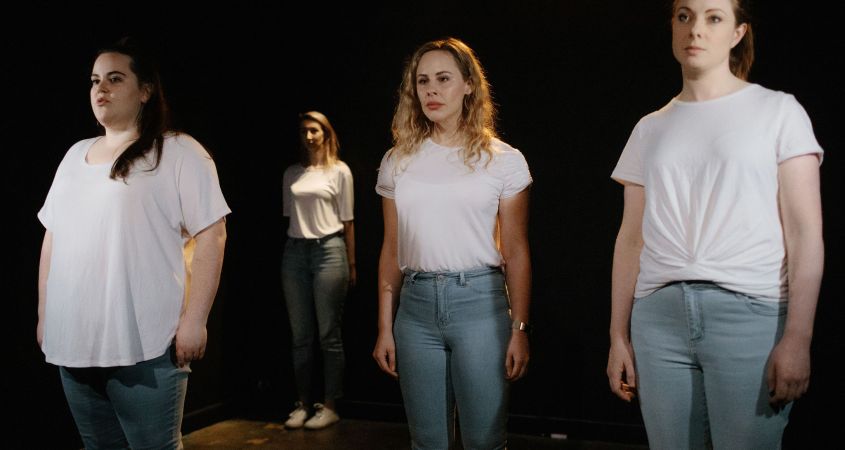
Witnessing an ensemble of collaborators and performers so in tune with each other, as well as in tune with the message and tone of the work they are presenting, is a rarity. Slut is a powerful dissection of the tangible inner conflict imposed on women making their journey from childhood to adulthood; and this is a production that for me comes close to perfection.

Patricia Cornelius’ exemplary yet disconcerting script was first performed in 2007, and as director Rachel Baring notes in the programme, “it is really hard when you take a piece from 2007 and it is just as relevant now as when it was written”. Baring has taken the raw, exposing elements inherent in Cornelius’ work, and turned the flame to high. Presented in the insanely intimate Fitzroy space ‘The Burrow’ (journey down a laneway off Brunswick Street to find a very cozy black box seating only 25), these feminist depositions are brutally honest and grippingly confronting. Baring ensures the dialogue and impressively rapid-fire choreographed movement are always as perturbing as the claustrophobic space these oppressed performers are unnaturally confined within. Lighting and sound design by John Collopy and Daniella Esposito respectively is exquisite, enhancing the text and direction at every turn.

The majority of dialogue is shared by a narrative triad composed of Lauren Mass, Jessica Tanner and Michaela Bedel. So impeccable is the timing and communal commitment to concentration shared by these three that we are transfixed with every word and gesture. Laura Jane Turner plays social renegade Lolita (named for the connotative qualities title “Lolita” recalls), and fearlessly delivers much of her exposition with disturbing composure mere centimetres away from audience members. This perfectly-matched company of four are of such high calibre I could happily have sat there fully engaged for hours.

A 30-minute show for almost $30 is a hard sell in our relentless economy where getting bang for your backbreaking buck is not only expected but necessary. But I’m here to tell you your spent dollars will be bereft of regret thanks to the dedication and expertise of these creatives. Slut is everything great theatre should be – urgent, relevant, and a good story well told; and proves how access to only limited resources is no obstacle to talented theatre-makers.

Don’t miss Slut, a powerhouse rollercoaster that propels itself forward with turbulent momentum at every turn, and will leave you simultaneously thrilled and terrified.

Running until March 21: https://www.trybooking.com/book/event?eid=586996

Photograph courtesy of Michaela Bedel.