Review: Amanda

Loss and hope in the aftermath of Paris terrorist attack 

By Samuel Barson 

On 13th November 2015, Paris was hit by a series of coordinated terrorist attacks, completely devastating the peaceful city. In Amanda, writer-director Mikhaël Hers has invented a similar attack on the city and people of Paris, a tragic event to disrupt the lives of the film’s protagonists.

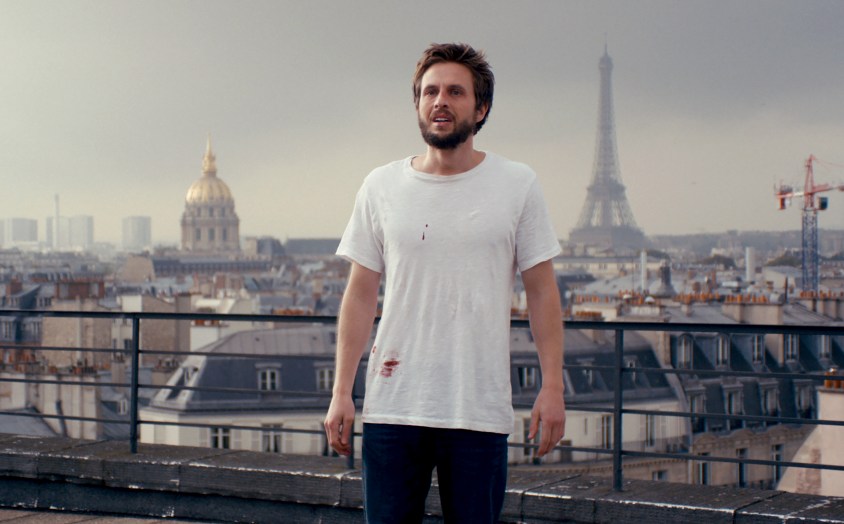
Killed in the attacks is Sandrine, who leaves behind her 7-year-old daughter, the titular Amanda. Sandrine’s brother David finds himself responsible for his little niece, and the film’s story is the journey of these two characters and the bond they create in the aftermath of such an horrendous event for their family.

As David, Vincent Lacoste is terrific. His ability to ascertain the emotions born from his character’s turbulent situation is striking: he balances stoicism for the sake of protecting his niece and expresses the explosive sadness that overcomes him in quiet moments. He also has the chance to explore a more charismatic side to his character in scenes with his love interest Léna, who was also injured during the terrorist attacks.

Isaure Multrier fittingly pulls the audience’s heartstrings in the titular role, with the majority of this film’s loss and devastation being seen through the eyes of this innocent, pure and sweet young girl.

Complimenting the cast’s powerful performances is Anton Sanko’s music composition. As the characters go through their respective roller coasters of grief, Sanko’s composition beautifully joins them and the audience on their ride.

Cinematographer Sébastien Buchmann plays a pivotal role in presenting audiences with a sense of hope and positivity that is desperately needed in a heavy narrative such as this one. He captures the beauty of Paris, despite the horrors that have occurred within and leaves us with a welcome feeling that this gorgeous city could never truly be destroyed, and neither could its people.

Despite some momentary weaknesses in the script, the exquisite performances and touching theme of loss make Amanda a very worthwhile contribution to this year’s Alliance Française French Film Festival.


Amanda screens 5 March – 10 April at Palace Cinemas across Australia as part of the 30th Alliance Française French Film Festival. Tickets can be purchased online. 

Review: Forgotten Places

A theatrical playground to choose your own adventure

By Owen James

Step into a place you might have forgotten – your colourful and playful childhood – with Citizen Theatre’s Forgotten Places. As you follow your nose between the Water Room, Mirror Room, Fun Room and Gift Room, this choose-your-own-adventure theatrical playground is calming and joyful.

With minimal dialogue and colourful costumes, director Jayde Kirchert has created a world that explores the boundaries between theatre and performance art that brings out the wide-eyed child hidden inside everyone. It’s impossible not to have fun in this magical place. A useful map guides us between each space, with a new act of music, dance, clowning, marshmallow snacks or paper treats to find behind each wall.

Designer Stu Brown is behind the transformation of the (recently renovated) Chapel mezzanine into this world fascinated with colour and meditative stimuli, without which there would be no show. It’s a perfect use for this unique space – no regular theatre show would be at home here like Forgotten Places is. Brown’s open-plan layout reminds us of the importance of removing division and borders from creativity.

But it’s the five-strong ensemble that really brings Kirchert’s ideas to life, embodying theatre as play in every stylised movement and moment. Willow Sizer’s voice is utterly mesmerising, Tomas Parrish can gleefully gestate any name into a personalised movement, Jordan Barr makes me cackle with perfectly spoken nonsense and a lesson in how to properly eat a marshmallow, Margot Tanjutco is hypnotising with beautiful uninhibited movement, and Kayla Hamill’s perfect sense of comedy makes me laugh over and over by simply saying “art over here, art over there”.

Music composed (and performed live) by Imogen Cycler is integral to creating the magical feeling that hovers throughout the air in this place. Her music is cyclic (no relation), repeating lyrics to emphasise their value, set to heavenly and haunting melodies that linger long after they finish.

Devising thematic content around the “four pillars of the City of Stonnington’s strategic plan for an inclusive, healthy, creative, sustainable and smart community” is a concept admittedly a little on the nose (though surely very receptive to council funding applications), but thankfully has inspired Citizen Theatre to create this very successful production.

It’s a sign of well-crafted escapism when at the end of an interactive experience as colourful and playful as Forgotten Places, I realise I hadn’t thought for a whole sixty minutes about my upcoming house move or the long to-do list waiting for me at work tomorrow – a cherished moment of calm. Forgotten Places is relaxing, safe and silly in the best of ways – not to mention very child friendly (the toddlers at our performance were having the time of their lives). Congratulations to Citizen Theatre for their latest fascinating, immersive, and calming outing – and for daring to create a world so special.

Forgotten Places was performed at Chapel off Chapel 13 – 17 February 2019.

Photograph: supplied

Review: Mad World

Fortune favours the bold

By Bradley Storer

The classic Latin proverb is handy advice for any audience member entering the realm of Mad World, the new theatrical experience currently running at Vau d’vile.  An immersive and interactive piece, Mad World will yield different paths for everyone who enters, and those who wish can simply hang back and enjoy the show. The real joy, however, is for those who dare to explore and try to unravel the mysteries they encounter.

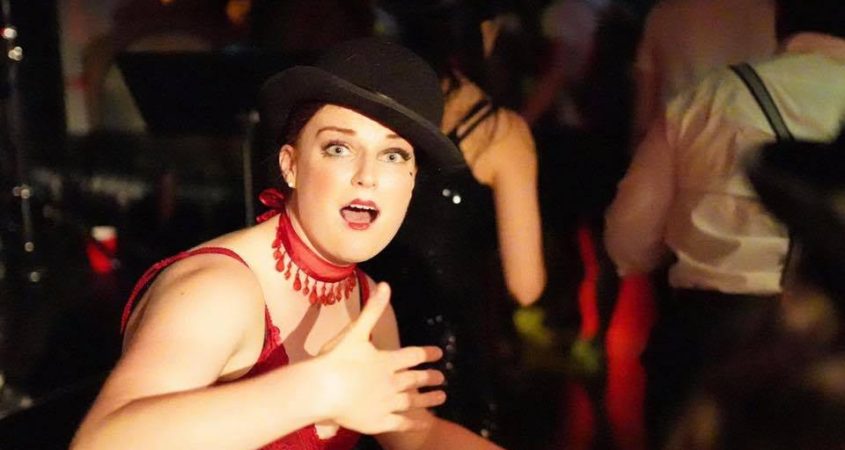
Set in Berlin, circa 1933, the venue is transformed into a underground Weimar-era cabaret bar, Klub Wonderland. The cast become an eclectic gathering of local singers, dancers and deplorables hiding away from the encroaching shadow of Nazism. The drama begins even before the audience has entered the club, and we are quickly guided through introductions to all of the characters before the evening begins in earnest and we are encouraged to split off and explore.

Each of the denizens of Klub Wonderland is wonderfully eccentric and so delightful that it would be easy to follow one of them all night. Directors James Cutler and Lauren McKenna have done an impressive job crafting the tiny intimate moments hidden throughout the performance and co-ordinating them around the larger beats that make up the central story. The cast are all extraordinarily talented, improvising with the audience behind the scenes without missing a beat as well as singing and dancing up a storm whenever they’re called to the main stage. Under the musical direction of David Butler (who also stars as the club’s de facto leader Peppy), the band keeps up a cavalcade of modern hits magically reworked into the fashion of pre-World War II music. Be prepared to hear Pink, Ariana Grande, Queen and even Eminem as you never imagined!

The floor show on the main stage of Klub Wonderland (which runs continuously throughout the entire evening) is so thoroughly entertaining that it’s almost a disappointment to tear yourself away. The compelling and intricate choreography of Madi Lee evokes the bawdiness of the sleazy Berlin underworld, even as it chillingly suggests the ever growing influence of the Third Reich.

The rewards of wandering further afield are more than worth it, as you find yourself drawn into the lurking tensions and shadowy dealings of the club’s denizens. Pulled into dark corners for hushed conversations, taken backstage to share furtive prayers, invited into alleys for terrifying tea parties? It feels as though literally anything could happen!

Words can only capture this experience to a certain degree, but the closest way it can be described is that child-like feeling of nervous excitement embarking on an adventure into the unknown. Take the plunge down the rabbit hole before it’s too late!

Mad World is being performed 3 – 20 February at Vau d’vile Drag Cabaret Fitzroy. Tickets can be purchased online.

Photograph by Carl McKinnon featuring Sophie Perkins as DamDam.


Review: Ron and Isobel

Politically charged suburban drama

By Samuel Barson
 

Australia, November 1975. The country is at its most divided, as the Whitlam Government is dismissed and replaced by the vindicated opposition lead by Malcom Fraser.

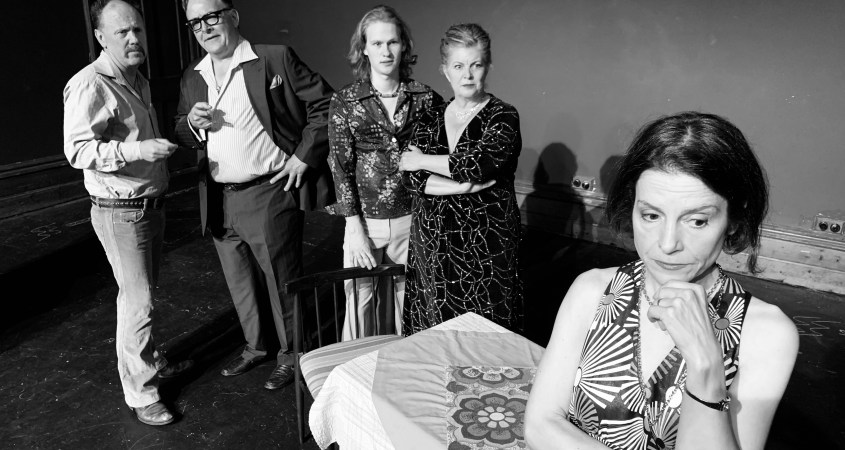
As these tumultuous political happenings play on in the background, Ron and Isobel, the titular, die-hard Labor characters, invite into their home new neighbours, the die-hard Liberal Slaters. What results is a night of heated discussion on a range of topics: divisions play out on stage between and amongst the couples, constantly reminding the audiences of the pending political battle occurring in the background at that time in history.

The tension here is immediately clear for audiences and is shown through a fluid range of comedic and dramatic moments played beautifully by the show’s cast. Shannon Woollard was perfectly smug and suave as the Fraser-loving real estate agent Paul and matched perfectly with Nadia Andary’s subdued yet clearly frustrated interpretation of Paul’s wife, Sandra.

Taylor Smith-Morvell brought some welcomed comedy and charisma to the stage in the semi-narrational role of Jack, the son of Ron and Isobel.

The clear standouts of the show however were the actors who portrayed the titular characters. Justin Harris-Parslow as Ron was magically boisterous and balanced his clear and aggressive opinions with an equally measured warm heart and non-judgmental outlook on life. Kelly Nash as Isobel was gorgeously passionate and strong-willed, undoubtedly an inspiration for the more submissive Sandra, as well as many other women in that male-dominated era.

Maureen White’s design was fittingly simple with the lighting fading in and out beautifully at each end of the play to both welcome and dismiss audiences from Ron and Isobel’s world. The use of a kitchen table and lounge chair was practical for the characters to inhabit in a very realistic sense.

Director Bruce Langdon has curated Anna Lall’s tight and rich piece of writing and has provided audiences with a piece of theatre that makes them think, laugh, empathise and reflect. Blessed with a high-quality cast and generous writing, Ron and Isobel is a must-see for lovers of politics, domestic disputes and arguments between neighbours.

Ron and Isobel is being performed at La Mama Courthouse 13 – 17 February. Tickets can be purchased online or by calling the box office on 03 9347 6948.

Photograph:  Bruce Langdon

Alliance Française French Film Festival

54 must-see films screen in Australia

By Lois Maskiell

The largest ever line-up of an Alliance Française French Film Festival will screen across selected Australian cinemas to celebrate the 30th anniversary of the event in Australia. More than 50 films, which captured the critics’ attention at the international film festivals in Cannes, Berlin and Venice, feature on the programme with the vast majority previously undistributed until now.

“This edition will be literally plugged to the history of cinema through genres with the western, the science fiction and the horror film, even the Bollywood film makes an appearance,” artistic director Philippe Platel tells Theatre Press.

Platel, also the Cultural Attaché at the French Embassy in Australia, curates the festival for the fourth consecutive year in collaboration with Alliance Française and Unifrance Films.

Comedy fans can prepare to be spoilt for choice: the festival launches with the explosively witty The Trouble with You (En liberté) and features a selection of achingly funny films. Directed by Pierre Salvadori The Trouble with You is “a poetic take on comedy at the intersection of many genres,” Platel says. “It’s a comedy, romcom, thriller and cop film with tarantinoesque effects.”

Sink or Swim (Le grand bain)
by Gilles Lellouche is “the big success for this year with 4 million spectators in total in France,” he says.

Box-office hit Dumped (Larguées) pivots on a simple plot: two daughters take their recently single mother to an island resort where she recovers on a diet of cocktails and an unexpected love affair. “It’s sweet and salty, it’s a margarita for your brain,” Platel says.

The Night Eats the World 5 (1)
The Night Eats the World (La nuit a dévoré le monde) | Winner for Best effects, Molins de Rei Horror Film Festival 2018

For the serious cinephile, the key film on the programme is pioneer auteur Jean-Luc Godard’s The Image Book (Le livre d’image). Godard, 88, has never ceased to polarise critics with his strikingly contemporary work. “He is so innovative, he reinvents cinema every time,” Platel says. Now it’s your turn to cast the verdict.

Claire Denis’ highly anticipated science fiction High Life starring Juliette Binoche will also appeal to the film buff, as will Virgil Vernier’s Sophia Antipolis and Jacques Audiard’s western Sisters Brothers (Les Frères Sisters), featuring John C. Reilly, Joaquin Phoenix and Jake Gyllenhaal.

For a spectacularly visual experience, Alain Resnais’ 1961 Last Year at Marienbad (L’Année dernière à Marienbad) is not to be overlooked with costumes by fashion icon Coco Chanel. “It’s an amazing film and it’s a very central piece in the line-up because the restoration is incredible,” Platel says.

Actress Vanessa Paradis leads in Yann Gonzalez’s spin on the slasher movie, Knife+Heart (Un couteau dans le coeur), which has already attained cult status since its Cannes premiere. “Paradis plays the role of a lesbian producer of gay porn films in the ’80s, facing a serial killer killing all of her cast,” he says. “It’s very fashionable with a trendy soundtrack by M83.”

Backing this variety of films are prominent industry patrons including Australia’s foremost film critic David Stratton and leading Australian producer Rosemary Blight. “Since 80% of our audience is Australian, we’re definitely an Australian cultural event,” Platel says. “It made sense that we have this entourage of Australian patrons from the industry.”

The festival’s enduring popularity affirms Australians’ affection for France’s unique cinema, and what better way to celebrate this birthday edition of the festival than with a range of films in which to escape and explore.

“There is a very strong appetite for French culture in Australia,” Platel says. “I’m amazed by this very sincere Francophilia found everywhere.”


The 30th birthday edition of the Alliance Française French Film Festival screens 5 March – 18 April 2019 across selected cinemas in Sydney, Melbourne, Canberra, Brisbane, Hobart, Adelaide, Avoca Beach, Paramatta and Byron Bay.

To purchase tickets and view the complete program see the official website.

Review: Barbara and the Camp Dogs

Half rock musical half gig slices straight to the heart

By Bradley Storer 

As the audience shuffled into the Merlyn Theatre for opening night of Ursula Yovich and Alana Valentine’s stunning musical play Barbara and the Camp Dogs, they were greeted with bar stools, faded couches and blackboards advertising happy-hour specials and upcoming bands. The well-worn atmosphere of a typical Aussie pub was contained entirely within the space.

Director Lecticia Cáceres uses the setting to represent both the fictitious band’s regular venues and a microcosm of Australian culture. The classic Aussie pub is the perfect liminal space to explore this story that crosses the landscape of the entire country and confronts the mythos embedded in our very culture.

Barbara (Yovich) and Rene (Elaine Crombie) are two Indigenous siblings who eke out their living in Sydney by playing live shows and singing with their back-up band, the Camp Dogs. What starts out as a charming comedy with Yovich and Crombie careening from one incident to the next while letting loose their explosively powerful vocals, becomes a gut-wrenching examination of the bonds of family and the devastating consequences of colonisation and its impact on current and future generations of Indigenous Australians. Rock music (a style we must remember was first appropriated by mainstream white culture from people of colour) feels like the ideal medium to convey the pain, tragedy and resilience of these characters.

Yovich as the eponymous Barbara delivers a performance of titanic scale: commandingly charismatic, ferociously funny and yet undeniably wounded. As Barbara travels from Sydney to Darwin and further on to the rural town of Katherine, we journey deeper and deeper into her character’s complex psyche and the roots of her traumas. Yovich is so thoroughly and authentically immersed in the character that it is, at times, almost unbearable to watch. When Yovich unleashes her searing and soulful voice in song (co-composed by both Yovich and Valentine), she slices straight to the heart.

Rene, as the calmer sister, is fantastic foil to the belligerent Barbara. Though Rene is no wallflower, with Crombie playing her with a personality and presence just as big as Barbara despite having a cooler head to balance things out. When the pair lift their voices together, they threaten to tear the roof off the theatre with their sheer passion and power. Troy Jungaji Brady expertly provides backing vocals, sound balancing and discreet mic transfers throughout the show and is granted an extra special opportunity which I won’t spoil here. When Brady’s voice is allowed to fly free it is possibly the most powerful of the entire cast as it reverberates in every corner of the space, and his gentle presence rounds out the trio perfectly.

The Camp Dogs, the backing band for Barbara’s pub-gig career and for the show in general, are an excellent trio of female-identifying musicians who bring brilliant light and shade to both the heavier rock numbers as well as the lighter, emotional sections. Sorcha Albuquerque seductively shreds on lead guitar, drawing the audience in during her massive solo. Michelle Vincent ably handles drums, with Jessica Dunn pulling double duty as both bass player and musical director. Karen Norris’ lighting design invaluably navigates the multitude of spaces Barbara and Renee encounter in their journey.

Barbara and the Camp Dogs performs throughout February, not long after Australia Day reminding us how we still grapple with the effects of colonisation. The show confronts, on a deeply personal and individual level, the dark and uncomfortable truth that lies at the heart of Australia: the continual structural oppression of our indigenous people which feels not only inescapable, but an inherent part of our cultural identity.

The tension to reconcile this reality with the move towards healing is the central struggle of this piece and the reason why this show is not only a must-see for theatre goers, but for any Australian.

Barbara and the Camp Dogs runs 7 February – 3 March at Malthouse Theatre. Tickets can be purchased online and by calling the box office on (03) 9685 5111.

Photograph by Brett Boardman featuring Elaine Crombie and Ursula Yovich.

Review: As You Like It

Endearing, romantic and droll

By Irene Bell 

Seemingly every character who is in any way interesting is banished from the duchy and flees to the Forest of Arden in the first act of Shakespeare’s revered comedy, As You Like It. This is just as well for the audience, as we get to enjoy all the silliness that ensues: there are disguises, musical numbers, cases of mistaken identity and an odd off-stage punch-on with a lion.

In the Park Productions’ As You Like It is a whimsical play with the action on stage never producing a dull moment, and the fitting outdoor location creates a lovely family-friendly atmosphere. Creator, Meg Deyell has crafted a production that gets to the very heart of the play.

The main premise is cute and romantic: The courtship of two lovers, Rosalind and Orlando, is cut very short as Rosalind is banished from the kingdom and Orlando flees for his own safety. Both find themselves in the forest though Rosalind is now in the guise of a man, Ganymede. The two meet and proceed to strike a deal in which Orlando and the disguised Rosalind play out a pretend romance, allowing Orlando to practice his moves.

Dana McMillan is powerful as Rosalind, she fully embodies both the wit and tenderness of her character. McMillan’s diction is a joy to hear and her physical comedy is incredibly engaging. Shae Kelly’s Orlando is wonderfully post-emo in both manner and dress, and while Kelly took a couple of scenes to find a rhythm, once there he performed great comedy.

Besides these performances, there is a wonderful array of characters who are all as funny and unwittingly wise as each other. For a production with such a limited cast and space, the actors build a sense of a friendly, odd-ball community incredibly well. On stage, there is a strong sense of chemistry particularly from David Harris – who plays both Touchstone and Adam – and anyone with whom he shares a scene.

I found the stripped down, steampunk-esque aesthetic clashed with the more by-the-book costumes of secondary characters like Corin the shepherd and Phoebe. Though it was the small details that made this production feel fully-realised – a personal favourite was Corin’s name written on his lunch bag, very endearing!

As You Like It is a fun and goofy way to spend an evening with friends and family. What could be better than enjoying a classic comedy while having a picnic?

As You Like It plays in Alistair Knox Park Eltham 8 – 10 February and Watkins St Reserve Diamond Creek 14 – 16 February. Tickets can be purchases online or by calling the box office on 1300 302 448.  

Review: Merciless Gods

Gods and monsters rendered achingly human 

By Bradley Storer

Queer performance collective Little Ones Theatre returns to the stage with the critically acclaimed production Merciless Gods for Midsumma Festival. In this production playwright Dan Giovannoni adapts Christos Tsiolkas’ collection of short stories to present a series of vignettes which encompass lives across the social and economic strata of Australian society. It’s a thrilling reminder of the burning necessity for Australian stories on our stages.

What remains most striking in the memory is director Stephen Nicolazzo’s powerful use of imagery as he channels the divine forces that give the play their name and inspiration. We see a heroin addict bathed in the heavenly halo of a Christian saint, we see a murderer locked in the gracefully muscular pose of a Grecian statue and we see a bedraggled and defiantly grotesque old woman sipping from a cask of cheap wine. This magnificent imagery is only made possible through the transporting simplicity of Eugyeene Teh’s set design, the glorious lighting of Katie Sfetkidis and the seductively mysterious sound design of Daniel Nixon.

The ensemble are excellent across the board, never more so than in the opening scene where they bounce off each other effortlessly in a seemingly normal suburban story that morphs into an unsettling and disturbing account of human brutality.

Each actor is given their moment to shine. Brigid Gallacher plays the voluptuous mother disgusted by the baseness of her own offspring. Paul Blenheim plays a drug addict enraptured by the twin figures of his straight best friend and the Lord Jesus Christ. Stefan Bramble stars as an imprisoned murderer both terrifying and tender in equal measure. Charles Purcell embodies a grieving gay son of a dying man. And Sapidah Kian, in the final glorious sequence, stars as the domestic Delphic Oracle relaying a vision of ecstasy.

The only negative, since there was seemingly no vocal amplification used, was the loss of textual and vocal clarity whenever the actors would play upstage away from the audience – an unfortunate side effect from a space as acoustically unforgiving as the Fairfax.

If forced to pick a standout performance it would have to be Jennifer Vuletic’s. Whether she is prowling the stage proudly nude as a pretentiously provocative German novelist, curling and contorting in spasms of pain as an aged Australian patriarch or bowed over in operatic fits of grief as an Italian mother mourning the loss of her son, Vuletic is a charismatic chameleon.

This unapologetically queer production, centred on the outsiders and outcasts of society even at their most reprehensible, is so luscious and commandingly seductive in its urgency and power that it’s impossible to resist. The cast and creatives of Merciless Gods have crafted a piece overflowing with horror and love, and is a must see this Midsumma season!

Merciless Gods plays at Arts Centre Melbourne until 10 February as part of Midsumma Festival. Tickets can be purchased online and by calling the box office on 1300 182 183.

Photograph: Pier Carthew 


Review: Sweet Phoebe

Dog sitting takes a disastrous turn in punchy performance


By Owen James

Sweet Phoebe is beloved Australian playwright Michael Gow’s intimate saga of resilience and obsession. Celebrating its 25th anniversary this year, it tackles one young couple’s swelling fixation on finding lost dog Phoebe and the search’s dire consequences on their marriage and wellbeing.

Far more isolated than Gow’s most famous play Away, Sweet Phoebe takes place entirely in one room: the living room of ambitious, hard-working couple Helen and Frazer. Director Mark Wilson utilises the confined setting to its full advantage, staging a production that held my attention every step of the way. With nothing but one stagnant room, two actors, and Gow’s strong script, Wilson has concocted great theatre.

Outside these lightning-lined walls (a simple but incredibly effective set by Laura Jean Hawkins), the rising tide of industrial modernity and its career-driven pressures laps at the door and seeps in through the cracks. Marcus McKenzie and Olivia Monticciolo as Frazer and Helen bring this pressure and its debilitating effects into their house.

As their search for Phoebe increases in desperation and aggression, McKenzie and Monticciolo fiercely control the stage, doing their best to overcome Gow’s monologue-heavy tail end of the play with rich and compelling characters. Their heightened intensity from the very beginning of the play leaves them little room to climb, but Monticciolo and McKenzie successfully take us beneath the layers of Helen and Frazer to a warped reality down Gow’s rabbit hole.

Sound by Daniel Nixon amplifies the frantic characters’ inner torment and is timed to perfection with every scene change. The set and sound are complemented by precise and intricate lighting by Lisa Mibus, all three elements blend seamlessly to create a palate of evocative and measured unified design.

Sweet Phoebe combines clever writing, effective design and powerhouse performances into a punchy, intriguing 80 minutes that matches Red Stitch’s usual exceptional standard. Full credit to every creative in this team for staging this devolving, distorted mirage with fiery tenacity.


Sweet Phoebe is being performed at Red Stitch Actors’ Theatre until 3 March. Tickets can be purchased online and by calling the box office on 03 9533 8083.

Photograph: Teresa Noble

Review: Become the One

Smart, moving and challenging examination of sexuality in sport

By Samuel Barson

The results of a 2015 study into homophobia in sport documented that 87 per cent of Australian sportspeople felt compelled to hide their sexuality in some way.

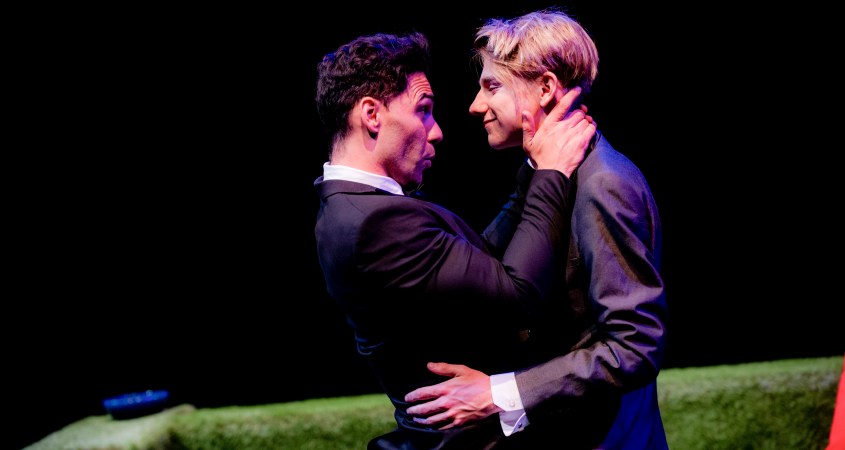
Adam Fawcett’s smart and challenging new play, Become the One, tells the fictional story of Tom, a celebrated AFL player who belongs to that 87 per cent. When Tom meets the openly gay Noah, sparks immediately fly, and as their relationship grows so do questions around identity, sexuality and a devotion to a toxic masculinity that sport can bring.

Fawcett’s exquisite writing is undoubtedly the highlight of this production. His clever combination of romance, comedy and drama has given director Lyall Brooks and actors Chris Asimos and Henry Strand the room to explore and create a piece of theatre that is exceedingly important for audiences to witness. Asimos is charismatic and brooding as Tom, the perfect counterweight to Strand’s precocious, yet sweetly gentle Noah. The two bounce off each other beautifully and present a dynamic and chemistry that surpass the stereotypes their respective characters could have easily risked slipping into.

The set design was simple and stationary yet exceedingly effective: the relationship never leaving Tom’s apartment just as Tom wanted it, behind closed doors and away from the public eye. It’s amusing to note the decision to design the set with synthetic grass (footy oval!), and the use of a single red pillow (footy!) that made its way around it. As an equal lover of footy and theatre this imagery pleased me greatly. Tom Backhaus’ and Benjamin Morris’ respective sound and lighting design complimented the rest of the production well, providing various atmospheres of swelling emotions as Tom and Noah journeyed through the highs and lows of their relationships.

It cannot be stressed enough how important a story like this is. Classy, sharp and deeply moving, Become the One makes for a special experience. A huge congratulations to all involved.

Become the One is currently playing at Gasworks Theatre until 9 February as part of Midsumma Festival. Tickets can be purchased online or by calling the box office on 03 8606 4200.

Photograph: Jodie Hutchinson