Category: Whats On

Victorian Opera and Circus Oz Presents LAUGHTER AND TEARS

Brave ascent into arias and airy new ground

By Leeor Adar

It is a wonderful idea in theory to create an amalgamation of opera and circus in production. Both disciplines embody the drama of the human condition, whether through the astonishing highs of an operatic voice to the deep dive taken by the circus performer.

Laughter and Tears.jpg

Victorian Opera and the State Opera of South Australia merge here with Circus Oz to bring to life Ruggero Leoncavallo’s Pagliacci. The production begins in humour as one of our characters throws open the curtains and insists on joining the wonderful Orchestra Victoria under concertmaster Roger Jonsson. It’s a clever breakage of the fourth wall, and a nod at the fact we are watching a play within a play, which becomes of greater importance as we move towards Act II.

The dress rehearsal of a Commedia dell’Arte pantomime is slapstick in true tradition, with Circus Oz performers Kate Fryer, Geoffrey Dunstan, D J Garner and Luke Taylor as stage hands, essentially stealing the show from the main action of the dress rehearsal. The stage hands are so effortless in their expression, humour and movement that we as an audience implicitly trust them to flip their bodies and hang off ladders without batting an eye. Unfortunately, Act I is bordering on dull, and when the curtains closed at interval, it was difficult to fathom where Laughter and Tears would take us.

Act II is a very different turn from Act I, undoubtedly as we’ve moved on from the slapstick and now entered the Tears. Tonio, performed with brooding viciousness by the talented baritone James Clayton, is the prologue to the Tears, reminding us that the customs of Commedia are over, and we are now going to witness passion, blood and flesh in Act II.

Enter Pagliacci.

Disappointingly, the amalgamation of circus and opera does not work well here. There is one exception, and it is occurs when Nedda (soprano Elvira Fatykhova) describes the freedom of birds in nature as Geoffrey Dunstan leaps upon ropes, ever-escalating in height, inspiring awe and heightened pulse rates amongst the audience. This is the amalgamation I was seeking. It was the beauty of Fatykhova’s voice soaring as the body of the performer flung itself into careless abandon. It was breathtaking and brief. Circus Oz took a backseat to the drama of Pagliacci from here on, and it will be worthwhile to utilise their skill in more astonishing ways in future exercises.

It is wonderful to see the famous tenor aria, Vesti La Giubba, performed live by such a talented tenor as Rosario La Spina. As Canio (La Spina) breaks down during this performance, the heart simply stops. The warmth and pathos of his voice is heartbreaking. I was very moved, and in that moment Tears delivered. La Spina’s shaking rage and vulnerability prior to slaying his wife and her lover showcased La Spina’s marvellous talent as a performer.

To see the death-defying leap of bird-song, and the leap of faith taken by Victorian Opera and Circus Oz, you can see Laughter and Tears on Tuesday 16, and Thursday 18 of August at 7:30pm, at The Palais Theatre: http://www.victorianopera.com.au/what-s-on/season-2016/laughter-and-tears/

Image by Jeff Busby

German Cornejo’s TANGO FIRE

Let the dance enthrall you

By Leeor Adar

It’s a cold winter night in Melbourne, the storm clouds are threatening overhead, but inside the Arts Centre’s Playhouse, there’s a heat emanating from the stage.

Tango Fire

German Cornejo choreographs five couples for over two hours, including himself with the mesmerizing Gisela Galeassi. This show is highly energetic, sensuous, and immersing. By the close of the night, audiences rose to their feet, clapping and cheering for this attractive troupe of skilled dancers. With every effortless movement, Tango Fire was a taste of the Argentinian soul.

Part One of Tango Fire was slow to begin, with the company engaging in a Tango Foxtrot. Soon enough the rhythm, the style and energy quickened, and we were in the thick of varying tangoes. Argentine Tango has many varietals, and the dancers took their audience through these fluid, playful, and at times raw performances that exposed love stories, flirtations and sorrows.

Part One could have easily been dismissed as light entertainment, a nod to the Argentinian dance hall, but as soon as Cornejo and Galeassi stepped out into a midnight scene, with the Quarteto Fuego (the band) to dance a classic tango, we were in no doubt we were in the presence of greatness. Galeassi’s finesse, agility and beauty as a dancer are breathtaking. The eroticism of the dance came to the fore, and it is now undisputed in my mind that the tango in its varying forms is the dance of lovers.

As Tango Fire moved into Part Two, the couples performed independently. Aside from Cornejo and Galeassi, standouts included Ezequiel Lopez and Camila Alegre, who beguiled us in a partnership of heated synchronicity, and Sebastian Alvarez and Victoria Saudelli who performed a modern tango of gymnastic proportions, which conveyed a violence of love that was both beautiful and terrifying.

The standout performance for the troupe was Oblivion, where the pace softened, and the performers costumes embodied the ethereal quality of the tango. It was a tango suspended in time of languid movements, captivating the audience in a dream-like trance for its duration.

Tango Fire is a celebration of tango in its many guises, and a gorgeous troupe of performers with varying qualities to bring it to life. For those who admire the tango, this is an exciting education in its form.

You can catch Tango Fire for its final Melbourne performance on Sunday the 14 of August before it tours to Adelaide, Bendigo, Canberra and Brisbane.

https://www.artscentremelbourne.com.au/whats-on/2016/dance/tango-fire

http://www.tango-fire.com/

Prince Moo Productions Presents AVENUE Q

Uproariously funny and supremely entertaining

By Jessica Cornish

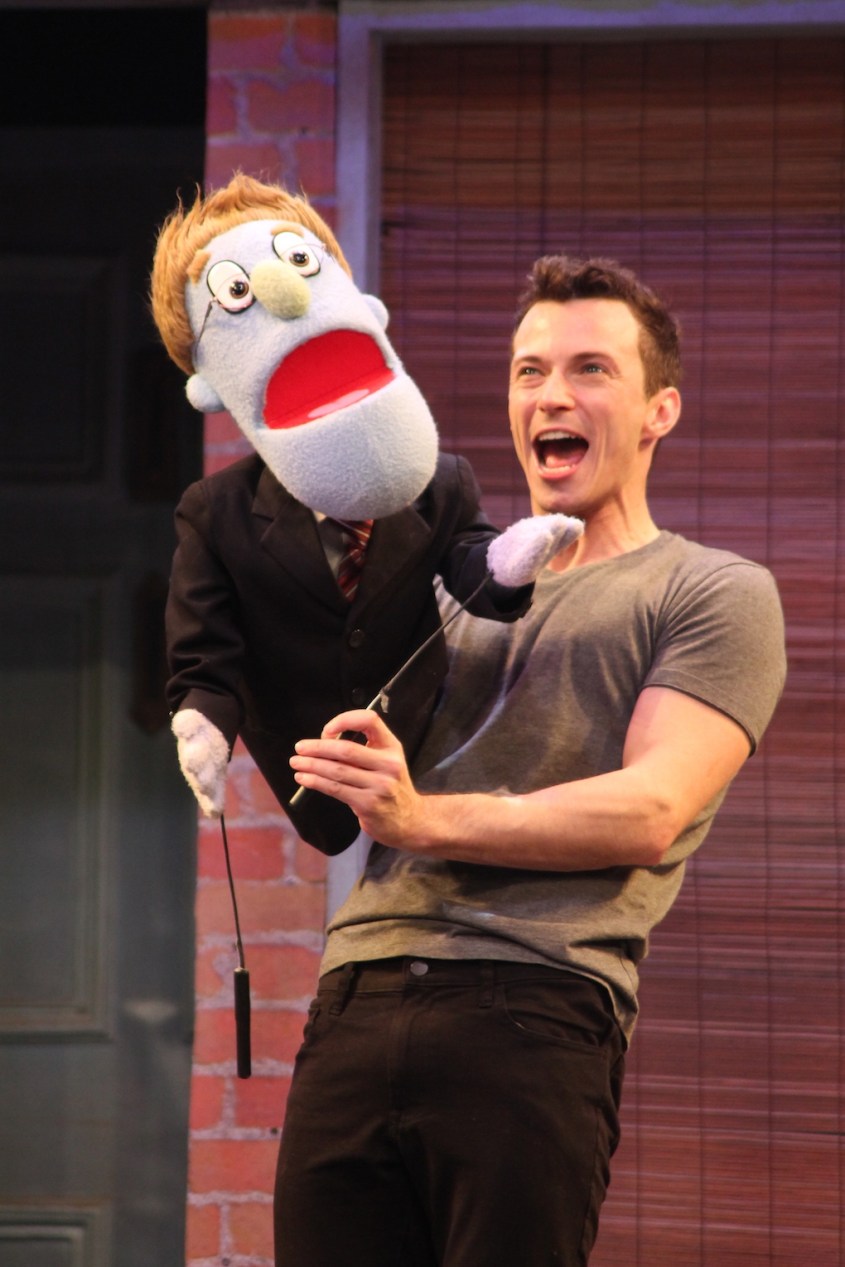
Growing up as a teenager obsessed with the music of Avenue Q, I was pretty ambivalent as to how the recent Australian production playing at Her Majesty’s Theatre would compare to my original cast recording memories, but as the show began, my anxiety quickly evaporated. It was one of the most engrossing and entertaining musical productions I have seen in the last few years.

Avenue Q.jpg

The story follows recent college grad, Princeton, who moves into a colourful apartment block in a diverse neighbourhood filled with Sesame Street-style monsters, puppets and even humans. Throughout the quirky two-hour (and adults’ only) musical journey, we see the youngster settle down, find romance, lose romance, have a fling, and even gain a life purpose along the way.

The dynamic and often dual characters were well cast with Ross Hannaford (Princeton/Rod), Vincent Hooper (Nicky/Trekkie Monster) and Andrew Hondromatidis (Brian), however exceptional performances belonged to Sophie Write (Kate Monster/Lucy the Slut) and Sun Park (Christmas Eve), who between them stole the show. Both women were vocal standouts: pitch perfect, perfect tone and with great resonance. The vocals for superintendent Gary Coleman (Zuleikah Khan) were less secure at times, although it’s a notoriously tricky part which can often challenge a female’s lower vocal range and demand sacrificing power for pitch. As minor characters that weave themselves in and out of the story, the Bad Behaviour Bears performed by Lulu McClatchy and Hooper were also particularly high energy, hilarious and well-worthy of note.

John Kerr‘s set design was simple but effective and the puppeteers draped in black were well-choreographed and transitioned smoothly in and out of different roles all night. Whether you watched the puppet or a puppeteer, both were equally engaging and emotive. Unfortunately the lighting operation was slightly under whelming and patchy at times on the night I attended, with shadows cast on puppet faces and a couple of sloppy follow-spot pickups: however, I’m sure this will sharpen up as the season progresses. The sound was clear and well balanced, however it would have been nice to bump up the volume for an excited opening night audience.

This was, overall, a brilliant production directed by Peter Snee and musically directed by Trevor Jones, and I honestly could not stop smiling the evening. With those witty lyrics and music written by Robert Lopez and Jeff Marx, and Jeff Whitty‘s book helping offer a raunchy insight into the lives of puppets dealing with homosexuality, racism and sex, this new production of Avenue Q is as good as theatre gets.

Season: Performances every night until August 14 (no performances Monday)

Venue: Her Majesty’s Theatre

Bookings: Ticketek

Image by Nichole Riseley

Optic Nerve Presents THE MILL ON THE FLOSS

Where waters run deep

By Rebecca Waese

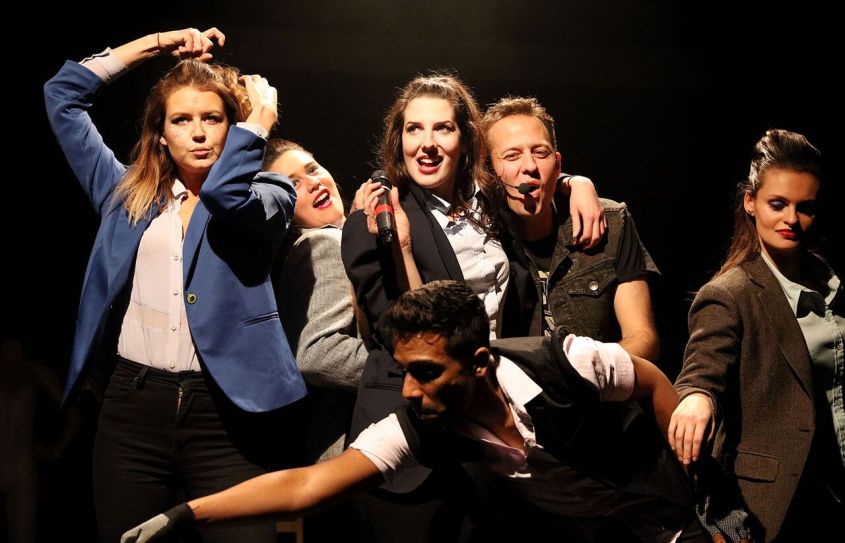
Optic Nerve’s The Mill on the Floss directed by Tanya Gerstle, delivers a thrilling, sensual, and physically-charged performance about Maggie Tulliver, who, growing up in a provincial town in nineteenth-century England, learns that her choices in life are damningly limited by her gender.

The Mill on the Floss

In this intelligent and immersive production, originally adapted by Helen Edmundson for Shared Experience Theatre Company from George Eliot’s novel, three actors play Maggie at different stages in her life in a moving embodiment of how we experience inner conflict when faced with making heart-breaking decisions. Young Maggie, played by Maddie Nunn with joy and irreverence, supports the more somber second Maggie, hauntingly portrayed by Zahra Newman, and convinces her to return the affections of her first suitor Philip Wakeham, (Tom Heath), who is the son of the lawyer who has taken over Maggie’s father’s mill. Rosie Lockhart delivers a beautifully tempered yet volatile third evolution of Maggie, who becomes entangled in an impossible love triangle with her cousin’s betrothed, Stephen Guest (George Lingard), and has to choose between respecting her brother’s wishes for her and her own desires that will leave her disowned by her family and a societal outcast.

Gerstle’s Pulse style of actor training, where actors follow physical and emotional impulses to give body to the text, allows for some unforgettable ensemble moments. Eight actors commit fully to their 17 roles and create a moving experience of a flood using only chairs and an upturned table in a simple yet evocative light and soundscape. The ghost of a drowned witch emerges from an unseen crevice under the stage to try and drown Maggie in the river. The scenes with the Aunties who selfishly expose their self-interest when Mrs Tulliver (Luisa Hastings Edge) and Mr Tulliver (James O’Connell) lose everything reveal the underside of family divided by class. Music enhances the production and Zahra Newman’s powerful instrument of a voice, worth the price of admission alone, sings a primal call-to-arms of the pain of women who centuries earlier were drowned for being witches.

This adaptation maintains a strong connection to the novel, written in 1860 by Mary Ann Evans under the male pseudonym George Eliot, for its unflinching and unnervingly contemporary portrait of the stirring passions of a young woman bound by the social forces of her time. There is less focus on Tom, Maggie’s brother (Grant Cartwright) than in the novel although his over-physical relationship with Maggie resonates with the intense childhood bond George Eliot describes having with her brother before they were estranged in her autobiographical poem “Brother and Sister.” The weakest part comes in the love affair between third Maggie and Stephen Guest where the affair feels somewhat rushed and not as consuming as it could be if Lingard were able to bring a deeper maturity to the role.

Mill on the Floss injects the past into the contemporary with its rousing themes of how women react passionately against being held down in society. In the theatre foyer, a collage depicting fifteenth-century witch trials and Eddie McGuire’s recent comments about how he would pay to see his female colleague’s head held under a pool of iced water, tracks a chilling legacy that makes Maggie’s struggles even more vital today. This a triumph you do not want to miss; it’s history in the making.

Date: 28 Jul 2016 – 13 Aug 2016. Extra show added Tues Aug 9.

Time: Tues to Sat at 7:30pm and 1:30pm on Sat 6, Sat 13 Aug

Price: $35 Full / $26 Conc, Under 30, Groups 8+ /$20 Preview [plus $2.50 booking fee per ticket]

Presented by: Theatre Works and Optic Nerve

Bookings: (03) 9534 3388

Image by Pia Johnson

Rebecca Waese is a Lecturer in Creative Arts and English at La Trobe University.

Anthony Weigh’s EDWARD II

Tender chaos

By Leeor Adar

For all the chaos of Christopher Marlowe’s brief life, I’m sure he would have sat in the Merlyn Theatre last night with a wicked smile on his face to see the tender chaos Matthew Lutton and his team resurrected.

Edward II.jpg

But let’s be honest, with Anthony Weigh’s writing and Marg Horwell’s impressive set design, this work is a beast of its own glory.

The play is broken into the fragments of the artefacts the boy prince (Julian Mineo/Nicholas Ross) inspects from his father’s reign. The noble handle of a sword and handkerchief descends to a bag of faeces left at the palace gates. The frames of the scenes marked by the flint and steel of the lighter, signify the brief candle of these moments leading towards Edward II’s fall.

Edward II is a museum to the hypocrisy of the people’s love for their monarch. It’s a cold world, but despite the blood and pulp of the people within it, at the core of this rotten apple of yet another kingdom, is the most tender love story between two men I have ever witnessed on stage. Johnny Carr (Ned) and Paul Ashcroft (Piers) capture the heady, shaking, vulnerability of the impossible-to-bottle kind of love. Their energy was marvellous on stage.

Ned’s brutality and unpredictability at first drove this production, but even the bubbling inner-workings of an unstable prince could not quash the ambitions of the likes of Mortimer, played with mastery by Marco Chiappi. When Chiappi got going on Weigh’s words, it became Mortimer I. For all the sweat and passion of Carr and Ashcroft, Chiappi’s delivery drew the masses into the palm of his hand – audience and peasant alike. Even as Mortimer lulled a sensually delusional Ned towards death, we could not help but accept the sensibility of this decision. Because tomorrow, we will have another king.

The woman’s role in Edward II is to nurture the next king, but Sib (Belinda McClory) laments the loss of her potential in this world. Although Sib plays the role of the queen-to-be, there is ambition pulsing through her sinewy body for a surge of control. McClory’s voice is hollow and powerful as she pushes her lover aside and walks with purpose across the stage. But at the close of this play, she’s exhausted, calling out, unanswered, into the kingdom she birthed but could not rein.

The Malthouse Theatre has always been the Marlowe-esque bad boy of the Melbourne theatre world, challenging the dimensions of theatre and immersing its audiences in treacherous and thought-provoking terrain. This one such terrain was bold, decadent and ultimately heartbreaking.

Malthouse Theatre until August 21

http://malthousetheatre.com.au/whats-on/edward-ii

The Butterfly Club Presents SIMON TAYLOR DOES A WHOLE BUNCH OF COOL STUFF

He sure does

By Joana Simmons

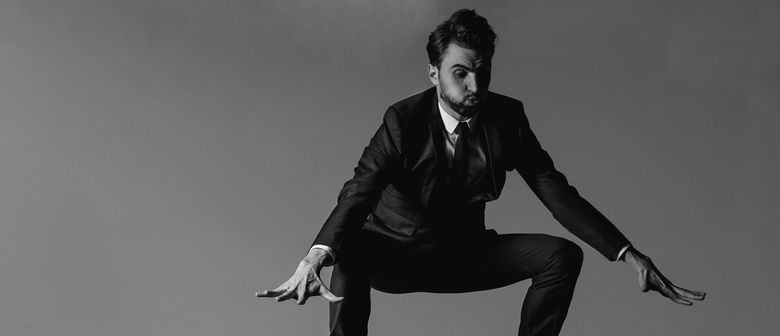
He’s suave, he’s stellar, he’s spellbinding. He’s Simon Taylor and he is an abundance of talent and charm in his one-man show- Simon Taylor Does a Whole Bunch of Cool Stuff. Let me just say here, the title lives up to and exceeds its name in this well-structured, well-timed and well-isn’t-he-lovely show.

Simon Taylor

Opening with an epic escape act, he lights up the stage and the faces in the audience (quite a few, considering it’s a cold Tuesday night.) Simon is charming and charismatic, warming us up with some great banter, tales of his life in his new home, Los Angeles, and a trick he learned at The Magic Castle. I was the lucky one who was escorted onto the stage to pick the card, and I couldn’t believe how the magic unfolded. Card tricks aside; Simon Taylor is the Jack-of-all-trades. The things that come out of his mouth, some magic, some musical, are all delivered with skill and energy.  It’s showmanship at its best.

By about 20 minutes in, the audience is thoroughly on board and joining in the sing-a-long to Amy Winehouse’s “Valerie”, providing backing vocals, and whooping and gasping for all of Simon’s moves in all the right places. In a show like this, it’s hard not to be won over, with our host’s honest funny anecdotes and obvious enjoyment of what he’s doing. We have fun because he does. He tells us how he’s excited to be back at The Butterfly Club as it’s where he made his debut seven years ago, and the first stage he sang upon – and he’s been having lessons since. Simon was accompanied by Louise Goh and even played himsel:, vocally the notes were there, though I can’t wait to hear the resonance and fullness as his voice continues to develop.

The US is extremely lucky to have an export who is the whole package. With magic, music, stories and funnies; Simon Taylor Does A Whole Bunch of Cool Stuff is a show you could take anyone to and they will love it. Hell, you can even go by yourself because by the end of it you’ll feel like you, Simon and the audience are a bunch of mates, sharing this incredible experience that’s a live entertainment extravaganza. It’s on till Sunday, book today.

Date: 7th of August, 2016

Time:8:30pm

Location: The Butterfly Club, Carson Place, Off Little Collins Street, Melbourne

Price: From $25­

Bookings: TheButterflyClub.com

CHANGES: A Theatrical Tribute to the Music of David Bowie

It’s all about the music

By Sally McKenzie

David Bowie was a theatrical performer, so it makes sense for Kendall-Jane Rundell and her team at Bare Naked Theatre to deliver the music of Bowie in a theatrical format. They promised  ‘a personal, raw account of storytelling through contemporary and physical theatre’, but unfortunately I felt that the ‘storytelling’ aspect fell short in many aspects. The music, however, particularly the magnificent accompaniment by Robot Child, was pure Bowie indulgence in every way.

Changes.jpg

Musically, this show was quite an ambitious project, as it included roughly 35 Bowie songs, no dialogue. I was in music heaven. Songs included Bowie’s better-known hits such as the title song ‘Changes’, ‘ Space Oddity’, ‘Life on Mars’, ‘Let’s Dance’, ‘China Girl’, ‘Fashion’, ‘Starman’,  ‘Under Pressure’ , ‘Rebel Rebel’ and ‘Golden Years’.  Some of his more rare gems such as ‘Oh You Pretty Things’, ‘Where Are They Now’ and ‘Boys Keep Swinging’ also played an important part in this musical tribute. With the absence of a conductor, the band executed every song with confidence and flair. The transitions between songs was mostly smooth with only the occasional brief pause while musicians changed instruments or to allow for dramatic pauses on stage.

Robot Child with guest musician Matt Arter (guitar, sax, harmonica) has one of the finest line-ups of musicians I have seen. The arrangements were very close to the original Bowie tunes. The sounds produced on the keyboards of Owen James and David Hartney were great replicas of those included on Bowie’s albums, and the piano solos played by James in ‘Life on Mars’ and ‘Oh You Pretty Things’ were a highlight. Waleed Aly is indeed a virtuoso on the electric guitar. His solos were a feature of the night as they soared through the venue.

Together Dan Slater (drumkit) and Daniel Lijnders (bass guitar) provided a rock solid foundation for the band, executing every riff and rhythm with absolute accuracy and a great understanding of the vast collection of Bowie’s ‘substyles’ of alternative rock. I also particularly enjoyed the backing vocals provided by Hartney and Arter. Those added harmonies and the conviction and passion by these musicians were a huge asset to the show.

The main vocalists of the night were Jeff Wortman (who was also the music director and the regular lead vocalist of Robot Child) and Rundell (director). Wortman’s vocals were impressive. I was amazed by his vocal stamina as he sang in almost every song – and with 7 or 8 shows remaining, has a huge job ahead of him. Rundell was the other lead vocalist, and although her voice suited the range and androgyny of some of the Bowie songs,  she unfortunately did not have the vocal flexibility or security required. Her intonation wasn’t always accurate and I felt her voice lacked the power and impact required to match the energy and professionalism of the band.

With no program, director’s or musical director’s notes and no biographies of cast for the show, I wondered initially: what was the original concept for Changes? What was the purpose?  I waited for the actors on stage to tell me a story but struggled to connect to any of the themes. The six other performers in the cast portrayed the ‘fans’, ‘party-goers’, ‘drug-takers’ etc. in Bowie’s life, and attempted to provide a more abstract account of Bowie’s songs and lyrics with physical movement – some choreographed, some not.  Costumes by Jessica Allie were simple and neutral, and make up was ‘Bowie-esque’, but the performers seemed to lack an overall sense of purpose and commitment. Jacqui Essing was the stand-out in this hard-working but under-utilised ensemble. She looked completely comfortable on stage and was the most confident with her movement.

Lighting and sound was fabulous. A wall of light rigged behind the band shone into the audience as if to represent the ‘outer space’ theme in the relevant parts of the show. Large hanging spot lights were scattered and clearly visible over the largely open stage, giving the sense of Hollywood or TV studio. Handling such a big sound in a high-ceiling venue is a huge challenge, and LSS Studios triumphed again. The band was mixed perfectly and the overall sound was at ‘Rock Concert’ level, which was much needed. At times though, it was difficult to hear the words of the vocalists. Bowie’s lyrics are often abstract and difficult to understand, however, so this wasn’t a major deterrent.

Admittedly, this is not the cohesive, meaningful or enlightened dramatic performance the publicity suggested, but I was truly impressed by the hundreds of hours put in to rehearsing and performing such an epic collection of songs, and if you are a Bowie fan, you will revel in the sound of this show.

Changes: A Theatrical Tribute is at Gasworks Arts Park until the 6th August. Book at http://www.gasworks.org.au/event/changes/ or barenakedtheatre@gmail.com

Amanda Muggleton in THE BOOK CLUB

Thoroughly entertaining

By Myron My

A book club: where everyone has great intentions to read the book but, for some reason, never seems to have the time. Either that, or the meeting itself turns out to be an opportunity to talk about everything – but the novel. In The Book Club, middle-class suburban housewife Deb Martin seems to have found the perfect literary social group, but a few indiscretions and a blurring of fact and fiction begin to create some interesting moments for Deb.

The Book Club.jpg

Amanda Muggleton is completely at ease with the demands of this production which, in her case, is portraying every single character – male and female – and relying on nothing but her spectacular facial expressions, body language and voice for differentiation. Her comedy timing and physicality is spot on and while she plays these characters as “big”, Muggleton still manages to retain an honesty and authenticity to them all. 

The story, originally written by Roger Hall and revised here by Rodney Fisher, is entertaining and fun for the most part. There are times when I felt the momentum slows a little and certain events occur merely as a device for making Deb feel even more low and ashamed of what she is doing. It’s as if the script wants to push Deb so far that we have no choice but to sympathise with her, rather than trust that the audience will like her despite her actions.

However, Muggleton’s impressive performance and Nadia Tass‘ playful direction, playing out in Deborah’s book-filled living room as designed by Shaun Gurton, greatly assist in getting the audience through the lags and in quickly building towards the numerous climaxes throughout the show – both literally and figuratively speaking. The times when Deb goes out to the audience or acknowledges a reaction from the spectators adroitly strengthen the relationship between us and the character, and allows for a deeper sense of empathy to be shared.

While it’s true what Deb says about finding happiness in a good book, you can also find it in a good show. The Book Club is an enjoyable 90 minutes of laughs that can boast a story that is well-grounded yet enticingly dramatic and scandalous, and a dynamic and engaging performance by Amanda Muggleton.

Venue: Southbank Theatre, 140 Southbank Boulevard, Southbank
Season: Until 14 August | Tues – Sat 7.00pm, Sat 3pm, Sun 5pm
Tickets From: $70.45 Full | $65.35 Conc
Bookings: Melbourne Theatre Company

Image by Casey Wong

Zoey Dawson’s CONVICTION

Unsettling and outstanding

By Leeor Adar

Welcome to the prolonged anxiety attack.

Conviction.jpg

We were submerged into a seemingly soothing world of sound design maverick, James Paul. Distant shores ebbed and flowed into the subconscious and conscious workings of playwright Zoey Dawson. Inane, witty and self-indulgent thoughts grabbed us and made us laugh, and sometimes think a little too hard about ourselves. But that was Dawson’s point. Our own private narrative is both universal and compelling, and Dawson understands this, even if it ticks some theatre-goers off.

Declan Greene’s assured direction makes its masterful entrance as our actors form a tableau from a bygone era. The stream of consciousness that we found ourselves immersed in earlier is being spoken by our now shifting tableau. It’s a gorgeous beginning, and I feel safe in this space, which will become a central feature of what the Dawson/Greene team are going to undo.

And undo it they will.

Conviction goes House on the Prairie to Lord of the Flies in a descent one does not see coming. With every unhappy scene, it is reworked again, and again, just as its playwright tears the pages of their work away. You can almost feel the playwright’s desperation as historical inconsistencies litter the work, until our convict-cum-lady, Lillian (Ruby Hughes), is smoking out of a crack pipe and unravelling both out of character and out of era. The playwright has clearly become bored with the ‘great play’ and returns to a reality more familiar.

The cast is excellent – but it is our leading ladies who really stand out. Hughes dominates in her performance as the ‘survivor’ in a world of her own making, and Caroline Lee’s timing as a performer is effortless. Greene has directed his cast with style – transitioning them with ease from one dimension to the next. It’s a testament to this creative team’s skill that as an audience we take this wild and weird journey with them.

The only concern for this work is its exclusivity. Dawson may find it difficult to reimagine this work in another city. The references to Melbourne and the very specific Melbourne condition are hard to unravel. Dawson’s story resonated with me, but I wonder, outside of the theatre-loving privilege, how will outsiders connect? Dawson has taken on a mouthful in Conviction, but she still artfully weaves historical and feminist inconsistencies into her work in a way that is charming, jarring and familiar.  She reconfigures the past, as our stock white colonialists ask a passing native Australian to tell her story. The world stops for a moment, blacked out and blank, as this story was not Dawson’s to tell. Dawson reminds us that we write stories about our own experiences because they are authentic. It’s also a brazen up-yours to our great nation’s denial of a stolen history. But this is Dawson’s experience, and she manages to intersect her private narrative with a greater narrative about our fear of not being enough, and unworthy of telling our tale.

This isn’t a story about convicts – as I expect you’ve gathered by now. It’s a story about convicting ourselves to a life of self-doubt and anxiety for failing to have the conviction to tell our story.

You can join the stream of consciousness from the 27 July to the 6 August, Wednesday – Sunday at 7:30pm, Northcote Town Hall.

Bookings: Conviction Ticketing

Peter Rugg’s BIG GAY ADVENTURE!

Get sparkly!

By Joana Simmons

For his debut full length cabaret; Peter Rugg brings us Peter Rugg’s Big Gay Adventure!, the camp tale of a narcissistic millennial who lifts the lid on what it’s like to be gay today. Peter is brave and Rugg-edly uncovered in this Caba-gay filled with pop and musical theatre songs, educational anedcotes and one sparkly blazer.

Peter Ruggs Big Gay Adventure.jpg

As a kid, Peter dreamed of having the wedding with the isle and the doves and the man of his dreams. He points out that he didn’t have very many gay couples as role models and when he woke up in the adult world, realised that amongst the tanned hairless twinks on Grindr, finding this happy-every-after might be harder than he thought. Especially living in a country where marriage still isn’t legal. Cheeky one-liners and smug segues between stories and songs navigate us through tribes and groups of ‘types’ of gay, dating, anonymous hook-ups, judgement, body image and discrimination. Some of the more meaty topics he touched on lightly, though I would have loved for him to authentically bare all truths about them- sexual health, role-model couples and what it’s like being in the closet, rather than spending more time talking about Grindr and things which are stereotypical for a young gay man.

For a first full-length show, this content and topic is no walk in the park, and Peter tackled it with gusto though structurally the issues could be developed more to really hit home. He’s interesting, and I wanted him to go deeper (excuse the innuendo, after seeing this show I see it in everything!)

Rainer on the piano sweetly accompanies him and must also be mentioned for his speaking role and assistance with putting Peter back on his train of throught. The adaptations on pop and musical theatre songs express his wants, views and struggles. Highlights were his rendition of Estelle’s “American Boy” and the heartfelt song for all the men in the closet, and these made up for moments in other songs where notes were pitchy and storytelling and ideas were lost. Applause followed every number and his energy carried through. His interaction with the crowd was relaxed and conversational; he was able to work the crowd well although some of the time he spoke directly to his friends, and it felt like the two of them having a chat over brunch that the rest of us weren’t invited to. The final few numbers were standouts and made up for all the flaws previously mentioned: his honesty about how it felt when he held hands with a boy in public for the first time, and the fear of discrimination, and what his wedding would be like had me fixated. Finishing with a fabulous upbeat number left us loving him all the way to his curtsey.

This caba-gay is an onstage celebration of all things camp. It’s not easy doing a solo cabaret: you are baring a part of your soul in an entertaining way. It’s probably even harder when it’s a part of your soul not everyone in this country agrees with. So for that, and more, support Peter Rugg and his Big Gay Adventure because what he has to say is important and the talent is definitely there. He’s a looker too: you can’t help but get lost in his GAY-ze.

Show Details: Peter Rugg’s Big Gay Adventure!

Dates: July 20-24

Time: 7pm

Cost: $25-32

Venue: The Butterfly Club, 5 Carson Place, Melbourne

Tickets: thebutterflyclub.com