Category: Performances

Fifi La Boom! in SONGS AND SEXCAPADES

Left wanting more

By Myron My

Based on her online sex blog, Fifi La Boom! has come to Melbourne to beguile audiences with her show, Songs and Sexcapades. The cabaret/burlesque performer recalls various sexual (mis)adventures she has had while singing some of her favourite songs.

Songs and Sexcapades.jpg

Despite the initial allure of this premise, sadly, that’s all that Songs and Sexcapades seems to be though; Fifi telling us stories and singing, with not much else. The songs felt lacking in originality and zest with Fifi simply singing over the track and throwing in a quick line here or there to link back to her story. There is no engagement with the song itself and apart from the final number, it never feels like Fifi carries the tune, nor does she project her voice out to the audience.

The stories covered are, like the songs, entertaining but again nothing new. They feel like familiar tales that have been told time and time again. Fifi’s storytelling style is fun but when the narrative has nothing but content that has been heard before, it is difficult to retain the attention of your audience, particularly when you are performing on a bare stage without a single prop or set piece.

Having some simple items or visual cues would have been highly favourable for this show, especially as for almost the entire hour, Fifi remains standing behind the microphone. Some stage direction could potentially also have aided the show in providing something by which the audience can be engaged or stimulated. The single burlesque routine felt rushed and didn’t seem to consist of much of the pleasing teasing or flamboyant performance that is generally required for a successful act.

With the amount of sex-themed shows of all varieties being performed, it would seem there needs to be more to this show than just Fifi La Boom! behind a microphone. While on paper Songs and Sexcapades appears to be a fun show, I feel more creative input was required to make it fulfill its potential as a unique and entertaining experience.

Venue: The Butterfly Club, 5 Carson Place, Melbourne
Season: Until 29 May| Sun 8.30pm
Tickets: $32 Full | $28 Conc
Bookings: The Butterfly Club

Dislocate Presents IF THESE WALLS COULD TALK…?

First there’s good circus, then great circus – and then this

By Myron My

When you move into a house, you can’t help but be filled with the excitement of new beginnings as you begin to unpack boxes and find new places for your belongings, but what about the people who lived there before us? Not only the ones that have just left, but the ones that lived there ten years ago and twenty years ago? What memories have they left behind? Presented by Dislocate, If These Walls Could Talk…? shows the stories of these past inhabitants over six decades, through circus, performance and imagination.

If These Walls Could Talk

The four performers – Geoff Dunstan, Kate Fryer, DJ Garner and Luke Taylor – have the difficult task of not only performing circus acts that will entertain the audience but also convincingly remaining in character and showing their emotional journey in short periods of time. The first story, set in the 60s, show a loving elderly couple (Fryer and Dunstan) who decide together to take their own lives. As they reminisce over their younger years together, the acrobatics they perform are seen as visual representation of the emotions they are feeling. The closing moment is beautifully executed as the stage fades to black on the couple for one last time. And so the stories continue, showing the various inhabitants’ dealings with life, death and moving on.

The last story evokes a powerful mixture of emotions as we see a man (Dunstan) attempting various methods of suicide only to have them thwarted by some otherworldly force. When he attempts to jump out the window, the window slams shut on his face. When he attempts to hang himself by the door, the door gives way and releases the rope. Despite the clear theme of suicide, there is a delicate and thoughtful blend of humour throughout this piece, and the show as a whole. The finale is wonderfully wrought with the past residents spinning around the man on a trapeze as photographs fall from the ceiling of all the people who have lived there before.

The set changeover between the decades is comically done and highly creative, as the ensemble put their clowning skills to excellent use. The set, composition and costumes by Michael Baxter, Chris Lewis and Harriet Oxley respectively are perfectly themed to the eras. I particularly loved the 70s disco tunes of a gay relationship and the 80s pink jumpsuit donned by Fryer. Eduard Ingles’ lighting design is also utilised effectively, most memorably in the 80s domestic violence afterlife sequence.

Good circus is obvious when the tricks are good, the audience is interested and there are a few gasps, but great circus is when there is a story we can follow and we become emotionally invested in the characters we see. If These Walls Could Talk…? goes beyond even that, and creates a poignant reminder that while we should embrace life and all there is to it, we should not forget the ones that have come before us.

If These Walls Could Talk…? was performed at Gasworks Arts Park on 20-21 June 2016.

ATYP Presents SUGARLAND

Powerfully believable

By Myron My

Sugarland, the latest production by the Australian Theatre for Young People, is a play that revolves around the experiences of a group of teenagers living in Katherine, Northern Territory. With an upcoming singing competition as its focus, it’s a gritty and honest look at the challenges and difficulties teenagers in rural Australia often face, including homelessness, domestic violence, drugs and suicide.

Sugarland.jpg

The young cast played by Narek Arman, Xanthe Paige, Calen Tassone, Jonas Thomson and Dubs Yunupingu, have a deep understanding of the characters and their motivations, and develop them carefully into complex human beings. Under the watchful direction of Fraser Corfield and David Page, the five actors explore who these people are as the characters figure out where they belong in this mixed-up world. The choreography of the boxing fight between Jimmy and Aaron (Tassone and Arman) in particular is impressively directed, with both actors clearly in the moment and allowing their characters to take control of the situation.

Written by Rachael Coopes with Wayne Blair, the script and story remain plausibly natural and authentic: we believe this is the language that children are using, this is the way that children are feeling, and this is the way that children are behaving and finding a release from the difficulties they are facing. The choking scene between Jimmy and Erica (Paige) is one of the most intense and possibly disturbing scenes I have seen in theatre for quite some time. Meanwhile, Aaron’s singing of his sister’s Iraqi song, with Arman’s voice breaking right at the very end of it, is a great example of how the writing and performances portray what the characters are going through without needing to say much at all.While there are a few scenes that lack the required dramatic tension, such as Nina’s (Yunupingu) performance in the singing contest and her solution to getting her own house coming quite out of the blue, Sugarland still manages to be very effective in revealing the emotions of these teenagers as something genuine.

Jacob Nash‘s set design of red dirt and concrete-like tables and chairs are a strong reminder of the land these children inhabit, but also of the harsh, cold reality of the situations they face. The sound design by Guy Webster and the tour lighting design by Karen Norris further heighten the desperation and frustration that these characters are feeling throughout the play.

There is no immediate happy ending in Sugarland – maybe there is no happy ending at all – but it does finish on a note of hopefulness and positivity. If we want change to occur, we all need to want that change, and fight for it together. As one character states, “it’s about seeing past the bullshit and doing the right thing”. There really is no other way.

Sugarland was performed by the Australian Theatre for Young People at Arts Centre Melbourne between 19 -21 May 2016.

Next Wave Festival 2016: THE HORSE

Silence in space made into music

By Myron My

Every now and again, there is a production that pushes the boundaries of what can be done. Dylan Sheridan’s The Horse is one of these shows, in that it uses a variety of tools to create an immersive musical space travel experience for its audience. As director, composer and performer (electronics), Sheridan vividly creates an intergalactic world with a saxophone, violin, cello, electronics and automated instruments.

The Horse.jpg

The Horse takes its title from the Horsehead Nebula, a cloud of gas and dust in outer space, 1,500 light years from Earth. So named due to the shape of its swirling gases, it is visible in the night sky as a dark silhouette against other luminous matter, though above the Horsehead is a bright pink gas which contrasts with the dark gas found below. For his composition inspired by this phemonemon, Sheridan translates actual interstellar data into the music of The Horse. For the most part this metamorphosis of information into art creates interesting results, but at times – perhaps deliberately – it feels like not much is happening to keep us engaged musically.

The perfectly executed lighting takes some of its cues from the colours of the nebula, shining a cold light on one half of the stage, and a warm, glowing light on the other. The close of the performance also cleverly has us physically moving from the darkness towards the pink glow, further building on this evocative environment Sheridan has created so well.

While The Horse creates a delicate mood of space exploration and dream states, there is also a sense of trepidation and unease from what is transpiring. The show begins in pitch black until a dull light shines on a single automated violin being strummed. The highly skilled musicians – Benjamin Price (saxophone), Emily Shepherd (violin) and Robert Manley (cello) – constantly appear suddenly and slowly fade away as if they are spirits. At another one point, a light shines on a single square patch of grass, with birds chirping in the background that immediately turns to darkness and we begin to hear train engines working from all directions.

There are some parts in The Horse that feel like they go on for a little too long or need to be more engaging for the audience; however, if you allow yourself to be taken in by the experience, you really do feel like you have left Earth to drift into new realms. While the Horsehead Nebula still has about 5 million years left before it erodes away, The Horse is only on until the end of the week so make sure you book your tickets and support some creative emerging talent.

Venue: Arts House, 521 Queensberry St, North Melbourne, 3051 
Season: Until 22 May | Thurs – Sat 8.15pm, Sun 7.15pm 
Tickets: $23 Full | $18 Conc 
Bookings: Next Wave Festival

Aerial Manx in TEMPEST IN A TEACUP

Cheerfully grotesque

By Myron My

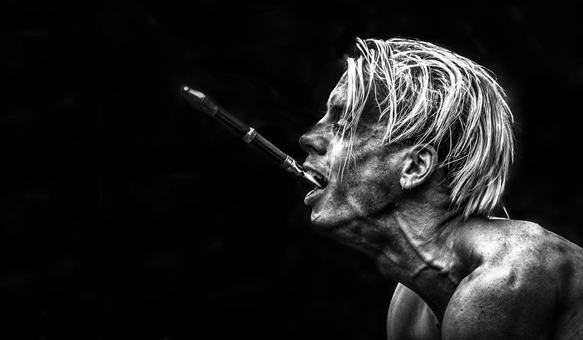
Aerial Manx is one of those performers who has probably never said no to a challenge: someone who is always up for anything and testing new things and the limits of how far he can push himself and his body. Along with his wife Little Miss Bones, Manx and this new and intimate show showcases just that, and with acts such as his signature sword-swallowing backflip, Tempest in a Teacup makes it clear why he is a cut above the rest. Yes, this is not a show for the easily queasy.

Tempest in a Teacup.jpg

It seems the older I get the more faint-hearted I become, and the tricks performed in Tempest in a Teacup reinforced this fact for me. The sword-swallowing I could actually watch, but when Manx lifted three bowling balls chained to his ears, seeing that lobe get stretched was incredibly intense. The only comfort to me was knowing that Manx and Little Miss Bones were obviously experienced professionals who had most likely performed these tricks countless times and nothing should go wrong, and thankfully nothing did, except for the technical mishaps.

Throughout the show Manx attempted to control the music from his watch and iPad on stage. Unfortunately, technology being technology, songs did not start when they should have, started playing on their own, or began to play and then skipped to the next track. While he attempted to fix this, Manx would let us know how embarrassed he was and to talk among ourselves while he tended to it. My question is, why, when there is a dedicated sound and tech booth in the back of the venue, would you not utilise this to then focus your attention on the performance? Because while the tricks were amazing, I feel there was definitely a need for a tighter structure and direction for the show.

At the beginning, the two performers are showing us oddities they have collected over the years, including a replica cast of the Elephant Man’s skull and antique tools used for lobotomies. However, these props are never brought back again or utilised in any way, so I wondered why they showed us, apart from filling in time. On occasion, this loose awkward structure made me feel like I was watching a street show rather than a piece being performed at a venue. Manx has no doubt plenty of random and unique experiences throughout his career, and it would have been great to have heard some of those stories and how they got him to where he is now. One time when he does this well is with regards to recounting his recent Guinness World Record achievement for the Fastest Human Backbend Walk over 20 metres, which he then proceeds to perform. And if you need a visual aid on what that looks like, think of the spider walk in The Exorcist.

Aerial Manx is a great performer who is very skillful in what he does and who clearly likes to push the boundaries of what the body is capable. In order to make Tempest in a Teacup a strong production as a whole, I feel it’s imperative that he offers some more powerful purpose or reason or narrative behind what we are seeing. With the wonderful creative possibilities of circus becoming more prominent in performances at Melbourne venues and festivals, it would seem there needs to be something more happening than watching someone swallow two neon tubes simultaneously, as impressive as that may be!

Tempest in a Teacup was performed at The Butterfly Club between 29 April and 8 May, 2016.

Next Wave Festival 2016: SEDIH/SUNNO

An exquisite and emotional experience

By Myron My

There is so much I want to write down right now but I am unsure if it’s a critical review of the show I just saw or a visceral personal response. Such is the effect that Rani Pramesti has on you when you walk out of Sedih//Sunno. “Sedih” is Bahasa Indonesia for ‘sadness’ and “sunno” is ‘to listen’ in Fijian Hindi, so the show is an invitation to listen to our sadness. Or as one of the performers advised us, it is a mediation on such sadness.

rani-p-collaborations-sedih-sunno-2016-photo-credit-daniela-rodriguez.jpg

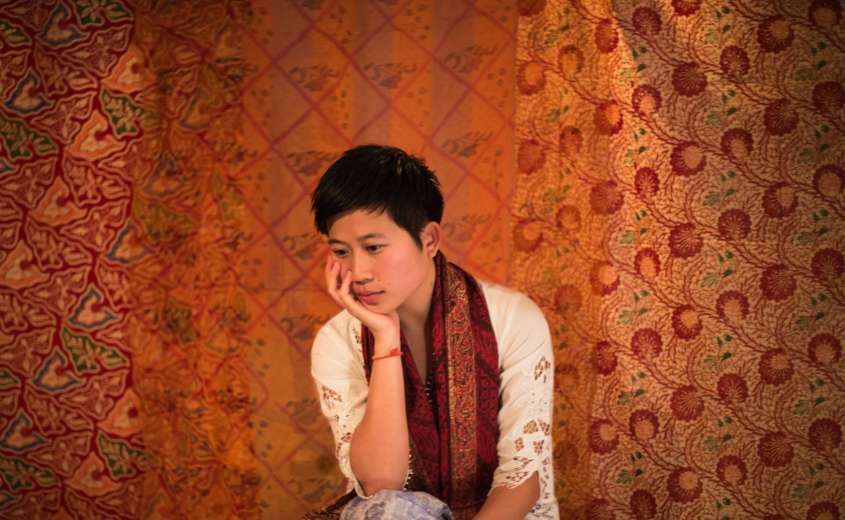
Sedih//Sunno is a collaborative performance installation piece by Pramesti, Ria Soemardjo, Kei Murakami and Shivanjani Lal, all sharing stories with us in this multi-sensory and multi-cultural show. As we take our seat in a room surrounded by gorgeous Indonesian batik fabrics, we hear the four women speaking over the top of each other in their various languages as if they are conversing at home with their family. I don’t understand any of it (except some snippets of Japanese), but it feels lively, fun and inviting.

The conversation soon quietens and Pramesti enters the space, asking for permission to join us. She puts the intimate group at ease with her gentle humour and calm nature, and I almost feel like I am at primary school show-and-tell, as Pramesti shares with us stories of her childhood and her mother’s childhood. While devising the show, Pramesti reveals she discovered her mother had been sexually abused when she was eight years old, which changed the nature of the work drastically. It became a piece about keeping company with your sadness and not hiding it away on its own. The integrity of the performance and safety of the audience is always paramount for the four artists and they are with us every step of the way through the performance.

As we continue moving through the space, we are handed small pieces of batik and directed to Pramesti who helps us in folding the sheets and putting them away, no doubt something she has done numerous times with her mother. As I sat down, listening to the beautiful music from Soemardjo’s tamboura and her Javanese-inspired vocals, and watching as the rest of the group folded their fabrics with Pramesti, I was taken back to my own childhood, where I would help my late mother fold linen. It was a very vivid experience and raised questions of my own personal grief and sadness since my mother passed away eight years ago.

Sedih//Sunno can be seen as a rite of passage of accepting sadness as part of our lives. It is about reflecting on those moments and opening up to ourselves as to how they have made us who we are. At another point in the show, we are provided with smalls bells and shown a path that has four glass bowls of water. As we walk past each bowl, we ring our bell as we dunk it in and out of the water three times. Again, through the guidance of these artists we are able to acknowledge sadness and the passing of time.

So there have been some tears shed as I write this and maybe if I had written this review a few hours after I saw it rather than immediately, my response would have been slightly different, but Pramesti and her team are owed our honesty and should be aware of the poignant experience with which they have provided people. Pramesti’s mother says in a recorded conversation that “life is beautiful and unplanned”, but you really should plan to see Sedih//Sunno before it sells out.

Venue: Arts House, 521 Queensberry St, North Melbourne, 3051
Season: Until 15 May | Wed – Sat 6.30pm, Sat 3pm, Sun 5.30pm
Tickets: $28 Full | $23 Conc
Bookings: Next Wave Festival

Image by Daniela Rodriguez

Hungry Wolf Theatre Presents ORPHANS

Fraternal bonds are set to break

By Myron My

The bond between brothers, or any siblings for that matter, is a bond for life. After all, as the adage goes, you can choose your friends but you can’t choose your family. Lyle Kessler’s Orphans, two brothers share the pain of having a mother who has died and a father that has abandoned them. While both of them choose to deal with the pain and protect themselves and each other in different ways, emotions gradually reach boiling point where something has got to give.

Orphans.jpg

In Hungry Wolf Theatre‘s current production, Mark Davis as younger brother Phillip continues to impress me with his ability in bringing his varied characters to life. It’s testament to his skill and talent that Davis is physically and emotionally the complete opposite to the character I last saw him in: Q44‘s brilliant production of Sam Shepard’s Fool For Love last year. The machismo and hot-bloodedness of Eddie is nowhere to be seen in Phillip, an innocent, sheltered individual who falls somewhere on the high-functioning Autism disorder spectrum. It is almost like the performer has ceased to exist as each movement, each stare, each thought process is overtaken by Phillip and for a show that goes for over two hours, it is a challenging feat that Davis smashes through.

Danny Zivaljevic as the older, more volatile brother, Treat, has a strong presence on stage and physically captures the anger that is boiling inside the character. It’s an anger that we recognise if Treat doesn’t control soon enough, will eventually be his undoing. I confess I would have liked to see Zivaljevic try and work more with the subtleties and the nuances of these anger issues that would have allowed Treat to feel like a better-rounded character. Meanwhile, Sebastian Gunner is much at ease with Harold, finding the perfect balance between his comedic, threatening and sensitive nature.

The committed performances from the actors are unfortunately let down by a script that for me lacks true suspense or tension and doesn’t seem to lead anywhere – nor does it explore the characters’ relationships to the depth that I feel would be more rewarding for the audience. However,  Peter Blackburn’s strong direction here and use of the space builds a claustrophobic and still somewhat suspenseful environment within the confines of the brothers’ living room.

Despite the script not being as engaging as I would have liked it to be, the captivating performances alone are worth seeing in this production of Orphans by Hungry Wolf Theatre.

Venue: Gasworks Arts Park, 21 Graham St, Albert Park, 3206
Season:
 Until 23 April | 3pm and 7.30pm
Tickets:
 $30 Full | $20 Conc

Bookings: Gasworks Arts Park

MICF 2016: HOT BROWN HONEY

Just wow

By Joana Simmons

Hot damn. Hot Brown Honey is tearin’ up the Northcote town hall and tearin’ down patriarchy, entitlement and fear. The impeccably written and designed show is a sassy smorgasboard of dance, poetry, comedy, circus, striptease and song. The vibe feels like a disco crossed with a rock concert and gospel service with its no-excuses-high-energy-let’s-rock-the-boat attitude.

Hot Brown Honey.jpg

The Queen Bee on her pedestal of swag raps rhymes both humorous and heart-rending, and tells us how “Fighting the power never tasted so sweet (gluten free, no wheat).” Out from the giant lit-up honeycomb-shaped hive, the Honeys fiercely perform solo and group songs, scenes, and energetic and stylistic urban, traditional, tribal and contemporary dance. The range of talent in the cast is immense – hoola hoops, straps and beat-boxing that has my jaw dropping at the precision. All the acts are linked by the narration of the Queen Bee and show depth and connection to the poignant and sometimes dark themes and ideas they are raising. The rousing soundtrack of rnb, inventive remixes, original beats and voice overs had the sold-out opening night audience clapping, cheering and on their feet.

The production quality is outstanding. The lighting is superb – lasers, spots, and the giant hive of rock star quality. I couldn’t go without mentioning the inventive clever costumes that were seamlessly transformed within seconds during complex choreography: pants you can rip off? Wow. Coconut bras you can drink out of? Wow wow. What starts out as a leaf skirt turns into a full dress with head gear? Wow wow wow WOW!

This show is full-power female kick-ass gold. The audience was energised and buzzing all the way to the tram stop. It’s gobsmacking the talent and message this show has to offer: how it challenges everyone to review their views, and inspires everyone to rock the boat. Go see it. Cancel all your plans, tell all your friends if they haven’t heard about it already: because I’m know I’m going to be talking about it for a long time.

Hot Brown Honey for the 2016 Melbourne International Comedy Festival

Venue: Northcote Town Hall

Dates: April 6-16

Time: 8pm

Tickets: http://www.comedyfestival.com.au/2016/season/shows/hot-brown-honey

Kurt Phelan is PHELAN GROOVY

Pacy, playful and exceedingly entertaining

By Jessica Cornish

A little bit of drag, a little bit of Liberal-bashing, a sprinkle of Aussie pop and some good old musical theatre as packaged and presented by charismatic Kurt Phelan was an hour well spent this week at The Butterfly Club.

Phelan Groovy.jpg

Growing up in far north Queensland in the town of Townsville, Kurt moved down to Sydney as a talented young man to pursue his career in the arts. And clearly he’s done well for himself in the industry and on the stage, being cast in multiple professional musicals such as Dirty Dancing and Singing In The Rain, and even having a stint in Disney Land playing Prince Charming, appropriately fitted with brown contact lenses and all, to truly channel the part.

The NIDA grad has a beautiful voice with impressive vocal technique and control, transitioning with ease from falsetto to chest voice and consistently used good articulation so every word was easily understood, never once being lost amidst the punchy piano accompaniment. Squeezed into the hour-show were a lot of well-chosen upbeat songs, that seamlessly flowed with the dialogue and mood from one scene to the next. The cabaret also incorporated story snippets of personal experiences with musical theatre greats such as Jason Robert Brown, Rhonda Birchmore and Todd McKenney (which my fellow musical theatre buffs would appreciate), as well as touching briefly on more serious issues dealing with the premature loss of friends and also exposing performers for the people they really are rather than merely as their stage personas being presented to the world.

Phelan was supported by his excellent pianist Jack Earle, the dialogue and banter was well-rehearsed and structured, subtle light changes in the venue were able to nicely augment the changing moods of the piece, and the night ended with some fabulous crowd karaoke – so what more could you want?!

Phelan Groovy was a lot of fun, and charming Phelan didn’t take himself too seriously. His current season at The Butterfly Club has unfortunately ended, but when he returns (which we hope he does), you should definitely go check it out.

Melbourne City Ballet Presents NAPOLI

Impressive cast bring ballet to the suburbs

By Rachel Holkner

The professional dancers of the Melbourne City Ballet, performing alongside Finishing Year pre-professionals, recently gave a charming rendition of the 1842 full-length ballet Napoli at the Darebin Performing Arts Centre. The casting of the two lovers Teresina (Carolina Pais) and Genarro (Matt Dillon) was wonderful; both highly skilled ballet dancers, they shared real chemistry and were very compatible together.

Napoli.jpg

While the sets, costumes and props may be on the simpler side (being a short performance season) they more than fulfilled their roles, setting the scene for an Italian love story in a seaside town and then an underwater grotto as Teresina is kidnapped by Golfo, a water spirit (Brendan Bradshaw) and his Naiads.

Napoli, not produced as a full-length ballet in Australia for forty years, was a curiosity and an ideal choice for a small and nimble company. Artistic Director Michael Pappalardo mentions in the program the dancers’ difficult task in adapting to choreographer August Bournonville‘s unique technique. I wish I knew more of this; while certain of the combinations were unusual, it’s difficult to tell as a non-performer what makes them trickier than others.

As for the curious Napoli, it was soon clear why it is not performed more. Act One is a pantomime, acted in time to the music, with a profound lack of ensemble dances. The story is uneven and unnecessarily complex, relying overly on the dancers’ skills in mime rather than expressing character through movement.

The choreography as a whole is somewhat flat (there is no “Dance of the Cygnets” here), and the music insipid, the result of being composed by a collection of musicians inspired by a wide range of source material. While there is copious dancing in Act Three it also feels flat as there is no change in emotion: it is all celebration of the lovers’ reunion and tarantella.

However, none of these criticisms should be a reflection of MCB. They are a highly capable ensemble providing professional productions at locations and at price points for the general public. I would definitely recommend them to aficionados and the newly ballet-curious. This production of Napoli was definitely a case of the performers outshining their source material. Perhaps more of these rare or unusual pieces may be the key to drawing an audience of ballet enthusiasts.

Melbourne City Ballet‘s next production is the contemporary showcase Play Rewind at Metanoia Theatre, Brunswick
26-29 May
Tickets from $26.10
http://www.melbournecityballet.com.au

Image by National Photography