Category: Opera

REVIEW: Melbourne Festival Presents THE RABBITS

Powerful and poignant family opera

By Rachel Holker

Based on the acclaimed picture book by John Marsden and Shaun Tan, and the winner of several Helpmann Awards, The Rabbits (adapted and directed by John Sheedy) comes with high expectations and does not disappoint. An unsubtle commentary on the colonisation of Australia and the consequences for the people and the environment, this production for Melbourne Festival 2015 is no pantomime for the kids.

The Rabbits

The story remains very close to the original text, with the addition of Bird (Kate Miller-Heidke) as a narrator of sorts, calling on high various warnings and dire predictions yet pointlessly declaring her inability to assist with the Marsupials plight as the Rabbits invade.

The Rabbits is masterpiece of staging and design. Tan’s illustrations are utilised sparingly, yet effectively to portray the land of the Marsupials and the encroaching impact of the Rabbits. The costumes (Gabriela Tylesova) cross the line into puppetry and are so emotionally effective (the Marsupials in particular are gorgeously haunting) that the performers’ own faces become superfluous.

Miller-Heidke’s score is very good and, the small orchestra on stage was a delight – I would have liked to see even more of their interactions with the other players. All the performances were strong, especially the Marsupials Hollie Andrew, Jessica Hitchcock and Lisa Maza who brought genuine grief to some heartrending scenes.

The libretto is a touch uneven and jarring at points, particularly where it tries to play to the adults in the audience. This was not necessary and detracted from the story rather than lightening the mood as was the intent. However where the words and music combine at key emotional points is where The Rabbits excels.

I hope The Rabbits represents the beginning of a trend in children’s productions that speak up rather than down to their audience.

Tickets to The Rabbits, produced by Opera Australia and Barking Gecko Theatre Company, in Melbourne are sold out.
Sydney performances:14-24 January, Roslyn Packer Theatre, $47-$98

Bookings: https://opera.org.au/whatson/events/detail?prodid=113130

By Abbey age 11.

I really liked The Rabbits, but it was really sad at some parts. The costumes were amazing and the way they used their headdresses’ mouths when the Rabbits were drinking tea, instead of their own, was really cool. The use of props was awesome with some reaching the top of the stage such as the boat.

The story was told extremely well with one of the Marsupials from the book replaced by a narrating bird and I thought that was effective. The interpretation of the book was really good for the book has no dialogue, but the show does. The character’s speeches were made up but what they said still made sense to the story. The operatic side was amazing but loud.

I wouldn’t recommend this for young kids because it is so sad and emotional.
REVIEW: Lyric Opera of Melbourne Presents STELLA

Appealing, accessible Australian opera

By Christine Young

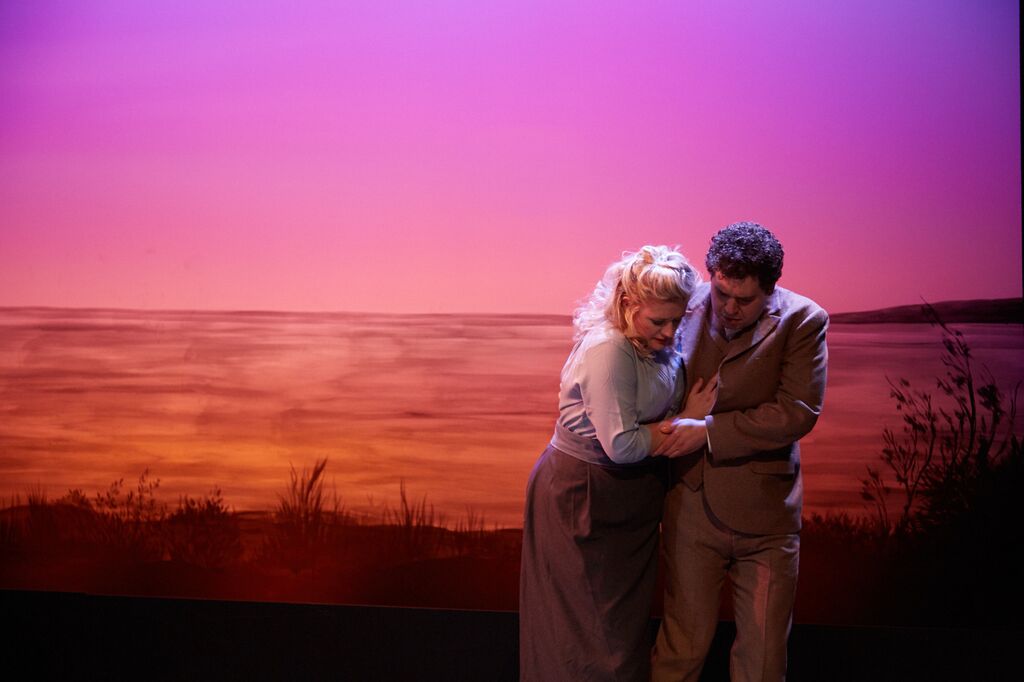
In the first of its 2015 Australian Opera Series, Lyric Opera of Melbourne is reviving G.W.L. Marshall-Hall’s 1910 work Stella which plays out the tragic story of a nurse whose ‘immoral’ past catches up with her at exactly the same time her boss, Dr Kirke, declares his undying love. I hate it when that happens.

Lyric Opera Presents Stella Photo by Kris Washusen

The story is based on Marshall-Hall’s own fall from grace in the eyes of Melbourne society and his work colleagues. In 1891, he emigrated from England to take up the post as the first chair of music at the University of Melbourne. This was a coup for the university: Marshall-Hall wrote his first opera at the age of fifteen, and by the time he came to Melbourne, had written two more operas and composed many orchestral works and songs.

But he was also a bit of a ratbag as far as the conservative Melbourne establishment were concerned. Marshall-Hall publically expounded his views as a socialist, atheist and passionate artist. Marshall-Hall’s reputation as a womaniser was ultimately his undoing and he was dumped by the university. He went on to establish the Conservatorium of Melbourne, and wrote Stella which premiered at Her Majesty’s Theatre in 1912.

In all my theatre reviewing, Stella was my first opera, and I’m pretty confident from my experience that it’s an excellent choice for the novice. The libretto is in English which is a good start. This means you’re able to focus on the singing and the music without the distraction of subtitles. Moreover, while this one-act opera with its cast of five may have a lower budget than the big, lavish productions, the cast, composer, orchestra plus the large artistic team are highly accomplished and experienced in their fields. And being in an intimate theatre space, the audience has the advantage of soaking up the singing and live orchestra in close proximity.

So if you want to experience opera without coughing up big bucks, this is the time and place to do it. And it seems fitting that the work of a bohemian and socialist should be made so accessible to the great unwashed.

Soprano Lee Abrahmsen shines as Stella to pardon the pun, and it’s such a unique experience to watch and hear, not just Abrahmsen but the whole cast, express Aussie vernacular in operatic style. Abrahmsen’s vocal control is outstanding and at its finest during her arias that are punctuated with expert vibrato. For the most part, I was completely taken by Robert Barbaro’s (Dr Kirke’s) angelic voice above all others. The male cast members seem to have more chances to showcase their talent than the title character, and Matt Thomas (Mayor Chamley) also has a stunning tenor voice which meets the challenge of depicting his character’s inner turmoil.

Last, but nowhere near least, under the inspired guidance of conductor Pat Miller the excellent 16-piece wind and string orchestra achieves the impressive balance of making its presence known without upstaging the singers. Make sure you stop every now and then to focus on the orchestra. You won’t regret it.

Where: David Williamson Theatre, 144 High Street, Prahran (enter from St John St)
When: 25-30 September, 2015
Tickets: $49.50 (adult) /$39.50 (concession) /$35.00 (under 30s)
Book: www.lyricopera.com.au

Image by Kris Washusen

REVIEW: Victorian Opera Presents REMEMBRANCE

How do you choose to remember?

By Deborah Langley

It’s a cold night in Melbourne and I must admit I’m feeling quite nostalgic. It’s been a hard week for me, the week I said goodbye to my grandmother, of funerals and sadness, of tears and regret. So it was with a heavy heart that I went along to the Victorian Opera’s Remembrance at the Arts Centre’s Hamer Hall.

Victorian Opera 2015 - Remembrance © Charlie Kinross

On this the centenary year of the ANZAC landing in Gallipoli, I was ready to remember: to shed a tear for the wasted youth and reminisce of times gone by, of what could have been and what we have lost.

With stories, songs and images we were given an historical and musical account of Australia’s involvement in World War 1. From the time of enlistment in 1914, with diggers leaving us and training in Egypt, through to landing in Gallipoli, the Somme and the Western Front and finally the homecoming of some of our luckier diggers. Remembrance gives a respectful reimagining, complete with authentic wartime ditties, but unfortunately this ultimately did not feel a truly heartfelt tribute.

Written and directed by award-winning Australian author Rodney Hall, and composed and conducted by acclaimed artistic director Richard Mills, Remembrance stars one of Australia’s best-known operatic tenors David Hobson, along with eight of Victorian Opera’s talented young artists.

Elizabeth Lewis is a standout in the ensemble, embodying characters both vocally and physically, while Michael Petruccelli and Nathan Lay give equally memorable performances as diggers throughout the war as the cast create a series of moving musical portraits against the backdrop of archival footage.

Accompanied by an impressive chamber orchestra, Orchestra Victoria, and a large rousing community choir, Remembrance does offer a glimpse into what life might have been like during World War 1: something we should all continue to remember.

Victorian Opera’s Remembrance was performed at Hamer Hall on August 13 2015, before touring:

Ulumbarra Theatre, Bendigo
15 August 2015, 7:00pm

The Cube, Wodonga
31 August 2015, 10:30am & 7:30pm

West Gippsland Arts Centre, Warragul
3 September 2015, 8:00pm

Eastbank Centre, Shepparton
12 September 2015, 7:30pm

http://www.victorianopera.com.au/what-s-on/remembrance/#TabDatesTickets

REVIEW: Victorian Opera Presents SWEENEY TODD

Loved it!

By Jessica Cornish

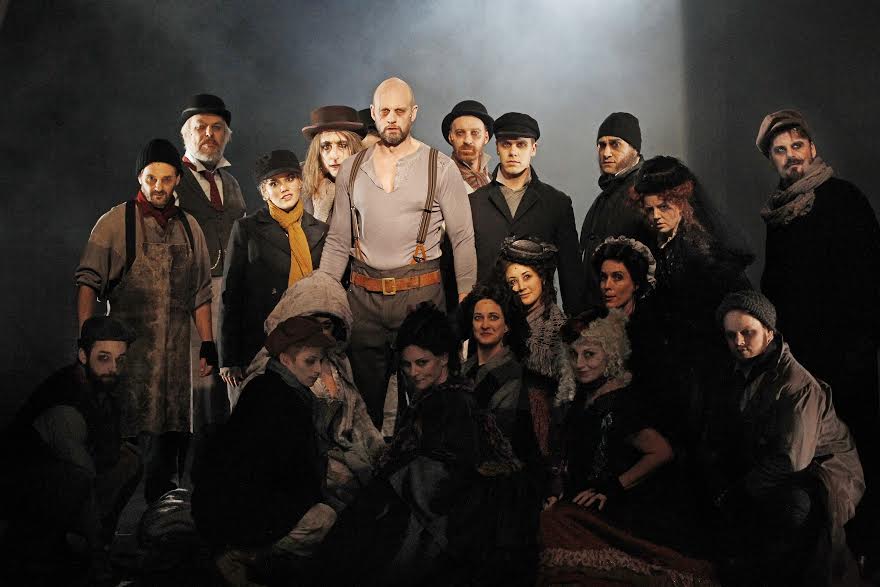
In celebrating their 10th birthday, Victorian Opera have chosen to end their Stephen Sondheim trilogy that began in 2013 with the famous musical horror Sweeney Todd: the Demon Barber of Fleet St, directed by Stuart Maunder.

Sweeney Todd

Sweeney Todd (Teddy Tahu Rhodes) is a man seeking revenge on Judge Turpin (Philip Rhodes) for the wrongful imprisonment that separated him from his beautiful wife and child, Johanna (Amelia Berry). Escaping colony convict life, Todd returns an obsessed and disillusioned man, and in a cruel and unforgiving society crumbling into filth and poverty, loses his humanity and becomes a serial killer alongside his infatuated accomplice, Mrs Lovett (Antoinette Halloran). They promptly make a business of slitting the throats of barbershop customers and baking them in to pies. Meanwhile, Todd’s estranged daughter is locked away by her adopted guardian the Judge, and a lovesick boy Anthony Hope (Blake Bowden) tries to free Johanna from the lecherous man planning to marry his ward.

Victorian Opera debutant but Melbourne music-theatre favourite Teddy Rhodes has a beautiful rich voice, and his strong brooding frame demanded attention at all times; however, for the first act he seemed a little wooden and detached (even for Todd) when delivering his few lines. Halloran was a triumphant highlight of the show: her singing was always clear, well-executed and perfectly acted, providing black humour throughout the night. Her Mrs Lovett was all at once funny, revolting, and greedy yet still managed to gain the sympathy of the audience. Another standout performance was soprano Berry as Johanna, who effortlessly and accurately glided through her notoriously difficult songs and had amazing vocal clarity and control. Finally, Kanen Breen as Beadle Bamford definitely needs a mention for his hilarious performance as the snarky Judge’s companion, with a killer falsetto that reared itself spectacularly in the second act.

The ensemble are highly participatory throughout the performance, reminiscent of a Greek chorus narrating and commentating on the action unfolding. In this production, the ensemble’s well-executed diction was truly impressive because of the rapid-fire of lyrics and intense musical and narrative demands, whereupon for the most part every word was heard even amongst the complex rounds of verses. The famous Sondheim score is lyrically rich, metrically unstable, dissonant and riddled with constant tension. Under Phoebe Brigg‘s astute musical direction, even songs seemingly beautiful and sweet were laced with vengeance and murder, always leaving the audience deliciously uncomfortable and on edge.

The clarity of the audio designed by Jim Atkins was excellent: however the balance between the orchestra and the vocals was often slightly off, leaving the occasional vocal lines difficult to hear, while the infamous eerie factory whistle was literally painful to listen to and, with patrons covering their ears, really needs to be turned down. Philip Lethlean‘s atmospheric lighting was harsh, using cool washes, up-lighting, and at times, one dimensional angles to give a real horror feel, and adding to the unease of Fleet St. The sets by Rodger Kirk were simple yet adequate, and were easily and smoothly manipulated on a scene-to-scene basis (with just the one bed that seemed to be stuck on stage for a little extra time than required).

Sweeney Todd is a thrilling and enthralling musical, and with a difficult score for the regular music-theatre or operatic performer, it is not often as vocally perfected as it is here by the Victorian Opera. The opening night performance was an absolute pleasure to see and hear, and as the ‘Demon Barber’ isn’t a steady theatre standard, I warmly suggest everyone go see this musical operetta. (Just make sure that if you are purchasing or picking up ticketson the day to arrive at least half an hour in advance due to very long lines, and even more importantly make sure you are in the correct venue! Many people, including myself were ushered into the wrong theatres within the Arts Centre, so I almost saw West Side Story, another Sondheim classic, last night!)

Victorian Opera’s Sweeney Todd is playing at the Playhouse in The Arts Centre until July 25, 2015. Tickets from $50, bookings via http://www.artscentremelbourne.com.au/whats-on/opera/sweeney-todd

Image by Jeff Busby

REVIEW: Victorian Opera Presents THE BIG SING

With voices raised

By Narelle Wood

For one night only Victorian Opera, community choirs from around regional and metropolitan Victoria, VOYCE (Victorian Opera Youth Chorus Ensemble), students from the Master of Music Opera Performance program and Orchestra Victoria came together for the very aptly named The Big Sing.

In the magnificent surrounds of Hamer Hall we were treated to performances of Verdi, Mozart, Bizet, as well as Gilbert and Sullivan and Maestro Mills’ own arrangements of Australian folk songs “Click go the Shears” and “Waltzing Matilda”. The program provided a great variety of musical moods, from the joyful drinking song “Brindisi” from La Traviata to Purcell’s haunting “When I am Laid in Earth” from Dido and Aeneas.

The Big Sing

It was, however, the ethereal performance of “With Drooping Wings” also from Dido and Aeneas and sung by VOYCE that was a highlight, demonstrating the depth of talent that Victorian Opera has to work with.

Michael Petruccelli and Matthew Tng were very entertaining (they seemed to be thoroughly enjoying themselves) and I could have listened to Kate Amos and Cristina Russo sing all night. But for anyone unsure whether opera is for them, nights such as these are a perfect introduction. Selection of music aside, Maestro Mills provides a history and context to the pieces in a passionate, sometimes brutally honest, but always entertaining style.

While in an opera performance the opera singers will always be the stars, listening to, and on this very fortunate occasion watching, Orchestra Victoria is an incredible experience. This time we were treated to some introductions to the various instruments, and personalities, of the orchestra, which added a relaxed and very personable feel to the evening.

I did find the request to join in the singing of “Waltzing Matilda” a little confronting and was a little too self-conscious to join voices with likes of Elizabeth Lewis and Nathan Lay. Hopefully The Big Sing will be back next year as I certainly thought it was a big hit, and who knows – maybe next year I’ll be game enough to sing along.

Victorian Opera’s The Big Sing took place at Hamer Hall on 13th Oct 2014.

REVIEW: Left Bauer Productions Presents MASTER CLASS

Intimate and involving theatre

By Bradley Storer

Terrence McNally’s Master Class, a play about the life of Greek opera singer Maria Callas whose artistry and career revolutionised the landscape of 20th century opera, comes to fortyfivedownstairs with the brilliant Maria Mercedes as the tragic diva.

Master Class

The intimate theatre space at fortyfivedownstairs is perfect for the play set as a masterclass in the twilight of Callas’s career, the era signalled effectively by the 70’s fashion worn by the cast. Mercedes enters the room with an air of quiet authority, an iron fist wrapped in silk, taking charge of the stage and the accompanist (Cameron Thomas) in short order. Mercedes is the embodiment of the word ‘diva’ – narcissistic, commanding and uncompromising but with such charisma and a depth of artistic integrity that it is easier to see how this figure still fascinates today. Mercedes manages to find the undercurrents of charm, self-deprecation and kindness in the character which also make her surprisingly likeable.

The three students who Callas teaches over the course of the play are all equally as brilliant – Robert Barbaro as the sole male participant Tony brings a potent masculine swagger and a heart-meltingly beautiful tenor to the role. Anna-Louise Cole as Sharon, the only student with the guts to stand up to the opera superstar, radiates a subdued determination which rises to the surface as she faces off against Callas – her dramatic soprano is showcased to jaw-dropping effect in an tremendously difficult aria from Verdi’s Macbeth. The best of the lot is Georgia Wilkinson as Sophie, a bubbly coloratura soprano, and Wilkinson plays her so winningly that it is hard to take your eyes off her, even when she is simply standing side stage observing Callas.

As she watches her students singing roles she herself made famous, Callas is drawn into internal monologues of operatic proportions, brutally delving into the depths of her poverty-stricken childhood, her ill-fated love affair with Aristotle Onassis, the demons of self-doubt, bitterness and adolescent insecurity which swirl into implosive arias of painful triumph and gut-wrenching loss.

At the end of the master class, Callas stands alone, reflecting to the audience on the simultaneous joy and loneliness of a life devoted to art, saying that she will be satisfied if she has had an effect on even a single person – it’s hard to imagine how anyone could leave this masterfully directed play without feeling affected by the soul of this great artist.

Venue: 45 Flinders Lane, Melbourne
Dates: 19 – 28th August
Times: Tuesday to Friday 8pm, Saturday 4:30pm and 8pm, Sunday 4:30
Tickets: Full $38, Concession $30, Under 30’s $30, Groups (10+) $30, Preview $30
Bookings: Phone – 03 9662 9966, Online at www.fortyfivedownstairs.com

REVIEW: Victorian Opera Presents LA TRAVIATA

Lush and lovely revisit to a classic

By Margaret Wieringa

Violetta is a party girl, drinking and dancing and partying her life away in 1870s Paris. She loves being courted by numerous men and doesn’t believe in love – until Alfredo Germont woos her and steals her heart. Moved away from Paris to the countryside, Violetta is approached by Alfredo’s father who convinces her it is in Alfredo’s best interest to end it, and the famous tragedy plays out.

Victorian Opera 2014 - La traviata - © Jeff Bubsy

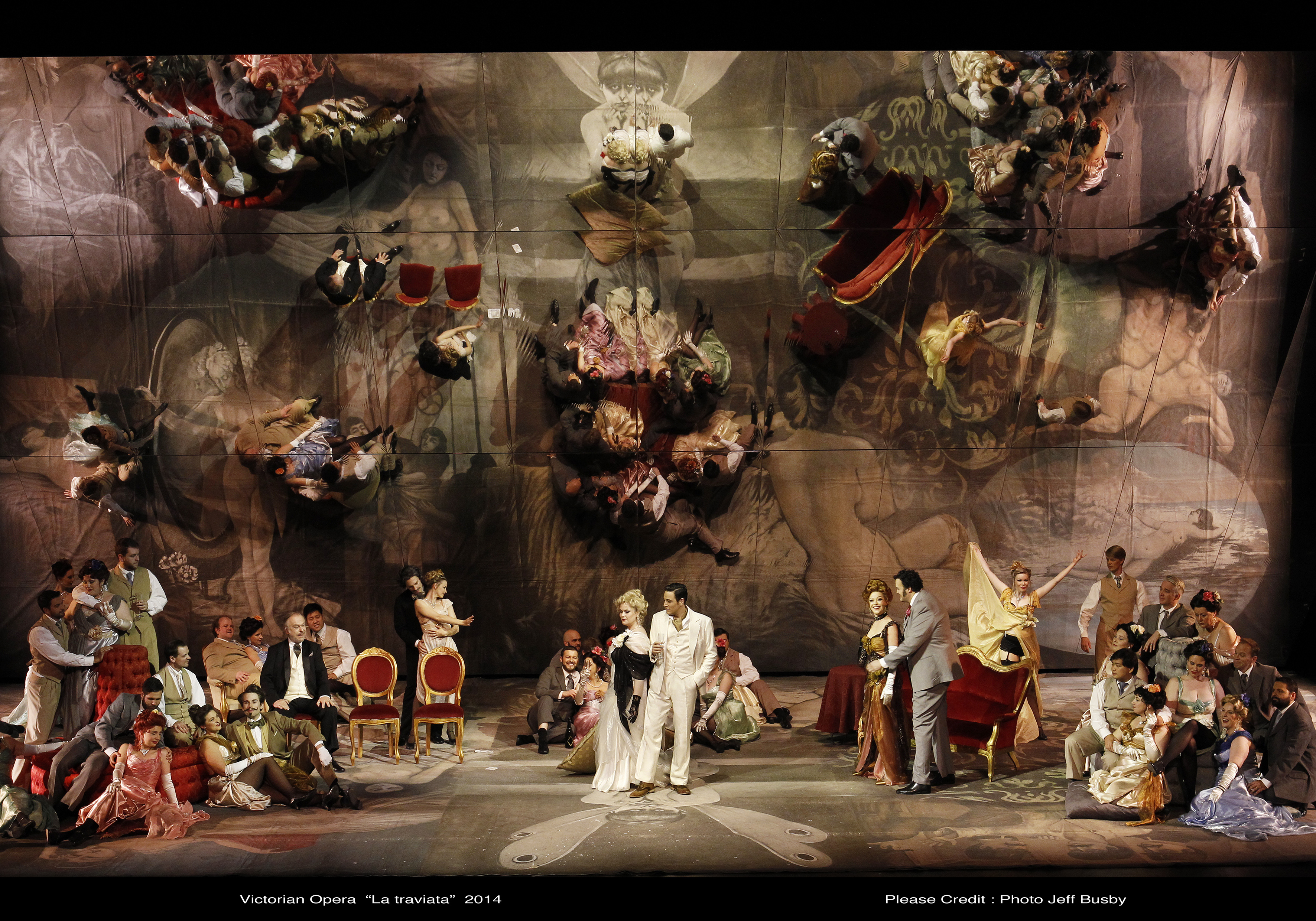
Directed by Henning Brockhaus and designed by Josef Svoboda, Victorian Opera presents this stunning production that has been acclaimed around the world. The feature that immediately grabbed the audience’s attention is the gigantic mirror that is raised before the performance commences. The backdrops are giant paintings on the floor and are reflected, along with the performers, in the mirror. This effect was magnificent, although it was not so successful during the restrained scenes at the country house, especially as it appeared the actors were climbing on the house at times which became unintentionally humourous. The appearance of doubling the size of the stage with the mirror showed a strong contrast between the decadence of the parties and the nightlife of Paris to the emptiness and loneliness of Violetta in her demise.

The production of La Traviata introduces Australian audiences to soprano Jessica Pratt, who held the audience in her hand every moment she was on stage. We lived her joy and delight and sighed as her fortune changed, and during several sections, audience members were heard called ‘Brava’. While the large social scenes were spectacular down to the tiny detailing on the costumes and the beautiful interactions between the various cast members, it was the duets that took my breath away; at the country house, with Violetta and Alfredo’s father, played with aplomb by Jose Carbo, and later in Violetta’s house between Violetta and Alfredo, played movingly by Alessandro Scotto Di Luzio.

This is an elegant production that is perfect not only for the seasoned opera lover, but also for those who have yet to take the plunge into opera. Brava!

Venue: Her Majesty’s Theatre
Dates: Saturday May 17, Tuesday May 20, Thursday May 22, Saturday May 24, Tuesday May 27, Thursday May 29
Times: 7:30pm
Booking: www.ticketek.com.au or phone 1300 795 012

REVIEW: Victorian Opera and Monash University Presents GAMES OF LOVE AND CHANCE

Enamored  with opera anew

By Narelle Wood

Games of Love and Chance was a smorgasbord of operatic music ranging from classical operas such as Carmen and The Magic Flute to the more recent operas of Summer of the Seventeenth Doll and Blitzstein’s Regina. The pieces selected offered a vast array of emotional journeys, from love lost to love regained, as well as love’s fortune foretold.

Games of Love and Chance

The almost eighty-piece orchestra, consisting of students from the Monash Academy Orchestra and several guest musicians, showcased the immense wealth of upcoming musical talent, performing Wagner’s Die Meistersinger von Nurnberg Prelude to Act Three from Tristan and Isolde with seemingly professional ease.

If it was difficult to believe the age of the musicians in the orchestra, it was even harder to believe that many of the young operatic artists had never performed with an orchestra before. Of this group of up-and-coming opera stars, it was Matthew Tng and Kate Amos that provided some of the stand-out performances; it was not just the clarity of their voices and their range but the embodiment of their characters, especially with the lack of context normally provided by costumes, sets and props.

Normally I’m captivated by watching the performers or the mesmerising rhythm of the violin bows, but during this performance I was just as fascinated by the conducting style and instant rapport with the audience of Richard Mills, the Maestro and Artistic Director at Victorian Opera. His passion for music, developing new talent and preserving our cultural heritage was clearly evident not only in the way he spoke during the introduction of each piece, but also in every flourish of his baton.

A highlight of the evening was the outstanding vocal soloists, many of whom are icons of the Australian operatic scene; among my favourites were Douglas McNicol, Jeremy Kleeman and the phenomenal performance of Lisa Gasteen.

While opera may not be everybody’s cup of tea, the collaboration between Monash Academy Orchestra and Victoria Opera provides a perfect opportunity to experience this great art form for both the opera novice and aficionada alike.

This performance took place at Robert Blackwood Hall, Monash University, Clayton on March 29, 2014. Visit artsonline.monash.edu.au/mapa/events for upcoming events.

REVIEW: Melbourne Opera Presents MADAME BUTTERFLY

The Butterfly reborn

By Margaret Wieringa

It’s one of the greatest tragedies in opera – Madame Butterfly, a young Japanese woman who falls in love with and marries an America serviceman only to be abandoned and, ultimately, takes her own life.

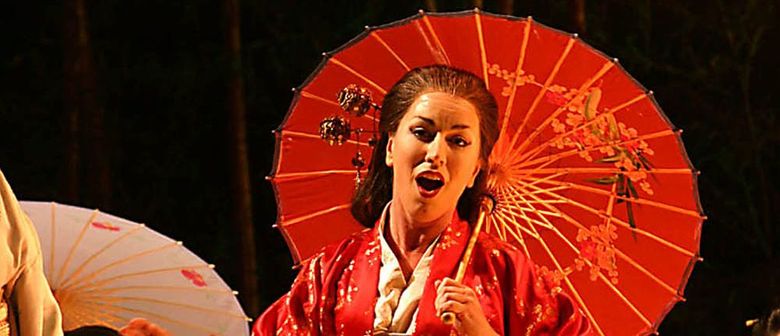
This production by Melbourne Opera is a restaging of director Caroline Stacey‘s production that was nominated for seven Green Room Awards a decade ago. Of the two casts being used for this performance, I had the pleasure of seeing Antoinette Halloran as Madame Butterfly.

Madame Butterfly

The turmoil of the title role poured out lusciously not only in her singing, but through every part of her presence. While she was the emotional centre of the performance, her grief was reflected in other characters, most notably  her maid Suzuki (played with beautiful large physical gestures by Caroline Vercoe) and Sharpless, the US consul (in a contrastingly still but equally grief-stricken performance by Roger Howell),

As I came through the foyer, I was surprised at the variety of people in the audience. There were young and old, some families; some seemed very familiar to the theatre experience and others, like one gentleman I overheard “could not believe they would ever go to the opera!” To get such a wide variety of audience members to embrace the performance is a large challenge. Luckily, a slight hitch with part of the set could not have been better timed, as it was followed shortly by a line from Pinkerton (Jason Wasley) wondering if the Japanese style of house would fall apart. The audience laughed together, brought into a shared joke and brought into the house.

The Athenaeum is a venue built for such an intimate performance, as the sounds of the orchestra seem to fill the entire auditorium. Occasionally, the music overpowered the singing, however with such magnificent sounds, it was hard to be disappointed. The simple use of the large, white paper doors as the main set allowed the mood of each scene to be set using delicate colour washes and other lighting effects, and contrasted beautifully with the bright colours of the costumes and umbrellas of the female chorus as they celebrated the wedding day.

By the end of the performance, I felt emotionally wrung out and was happy to leave Madame Butterfly’s house, though I was glad I’d dropped by. And especially glad that I’d brought my tissues.

Athenaeum Theatre

188 Collins St, Melbourne

Friday March 21, 7:30pm; Saturday March 22, 2pm/7:30pm, Monday March 24, 6:30pm

Book on 9650 1500 or through Ticketek on 13 28 49

Tickets from $25-$98

Alexander Theatre – Monash University

Wellington Road, Clayton

Saturday May 3, 8pm

Book on 9905 1111 or artsonline.monash.edu.au

Tickets from $30-$75

REVIEW: Jamie Way is THE GREAT PIZZAROTTI

Operatic tragedy was never so funny!

By Jessica Cornish

Opera and music theatre performer Jamie Way stars as the larger-than-life character The Great Pizzarotti in this 70 minute comical cabaret woven around famous operatic numbers such as “Nessun Dorma”, “The Toreador Song” and “La Donna Mobile” anddirected by Peter Cox.

The Great Pizzarotti

To open the show, the great man sang condensed versions of a couple of arias – not being a devoted opera follower, I didn’t know all the songs and initially felt a little lost on the content matter – but Way certainly has an amazingly rich and beautiful voice. So if nothing else, I thought to myself at the time I may not have a clue about what is going on if the performance continues to be sung in Italian- but it felt like a privilege simply listening to this man sing at one of my favourite venues in town!

After the first few minutes however, the witty banter began and it became clear that the audience were in for a night of hilarity, as Way joked about everything opera, classical composers, wines, and even the odd Beethoven classic spun in to a Elvis-style tune. Plus his constant fascination and flirtation with the ladies of the room was pretty damn amusing.

The woman next to me got presented with a rose, in slow-motion while Pizzarotti simultaneourly belted out a tune of huge and romantic proportions in to her face – ah, if only it had been me…

A highlight moment was the epic one-man re-enactment of The Magic Flute, the famous opera composed by Mozart who according to popular art (and Pizzarotti) is merely a head sitting on a pair of shoulders.

Watching Way playing multiple characters including the leading man, lady and wicked father, and (as morbid as it sounds) performing the tragic attempted death scene with the damsel stabbing at herself continuously under a veil of red light was simply brilliant and ridiculously funny.

It’s satisfying to say The Great Pizzarotti was indeed as great as its title proclaimed. I feel certain that both opera lovers and newbies like me will love the show because it’s hilarious, well-crafted, and Jamie Way is an extremely talented vocalist and performer.

You can catch his final cabaret performance at The Butterfly Club at Carson place in the CBD, tonight at 8pm. For tickets go to www.thebutterflyclub,com.