Category: Dance

Melbourne City Ballet Presents NAPOLI

Impressive cast bring ballet to the suburbs

By Rachel Holkner

The professional dancers of the Melbourne City Ballet, performing alongside Finishing Year pre-professionals, recently gave a charming rendition of the 1842 full-length ballet Napoli at the Darebin Performing Arts Centre. The casting of the two lovers Teresina (Carolina Pais) and Genarro (Matt Dillon) was wonderful; both highly skilled ballet dancers, they shared real chemistry and were very compatible together.

Napoli.jpg

While the sets, costumes and props may be on the simpler side (being a short performance season) they more than fulfilled their roles, setting the scene for an Italian love story in a seaside town and then an underwater grotto as Teresina is kidnapped by Golfo, a water spirit (Brendan Bradshaw) and his Naiads.

Napoli, not produced as a full-length ballet in Australia for forty years, was a curiosity and an ideal choice for a small and nimble company. Artistic Director Michael Pappalardo mentions in the program the dancers’ difficult task in adapting to choreographer August Bournonville‘s unique technique. I wish I knew more of this; while certain of the combinations were unusual, it’s difficult to tell as a non-performer what makes them trickier than others.

As for the curious Napoli, it was soon clear why it is not performed more. Act One is a pantomime, acted in time to the music, with a profound lack of ensemble dances. The story is uneven and unnecessarily complex, relying overly on the dancers’ skills in mime rather than expressing character through movement.

The choreography as a whole is somewhat flat (there is no “Dance of the Cygnets” here), and the music insipid, the result of being composed by a collection of musicians inspired by a wide range of source material. While there is copious dancing in Act Three it also feels flat as there is no change in emotion: it is all celebration of the lovers’ reunion and tarantella.

However, none of these criticisms should be a reflection of MCB. They are a highly capable ensemble providing professional productions at locations and at price points for the general public. I would definitely recommend them to aficionados and the newly ballet-curious. This production of Napoli was definitely a case of the performers outshining their source material. Perhaps more of these rare or unusual pieces may be the key to drawing an audience of ballet enthusiasts.

Melbourne City Ballet‘s next production is the contemporary showcase Play Rewind at Metanoia Theatre, Brunswick
26-29 May
Tickets from $26.10
http://www.melbournecityballet.com.au

Image by National Photography

REVIEW: Paul Malek’s BOYZ

Intense and absorbing new dance work

By Myron My

Your 20s are a time in your life where you finally step out into the wider world and attempt to make sense of it all. For most, it includes moving out of the family home, graduating from studies, and finding your place in life. Easier said than done though. Presented as part of this year’s Midsumma Festival, Paul Malek‘s new contemporary dance piece BOYZ explores what it means being a gay man in your 20s.

BOYZ.jpg

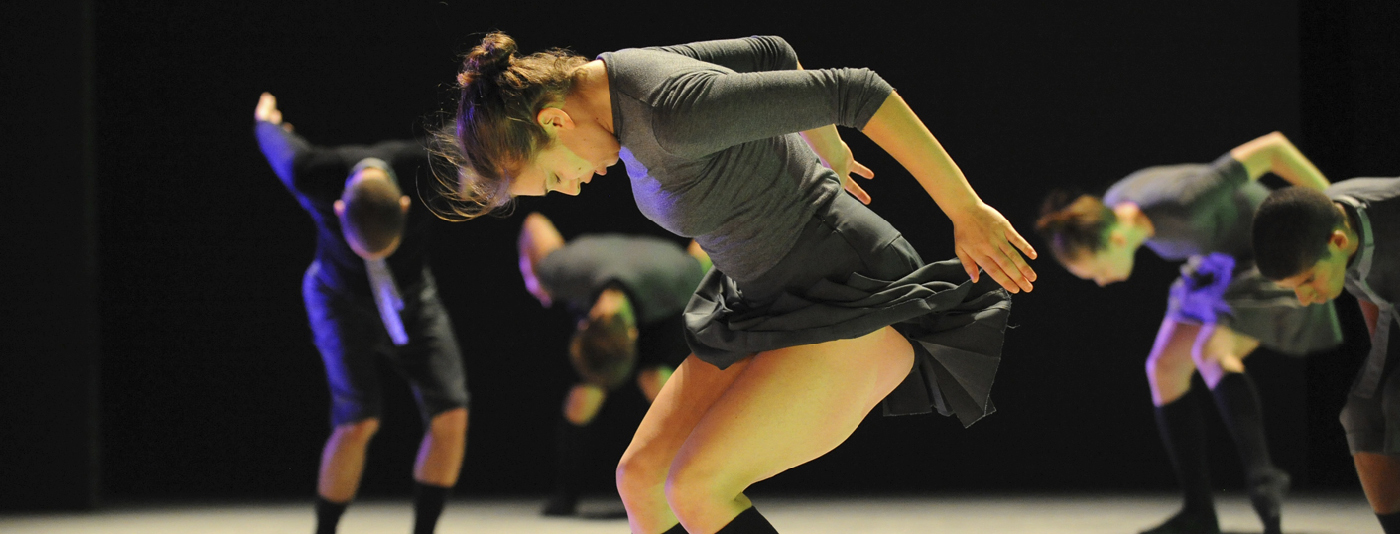
Whilst there is a feeling of frustration and boredom, things begin serenely enough with five males – Jayden Hicks, Samuel Harnett-Welk, Charles Ball, Lachlan Hall and Kurt Dwyer-William – living under one roof. However, the gradual exploration of their sexuality, individuality and how they fit into a society such as ours, has them experiencing new and foreign moments. Malek incorporates some engaging storytelling through his choreography, and the characters the dancers take on maintain a sophisticated depth to them that I rarely witness in contemporary dance.

This is a physically demanding piece that expects much from its performers who are more than able to rise to the challenge, with the menage-a-trios between Ball, Hicks and Hall highlighting this better than any other sequence in BOYZ. Precision timing is required from all three, as their bodies become one but remain in constant movement. The choreography is so intricate that if one arm or one leg is misplaced even for a second, it would visibly disrupt the flow they have created.

There is a strong Dionysian influence throughout BOYZ, for just like the excesses of the Greek God of wine and ecstasy, the moments shared by the characters on stage are highly intense and passionate, whether it be through drugs, dancing, or with each other. Look deeper and you can see that while these events and the transition into manhood can potentially cause harm and tragedy, they can also be viewed as an opportunity for growth and self-discovery.

The choreography is perfectly timed to music by Danish electronic musician, Trentemøller, which at various times sounds like a rapidly beating heart that’s about to explode. The basic and simple set design by Chris Curran, consisting of a white sofa, table and chairs, is the perfect contrast to the frenetic nature of the characters’ experiences, and together with Curran and Hicks’ costuming and Craig Boyes‘ lighting design, create some evocative aesthetic moments.

While the ending is fitting in itself, with the dancers collapsing into slumberous exhaustion from all they have gone through, it is at a much slower pace than the rest of the show, and as such the overall impact of BOYZ lessens. Cutting the length of the finale would still allow for Malek’s desired effect but would also have us remain completely engaged with the piece.

BOYZ is an hypnotic and honest performance piece that, regardless of sex and sexuality, audiences can strongly relate to in appreciating the events and emotions these five dancers go through. From Malek’s perspective, the world can be a big scary place when you’re set free in it, but it’s the experiences we have, both good and bad, that will ultimately decide who we are and how we can find what we are looking for in life.

Venue: Transit Dance, 2/10 Elizabeth St, Kensington
Season: Until 30 January | Wed – Sat 8.30pm
Tickets: $30 Full | $22 Conc
Bookings: Midsumma Festival

REVIEW: Chunky Move Presents MISS UNIVERSAL

Excellent components strive to be whole

By Caitlin McGrane

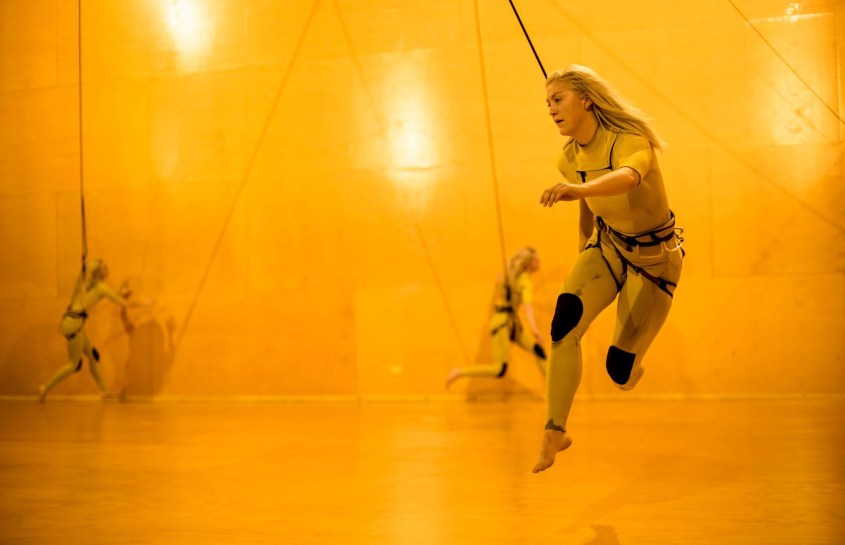
I walked out of Miss Universal and needed quite a while to process what I had seen. When I walked into the performance space I was instructed to ‘interpret it’ in any way I wanted. Speaking to other audience members they were similarly told that there was no wrong place to stand but if you happened to be in the wrong place you would be moved along by the performance: all very mysterious and contemporary. The performance was innovative, eclectic and unlike anything I had seen in a dance performance: it was well conceptualised, directed and choreographed by Atlanta Eke, who also performed alongside Annabelle Balharry, Chloe Chignall and Angela Goh.

Miss Universal.jpg

The performances were excellent and I found myself variously moved, bemused and amused throughout. The trouble was for me that the work did not hang together as a coherent whole; this may not have been the intention in the first place but what it meant for me was that while there was nothing boring about the performance itself, I found myself eventually bored. I think the performance works best if you think about it as a series of visual vignettes rather than holding a narrative or theme through the performance. Chunky Move’s performance space was utilised well, and the performers demonstrated exceptional agility and versatility as they manipulated levels and the traditional space between performer and audience.

The lighting, designed by Matthew Adey from House of Vnholy, lit the space in a sickly hue that exposed imperfections on everyone’s skin, lending an ‘other worldly’ quality to the show. This ethereal quality was enhanced by the excellent and jarring score from composer Daniel Jenatsch.

Overall I really wish Miss Universal had resonated more with me, but other opinions are available and I would encourage those who appreciate contemporary dance to experience it for themselves.

Miss Universal is now showing at Chunky Move until 12 December 2015. More information and tickets from: http://chunkymove.com.au/our-works/current-repertoire/miss-universal/

REVIEW: Batsheva Dance Company Presents DECADANCE

Startlingly unexpected

By Narelle Wood

It was clear from even before the show began that Batsheva was no ordinary dance company and this was going to be no ordinary performance. Company member Shamel Pitts was tasked with entertaining the audience before the curtain was raised, before being joined by fellow performers in a remarkable opening number of unique movement and style.

Decadance

Decadance for the 2015 Melbourne Festival was like no other style of dance I’ve seen. The music selection was eclectic with pieces ranging from Dean Martin, Vivaldi, The Beach Boys and a traditional folk song “Echad mi Yodea”. The dancers often performing intricate canons that slowly built until, just when you thought you knew what was coming next, would take the dance, and often the emotion, in a completely different direction.

It was, as described by the women sitting next to me, an emotional rollercoaster, the mood changing from broodiness to something more light-hearted within a couple of movements. I found their pieces to be both challenging, witty, inspirational, intriguing and most of all joyous. I’m generally not a fan of audience participation, but on this occasion the whole theatre seemed to come alive with enthusiasm, in a celebration of dance. The performance was complimented by such clever and simple use of lighting (Gadi Glik) and wardrobe (Ofer Amram and Maya Avi). At one point, , through the use of the dark backdrop, black suits and some low level lighting, it seemed as though the dancers emerged from nowhere.

Ohad Naharin’s choreography is powerful and intriguing; both the movement and use of music is generally not what you expect. Sometimes it is simplistic and repetitive and at other times there are so many different movements and shapes it is hard to know where to look. But that might be the genius of Naharin’s work, no matter how complex it is, the elements don’t seem to compete, instead perfectly complement each other to tell the most interesting stories.

Decadance was the complex expression of genius at work. I can’t pinpoint why I found it completely enthralling, only that I did, and that when I left I knew I needed to see more. It is contemporary dance in a style and league all of its own.

Venue: State Theatre
Season: 17th and 18th of October (Batsheva presents Last Work)
Details: http://www.artscentremelbourne.com.au/whats-on/dance/last-work

REVIEW: Melbourne Festival Presents 32 RUE VANDENBRANDEN

Suspended in isolation

By Myron My

Performed as part of this year’s Melbourne Festival, Peeping Tom return to Australia with 32 Rue Vandenbranden which explores the isolation and loneliness that a group of people feel through the company’s trademark fusion of dance, physical theatre and music.

32 Rue Vandenbranden

The stage design, which is how the Belgian company begins developing a new creation, perfectly encapsulates the emotional state of its inhabitants. High on a mountain-top, underneath an endless sky, sit three rickety caravans. The ground is covered in snow and there is an immediate sense of remoteness and desolation. The emotive sound composition by Juan Carlos Tolosa and Glenn Vervliet strongly adds to the feelings that the characters are experiencing, while mezzo-soprano Eurudike De Beul‘s musical moments in the show are an aural delight for the audience.

There are some beautifully choreographed moments in 32 Rue Vandenbranden including the opening performance between Jos Baker and Maria Carolina Vieira. Their subsequent duets are mesmerising to watch, as their bodies intertwine with apparent ease in equal displays of frustration and desire to connect with another human.

However, there is still a strong emotional disconnect between what is occurring on stage and what the audience is feeling. The stories that are being told and the character motivation for the movements in the piece unfortunately do not translate well, and along with the constant change in the tone and mood and beyond the stage snow, the show left me feeling quite emotionally cold.

Overall, the individual elements in 32 Rue Vandenbranden, such as the set design, the music and the performances, show the loneliness and hope that people experience in their attempts to connect with and build relationships with people. Ironically, it is this success with the aforementioned aspects that is also its undoing, resulting in a distinct lack of story and heart to the show and an unemotional response from its audience. Perhaps this disconnect is deliberately the work’s ultimate message.

32 Rue Vandenbranden was performed between 8 – 11 October at Southbank Theatre.

NEWS: The Australian Ballet’s 2016 PROGRAM LAUNCH

Performances to entrance and transcend

By Narelle Wood

I’ve been a subscriber with the Australian Ballet for the last six years and each year I’m left wondering how exactly they will manage to top, or even equal, that year’s season. This was especially the case after the year’s Australian premiere of David McAllister’s Sleeping Beauty; one of the most exquisite and luxurious performances I’ve seen. The 2016 season plans to be just as exciting and enthralling, but for completely different reasons.

Vitesse at The Australian Ballet 2016

The five works have been selected because they in some way encapsulate the transformative nature of ballet, either through stretching the dancers, the audiences or the very idea what ballet should be. The Melbourne season begins with Vitesse, part of the contemporary mix, providing a selection of ballets ranging from the chic and sleek of “In the Middle, Somewhat Elevated”, to the the Edvard Munch-inspired “Forgotten Land” to the speedy and fabulous “Danse a Grande Vitesse”, the performance’s namesake. The 2016’s classical repertoire includes a reprise of Stephen Baynes’ 2012 Swan Lake, an Australian premiere of Stanton Welch’s Romeo and Juliet and the comedic and playful fun of Coppelia.
The showcase piece for the Australian Ballet’s 54th season is John Neumeier’s Nijinsky. It was apparently fourteen years ago artistic director David McAllister first broached the idea of staging this ballet, and in 2016 this finally becomes a reality. Described as ‘a biopic of a legend’, this ballet celebrates the accomplishments and mastery of Russian dancer Nijinsky and his ‘unprecedented on-stage intensity’.

While Coppelia may be the only ballet here with lightness at its heart, the program sounds every bit intriguing as it does transformative. There is no doubt that the Australian Ballet will once again exceed all expectations by taking the audience on a completely different, and at times, unexpected journey. As always, I find it hard to pick what I am looking forward to most; the opulent costumes and sets, the unparalleled athleticism, the stories and music, or the grace and elegance of the dancing. 2016 is promising to be another season of exquisite, and world-class, ballet.

Season: Melbourne season begins 11-21st March
Performance Details: Available at australianballet2016.com.au

REVIEW: Devize Co Presents PLUNGE

It begins with a single touch…

By Myron My

Having seen Plunge when it was in its early stages of development last year during La Mama’s Explorations season (then known as Blending), I was very interested to see how the work had progressed. Being performed at the 2015 Melbourne Fringe, the work explores the infinite number of outcomes that can result from a single touch. Some are good and some are bad and some are absolutely crushing.

Plunge

Choreographer and director Darren Vizer continues to push his two performers, dancer Joel Fenton and actor Jean Goodwin, to their extremes relentlessly. They share a good chemistry and have clearly worked hard at driving through the more challenging moments of Plunge and allowing the piece to evolve.

Fenton’s dance sequences clearly demonstrate how his body has been taken over by his emotional state and he uses the whole space to bound, leap, and throw himself around the stage. The music and sounds used to further convey these feelings are well chosen, especially the rapid beating of the heart in the second story.

Goodwin’s monologue on loving and owning her body is a powerful statement about the constant threat women face just for being women. Her command of the statements she makes and the pace with which they are delivered are full of angry confidence. She wants to be heard and she wants to make sure we hear her. It’s a speech that should resonate with each and every single woman out there as well as to every single man who has female family members, friends or partners.

What drew me to Plunge initially was the challenge of having a performer, who is predominately a dancer, acting – and vice versa. This idea has been further developed, especially with providing Goodwin a solo dance moment. However, while her commitment to the piece is evident, I ultimately had difficulty understanding the purpose of what was trying to be conveyed by this inclusion. Similarly, I would have liked to see Fenton be slightly more aggressive in the final story to really drive home Goodwin’s response.

Plunge took on its new name as the performers were no longer blending their two art forms but immersing themselves in it. Similarly, one could also say that it’s about what happens when we take the plunge into romance without quite knowing what the outcome will be. Despite its minor shortcomings, this is still a highly intelligent and insightful piece not only exploring relationships, but also the way the society in which we live operates.

Venue: Fringe Hub, Arts House, 521 Queensberry St, North Melbourne, 3051

Season: Until 24 September | Tues-Sat 10.30pm, Sun 9.30pm

Tickets:$25 Full | $15 Conc, Cheap Tuesday

Bookings: Melbourne Fringe Festival

REVIEW: The New 2015 Production of BALLET REVOLUCION

Vibrant, vital and intoxicating

By Christine Young

As far as revolutionaries go, Cuba’s Ballet Revolución dance company is to dance what Che Guevera was to guerilla warfare. Bloody powerful!

Ballet Revolución

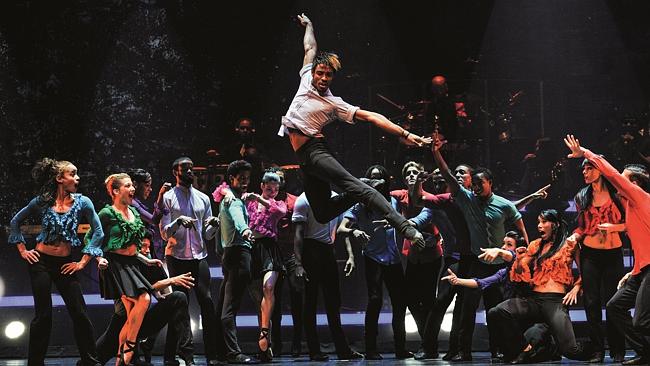
Ballet Revolución breaks every rule, not just of ballet, but of conventional dance performance. The nineteen dancers, twelve men and seven women, are seasoned international performers who come from different, multiple in some cases, disciplines: classical ballet, contemporary, folklore and modern dance. This is true ensemble dancing with only a handful of solo, duo or trio numbers sprinkled through the show.

There aren’t enough adjectives in the English language, or in Spanish I’d wager, to describe the amazing spectacle that is Ballet Revolución. Under the expert guidance of Artistic Director Mark Brady, and choreographers Aaron Cash and Roclan Gonzalez Chavez, the dancers deliver a high-energy, diverse and captivating show. The mix of dance styles – ballet, street, Latin-American and contemporary – are interspersed cleverly throughout the performance. And the dancers display some remarkable physical feats of strength, agility and grace.

Meanwhile, the music (directed by Osmar Hernandez) is provided by a live on-stage band which includes two singers, Cuban drums, trumpet, electric guitars, keyboards and a standard drum set. For much of the show though, the band is covered in darkness or soft light to keep the focus on the dancers.

Ballet Revolución dances across its genres to stirring renditions of modern hits from Lorde, Beyonce, Sia, Jessie J, Rihanna, Bruno Mars as well as a couple of oldies from Prince and The Police. The audience is taken everywhere from a ballet recital to a nightclub dancefloor. This makes it sound like organised chaos. Wrong. It’s so much more.

The choreography, music and lighting are meticulously planned and realised by the cast, crew and creative masterminds.
And the lighting should have its own credit in the cast list. Vibrant colours typical of Latin America feature throughout the show. There is a lot of soft lighting used which creates an interesting juxtaposition of darkness and radiance.

The costumes designed by Jorge Gonzalez are often unique and complement individual dances and lighting arrangements. All I an say is … sequins, sequins, sequins, darling! The sequined tops worked especially well as they also sparkled and danced under dim lighting.

Overall, Ballet Revolución offers a unique and unforgettable experience. Vamos!

Venue: Arts Centre Melbourne
Date: Until 5 July, 2015
Time: 7.30pm, 2pm or 2.30pm
Tickets: From $84.90
Booking: www.artscentremelbourne.com.au

REVIEW: Force Majeure Presents NOTHING TO LOSE

Unabashed and cheerful celebration of human bodies

By Margaret Wieringa

It’s rare to see an overweight body in underwear anywhere. The media is mostly about the traditional construct of ‘the body beautiful’, and even plus-sized models are posed to reveal only that which is deemed attractive – the curve of a large breast or the roundness of some junk in the trunk. But normal large men and women?

Nothing-to-Lose

Created by Force Majeure under the artistic direction of Kate Champion in collaboration with artist and activist Kelli Jean Drinkwater, Nothing to Lose is a performance art piece powerfully choreographed by Ghenoa Gela that uses personal experiences to embrace the fat body. It is at times confronting, challenging the audience to consider words and phrases they may have used or heard used toward large people: “What a pretty face”, “Haven’t you had enough?”, “Does your back hurt?”, and many more. At one stage, a group of audience volunteers were invited onstage to physically explore the bodies of the dancers – an exercise that mostly provoked awkward laughter.

The cast started onstage in near darkness as the audience moved into their seats, and when the house lights came down, they writhed about each other on the stage in very dim light. This continued for some time and had the feel of an exploratory exercise that the group may have completed in development of the work rather than a final piece. Unfortunately, it was not the only piece that felt under-prepared. At times some of the sequences felt longer than necessary, and I found the initial confrontation had lost its impact by the time the cast had moved onto the next scene.

Luckily, after a few scenes, the cast pushed pedestals into the space and arranged themselves on them to dance a beautifully synchronised piece. It was in this that I saw exactly how good the show could be. Each body was highlighted by the harsh lighting, frankly revealing the flaws and dimples that in daily life we mostly strive to hide. It was beautiful.

And then there was the jiggly dance – a delightful number with each body moving in a uniquely wobbly way and with exaggerated facial expressions that sent giggles rippling through the theatre. The performance ended on a high, with a hip-hop dance number performed by an extended cast that drew cheers from the audience. Nothing to Lose is at times awkward and a little uneven, but ultimately both triumphant and entertaining.

Nothing to Lose is playing at the Malthouse Theatre until March 21. Tickets can be booked at http://malthousetheatre.com.au/whats-on/nothing-to-lose

REVIEW: Phantom Limbs Presents DREAMLOGIC

A beguiling reverie

By Caitlin McGrane

The opening 20 minutes of Dreamlogic took me slightly by surprise, it was like being in a psychological experiment and I did for a moment think that there might be an element of audience participation. Thankfully, I was mistaken. The two performers, James Welsby and James Andrews, begin by blowing up balloons and moving them around their bodies without using their hands. It’s incredibly awkward and hilarious to watch, as simultaneously audio from a psychology experiment plays in the background. The focus of the performance is on the subconscious mind, so it’s fitting that the opening seemed to encourage the audience to relax and let themselves be carried through the performance.

Dreamlogic

As the performance built to a crescendo, the space between the dancers reduced until they started to move beautifully together. I particularly enjoyed the surprising yet creative use of balloons, but was slightly disappointed they didn’t move around them towards the end as the balloons filled up the space. Choreographed creatively by Welsby himself and Amy Macpherson, the 50-minute show was delightfully captivating. The rhythmic ebb and flow of the performance captured the audience’s attention and held us in a dream-like state that continued even as I left the theatre. My absorption was only briefly distracted by the slightly clumsy lifts in the final act.

The subconscious mind and the spaces between people, the subject matter that inspired the performance, never felt tired or insipid. Instead, I found myself asking questions about the way that people interact with each other and how we move collectively through spaces. Dreamlogic is a delightful performance that I would highly recommend to anyone who enjoys thinking critically about how we interact.

Dreamlogic is showing at the Northcote Town Hall at 7:30pm until Tuesday 10 March. For tickets visit http://www.darebinarts.com.au/whats-on/dreamlogic-phantom-limbs.