Category: Cabaret

Martyn Jacques on THE TIGER LILLIES

An interview with the cult cabaret artist

By Bradley Storer

Welcome back to Australia! Having toured here many times over the years in both theatrical shows and concerts, is there something about this country that keeps drawing you back to visit?

Yes I love it! I even have a dream about living here. It’s the history, the colonial buildings, the weather. It’s all weird and magical. Dark and cruel as well. I could imagine doing a project and writing about it. I lived and still spend time on the Mill bank estate in London. Used to be Mill bank prison where the convicts were sent over.
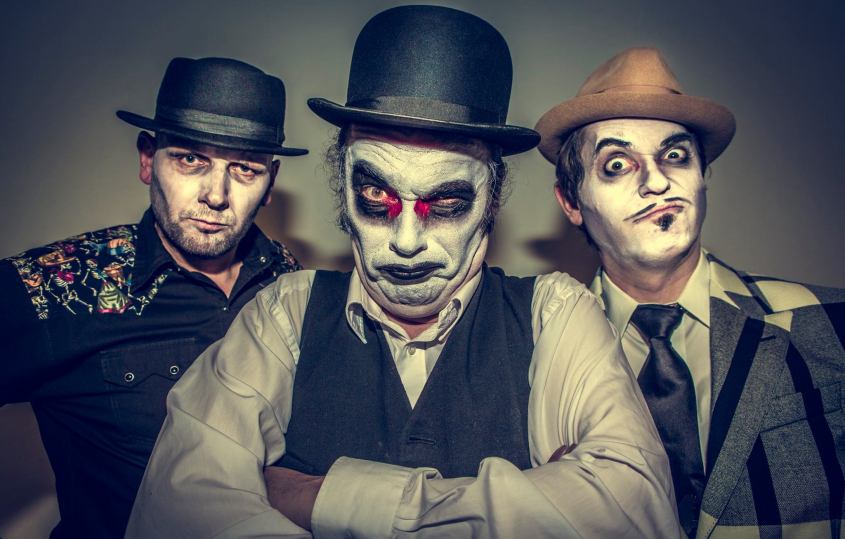
Tiger Lillies 1.jpg

Since Australia originally began as British penal colony, do you find Australian audiences react to the Tiger Lillies’ work in a massively different way to the audiences in your home country?

I think there’s something a bit different about Australians, yes. I’d like to understand it better. I suppose I’d need to spend more time here

After maintaining a career over nearly thirty years, has your general artistic approach to creating your work changed or evolved?

I’d like to think we’re like good wine. We were good at the beginning so it can evolve, change and become better

You’ve mentioned before that after writing so many songs inspiration now tends to come from external sources such as historical figures or events rather than internal, emotional sources – have recent political events (both in Britain and further abroad) and more contemporary social upheavals been an influence on your songwriting?

I’m more interested in history. Its dark side. But that’s the appeal – just the same thing but performed by dead people long gone.

Across your careers, you’ve composed extensively for theatre, with your latest album Cold Night in Soho being your first in ten years not linked to a theatrical show – do you approach writing for the theatre or a theatrical adaptation differently to composing an original album? Do you find the process for either more enjoyable?

I’m happy doing both. The difference is blurred. As long as it’s a good story and theme. The theatre-based albums are good albums as well.

Your music contains extremes of both lyrical beauty and joy as well as violence, death and apocalypse – in a world today that seems to be increasingly shifting towards the latter, what motivates you all to keep creating art? Is there a kind of catharsis or celebration inherent in creating and singing your particular style of music?

It’s like an addiction. I can’t stop. I record around 3 albums a year. I need to do it. It’s my reason to exist.

The Tiger Lillies have written about many dark topics in their work including rape, murder, drug abuse, paedophilia and religious hypocrisy. Do you feel that perhaps music can explore these darker aspects of the human experience in ways that other artforms can’t?

No I think other art forms do it a lot more and it’s far more acceptable than in music. But I think that’s one of the reasons we’re unusual and original. We take dark subjects – which in theatre and art and film is normal – and write songs.

You’ve previously talked about the influence of punk on the Tiger Lillies, with the willingness to push boundaries and offend along with a strong anti-establishment sentiment being a core part of the band – do you believe that with the move towards the conservative right happening in many Western countries that the punk spirit is now more important than ever?  

Yes, it’s perfect for the age in which we live!

To end on a lighter subject, when you’re not performing yourself who are some of the cabaret and musical acts that you love to watch onstage?

I’ve liked some of the things I’ve seen at the Adelaide Cabaret Festival. It’s nice to see there are people out there who have a similar sensibility

The Very Worst of The Tiger Lillies was performed at Memo Music Hall, St Kilda on June 18, 2017.

Kin Collective Presents SHRINE

Intelligent and invested production of Winton’s play

By Tania Herbert

Starting with an Acknowledgement of Country and transitioning straight into an Australianism-filled train-of-thought dialogue, it was immediately evident that we were in the theatre with one of Australia’s most celebrated writers, Tim Winton. Shrine is one of Winton’s three Western Australian-based plays, presented by Kin Collective and directed by Marcel Dorney.

Shrine.jpg

The script content is not happy fare, telling the story of teenager Jack Mansfield (Christian Taylor) and his untimely death from a car accident that his bratty and drunk grammar-school friends (Nick Clark and Keith Brockett) manage to walk away from unscathed. His grieving parents (Chris Bunworth and Alexandra Fowler) find themselves struggling to come to terms with both their loss and their disbelief at the events as related by his school mates.

The catalyst come through interactions with June (Tenielle Thompson), an enigmatic and almost ghost-like character, who appears to Jack’s father Adam. She offers the chance for him to gain a last insight into his son, as she tells stories of moments from her long-term school-girl crush on Jack.

The central character of Adam – a stoic, grieving father filled with barely-contained rage – was masterfully captured by TV and theatre veteran Bunworth. The emotional range of both character and actor were engaging and believable, driving both the story and the emotion. Thompson as June plays counterpoint to his layers of emotional depth with a likeable and steady performance.

Dorney’s staging greatly added to the allure of the play, with the brick shrine centre stage functioning poignantly as prop, emotional barrier, or transitional object. This, with the heavy proscenium border and ambient soundtrack made the performance space reminiscent of a live cinema, with characters stepping from screen into the audience, beautifully capturing the theme within the play of moving between life and fiction.

The build-up and resolution were unpredictable, nuanced and somehow satisfying, in typical-Winton style. However, unfortunately there are serious eye-rolls evoked by the storyline’s gender stereotyping (quite touchingly reflected upon by the director in his program notes), with female characters presented only as passive recipients of abuse and grief. There was little Fowler could do with the character of Mary Mansfield as the wailing wife, who appears only to howl, berate her husband and embark on soliloquies of childbirth and motherhood. Her one short scene of a sweet memory with Jack is the only time she gets to be her own woman, and becomes a particularly moving moment of performance. The sections of stunted, overlapping sentences typical of Winton felt a little unnatural as more prose than dialogue – though the director used them to advantage, giving a lofty Greek-chorus feel to the unwinding of the tragedy.

Thus despite some script limitations, the direction and performances here are strong, the play engaging, and the lighting (designed by Kris Chainey) is just gorgeous. Fortyfivedownstairs was the perfect venue for a dive into what lies under the surface of Australian culture in Shrine.

Shrine is on at fortyfivedownstairs, May 24 – June 18, Tuesday – Saturday 8pm, Sunday 5pm.

Bookings: 02 9662 9966 or online at  http://www.fortyfivedownstairs.com/wp2016/event/shrine-tim-winton/.

Ticket price: $30-45.

N.B. Shrine is part of 2017 VCE Drama Studies Unit 3 Curriculum – Thurs 1, 8 & 15 June 11am school matinees are for school groups only.

Daniel Lammin and MUST Present AWAKENING

A stunning reimagining

By Bradley Storer

Frank Wedekind’s play Spring Awakening – a tale of sex, violence, and the messy transition from child towards adulthood – is a classic of the twentieth century, incredibly explicit and shocking for the conservative times in which it was written and instantly banned. Awakening, an adaption of the original Spring by director Daniel Lammin comprised of five actors (Nicola Dupree, Samantha Hafey-Bagg, Eamonn Johnson, James Malcher, Sam Porter and Imogen Walsh) all sharing and swapping roles, seeks to unpack and re-examine the issues raised in the original play to see if anything has changed.

Awakening.jpg

Oddly enough, it is when the play sticks close to its source material that it feels slightly flat – the earlier, more traditional scenes seem to drag and lack energy despite the commitment of the cast and a wonderful sound design (constructed by Porter) that enlivens every scene. As more stylized and less naturalistic conventions take over, the true and more thrilling theatre begins to appear. Hansy’s masturbatory monologue has never been more intimate and enthralling, and the darkness and horror of the barn scene chills the blood, Wendla’s terrified whispers echoing in the blackness.

The second act, which breaks completely with the setting and costuming of the original text, is where Awakening truly comes into its own. Here Wedekind’s play is cracked open and re-examined in the light of modern society, the most obvious connection being the continuing prevalence of youth suicide and disconnection from each other even in an age where technology connects us in more ways than ever, depicted here in funny and finally tear-inducing series of text messages that pinpoint that tenuous dance between the desire to reach out and the fear of the vulnerability inherent in doing so. The cast are brilliantly versatile, swapping roles with ease, singing multiple harmonies on many occasions and even playing instruments for a Freddie Mercury song.

The final, brilliant revelation this re-examination comes to is an uncovering and denouncement of the original Spring Awakening’s support and perpetuation (whether intentionally or unintentionally, but it is made clear that this makes little difference) of rape culture, pointing out a hideous contradiction in thinking that feels both stunningly obvious and horribly insidious.

Lammin and the cast should be incredibly proud, Awakening is shocking in the best sense of the word: a true ‘awakening’.

Venue: Fortyfivedownstairs, 45 Flinders Lane, Melbourne.

Dates: 10th – 21st May 2017

Times: Tuesday – Saturday 7:30pm, Sunday 5pm

Price: $25 – $35

Tickets: 03 9662 9966 or fortyfivedownstairs.com

Mark J. Wilson in HOMAGE TO BRICOLAGE

Musings on a self-portrait

By Adam Tonking

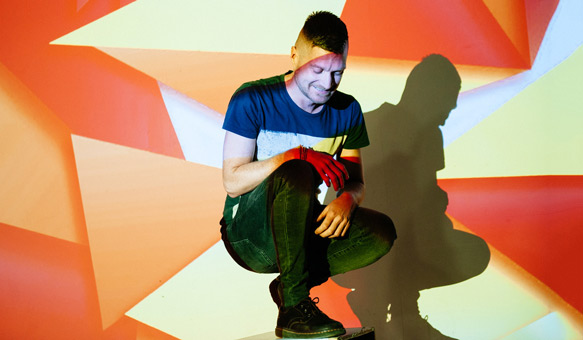
“Bricolage,” according to writer, director, and performer Mark J. Wilson, “is the process of bringing together diverse fragments to make up a larger story,’ and in his show Homage To Bricolage he takes diverse experiences from his life story and through music, poetry, and projections, reflects on their greater implications for society at large.

 Homage to Bricolage.jpg

Performed as a kind of stream-of-consciousness poetry, punctuated with almost entirely original pop songs, Wilson takes us on a journey with him through his experiences of identity; in relationships, in gender, in sexuality, in online society; using cultural touchstones like dating apps, ordering takeaway, Dawson’s Creek… These almost Beat-esque poetical rants were hypnotic and emotionally delivered, frequently underscored by trance-like music and accompanied by well-chosen projections, from family photos to creepy animation. His self-composed songs did sound beautiful, although the pop sensibility of his vocal treatment made it difficult to understand the lyrics at times, and it was a shame to miss the meaning of what are clearly very personal stories.

And it was very personal. Wilson refers to this show as “his signature work,” and indeed you can see in every moment how much it means to him, how much of himself is in each piece he delivers, and his commitment is staggering. All these diverse elements, while not always successful individually, come together to form the larger story of Mark J Wilson, and bricolage is the perfect term for it.

Mark J Wilson’s Homage To Bricolage was performed at The Butterfly Club from 11 – 14 May 2017.

Melbourne International Comedy Festival 2017: IMPURE THOUGHTS

Devilishly cheeky

By Myron My

There are times when we find ourselves in situations where our internal voice is saying something completely different to our external one. This is usually because our true thoughts would be something unacceptable, rude or improper. In her latest show presented as part of the Melbourne International Comedy Festival, Claire Healy’s Impure Thoughts delves into these urges one by one in a night of striking music and appealing storytelling.

Impure Thoughts.jpg

It’s been over a year since I last saw Healy perform and in that time, it appears she has gone through some form of exciting transformation, as she seems to have really found her voice with Impure Thoughts. It’s loud and commanding, and I was struck by the subtle differences she incorporated into each song.  Her opening number, sung in French, is a powerful beginning, and despite not all understanding the language, her audience are still able to deduce what is being shared.

Healy’s affable nature is evident as she shares anecdotes, from her stint working as a performer in nursing homes in England, to her annoyance at Facebook’s targeted marketing. While the links between story and song were not always clear or strong, both were still highly entertaining.

The show never get too nasty or tries to deal with taboo subject matters, which is in line with Healy’s quirky humour and cheerful view of the world. Even when her rage and frustrations are legitimate, Healy makes sure that the tone of the show is kept light-hearted and fun, such as lampooning an article published in 1895 listing the forty-one don’ts for female cyclists, to highlight enduring issues of sexism and misogyny.

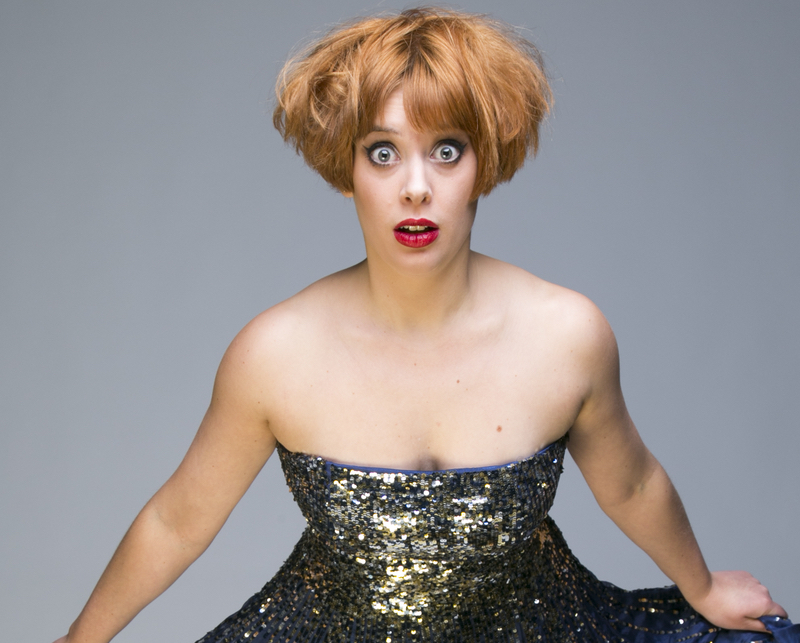
Impure Thoughts might not be as scandalous or salacious as the show title might suggest, but Healy has ensured that we are kept smiling throughout the cabaret. It’s an evening of great songs, clever writing and some excellent wide-eye stares.

Venue: Tasma Terrace, 6 Parliament Place, Melbourne.
Season: until 22 April | Mon – Sat 8:00pm (no shows 14 -1 7 April)
Length:
50 minutes
Tickets: $25.30 Full | $20.30 Conc | $18.30 Tightarse Tuesday
Bookings: MICF website

Melbourne International Comedy Festival 2017: DOCTOR IN THE HOUSE

Lovable and laughable

By Myron My

Ahmed Kazmi is a doctor: a real-life doctor. He also happens to be a comedian who can sing and dance and in his enjoyable Melbourne International Comedy Festival show Doctor in the House, Kazmi explores the high and lows of the medical profession while informing the audience of some dos and don’ts when visiting their GP.

Doctor in the House

The softly-spoken doctor recalls his fondness for looking after older patients and the experiences he’s had with them, which has even involved him hosting and performing in a Christmas carolling evening at a retirement village. He also lists the various types of patients he sees at his clinic, like the ‘one-liner’ responders and the ‘patient-by-proxy’, as well as some of the more unique people he’s received, which elicits many laughs from the audience. Dr. Kazmi is quick to inform us that no real names or specific details are being used, so if you’ve ever seen the doctor, your anonymity is secure.

Kazmi is highly relaxed on stage and there are a few times where he laughs at his own anecdotes before he’s even told them to us, maintaining the casual atmosphere in the room. The UK doctor can also sing – and sing well – which he proves by performing a couple of songs, including a few delightful iconic Australian numbers. Kazmi has done his research, referencing specific Melbourne locations and using appropriate “Aussie” lingo to better set the scene and allow for us to recognise the characters in his stories as people we can recognise in others, or even ourselves, and therefore engage more with his experiences and the show itself.

Throughout the show, Kazmi highlights moments of discrimination and judgement he has faced because of his name, the colour of his skin, and the fact that he is a Muslim. While light in tone, it is still a poignant reminder of how entrenched racism is in society and how we all have a part to play in ending it.

Doctor in the House could easily have gone down the path of medical jargon and stories purely for shock value, but Kazmi has chosen a more realistic and down-to-earth approach to this show ensuring that we have a thoughtful and entertaining evening. While we laugh with him through what he shares, he is clearly a doctor who loves his work and genuinely cares for the people he looks after. He may have an impeccable bedside manner, but now Kazmi also has an impeccably funny show.

Venue: The Butterfly Club, 5 Carson Place, Melbourne
Season: Until 16 April | 8.30pm
Length: 60 minutes
Tickets: $32 Full | $28 Conc
Bookings: MICF website

Victorian Opera Presents THE PRINCESS AND THE PEA

Clever, charming and tons of fun

By Leeor Adar

Squeals and giggles erupted from the audience of Victorian Opera’s The Princess and the Pea on Saturday afternoon. The audience is very young – the youngest I’ve seen for the Victorian Opera, and it fills me with gladness. The lingering question for opera remains as to how to attract future generations, and the Fables for Season 2017 is an operatic call to arms for Victoria’s smallest residents.

The Princess and the Pea.jpg

Hans Christian Andersen’s tale is reimagined under the clever guardianship of Victorian Opera’s developing artists Candice MacAllister (Design) and Alastair Clark (Direction). This colourful and vibrant production is short and sweet at only 40 minutes, and enough to ensure the little attendees don’t go stir crazy. Composed by the late Weimar Germany’s Austrian-born Ernst Toch, the singers clearly take pleasure in performing to their craft to such a young audience.

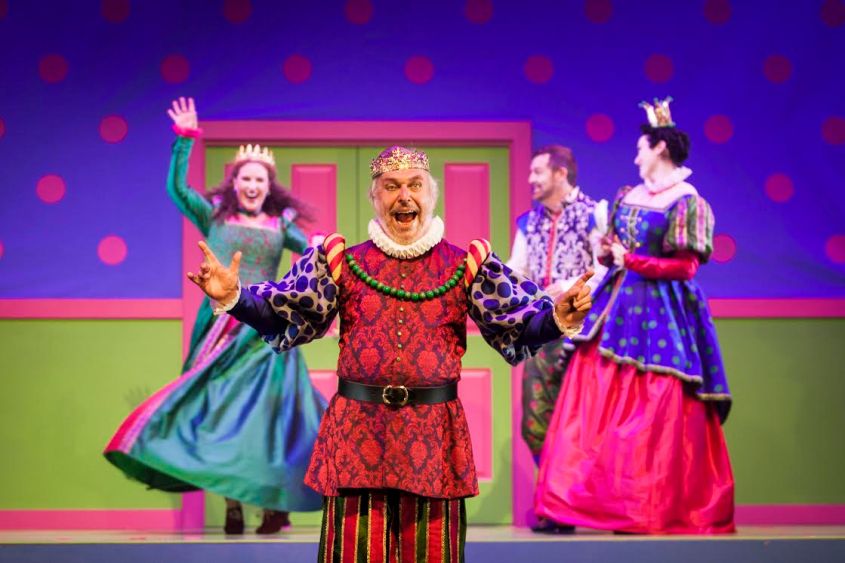
This production was a clever way to present the tale and the marvels of the opera to its young audience. Set as a show on television station, ‘Mythical Mysteries!’ the story is presented with the humour of forgotten lines, dropped scripts and the hustle and bustle of a television set. It’s slapstick and generally silly, but the appealing performances of the cast ensured that despite the German accents, the audience understood the action. MacAllister’s set and costume design was bright and artful, which consisted of a giant television frame that lifted the veil to behind the scenes.

The story follows as expected, with a desperately in love Prince (James Egglestone), a humbly dressed Princess (Olivia Cranwell), and a Queen (Kathryn Radcliffe) who has high hopes for her princely boy. Looks are deceiving, as the moral of the story drums into the chirpy youngsters, and a plan concocted by the crafty and energetic TV Host (Dimity Shepherd) to plant a pea in the Princess’ mattress reveals the lost girl’s true identity… and they all lived happily after.

You can check out the Victorian Opera’s Fables 2017 season here: https://www.artscentremelbourne.com.au/discover/seasons/victorian-opera-2017 which will showcase work that will entertain audiences of varying age groups.

Image by Charlie Kinross

The Butterfly Club Presents THE GOSPEL ACCORDING TO MATTHEW

All praise for the songs

By Jessica Cornish

With its creator standing upstage, arms spread wide and hands busy below the waist, The Gospel According to Matthew began. This fifty-minute cabaret production encapsulated the world through the eyes of Matthew Semple, with his inner thoughts and views splashed across the stage in form of song and story-telling.

The Gospel According to Matthew.jpg

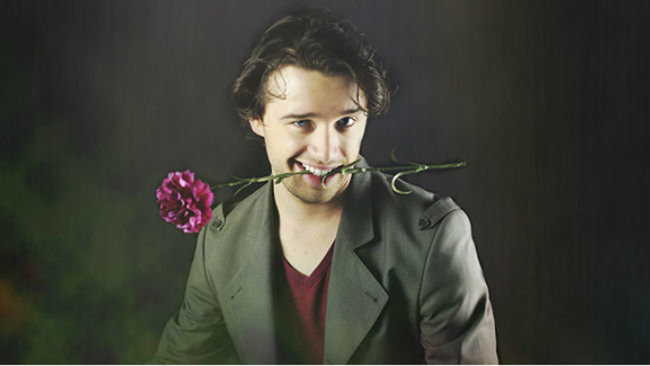
The music-theatre-born-and-bred Semple performed his self-professed ‘shitty cabaret’ to his cosy audience, happily huddled into the intimate performance space of The Butterfly Club. This young performer had a pleasing amount of confidence and a strong stage presence; he performed with the polished hallmarks and training of a musical-theatre babe with clear diction, a strong tone and a nice dash of vibrato.

Despite the thoroughly scripted and rehearsed narrative, Semple was also comfortable enough to partake in some impromptu banter with his audience, which provoked some of the funnier moments of the night.

Unfortunately I felt the performance overall lacked a strong and clear overarching theme to its detriment, and throughout the show there were a number of one-off and throwaway jokes that for me often missed the mark. Substituting the satire and wit for cheap shots and crude humour- small dick jokes and making fun of paraolympians for example – certainly wasn’t my favourite comic styling. There was also not much character development of the main man himself: Semple touched on being recently single and ending a long-term relationship for example, however this wasn’t really explored in any detail, and considering the show’s title, it would have been interesting to hear more personal stories and self-reflection.

My favourite moments of the night were easily when Matthew at his piano took the limelight. His songs were well-constructed and entertaining, and focused more adroitly and wittily on numerous social issues currently trending in Australia such as our dubious offshore detention centres and questionable conservative MPs like Dutton and Hanson, which made for both enjoyable and thought-provoking musical numbers. Perhaps some more of these upbeat playful songs added into the mix would better support and inform the less successful moments of story-telling.

In conclusion, Matthew preaches to his crowd to ‘shout your truth’ and go forth: therefore, in truth I believe this cabaret show has the potential to grow and flourish, and hope the narrative can thus become sharper and snappier and as appealing as the music as time goes on.

The Gospel According to Matthew played at The Butterfly Club, 5 Carson Place Melbourne in March 2017.

The Butterfly Club Presents ARTS CAPTAIN

Excruciatingly funny

By Narelle Wood

Arts Captain details the triumphs and tribulations of over zealous Arts Captain Theodore Etherington in a show that can easily be described as The Office meets Glee.

Arts Captain.jpg

We first meet Theodore (Jayden Walker) just before the first school assembly of the year. Theodore’s plan is to literally make such a song and dance about his prefect position that no-one, including the new drama teacher will have any doubt over who’s really in charge. There is one small glitch in Theodore’s plan – he can’t sing and his dance moves are reminiscent of the uncoordinated kid at the back of the Rock Eisteddfod ensemble. It is very quickly established, at least for the audience, that Theodore is all glitter and glam and with not much of a gift for the musical theatre genre.

The story is a familiar one – ego temporarily crushed, dramatic unleashing of blame and venom upon anyone within spitting distance, and some salvation in the end. What makes this show work is the way Walker has carefully crafted the narrative, the ease with which he breaks the fourth wall and returns to character, and the nuanced (and overtly obvious) references to Broadway littered through out. As a teacher I appreciated the self-deprecating, self-awareness of what it’s like to teach a student of Theodore’s ilk. As far as musical selections go, I was impressed with the selection of songs and how they, mostly (by Walker’s own admission), fitted with the narrative. However, I will never quite be able to listen to I Dreamed a Dream again without conjuring up images of Walker’s tortured rendition.

There were only two things I struggled with. One, Walker was at times very quiet and it was hard to hear him above the ambient noise coming from outside the theatre space. And two, I wanted to hear if he could really sing; I’m sure there was an in-tune note there somewhere in his repertoire. Those two things aside, it was guffawingly brilliant in its cringe-worthiness.

Arts Captain is every bad high-school musical moment rolled into one and Theodore is so realistic that I found myself thinking “My God, I think I’ve taught this kid”. I hadn’t. Arts Captain is obnoxious and entertaining. If this is the calibre of show Walker is producing as he’s starting out, I can’t wait to see what he does as his career evolves.

Arts Captain was performed at The Butterfly Club, Carson Place, Melbourne at 7pm Sat 25th & Sun 26th February, 2017.

Theatre Works Presents LIFETIME GUARANTEE

Talented hard-working cast enliven new Australian play

By Myron My

Written by Ross Mueller, Lifetime Guarantee is a story shared by five characters whose lives intertwine as they seek love and connection in the modern world. Julian Dibley-Hall and Charles Purcell play Charles and Daniel, a couple living together who don’t seem to actually want to be with each other despite their protestations. Charlie’s new assistant Jodie has some interesting sexual predilections and Daniel’s ex-wife Chloe is trying to move on with her life. And then there’s Francis, whose interactions with each character seems to lead to situations in which they’d rather not be.

Lifetime Guarantee.jpg

Unfortunately Mueller’s script feels under-developed, with some questionable character motivations throughout. The cast themselves do well with their characters’ limited development, and with direction that seems surprisingly over-the-top, awkward and unnatural. Candace Miles manages to breathe some life into the aggrieved Chloe, bringing pleasing nuance to her portrayal. Izabella Yena as Jodie is initially full of spark and creates interest in her character, but once the assistant’s “secret” is revealed, Jodie immediately becomes one-note and repetitive where even Yena’s energy and effort is unable to make her relevant again.

Jodie’s revelation, while intended to create shock and intrigue, is just ridiculous, and there seems to be no purpose in having this transpire except to make some sex-related puns. Similarly, the scene involving Francis visiting Daniel to fix his broken washing machine is preposterous, and becomes merely a plot function to drive the story go down the path Mueller wants.

For me, John Sheedy‘s direction is often jarring and prevents any emotional connection being established, with even intimate moments feeling cold and artificial. Simple actions like entering and exiting from the same side of the stage break the realism and if the production goes to all the trouble of having a working shower on stage, why did they decide to have an actor pretend to spit out coffee from an empty cup?

What is interesting about Lifetime Guarantee is the level of importance that ‘models’ of things have:  Charlie and his model house signify the life he idealises, Jodie and her model cars are symbolic of the kind of love she desires, and there’s Jodie’s friend who has been offered a job to create a model of the Great Wall of China. The idea that everyone is trying to build these perfect lives for themselves with intricate and minute care, but end up ignoring the significance of the things happening around them is fascinating, but sadly never fleshed out.

Lifetime Guarantee attempts to examine modern life and the ways people experience loneliness and struggle to connect with others. Unfortunately the writing and direction here cannot inspire any deeper thought beyond the surface of themes that have been staged many times before.

Venue: Theatreworks, 14 Acland St, St Kilda

Season: Until 26 February | Tues – Sat 7:30pm, Sat 2pm, Sun 5pm 

Tickets: $38 Full | $30 Conc 

Bookings: Theatreworks

Photo by Pier Carthew