Category: Music

Melbourne 2016: THE TALLIS SCHOLARS

Divine music in all senses of the word and experience

By Leeor Adar

Born under Peter Phillips‘ directorship, The Tallis Scholars wonderfully transcend the passage of time and deliver audiences the English Renaissance polyphony.
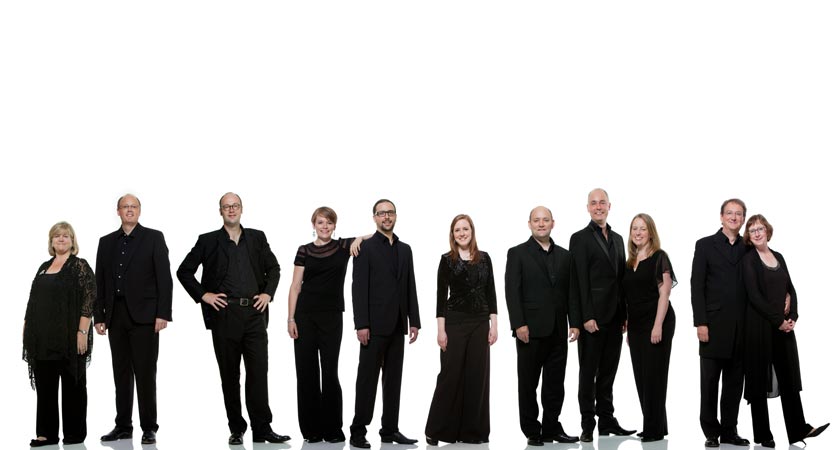
 The Tallis Scholars.jpg

Since 1973, Phillips has been proving that polyphony draws audiences in the droves. If anything is to be said for Hamer Hall on that balmy Melbourne night, the audiences of varying generations filled the seats to indulge in these beautiful harmonies. Sixteenth-century composer Thomas Tallis, a man who won the patronage of the powerful and elite (and also held the monopoly of printing music), inspired the title of Phillips’ troupe.

Phillips challenges his singers and convention by having only two singers perform a part. Phillips aptly states that two singers for a part are ‘more precise’ and ‘vulnerable’. The fact that the performers must work harder to crystallise their sound is an even greater credit to their ability and to their director. We were treated to some of the most ethereal sounds a human voice could deliver; I was elsewhere for much of this performance, hoisted by these angelic voices to higher ground. The mysticism inspired by Catholicism clearly still affects audiences today through the sacred verses performed.

Phillips began the night with Peter Philips’ Cecilia Virgo, a piece whose text was inspired by the patroness of music, Cecilia. The piece is a perfect opener to the polyphonies that come after, signalling the skill of the alternating groups of voices. Pieces I felt that highlighted the skill of the Scholars and delivered the most compelling music to me would have to be Tallis’ Lamentations of Jeremiah, the modern composer John Travener’s As one who has slept, and William Byrd’s Tribue Domine.

Tallis’ Lamentations of Jeremiah I felt captured the melancholy of the destruction of Jerusalem at a greater depth than Dominique Phinot’s, which Phillips has included after Tallis’ in the program. This was an exercise I suspect in contrasting how the Lamentations could be performed differently, with Phinot’s polychoral style dominating his piece.

The inclusion of Travener’s 1996 As one who has slept was a beautiful nod to a modern composer. The piece carries with it the weight of tremendous mysticism – the varying tones that take us to sudden and melodious highs and lows were a beacon of light in the evening for me. At one point I felt chills in my body: a testament to how overwhelming choral music can be.

The Tribue Domine by one of Tallis’ contemporaries, Byrd, closed the official part of the evening. With soaring voices that harmonised so beautifully, audiences were guaranteed to leave the Hamer Hall in an otherworldly state.

While Phillips indulged us with one last encore, I was adament it will not be the last time I journey to listen to this marvellous choral music.

The Tallis Scholars performed at Hamer Hall on November 6, 2016.

Tinalley String Quartet and John Bell in SPEAK LESS THAN YOU KNOW

The letters of Beethoven, alive in words and music

By Leeor Adar

A Tinalley String Quartet and John Bell collaboration is an iconic pairing that would excite any theatre or classical music aficionado.

Speak Less Than You Know.jpg

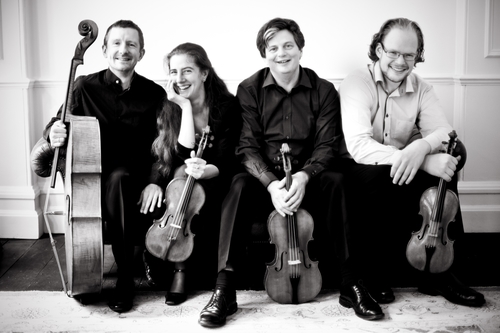
Tinalley’s Adam Chalabi (1st violin), Lerida Delbridge (2nd violin), Justin Williams (viola) and Michelle Wood (cello) are exceptional. Thirteen years of performing worldwide and multiple awards later, it is unsurprising Tinalley have reached the status of one of ‘Melbourne’s Most 100 Influential People’. The precision, intensity and elegance of their music do justice to the brilliance of Felix Mendelssohn and Ludwig van Beethoven.

Tinalley first treat us to Mendelssohn’s String Quartet in a minor, Opus 13. Without a doubt, this is Mendelssohn’s journey through the soaring heights of passionate love. Further inspired by the passing of Beethoven, Mendelssohn’s Opus 13 features the occasional tribute to the old master, whilst carving his own fervour into the Quartet tradition.

One can imagine walking in the night air, bathed in the moonlight during the Adagio – Allegro vivace. Into the second movement, the Adagio non lento, there is a maddening energy that is both overwhelming and reminiscent of Beethoven’s Quartet, Opus 95. Succumbing to the varying moods of Mendelssohn’s romantic Quartet so far, the third movement, Intermezzo: Allegretto con moto – Allegro di molto, is an insistent melody that intertwines rapturously. The dazzling Quartet closes with the intensity of Beethoven’s leaning, and forms an amalgamation of all previous movements with Mendelssohn’s distinct flair.

When Tinalley finishes the Quartet, I am under Mendelssohn’s spell. It is fitting that Mendelssohn’s Quartet, so inspired by Beethoven, should be the splendid gatekeeper to Beethoven and his letters.

Enter Bell, letters in hand.

Bell’s timeless, cool voice embodies Beethoven’s deeply personal letters, reflecting his tempestuous temperament. From the earnest longing for the company of his friend Karl Amenda at age 31, to a different kind of longing for his Immortal Beloved at age 42, the insight into Beethoven’s lonely, and intense emotional inner life is palpable. It is not difficult to hear how Beethoven’s music reflected the torment and passion he experienced within himself.  The audience was given some comic relief in Beethoven’s letters to his nephew’s boarding school owner. The letters show the intensity of Beethoven’s hatred towards his sister-in-law, and later, a copyist who dared fail his expectations.

Interspersed amongst the reading of the letters, Tinalley performs Beethoven’s String Quartets, with each reflecting the mood of the letters read by Bell. Conceptually devised by Anna Melville, Melville brought Beethoven to life in a way that his music alone could only do in suggestion. The rich insight his letters provide confirm the temperament of the man who shared so much in his music.

Speak Less Than You Know was an outstanding and enjoyable insight into the Quartets of two masters. I, like others in the audience, left the Melbourne Recital Centre with a renewed passion for the men and their music that existed almost two hundred years before us.

‘Speak Less Than You Know’ was performed at the Sydney Opera House and Melbourne Recital Centre across three nights.

Finn and Porter’s THE FIERY MAZE

Sink into the music

By Leeor Adar

Twenty years later and the unburied treasure of Tim Finn and Dorothy Porter surfaces into a smoky, enchanted space at the Malthouse’s Beckett Theatre. It’s a minimalist space with a ring of lights surrounding the performing trio, Tim Finn, Brett Adams, and Abi Tucker.

The Fiery Maze.jpg

Tucker howls and serenades us with Porter’s visceral and haunting words, as if the very spirit of Porter possesses Tucker. Tucker’s performance is moody and earthy, and she breathes life with her voice into the stories of the stormy, moon-gazing kind of love that evokes something forgotten in her audience. Like quicksand, we are enveloped into the private world of Porter.

Finn’s music is gorgeous, and we expected it. Brett Adams on guitar is a revelation, and a perfect suitor for the music. The real core shakers, This World, My Magic Friend and Black Water are interspersed with the jagged energy of New Friends, Bride Doll and Making You Happy. Each song delivers a truth behind the kind of love that we remember and carry even if it’s not in our very present. Porter’s words are utterly relatable, even if we can’t admit it. Like in January, we hope for a tomorrow that may bring us something new, something better. Understandably, even decades later, Tucker asked after Black Water, wanting to revisit the music and words that never left her from that recording in 1995.

As an audience we feel no different. With Black Water still swimming in my veins, I too want to return to the balmy darkness of The Fiery Maze.

It’s a real treat for those seeking a soulful experience with this unique blend of poetry and music by world-class artists.

The Fiery Maze continues until 4 September at the Malthouse Theatre: http://malthousetheatre.com.au/whats-on/the-fiery-maze

Image by Pia Johnson

CHANGES: A Theatrical Tribute to the Music of David Bowie

It’s all about the music

By Sally McKenzie

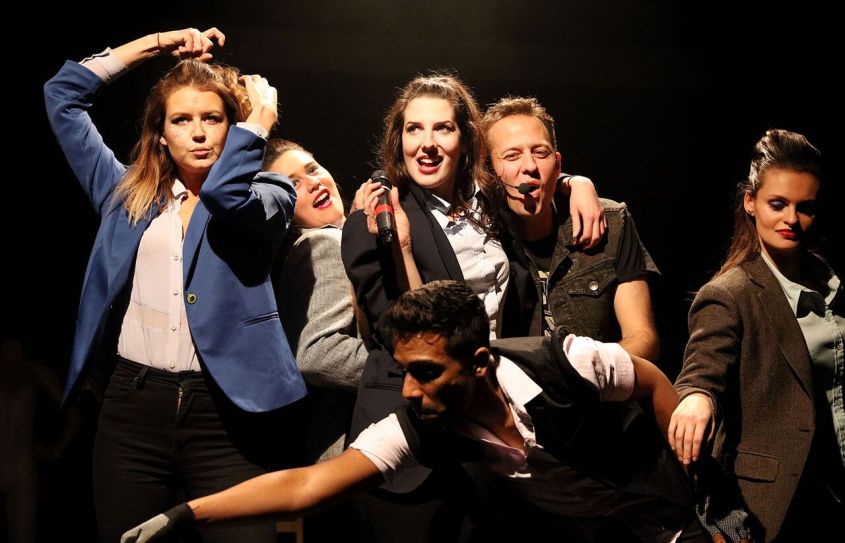
David Bowie was a theatrical performer, so it makes sense for Kendall-Jane Rundell and her team at Bare Naked Theatre to deliver the music of Bowie in a theatrical format. They promised  ‘a personal, raw account of storytelling through contemporary and physical theatre’, but unfortunately I felt that the ‘storytelling’ aspect fell short in many aspects. The music, however, particularly the magnificent accompaniment by Robot Child, was pure Bowie indulgence in every way.

Changes.jpg

Musically, this show was quite an ambitious project, as it included roughly 35 Bowie songs, no dialogue. I was in music heaven. Songs included Bowie’s better-known hits such as the title song ‘Changes’, ‘ Space Oddity’, ‘Life on Mars’, ‘Let’s Dance’, ‘China Girl’, ‘Fashion’, ‘Starman’,  ‘Under Pressure’ , ‘Rebel Rebel’ and ‘Golden Years’.  Some of his more rare gems such as ‘Oh You Pretty Things’, ‘Where Are They Now’ and ‘Boys Keep Swinging’ also played an important part in this musical tribute. With the absence of a conductor, the band executed every song with confidence and flair. The transitions between songs was mostly smooth with only the occasional brief pause while musicians changed instruments or to allow for dramatic pauses on stage.

Robot Child with guest musician Matt Arter (guitar, sax, harmonica) has one of the finest line-ups of musicians I have seen. The arrangements were very close to the original Bowie tunes. The sounds produced on the keyboards of Owen James and David Hartney were great replicas of those included on Bowie’s albums, and the piano solos played by James in ‘Life on Mars’ and ‘Oh You Pretty Things’ were a highlight. Waleed Aly is indeed a virtuoso on the electric guitar. His solos were a feature of the night as they soared through the venue.

Together Dan Slater (drumkit) and Daniel Lijnders (bass guitar) provided a rock solid foundation for the band, executing every riff and rhythm with absolute accuracy and a great understanding of the vast collection of Bowie’s ‘substyles’ of alternative rock. I also particularly enjoyed the backing vocals provided by Hartney and Arter. Those added harmonies and the conviction and passion by these musicians were a huge asset to the show.

The main vocalists of the night were Jeff Wortman (who was also the music director and the regular lead vocalist of Robot Child) and Rundell (director). Wortman’s vocals were impressive. I was amazed by his vocal stamina as he sang in almost every song – and with 7 or 8 shows remaining, has a huge job ahead of him. Rundell was the other lead vocalist, and although her voice suited the range and androgyny of some of the Bowie songs,  she unfortunately did not have the vocal flexibility or security required. Her intonation wasn’t always accurate and I felt her voice lacked the power and impact required to match the energy and professionalism of the band.

With no program, director’s or musical director’s notes and no biographies of cast for the show, I wondered initially: what was the original concept for Changes? What was the purpose?  I waited for the actors on stage to tell me a story but struggled to connect to any of the themes. The six other performers in the cast portrayed the ‘fans’, ‘party-goers’, ‘drug-takers’ etc. in Bowie’s life, and attempted to provide a more abstract account of Bowie’s songs and lyrics with physical movement – some choreographed, some not.  Costumes by Jessica Allie were simple and neutral, and make up was ‘Bowie-esque’, but the performers seemed to lack an overall sense of purpose and commitment. Jacqui Essing was the stand-out in this hard-working but under-utilised ensemble. She looked completely comfortable on stage and was the most confident with her movement.

Lighting and sound was fabulous. A wall of light rigged behind the band shone into the audience as if to represent the ‘outer space’ theme in the relevant parts of the show. Large hanging spot lights were scattered and clearly visible over the largely open stage, giving the sense of Hollywood or TV studio. Handling such a big sound in a high-ceiling venue is a huge challenge, and LSS Studios triumphed again. The band was mixed perfectly and the overall sound was at ‘Rock Concert’ level, which was much needed. At times though, it was difficult to hear the words of the vocalists. Bowie’s lyrics are often abstract and difficult to understand, however, so this wasn’t a major deterrent.

Admittedly, this is not the cohesive, meaningful or enlightened dramatic performance the publicity suggested, but I was truly impressed by the hundreds of hours put in to rehearsing and performing such an epic collection of songs, and if you are a Bowie fan, you will revel in the sound of this show.

Changes: A Theatrical Tribute is at Gasworks Arts Park until the 6th August. Book at http://www.gasworks.org.au/event/changes/ or barenakedtheatre@gmail.com

REVIEW: Melbourne Festival Presents LAURA MARLING

Warm and winning performance from young international artist

By Jessica Cornish

Draped in plain black linen and hugging an acoustic guitar, award-winning UK artist Laura Marling performed in the beautiful Hamer Hall as a part of the 2015 Melbourne Festival. Her stunning warm vocals filled the venue, complemented by her unobtrusive band mates upstage in the speckled light.

Laura Marling

The night began with a barrage of some of her more intense songs all in minor keys, and these were augmented by the stunning movement and colour splashed across the stage from the clever lighting design. All evening the lighting was vibrant and energetic, constantly changing and employing interesting lighting angles and looks or incorporating use of silhouettes and shadows.

Reminiscent of an intuitive storyteller rather than a mere folk performer, Marling’s songs have a genuine nature and often seem open-ended, never allowing us to predict when they will end, before we experience the sudden abruptness of silence. In between songs she was quietly spoken, and preferred to let her songs speak for themselves rather than explaining how they came to be or what inspired what particular composition.

She performed a catalogue of her more well-known pieces including my personal favourite “Ghost” (though she somehow managed to stumble on the words!) Laura charmingly explained afterwards she was distracted as she was trying desperately not to accidentally sing ‘shat’, which can sometimes amalgamates from the words ‘hat’ and ‘sat’ in the lyrics. She also professed Dolly Parton was a hero of hers (good taste, I have to say) and performed a wonderful cover of ‘Do I ever cross your mind?’ while impressing the audience with her new finger-picking technique, which specifically required the growth of her mutant right thumb nail.

Sometimes the lyrics were a little bit lost in the mix, but her vocal quality was continuously stunning. She has a rich, warm tone that sat nicely above the twangy acoustic guitars, and was a constant pleasure to watch and hear. If she ever comes back to Australia, I will be excited to see what this young British modern folk singer will then have in store.

http://www.lauramarling.com/

Image by Deirdre O’Callaghan

REVIEW: Melbourne Festival Presents KATIE NOONAN’S VANGUARD

Evocative, experimental and enthralling

By Jessica Cornish

Kicking off her 2015 national tour promoting her latest crowd-funded record, Katie Noonan performed last weekend at Melbourne Festival’s Foxtel Hub. Back to her roots and travelling with trio of talented band mates Stu Hunter (keys), Declan Kelly (drummer), and Peter Koopman (guitarist), now known as Vanguard,  Noonan and her musicians performed a beautiful late-night set in the heart of Melbourne.

Katie Noonan

Armed with her percussive wooden cylinder, drum sticks, keyboard and an array of gaudy silver-animal bling, she belted out a mix of originals from her latest album Transmutant and some older songs such as ‘Sweet One’ written with world-famous artist Sia when they were both living in L.A. a decade ago, struggling with the image-obsessed and at times brutal music industry, and realising that they were part of each other’s strongest support networks.

It was definitely not your typical pop set – or even jazz for that matter, and I couldn’t even hum you back any melody featured in her songs. I think her works are best described as a mix of electronic pop-like ballads, incorporating many different textures of sounds and rhythm using synthesisers and pedal effects. At times the songs seemed to drift aimlessly with no real sense of purpose or direction and on reflection many of the songs seemed similar and merged into each other. However all her songs appeared to be of a highly personal nature and were reflections on those close to her life. She expressed her love for her two sons and their ability to find joy in daily life, and her distress dealing with the grief of the steady deterioration of her father’s health. Noonan’s voice is definitely a highlight of the performance, truly a stunning instrument and as perfect as any polished recording you could hear playing. She has a breathy, yet gutsy voice gliding in to her higher vocal range, so ultimately her songs trap you in the moment, and left me listening intently to every word and note she produced. To be honest it was hard to concentrate on anything else that was going on, including the funky LED-panelled backdrop and flashing lights.

Through out the evening Katie was incredibly engaging and honest with us as her audience. The night seemed more like a cabaret, providing insight in to the singer’s life and the people who surround her in everyday situations. She took the time to explain the backstory to all her songs (and I even learnt that the German super market ALDI never play music in their stores because they don’t want to pay licencing fees). That tale of continuous silence was even the springboard for another one of Katie’s latest musical creations featured in the hub that evening. Her interaction with her band mates was also really genuine and their close rapport was really nice to watch, as so often musicians go unnoticed by their well-known vocalists. She even performed a song she had written as a wedding gift for Hunter.

The Foxtel Hub was a great venue, it was intimate, had a punchy lighting rig and really clear, high quality sound. It was a real treat to see such an iconic Australian performer as part of the Melbourne Festival, and to top it off, while waiting for the doors to open, my Dad and I were inundated with complimentary alcohol and food tastings from local Melbourne restaurants. A lovely night out in all.

http://katienoonan.com/

REVIEW: Melbourne Festival Presents 32 RUE VANDENBRANDEN

Suspended in isolation

By Myron My

Performed as part of this year’s Melbourne Festival, Peeping Tom return to Australia with 32 Rue Vandenbranden which explores the isolation and loneliness that a group of people feel through the company’s trademark fusion of dance, physical theatre and music.

32 Rue Vandenbranden

The stage design, which is how the Belgian company begins developing a new creation, perfectly encapsulates the emotional state of its inhabitants. High on a mountain-top, underneath an endless sky, sit three rickety caravans. The ground is covered in snow and there is an immediate sense of remoteness and desolation. The emotive sound composition by Juan Carlos Tolosa and Glenn Vervliet strongly adds to the feelings that the characters are experiencing, while mezzo-soprano Eurudike De Beul‘s musical moments in the show are an aural delight for the audience.

There are some beautifully choreographed moments in 32 Rue Vandenbranden including the opening performance between Jos Baker and Maria Carolina Vieira. Their subsequent duets are mesmerising to watch, as their bodies intertwine with apparent ease in equal displays of frustration and desire to connect with another human.

However, there is still a strong emotional disconnect between what is occurring on stage and what the audience is feeling. The stories that are being told and the character motivation for the movements in the piece unfortunately do not translate well, and along with the constant change in the tone and mood and beyond the stage snow, the show left me feeling quite emotionally cold.

Overall, the individual elements in 32 Rue Vandenbranden, such as the set design, the music and the performances, show the loneliness and hope that people experience in their attempts to connect with and build relationships with people. Ironically, it is this success with the aforementioned aspects that is also its undoing, resulting in a distinct lack of story and heart to the show and an unemotional response from its audience. Perhaps this disconnect is deliberately the work’s ultimate message.

32 Rue Vandenbranden was performed between 8 – 11 October at Southbank Theatre.

REVIEW: Melbourne Festival Presents BABYLON CIRCUS

Dance music explosion

By Narelle Wood

Babylon Circus was a little late in kicking off thanks to Melbourne’s stormy weather, but when it did the elements were just as wild inside the venue as they were out.

Babylon Circus

It’s hard to classify the genre of Babylon Circus; they are French Ska (think big band meets punk) with rock, French, gypsy, Israeli, Reggae, Dixie Jazz and slightly heavier punk, influences. The band itself is a 10-piece ensemble that includes all your regular instruments with a piano accordionist, and some brass and woodwind thrown in. For the most part the music is upbeat and extremely boppy, the constant vigorous bounce by the fans in the audience was a testament to that.

The first three or four songs were fantastic and all of the solos showcased the immense musical talent within the band. Unfortunately the beginning was also marred by some sound issues, which did make it hard to hear all the different instruments at times. Most of the songs were sung in a combination of French and English, and as my French is non-existent and the sound was very large, I found it difficult to work out what they were singing about.

As result of not being able to work out the songs, and also due to so much going on on stage, I found that by about half way through the set, things for me started to sound very much the same – though it was clear from the still bounding audience I was probably in the minority. The only other thing that I struggled with was the lighting; it was really cool and matched the high energy on stage, the problem was there was a lot for such a small space and I was still seeing lights in front of my eyes after I left the venue.

While some of Babylon Circus’s music probably won’t make my play list, there were some pieces that I thoroughly enjoyed. It was also really refreshing to hear a group that so cleverly mixed together a whole range of musical influences to produce a unique perspective on the Ska genre: I would have liked more of that.

Despite my reservations towards some of their music, I couldn’t help but tap my foot and get caught up in the enthusiasm and energy of both the band and the crowd. Babylon Circus knows how to have a good time on stage and that is completely infectious. Their run at the 2015 Melbourne Festival was one night only, but if you like the sound of a melting pot of musical genres that makes you want to dance, be sure to catch them next time they’re in town.

REVIEW: Melbourne Festival Presents THE LONDON HAYDN QUARTET

Impeccable

By Narelle Wood

It has taken three years for the Melbourne Festival to complete its ambitious undertaking of performing all 68 quartets composed by Franz Joseph Haydn. As part of this plan The London Haydn Quartet In their Melbourne debut contributed an astounding performance of three of Haydn’s string quartets (No 17 Op 17 No 2, No 37 Op 50 No 2 and No 3 Op 54 No3).

The London Haydn Quartet

It would be easy, at first glance, to mistake this sort of performance as simplistic; there is after all only a stage, the four musicians and some lights. But the simplicity of the surrounds only highlights the complexity of the music and the attention to detail in what can only be described as an incredibly nuanced performance of Haydn’s works. The intricate composition of Haydn’s music moves from moments of quiet almost stillness to furious duelling as the four string instruments answer and talk to and over each other in the most animated musical conversations.

Catherine Manson (violin), Michael Gurevich (violin), James Bord (viola) and Jonathan Manson (cello) make up the quartet and are as every bit as animated as the music. It was clear from both their performance and the brief moments Manson spoke that Haydn is their passion; Manson describing their dedication to Haydn’s works as something akin to dwelling in the unique musical universes that Haydn created. What was perhaps even more evident though was the mastery that these four musicians exhibited, especially in the ways they seamlessly moved through the pieces, each instrument and musician perfectly connecting to each of the others.

The music was beautiful and I found it to be an extremely relaxing and a thoroughly enjoyable way to spend some time on a Friday evening. The only disappointing thing was that it was over so quickly. But the good news is the Haydn for Everyone Series does continue throughout the Melbourne Festival. If you can, make sure to catch The London Haydn Quartet next time they visit for a remarkable classical music experience.

Haydn for Everyone Series

Venue: Various locations and times. See website for details
Season: Until 25th October
Bookings: www.festival.melbourne

REVIEW: Helen Bower’s LOST IN THE LOOPING GLASS

Engulfed in the artistry of music

By Myron My

I’ve often said if I had the time to learn any musical instrument I would choose the violin. There is something incredibly calming and meditative about hearing an accomplished musician play such an instrument. Upon learning there was a performance by violinist and sound artist Helen Bower as part of the 2015 Melbourne Fringe Festival, I made sure I would not be missing it.

Lost in the Looping Glass

Bower’s Lost In The Looping Glass is a 50-minute violin performance played alongside a loop pedal. She records fragments or sequences on her violin from compositions by local and international composers live, and has them playing on loop where they gradually layer on top of one another to create their own music.

It is obvious from the very beginning that Bower has completely given herself over to the music. There is a somewhat ritualistic process with Bower kneeling by the violin in reverence before she picks it up and begins to strum, pluck and strike the violin to make her expressive and emotive music.

Once you close your eyes, the beautiful combination of sounds and rhythms draw you away from the venue and you find yourself wherever your mind and the sounds want to take you. I myself end up on a nostalgic journey through significant periods of my life, all the while thoroughly enjoying the musical soundtrack that evokes and accompanies these memories.

At one point during Lost In The Looping Glass, Bower speaks of a time when she was a child in Berlin. Unlike other performances where hearing the artist speak of their own experiences enhances the effect of the art, I actually found the aural impact of this work means this spoken interlude breaks into the personal reflective journey that each audience member is going on, as our thoughts are then in conflict with the visual that Bower is describing. For me, it takes away from the power of the music and carefully constructed acoustic environment, and subsequently disrupted the distinctly immersive influence the performance has over me.

Bower’s Lost In The Looping Glass is a transfixing performance and a unique opportunity to see music from a violin being created on a loop pedal. Moreover, it’s a moving experience that allowed me the poignant and powerful chance to travel back to moments of my life that I had otherwise forgotten or not thought possible to relive.

Lost In The Looping Glass was performed at Scratch Warehouse between 18 September and 4 October for the 2015 Melbourne Fringe festival.